- 0
- 941 words
The global nonprofit The Ocean Cleanup will make Australia and the Asia-Pacific its primary focus, directing two-thirds of its global intervention effort to Southeast Asia over the next three years. Founder and chief executive Boyan Slat announced the shift in Sydney on 12 October 2026, after a week of meetings with funders, researchers and industry — and used the moment to demand that Australia match its climate rhetoric with funding and action on ocean plastic ahead of COP31.
FAKTA
- The Ocean Cleanup will direct two-thirds of its global intervention effort to Southeast Asia over the next three years.
- About 79 percent of ocean plastic reaching Australia from abroad originates in Southeast Asia, according to the organization’s research.
- The 30 Cities Program aims to place Interceptor systems in 30 of the world’s most polluting urban river systems by 2030, including Jakarta, Tasikmalaya and Denpasar.
- Australia will co-lead the drafting of a global ocean health roadmap with Türkiye at COP31 in November 2026.
- As of September 2026, The Ocean Cleanup has collected more than 62 million kilograms of trash from aquatic ecosystems worldwide.
Why Southeast Asia: the 79 percent figure
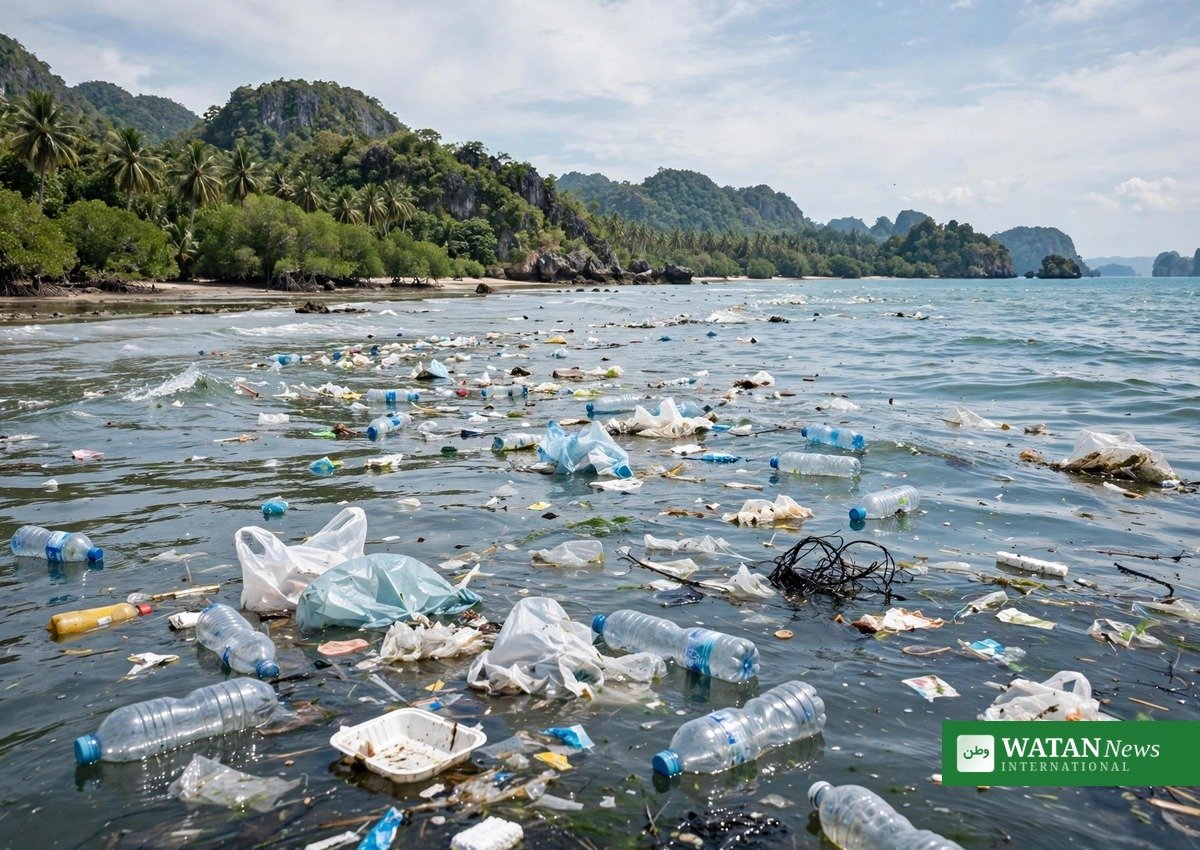
The decision is driven by data. The Ocean Cleanup’s research finds that Southeast Asia contributes about 79 percent of the overseas ocean plastic arriving in Australia — the plastic carried into Australian waters and beaches from other countries.
Breaking down the overseas plastic reaching Australia’s exclusive economic zone, the organization’s data attributes about 70.5 percent to Indonesia, 8 percent to Fiji, 4 percent to Vanuatu and 3 percent to Papua New Guinea. The Philippines and Vietnam each account for about 2.5 percent, East Timor and South Africa 2 percent each, China 1.5 percent, and Malaysia and the Solomon Islands 1 percent each. Smaller contributors — including Sri Lanka, Thailand, Samoa, the Maldives and New Zealand — make up about 3 percent combined.
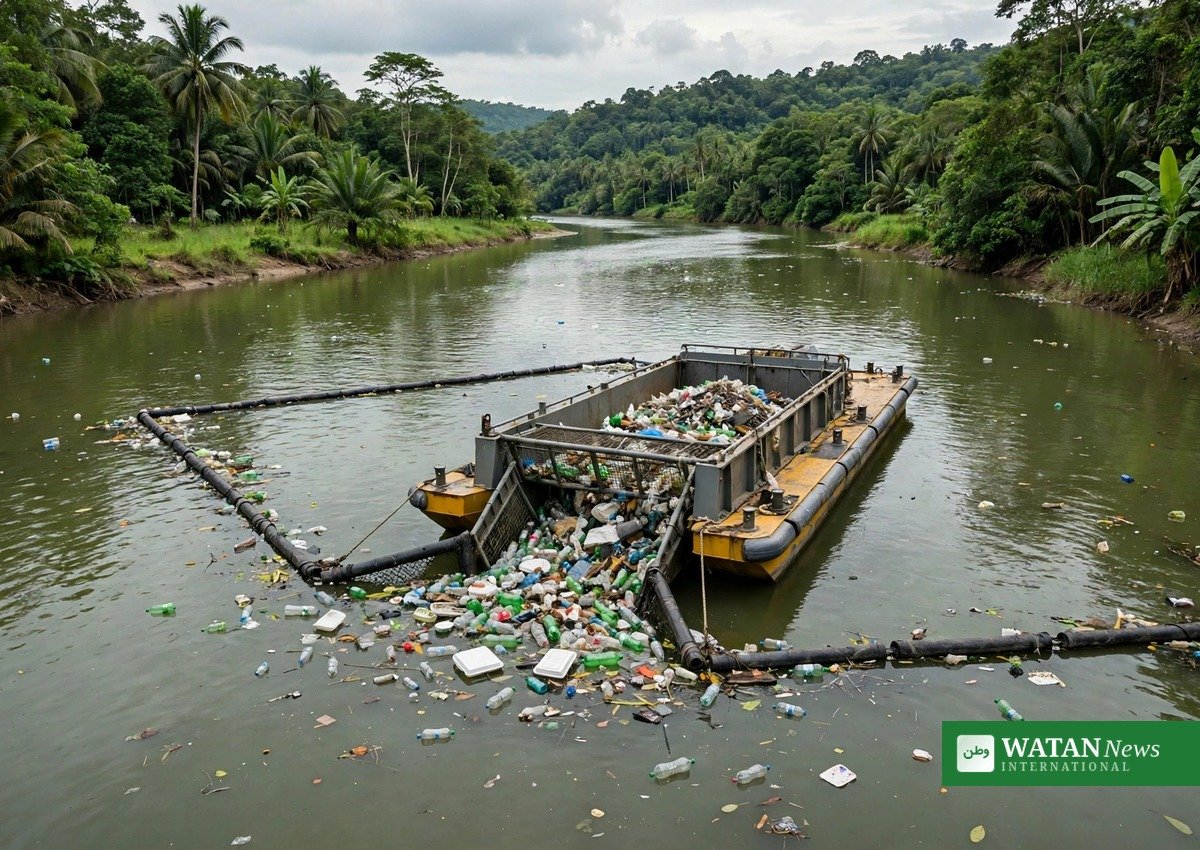
The approach rests on the nonprofit’s peer-reviewed research showing that around 1,000 rivers carry nearly 80 percent of the world’s river-borne ocean plastic into the sea — and that the most polluting of these rivers run through Southeast Asia. Stopping ocean plastic at its source, in rivers, is the strategy’s core.
“Tackling plastic waste is not one country’s problem: it is a regional and global issue we all must play a role in solving,” said Lisa McLean, managing director and chief executive of Circular Australia, at the Sydney announcement.
The 30 Cities Program
Central to the new strategy is The Ocean Cleanup’s 30 Cities Program, which will install Interceptor systems — floating devices that collect waste from rivers before it reaches the sea — in 30 of the world’s most polluting urban river systems by 2030.
The first locations already identified include three Indonesian metropolitan areas — Jakarta, Tasikmalaya and Denpasar — with further interventions planned in Malaysia. Slat said the organization is looking for Australian investors, researchers, policymakers and industry partners to plug into the interception work already underway in the region and globally.
The organization has also signed a letter of intent with the United Nations Economic and Social Commission for Asia and the Pacific (UNESCAP) to advance a regional partnership on ocean plastic, with Australia described as playing a leading role.
Sydney keynote: ‘action and cash’
During his Sydney visit, Slat headlined the Asia Pacific Circular Economy Hotspot forum with a keynote exploring how Australia can use its ocean-health capabilities to accelerate action in Southeast Asia. The forum was hosted by the New South Wales Government and Circular Australia and brought together leaders from government, industry, academia, finance and First Nations organizations. Speakers included NSW Minister for Climate Change, Energy, Environment and Heritage Penny Sharpe, the CSIRO Circular Economy Initiative, WWF-Australia and UNESCAP.
Slat argued that credibility in climate negotiations comes from funding and delivery, not from consumption statistics. He said “action and cash” — alongside science and expertise — would help Australia arrive at COP31, in Antalya this November, able to speak with authority on global ocean health. He also pointed out that Australia hosts 12 percent of the world’s blue carbon ecosystems and contributes between 5 and 11 percent of the global blue carbon stock, giving it outsized influence on the issue.
McLean added that in a circular economy, “waste is designed out in the beginning” through design standards and product-stewardship laws that make manufacturers and distributors responsible for their products at end of life, so materials like plastic “stay in the economy at their highest value for as long as possible and do not pollute at end of life.”
Australia, Türkiye and the COP31 ocean roadmap
The new regional strategy lands as Australia prepares to co-lead the drafting of a global ocean health roadmap with Türkiye at COP31 in November, while the Australian Government continues work on its own Sustainable Ocean Plan. For a country whose beaches receive plastic from across the region, the ocean agenda is set to be a visible test of delivery at the Antalya conference.
Read more of Watan News International’s climate coverage.
Cleanup alone is not enough
The Ocean Cleanup’s own message is that interception is only half the equation. The organization — founded by Slat in 2013, headquartered in Rotterdam, with about 200 staff and operations in 13 countries — develops river and ocean cleanup technology while partnering with governments and industry. Its broader argument, echoed by Circular Australia, is that a zero-waste future requires keeping materials in use from the start, not fishing them out of the sea afterwards.
Whether the funding Slat is seeking in Sydney materializes will be one of the early measures of how seriously Australia takes the ocean-health leadership role it wants to play at COP31.
Author

usman2344913@gmail.com
Related Posts
Saudi Crown Prince Turns Down Israeli Bid to Join Anti-Houthi Campaign
- 0
- 475 words
Saudi Crown Prince Mohammed bin Salman has reportedly turned down an Israeli offer to take part in the military campaign against Yemen’s...
Read out all
Kenyas Green Challenge: 3,3 millioner træer plantet på én time
- 0
- 758 words
Kenya plantede over 3,3 millioner træer på én time under Green Challenge på Mazingira Day og passerede to milliarder træer på det...
Read out all
کینیا کا گرین چیلنج: ایک گھنٹے میں 33 لاکھ سے زائد درخت لگائے گئے
کینیا نے میزنگیرا ڈے پر گرین چیلنج کے تحت ایک گھنٹے میں 33 لاکھ سے زائد درخت لگائے اور قومی ڈیش بورڈ...
Read out all
Kenya’s Green Challenge: 3.3 Million Trees Planted in One Hour
- 0
- 725 words
Kenya planted over 3.3 million trees in one hour under the Green Challenge on Mazingira Day, passing two billion trees on its...
Read out all
Breaking Bad Star RJ Mitte Dies Aged 34
- 0
- 313 words
RJ Mitte, the actor best known for playing Walter White Jr. on the landmark television series “Breaking Bad”, has died at the...
Read out all
14-Year-Old Pupil Arrested After Shooting Principal and Teacher at French School
- 0
- 472 words
A 14-year-old pupil has been arrested after opening fire with a hunting shotgun at his middle school in Aubagne, southern France, wounding...
Read out all