- 0
- 581 words
This is an explainer, not a news report: a guide to what sustainable living at home really means, grounded in the latest global data on buildings and emissions.
Most climate conversations focus on power plants, cars and summits. Yet the building you are sitting in right now is part of the single largest piece of the climate puzzle: according to the UN Environment Programme’s Global Status Report for Buildings and Construction 2025-2026, the buildings and construction sector is responsible for around 37 percent of global CO₂ emissions and nearly half of all raw material extraction worldwide.

That makes sustainable living at home far more than a lifestyle choice — it is one of the most direct ways ordinary people touch the climate crisis, every single day.
The numbers behind our homes
The scale is difficult to grasp. In 2024, global building floor area reached 273 billion square metres, growing by 1.7 percent in a single year — adding space equivalent to five Nairobis or two Delhis, according to UNEP. Residential buildings account for 77 percent of that floor area and around 70 percent of buildings’ energy demand. In other words, housing sits at the very heart of both the problem and the solution.
The sector still consumes 32 percent of the world’s energy and contributes 34 percent of CO₂ emissions. UNEP found that building-sector emissions rose around 5 percent over the past decade when they should have fallen 28 percent — though emissions have plateaued since 2023 as green building standards, renewable energy and electrified heating and cooling began to bite.
What sustainable living at home actually means
Sustainable living is often reduced to slogans, but in practice it comes down to four everyday areas:
Energy
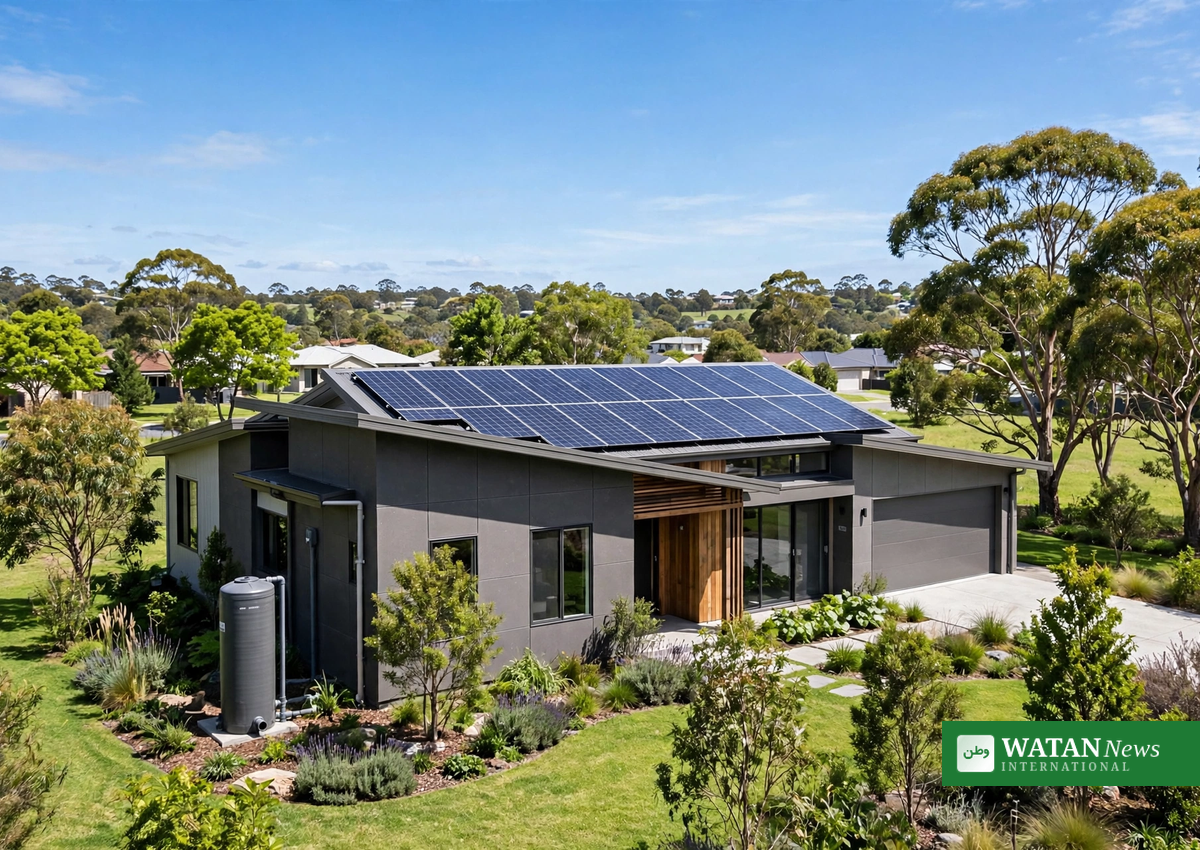
Heating, cooling, hot water and appliances dominate a home’s footprint. Better insulation, efficient heat pumps, LED lighting and rooftop solar all cut both bills and emissions. In Australia, researchers note housing accounts for around 24 percent of electricity use and 12 percent of carbon emissions — a pattern repeated across developed economies.
Materials and waste
Construction devours resources: the sector drives nearly half of global raw material extraction. Choosing durable goods, repairing instead of replacing, and separating waste for recycling extends the life of those materials. UNEP’s Avoid-Shift-Improve approach even shows that repurposing existing buildings generates 50–75 percent fewer emissions than new construction.
Water
Heating water is energy-intensive, and water scarcity is growing. Low-flow fixtures, rainwater harvesting and mindful use cut both.
Food and consumption
What enters the home matters too: reducing food waste, buying local and seasonal produce, and composting organic waste all shrink a household’s footprint.
Key facts: buildings and the climate
- 37% of global CO₂ emissions come from buildings and construction (UNEP, 2025-2026)
- ~50% of global raw material extraction is driven by the sector
- 77% of building floor area is residential — homes are the centre of the challenge
- 32% of world energy is consumed by buildings
- 19 countries have sufficiently detailed building goals in their climate plans (UNEP)
- 50–75% fewer emissions when repurposing buildings instead of building new
Why this matters now
Nearly half of the buildings that will exist in 2050 have not yet been built — most of them in emerging economies, where over half of new floorspace still falls outside any building energy code. The choices made in homes today, from insulation to appliances, will lock in emissions for decades.
Sustainable living is not about perfection. It is about understanding that the home is a climate actor — and acting like it. Explore more guides on green living at Watan News in English.
Author

usman2344913@gmail.com
Related Posts
صحت اور موسمیاتی تبدیلی کانفرنس 2026: لندن میں لانسٹ کاؤنٹ ڈاؤن کی دسویں رپورٹ کا اجرا ہوگا
صحت اور موسمیاتی تبدیلی پر لانسٹ کاؤنٹ ڈاؤن کی دسویں رپورٹ کے موقع پر عالمی ماہرین اٹھائیس اکتوبر کو لندن کی برٹش...
Read out all
Health and Climate Change Conference 2026 to Launch 10th Lancet Countdown Report in London
- 0
- 371 words
Global health and climate experts gather at the British Library in London on 28 October for a conference marking the 10th Lancet...
Read out all
Filippinernes vicepræsidentkontor lancerer El Niño-informationskampagne
- 0
- 466 words
Filippinernes vicepræsidentkontor lancerer en landsdækkende offentlig informationskampagne om El Niño-beredskab med enkel vejledning til husholdninger og landarbejdere.
Read out all
فلپائن: نائب صدر کے دفتر کا ال نینو سے متعلق عوامی معلوماتی مہم شروع کرنے کا اعلان
فلپائن کے نائب صدر کا دفتر ال نینو سے نمٹنے کے لیے ملک گیر عوامی معلوماتی مہم شروع کرے گا جس میں...
Read out all
Philippines Vice President’s Office to Launch El Niño Public Info Campaign
- 0
- 467 words
The Office of the Vice President of the Philippines will launch a nationwide public information campaign on El Niño preparedness, with plain...
Read out all
RCOY Asien-Stillehavet 2026: 500 unge fastlægger unges klimaprioriteter for COP31
- 0
- 731 words
For første gang i Bangladesh samlede RCOY Asien-Stillehavet 2026 mere end 500 unge fra 28 lande i Dhaka for at udarbejde en...
Read out all