
- 0
- 472 words
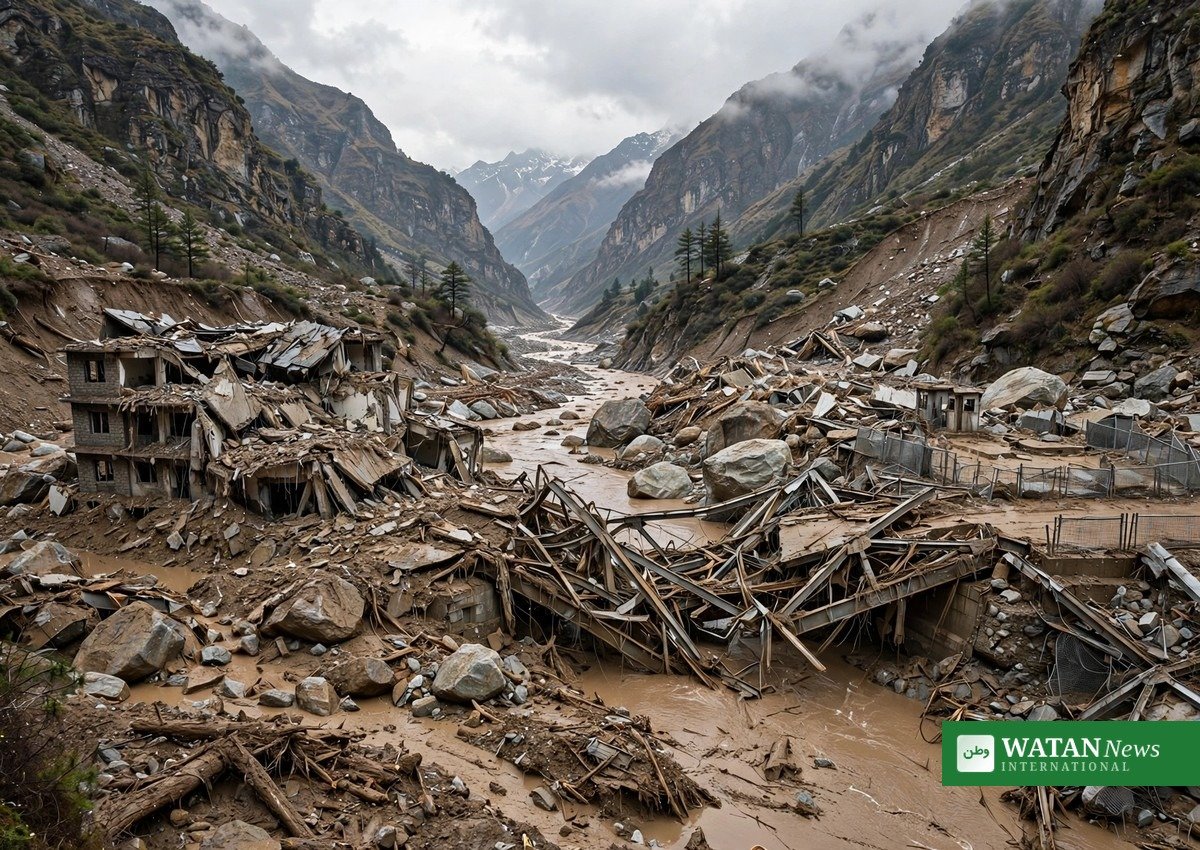
China has warned there is a “high risk” that a barrier lake which formed after the deadly Nepal–Tibet border landslide may burst its banks, causing a second flood downstream.
The warning follows the catastrophic flash flood of 26 August, which scientists say was triggered when part of a glacier collapsed from Langtang Lirung into the river below. As of Friday morning, an estimated 2.5 million cubic metres of water had accumulated at the barrier lake, according to state broadcaster CCTV.
FAKTA
- China’s Ministry of Water Resources: “high risk” of the barrier lake breaching and causing a second flood
- 2.5 million cubic metres of water accumulated by Friday morning (CCTV); a further 3 million cubic metres expected within days
- Lake formed at the confluence of the Chhochen Khola and Purepu Tsangpo rivers and had already started to overflow
- Search and rescue operations near the Nepal–Tibet border suspended due to the risk
- By Friday afternoon, state media said the upstream risk “had come under control” and rescue work resumed
China Warns of Barrier Lake Burst Near Nepal-Tibet Border
A barrier lake is a body of water formed when debris dams up a river – and this one is pressing against a natural dam of mud, rock and ice several kilometres upstream from Gyirong Port, the major land crossing between Nepal and China that was destroyed in the first flood.
Officials said heavy rain was also falling across the area, adding water to the lake faster than it could drain away. The lake sits in the same region as Langtang Lirung, the 7,227-metre peak where the collapsed glacier is believed to have originated.

Rescue Teams Pulled Back From the Danger Zone
Most of the Chinese emergency services were stuck at a village about 7 km from Gyirong Port because the lake was “overflowing non-stop”, a CCTV report said – a condition that could unleash fresh floods or debris flows with little warning.
Authorities dispatched engineering teams to monitor the lake’s water levels and atmospheric conditions around the clock, and drones were flown in to drop equipment and supplies to stranded crews.
Nepal on Alert Along the Bhote Koshi and Trishuli
Separately, Nepali authorities warned of the risk of blockages causing further floods along the Bhote Koshi and Trishuli rivers, telling people to stay away from the riverbanks until further notice. Follow our climate coverage for the latest verified updates.
By Friday afternoon, Chinese state media reported that the risk from the upstream barrier lake “had come under control” and that rescue operations had resumed – a fragile reprieve in a disaster that had already claimed hundreds of lives. Independent reporting is available from ExplorersWeb and the Tribune Content Agency.
Author

usmanjaved13132@gmail.com
Related Posts

Brewers Sweep Dodgers to Reach World Series for First Time Since 1982
- 0
- 580 words
The Milwaukee Brewers are going to the World Series for the first time in 44 years. Down 4-0 in the early innings...
Read out all
Lukashenko Says Trump Should Not Dictate Ukraine’s Future
- 0
- 497 words
Belarusian President Alexander Lukashenko said on Friday that US President Donald Trump should not dictate Ukraine’s political future, declaring that only the...
Read out all
Russian Drone Strikes Kill Three Across Ukraine, Cut Power to 370,000
- 0
- 419 words
Russian drone strikes across Ukraine killed at least three people and knocked out electricity to around 370,000 residents in the northwestern Volyn...
Read out all
Israeli Settlers Torch Olive Trees, Injure Photojournalist in West Bank Harvest Attack
- 0
- 484 words
Dozens of Israeli settlers attacked Palestinian olive harvesters in Abu Falah, West Bank, torching olive trees and injuring two people, including a...
Read out all
Candiru Spyware Ads Planted Zero-Click Spyware on 45 Al Jazeera Devices, Citizen Lab Says
- 0
- 621 words
Researchers have uncovered the first confirmed case of mercenary spyware being delivered to victims through ordinary online advertisements, infecting dozens of devices...
Read out all
Indonesia Forest Fires: Prabowo Approves Foreign Help as Haze Chokes Region
- 0
- 500 words
Indonesia has approved foreign firefighting help as its worst forest fires in a decade choke the region. Hundreds of thousands face breathing...
Read out all