- 0
- 1,060 word
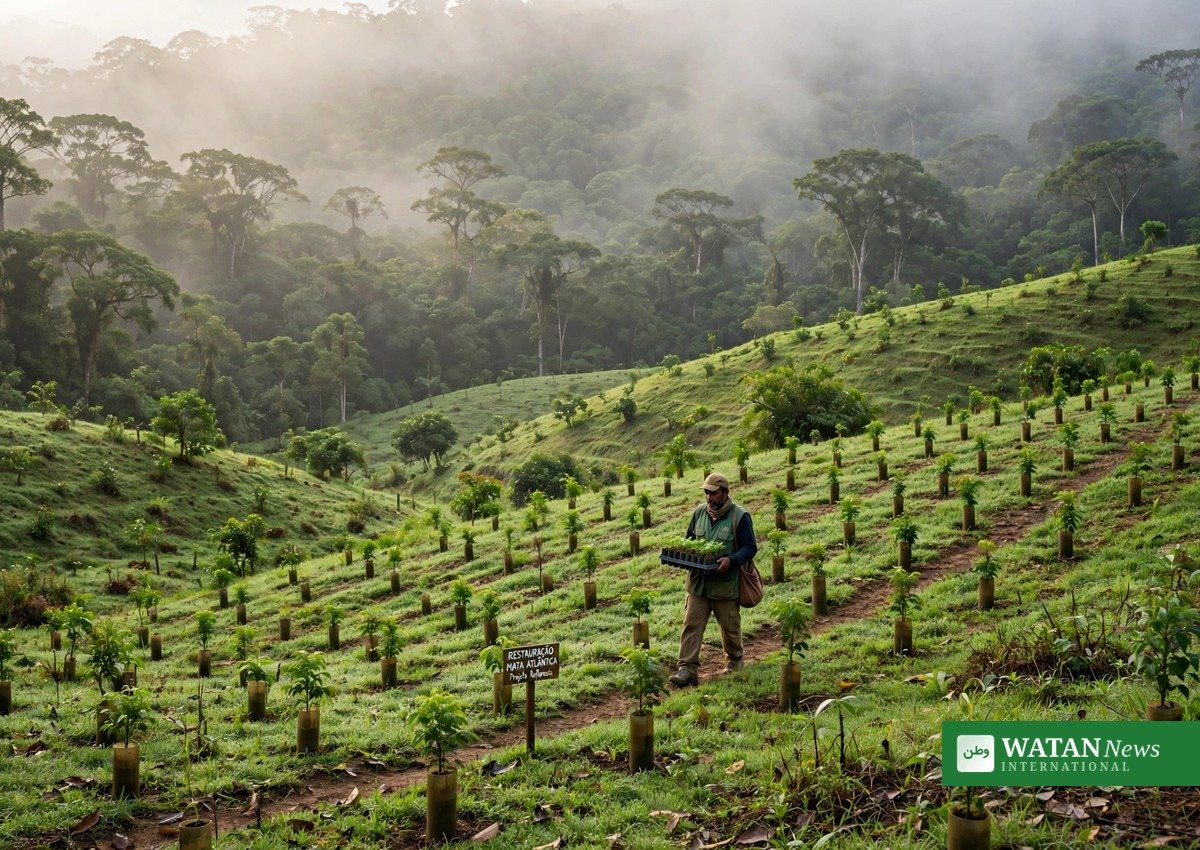
Washington, D.C. — More than one million native trees now stand across 1,089 hectares of Brazil’s Atlantic Rainforest after Forest Trends and the Arbor Day Foundation completed the first phase of the Arboredo Project, a community-led restoration initiative that has turned some of the region’s most degraded landscapes into a working model for how forests — and the people who live in them — recover together.
According to the announcement on 13 October 2026, well over one million trees — 1,015,594 — have been planted across the Ribeira and Paraíba Valleys of São Paulo State since 2023, an area roughly 3.7 times the size of the City of London. The project exceeded its original planting target while leaving behind four fully operational community nurseries, trained local teams and monitoring protocols capable of supporting future reforestation.
FAKTA
- 1,015,594 native trees planted since 2023 across 1,089 hectares in São Paulo State’s Ribeira and Paraíba Valleys.
- 379 families, 40 organizations and four community nurseries engaged; 110 jobs created linked to forest recovery and food production.
- Seedling emergence 48% above projections, monitored with technical support from São Paulo State University, Registro Campus.
- 229 native species used, including varieties with nutritional, medicinal and economic value for communities.
- Next step: the proposed Arboredo EntreVales Project across four landscapes.
A milestone for the Atlantic Forest
The Atlantic Rainforest is a global biodiversity hotspot and home to 70 percent of Brazil’s population. Brazil’s leaders have committed to restoring 12 million hectares of land by 2030, and the Atlantic Forest alone offers restoration potential of up to 17 million hectares. Against that backdrop, the Arboredo Project’s first phase is one of the most ambitious community-led restoration efforts completed in the region to date.
More than 1.7 million Brazilian Reales flowed through the local restoration economy — through the purchase of native seeds and seedlings, tools, labor and the consultation of local experts — grounding the climate and biodiversity gains in real local income. You can follow more of Watan News’ climate reporting on our climate page.
Communities at the centre
The project was built with local Guarani, quilombola and family farming communities from the start. Implementation on the ground was led by the local cooperative Cooperativa Para A Bioeconomia (COOBIO) in the Ribeira Valley and Akarui in the Paraíba Valley — groups, as Forest Trends puts it, “not just implementers” but “the authors of this work.”
The social footprint is as deliberate as the ecological one: 56 percent of participants were women or youth, and quilombola communities played a central role in local seed supply chains, connecting traditional knowledge of native species with the demands of large-scale replanting. Of the 18,000 kilograms of seeds purchased across both territories, about 44 percent came directly from local community seed networks, keeping money in the hands of local seed collectors.
“Planting trees is only meaningful if the people planting them have reasons to protect and manage those forests for decades to come,” said Beto Borges, Director of Forest Trends’ Communities and Territorial Governance Initiative. “Arboredo showed that when communities lead, the environmental and social results reinforce each other.”
The muvuca method
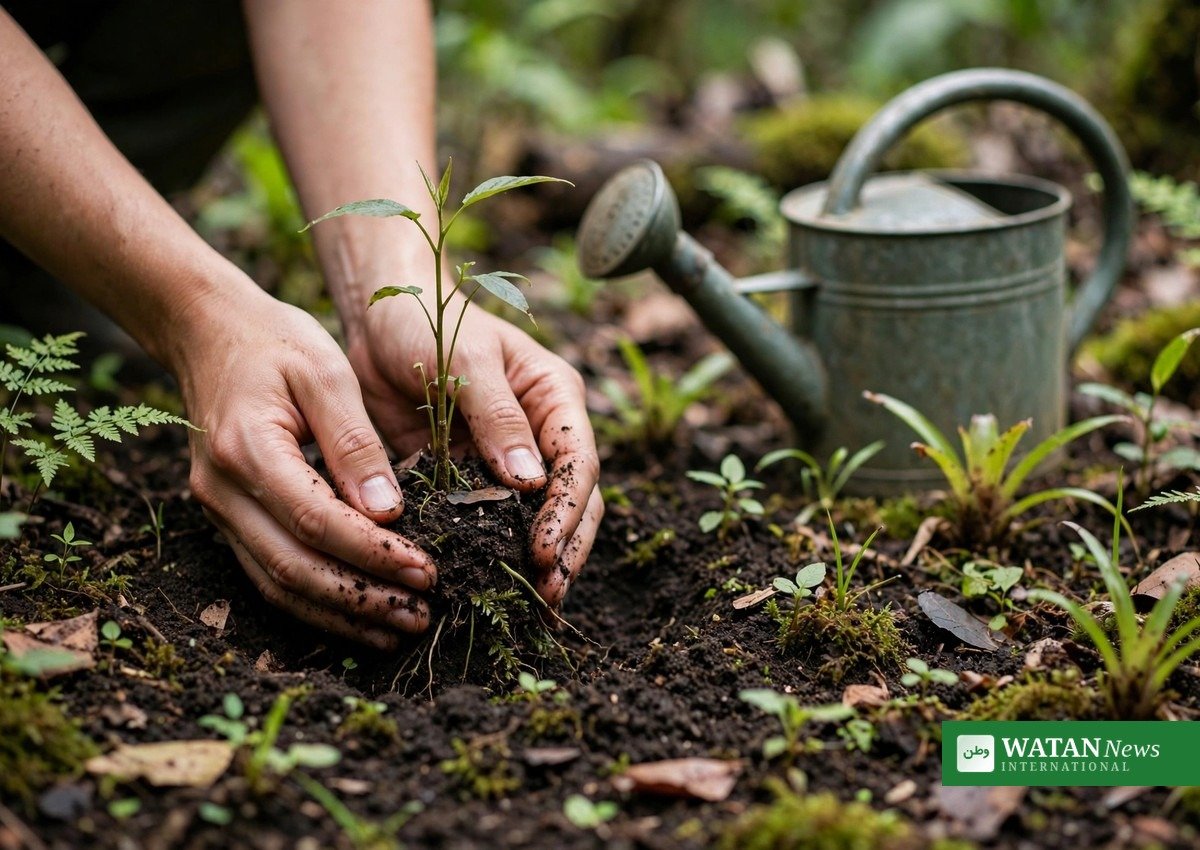
At the heart of the planting work is the muvuca-rara direct-seeding method: seeds are sown directly by hand or with farm equipment, using a diverse mix of species selected for each territory. Some seeds sprout quickly while others take years — staggered timing designed to mimic how a forest actually grows.
Monitoring carried out with technical support from São Paulo State University’s Registro Campus found seedling emergence rates 48 percent above projections — a strong signal, the project says, that the muvuca method could suit other replanting efforts across the Atlantic Forest.
Beyond seeding, eight experimental agroforestry plots were established across five communities in the Paraíba Valley, letting farmers combine forest recovery with food production and diversified income. Native nurseries produced tens of thousands of seedlings from up to 40 species, and the Vale do Paraíba Agroecology Network — 24 partner organizations — has grown into a regional hub for planning and collective action. The Entre Serras e Vales Alliance, developed in the project’s final phase, extends the model into a broader landscape stewardship strategy across the Paraíba Valley, Serra do Mar and Serra da Mantiqueira.
What comes next
The proposed Arboredo EntreVales Project would connect restoration efforts across four landscapes, translating the Arboredo Project’s experience into a larger-scale strategy to strengthen community and landscape resilience in the region.
Conclusion
The Arboredo Project’s lesson is structural, not sentimental: it treats biodiversity and climate outcomes as inseparable from the economic resilience, climate resilience and food security of the communities doing the work. A million trees planted is the headline; the lasting result may be the nurseries, networks and livelihoods that can plant the next million.
FAQs
How many trees were planted in the Arboredo Project’s first phase?
Well over one million trees — 1,015,594 — planted since 2023 across 1,089 hectares (roughly 3.7 times the size of the City of London) in the Ribeira and Paraíba Valleys of São Paulo State, Brazil, according to the Forest Trends announcement of 13 October 2026.
What is the Arboredo Project?
It is a partnership between Forest Trends and the Arbor Day Foundation, launched in November 2023, to strengthen Indigenous and local community livelihoods while planting one million additional trees in Brazil’s Atlantic Rainforest. The first phase worked directly with Guarani, quilombola and family farming communities, 379 families, 40 organizations and four community nurseries.
What is the muvuca-rara direct-seeding method?
It is a technique of sowing seeds directly into the ground by hand or with farm equipment, using a diverse mix of native species selected for each territory. Some seeds sprout quickly, others take years — the staggered timing intentionally mimics how a forest grows naturally. Monitoring supported by São Paulo State University showed emergence rates 48 percent above projections.
Who led the work on the ground?
Local organizations: Cooperativa Para A Bioeconomia (COOBIO) in the Ribeira Valley and Akarui in the Paraíba Valley, working with Guarani, quilombola and family farming communities. About 56 percent of participants were women or youth, and 44 percent of the 18,000 kilograms of seeds used came from local community seed networks.
What happens next in the Atlantic Forest?
The proposed Arboredo EntreVales Project would connect restoration across four landscapes, building on the nurseries, trained teams, monitoring protocols and the Entre Serras e Vales Alliance established during the first phase.
Author

usman2344913@gmail.com
Related Posts

Kenya Cult Leader Paul Mackenzie Convicted of 191 Shakahola Murders
- 0
- 699 words
A Kenyan court in Mombasa on Monday, October 19, 2026, found doomsday preacher Paul Mackenzie convicted of murder over the deaths of...
Read out all
Forest Trends og Arbor Day Foundation har plantet over én million træer i Brasiliens atlantiske regnskov
- 0
- 1,067 word
Washington, D.C. — Over én million indfødte træer står nu på 1.089 hektar af Brasiliens atlantiske regnskov, efter at Forest Trends og...
Read out all
برازیل کے اٹلانٹک جنگل میں دس لاکھ سے زائد درخت لگانے کا منصوبہ مکمل
- 0
- 3 words
واشنگٹن ڈی سی — برازیل کے اٹلانٹک جنگل میں مقامی برادریوں کے ساتھ دس لاکھ سے زائد مقامی درخت لگانے کا پہلا...
Read out all
Saudi Arabia Postpones ‘Davos in the Desert’ Investment Summit to 2027 Amid Houthi Attacks
- 0
- 661 words
The “Davos in the Desert” postponed to 2027: Saudi Arabia has pushed its flagship Future Investment Initiative, the annual gathering of global...
Read out all
Hawaii Turns Ocean Plastic Into Roads: Recycled Fishing Nets Show Promise
- 0
- 839 words
Researchers in Hawaii are paving roads with asphalt made from recycled fishing nets and plastic waste — a circular-economy answer to the...
Read out all
Hawaii tester veje af genbrugsplast: Fiskenet bliver til asfalt
- 0
- 846 words
Forskere på Hawaii asfalterer veje med asfalt lavet af genbrugte fiskenet og plastaffald — et cirkulært svar på øernes affaldskrise. (Illustration: Watan...
Read out all