
- 0
- 976 words
The world will overshoot the 1.5°C climate limit, but deep and fast emission cuts can still bring temperatures back below that threshold by the end of the century, the United Nations Environment Programme (UNEP) says in its new UNEP Emissions Gap Report 2026. The report, titled The Point of Return and published on Wednesday 21 October 2026, sets out what it calls the “lowest possible” overshoot path ahead of the COP31 climate conference in Antalya, Türkiye, next month.
Under that path, peak warming around mid-century would be limited to between 1.7°C and 1.8°C, before falling back to 1.5°C by 2100. Achieving it requires cutting global greenhouse gas emissions by 18 per cent by 2030, 45 per cent by 2035 and 69 per cent by 2040, compared with 2025 levels, according to UNEP.
UNEP Emissions Gap Report 2026: overshoot is not surrender
“Overshoot is not surrender,” UN Secretary-General António Guterres said in a message accompanying the report. “We can still keep it as small and as short as possible — and bring temperatures back below 1.5 degrees by the end of the century.”
UNEP Executive Director Inger Andersen warned that every extra fraction of a degree, and every extra year above 1.5°C, increases climate impacts and risks, including the deadly floods, heatwaves and wildfires seen in many countries this year. “We must pull out all the stops to minimize peak warming and return to 1.5°C by the end of the century,” she said, adding that this remains possible.
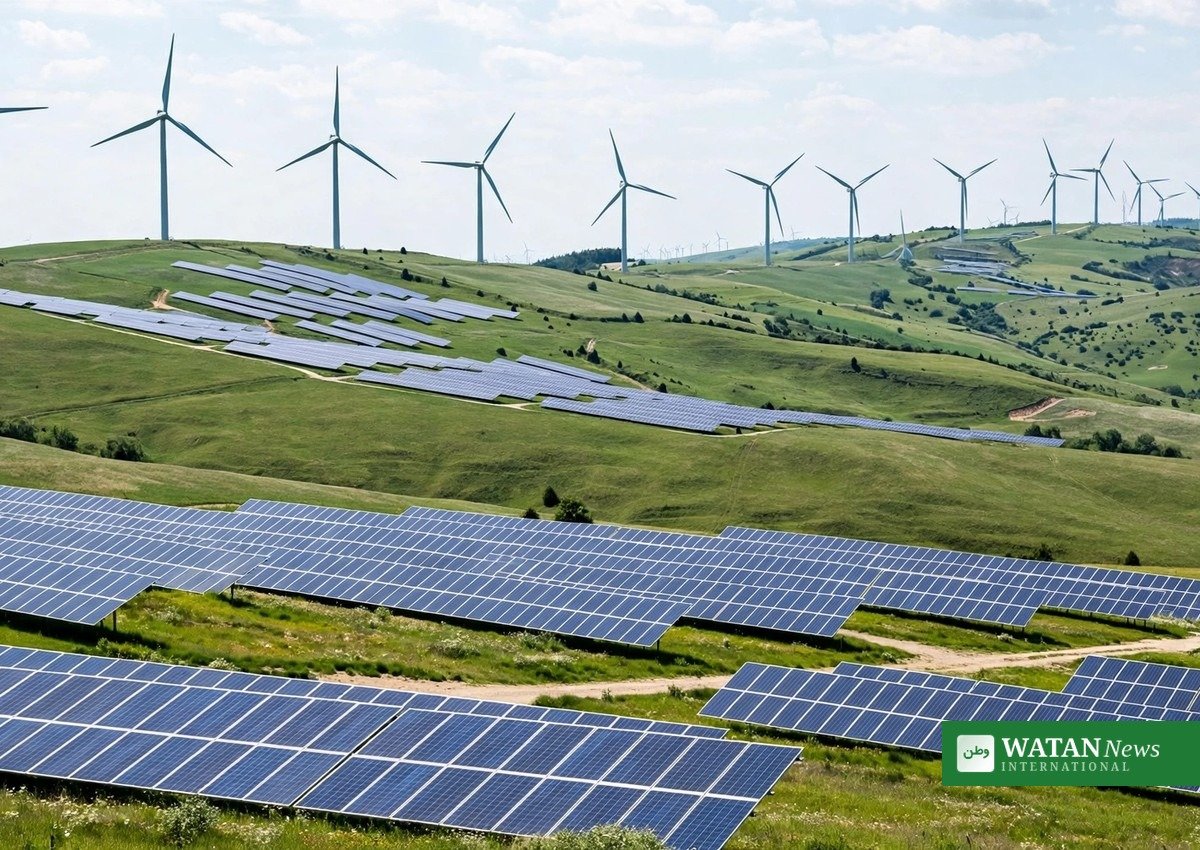
The report argues that there are more opportunities than ever to step up climate action. Since the 2015 Paris Agreement set the 1.5°C goal, renewable energy has boomed, growth in total energy supply from coal and oil has slowed compared with earlier projections, and climate policies have cut emissions in many places.
What happens without stronger climate action
If current policies continue, warming could reach 2.8°C within this century and increase thereafter, the report warns. Even if all national climate action plans, known as NDCs, are fully delivered and similar efforts continue, warming would still be limited only to 2.6°C.
These outcomes are worse than last year’s projections, according to UNEP, partly because of the United States withdrawing from the Paris Agreement and partly because of revised estimates of historical emissions. New NDCs submitted since the last emissions report have hardly made a difference, the report finds: full implementation of current pledges would deliver emission cuts of only 5 to 8 per cent by 2030 and 11 to 15 per cent by 2035.
Global emissions have risen by 0.8 per cent a year on average over the past decade, UNEP notes. Emissions in 2025 were roughly the same as in 2024, but the report says it is too early to conclude that they have peaked.
The action the report calls for
The report calls for accelerating the goals agreed at the first-ever Global Stocktake, the process held from 2021 to 2023 to assess collective progress under the Paris Agreement. Those goals include tripling renewable energy capacity and doubling the annual rate of energy efficiency improvements by 2030, shifting away from fossil fuels in energy systems, reducing non-CO2 emissions, and halting and reversing deforestation and forest degradation. Progress across most of these goals remains insufficient, UNEP says.
For the fossil-fuel transition alone, the report sets benchmarks: compared with 2025 figures, the share of coal, oil and gas in total energy supply would need to fall by at least 55, 15 and 5 per cent respectively by 2035, and by at least 75, 30 and 35 per cent by 2040.
The second Global Stocktake begins next month at COP31 in Antalya, and UNEP says it can build on the first stocktake by reaffirming priority mitigation areas, extending quantified goals to 2035 and 2040, and making existing action areas more tangible through clearer, quantified targets.
For readers following the road to Antalya, Watan News earlier reported on COP31 climate finance and the defence-spending debate in COP31 climate spending and defence.
Key facts
- Report: UNEP Emissions Gap Report 2026, The Point of Return, published 21 October 2026.
- Lowest possible overshoot: peak warming 1.7–1.8°C around mid-century, returning to 1.5°C by 2100.
- Required emission cuts vs 2025: 18% by 2030, 45% by 2035, 69% by 2040; net-zero CO2 around 2050.
- Current policies: warming of 2.8°C this century; full NDC delivery: 2.6°C.
- Next step: second Global Stocktake at COP31 in Antalya, Türkiye, in November 2026.
Conclusion
The message of the UNEP Emissions Gap Report 2026 is deliberately two-sided: the 1.5°C limit will be breached, but the size and length of that breach are still a matter of choice. The report’s benchmarks give governments heading to COP31 a measurable test — whether their new pledges close the gap toward 18 per cent cuts by 2030, or leave the world on the 2.8°C path.
Frequently asked questions
What is the UNEP Emissions Gap Report 2026?
It is the United Nations Environment Programme’s annual assessment of the gap between where global emissions are heading and where they need to be to meet the Paris Agreement goals. The 2026 edition is titled The Point of Return.
What does “overshoot” of 1.5°C mean?
Overshoot means global average temperatures temporarily rise above 1.5°C above pre-industrial levels before coming back down. UNEP says such a breach is now unavoidable, so the task is to make it as small and as short as possible.
How much must emissions fall, according to the report?
Compared with 2025 levels, global greenhouse gas emissions must fall by 18 per cent by 2030, 45 per cent by 2035 and 69 per cent by 2040, with global net-zero CO2 emissions reached around 2050.
What happens if countries only follow current policies?
Under current policies, warming could reach 2.8°C within this century and increase thereafter, according to the report. Full delivery of all current national pledges would still leave warming at 2.6°C.
Why does this report matter for COP31?
The second Global Stocktake begins at COP31 in Antalya in November 2026. UNEP says it can reaffirm priority mitigation areas and extend quantified goals to 2035 and 2040, turning the report’s benchmarks into negotiated action.
Author

usman2344913@gmail.com
Related Posts
Prabowo Accuses MSCI of Trying to Intimidate Indonesia After Market Rout
- 0
- 880 words
Indonesian President Prabowo Subianto has accused global index provider MSCI of trying to intimidate Indonesia, in his first public reaction to last...
Read out all
Iraq Closes Sheeb Border Crossing With Iran Amid Security Review
- 0
- 496 words
Iraq has closed the Sheeb border crossing with Iran until further notice, halting passengers, vehicles and commercial trucks while officials review security...
Read out all
UNEP Emissions Gap Report 2026: Verden vil overskride 1,5 grader, men dybe nedskæringer kan bringe den tilbage
- 0
- 1,047 word
Verden vil overskride 1,5-gradersgrænsen for klimaet, men dybe og hurtige emissionsnedskæringer kan stadig bringe temperaturen tilbage under grænsen inden århundredets udgang. Det...
Read out all
یو این ای پی ایمیشنز گیپ رپورٹ 2026: دنیا 1.5 ڈگری کی حد سے آگے جائے گی، مگر گہرے اقدامات واپسی ممکن بنا سکتے ہیں
دنیا 1.5 ڈگری کی موسمیاتی حد سے آگے نکل جائے گی، لیکن اخراج میں گہری اور تیز کمی درجہ حرارت کو اس...
Read out all
Italy Birth Rate Record Low Expected in 2026
- 0
- 427 words
New official figures point to an Italy birth rate record low in 2026, deepening a demographic crisis that has now run for...
Read out all
Burkina Faso Restores Death Penalty After Unanimous Parliament Vote
- 0
- 582 words
Burkina Faso’s parliament has voted unanimously to restore the Burkina Faso death penalty, bringing back capital punishment nearly a decade after the...
Read out all