- 0
- 912 words
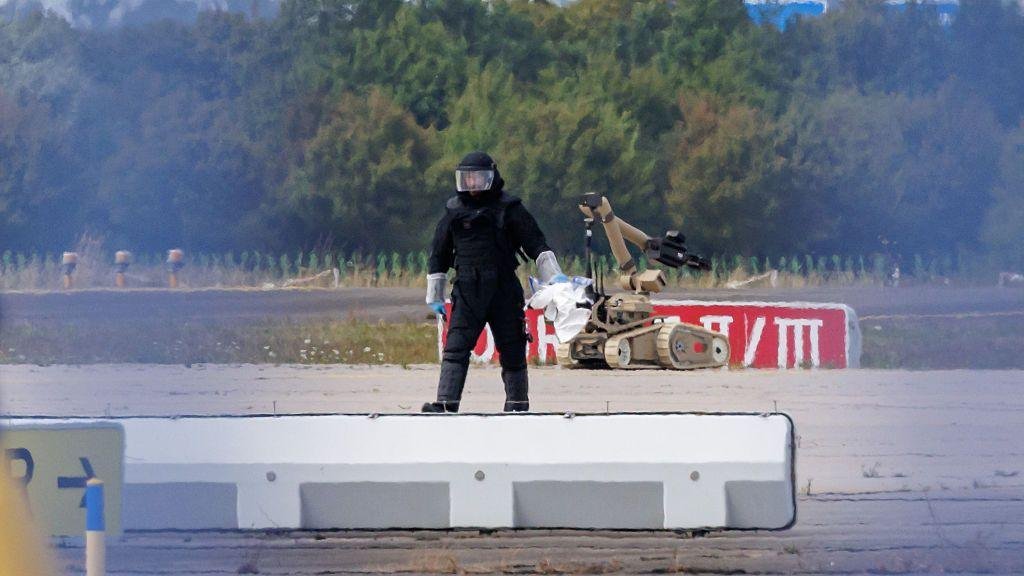
Germany has officially accused Russia of being responsible for the drone attack at Leipzig/Halle Airport last month, sparking a significant escalation in diplomatic tensions between the two nations. The attack, which occurred on August 4, involved a drone carrying an explosive device that was discovered near Ukrainian cargo planes, although it failed to explode due to a faulty detonator.
The accusation comes after an investigation into the incident, with Interior Minister Alexander Dobrindt stating that the attack followed a pattern of Russian hybrid operations in Europe. The Russian embassy in Berlin has denied the allegations, describing them as absurd.
- Germany accuses Russia of being behind the Leipzig airport drone attack
- The attack occurred on August 4 and involved a drone carrying an explosive device
- Germany has announced tighter entry controls for Russian nationals and plans to increase pressure on Moscow’s shadow fleet
Leipzig Airport Incident Details
The drone attack at Leipzig/Halle Airport was a significant incident, with the device being discovered near Ukrainian cargo planes. A second drone is believed to have collided with a cargo aircraft nearby, while a third drone was found near the airport 10 days later. The incident has raised concerns about the security of the airport, which is used by Germany’s military and NATO allies for the transport of military goods.
German Response to the Attack
In response to the attack, German Foreign Minister Johann Wadephul has announced plans to close the Russian consulate in Bonn and terminate the contract for the Russian House in Berlin. The Russian House has been accused of being used for espionage and spreading Russian propaganda. Wadephul has also announced tighter entry controls for Russian nationals and plans to increase pressure on Moscow’s shadow fleet, which is used to circumvent Western sanctions.
International Reaction to the Incident
The incident has sparked a significant international reaction, with the head of NATO, Mark Rutte, stating that the organization stands in full solidarity with Germany. The EU Commission President, Ursula von der Leyen, has also stated that the EU is united in its resolve to stand against Russian aggression and is preparing additional sanctions against Russia.
Russian Response to the Allegations
Russia has denied the allegations, with the Russian embassy in Berlin describing them as absurd. Maria Zakharova, spokesperson for Russia’s foreign ministry, has stated that Moscow will respond in a mirror-image fashion to Germany’s measures and has accused Berlin of sponsoring terrorism due to its military and economic support for Ukraine.
Future Implications of the Incident
The incident is likely to have significant implications for relations between Germany and Russia, as well as for the wider international community. The EU is preparing additional sanctions against Russia, and the incident is likely to increase tensions between Russia and the West. The incident has also raised concerns about the security of airports and the potential for future drone attacks.
Conclusion
In conclusion, the drone attack at Leipzig/Halle Airport has sparked a significant escalation in diplomatic tensions between Germany and Russia. The incident has raised concerns about the security of airports and the potential for future drone attacks, and is likely to have significant implications for relations between Germany and Russia, as well as for the wider international community. For more information on this and other news stories, visit Watan News.
FAQs
Q1: What happened at Leipzig/Halle Airport?
A1: A drone carrying an explosive device was discovered at Leipzig/Halle Airport on August 4, although it failed to explode due to a faulty detonator. A second drone is believed to have collided with a cargo aircraft nearby, while a third drone was found near the airport 10 days later.
Q2: Who has Germany accused of being behind the attack?
A2: Germany has accused Russia of being behind the drone attack at Leipzig/Halle Airport. The accusation comes after an investigation into the incident, with Interior Minister Alexander Dobrindt stating that the attack followed a pattern of Russian hybrid operations in Europe.
Q3: What has been the response to the attack from the international community?
A3: The incident has sparked a significant international reaction, with the head of NATO, Mark Rutte, stating that the organization stands in full solidarity with Germany. The EU Commission President, Ursula von der Leyen, has also stated that the EU is united in its resolve to stand against Russian aggression and is preparing additional sanctions against Russia.
Q4: What are the potential implications of the incident for relations between Germany and Russia?
A4: The incident is likely to have significant implications for relations between Germany and Russia, as well as for the wider international community. The EU is preparing additional sanctions against Russia, and the incident is likely to increase tensions between Russia and the West.
Q5: What measures has Germany announced in response to the attack?
A5: Germany has announced plans to close the Russian consulate in Bonn and terminate the contract for the Russian House in Berlin. The country has also announced tighter entry controls for Russian nationals and plans to increase pressure on Moscow’s shadow fleet, which is used to circumvent Western sanctions.
Q6: How has Russia responded to the allegations?
A6: Russia has denied the allegations, with the Russian embassy in Berlin describing them as absurd. Maria Zakharova, spokesperson for Russia’s foreign ministry, has stated that Moscow will respond in a mirror-image fashion to Germany’s measures and has accused Berlin of sponsoring terrorism due to its military and economic support for Ukraine.
Author

usmanjaved13132@gmail.com
Related Posts

Dubois Demolishes Wardley in Two Rounds to Retain WBO Heavyweight Title
- 0
- 670 words
Daniel Dubois needed barely two rounds to end his heavyweight rivalry with Fabio Wardley on Saturday night, storming to a second-round stoppage...
Read out allUNESCO Pilots Climate Action Toolkit in Santo Domingo’s Colonial City
- 0
- 1,087 word
UNESCO has launched the first pilot of its Climate Action Toolkit at the Colonial City of Santo Domingo — the first cultural...
Read out all
Two Officers Killed in Saudi AH-6i Helicopter Crash in Najran
- 0
- 536 words
Two Saudi officers were killed when a Saudi AH-6i helicopter crashed in Najran, the kingdom’s southwestern border region, on Sunday, the Saudi-led...
Read out all
Rohit Sharma Becomes Freyr Energy’s First Solar Ambassador with Nationwide ‘Solar Ho, Toh Freyr Ho!’ Campaign
- 0
- 1,041 word
Freyr Energy, India’s second-largest residential rooftop solar company, has named cricket star Rohit Sharma as its first-ever brand ambassador and launched a...
Read out all
Egypt’s Sisi Seeks Parliament Backing to Defend Saudi Arabia Against Houthi Attacks
- 0
- 462 words
CAIRO: Egyptian President Abdel Fattah al-Sisi said on Saturday that Egypt would take “any measures necessary” to defend Saudi Arabia if asked,...
Read out allOxford Climate Awards 2026: Lab Wins Top Honour as Saurya Named Climate Action Champion
- 0
- 921 words
Oxford’s climate champions took centre stage on Thursday night as the Oxford Climate Awards 2026 honoured the individuals, businesses and community groups...
Read out all