- 0
- 1,126 word
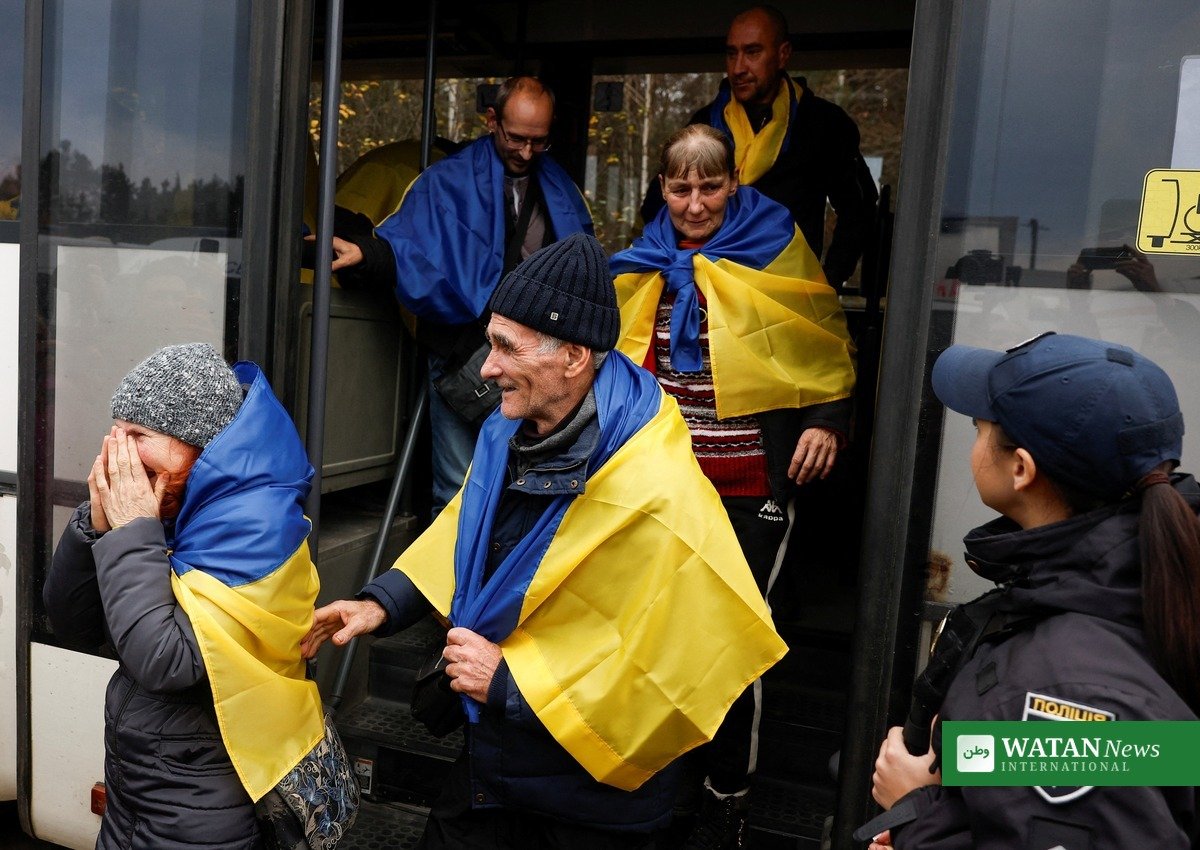
Hundreds of residents evacuated from the Russian-held town of Oleshky arrived back in Ukraine on Saturday afternoon, 31 October, ending a long and roundabout journey out of the besieged southern town and reuniting families separated for years. The Oleshky evacuees return to Ukraine completes the rare joint humanitarian operation that began on Friday under a localised ceasefire, the first of its kind between Russia and Ukraine in four years and eight months of war.
FAKTA
- What happened: Hundreds of Oleshky residents arrived back in Ukraine on Saturday afternoon, 31 October, after being evacuated from the Russian-held town.
- The journey: Evacuees travelled by bus through Crimea to Anapa in Russia, flew to Gomel in Belarus, and then travelled by bus into Ukraine.
- The ceasefire: A localised ceasefire in the Kherson region began at 3 a.m. on Tuesday, 27 October, and is expected to continue through Sunday evening.
- Who brokered it: United States First Lady Melania Trump helped negotiate the ceasefire, and Pope Leo XIV pressed both sides to allow aid and evacuations.
- How many: Ukrainian authorities have not disclosed the exact number of returnees or the border crossing used; Melania Trump said on Friday the convoy could safely evacuate more than 750 people.
- The town left behind: An estimated 1,700 to 2,000 people remained in Oleshky, down from a pre-war population of about 24,000, with reports of no electricity, gas or running water.
Reunions at the border
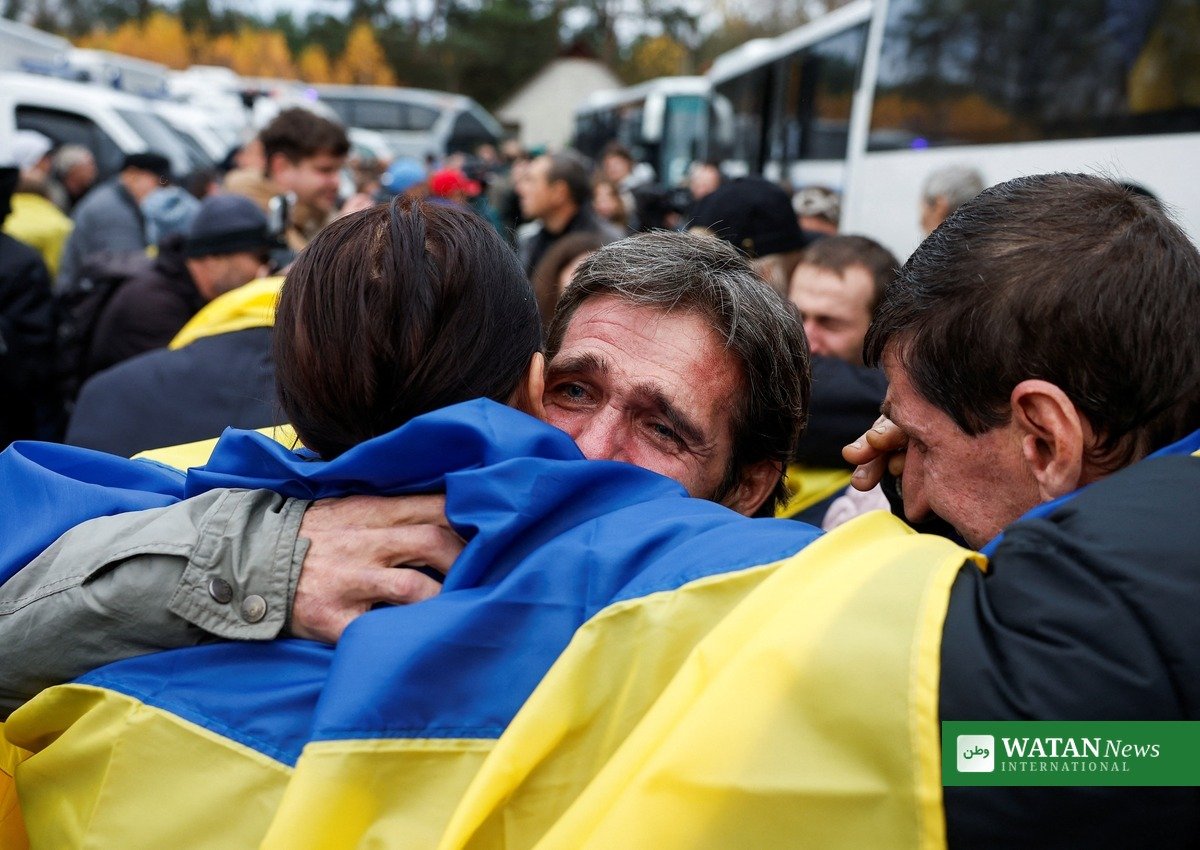
At the border, relatives waited with aid tents, coffee stands and provisions for the pets the evacuees brought with them, while volunteers from organisations including the Red Cross, Doctors Without Borders and the World Central Kitchen were also present. Residents draped in Ukrainian flags disembarked from buses and tearfully embraced loved ones they had not seen for years.
One reunion captured the scale of the separation. Dmytro, a Ukrainian soldier, had not seen his wife Larisa for 1,711 days. Larisa had stayed in Oleshky after the couple managed to get their daughter out, fearing she would be picked up at a Russian military checkpoint during filtration — the questioning Ukrainians under occupation had to undergo before being allowed to leave for Ukrainian-controlled territory. When the couple finally reunited on Saturday afternoon, both wrapped in Ukrainian flags, Dmytro kissed her over and over again, CNN reported.
Larisa, who has lost a third of her body weight under the occupation, spoke not about herself but about others still suffering. “It’s very hard. It’s not just us who are struggling — it’s hard for everyone in the country; there are so many people in the same situation as me,” she told CNN. “We’re waiting for all this to end, for peace to come, and for victory.”
Ukraine’s President Volodymyr Zelensky announced the arrival of the evacuees on Telegram, thanking Melania Trump for her help with the mediation. “And I thank everyone in the world — all journalists, all political and civic leaders, and all concerned people — who drew global attention to the situation in Oleshky and the genuine humanitarian catastrophe in the territory of Ukraine temporarily occupied by Russia. When the world pays attention, people are saved,” he said.
Oleshky evacuees return: the long journey home
The journey out of Oleshky was long and indirect. Direct evacuation across the Dnipro River into Ukrainian-controlled territory was not possible, with access routes heavily mined and littered with drone and vehicle debris. After a two-day demining operation was completed on Thursday, people who wanted to leave gathered on Friday and travelled through the occupied Crimean peninsula to Anapa in Russia’s Krasnodar region.
From Anapa, the evacuees flew to Gomel in Belarus, according to the Russian Defence Ministry and Ukrainian officials. Four planes carrying residents landed at Gomel on Saturday, Belarusian state news agency Belta and senior Ukrainian official Davyd Arakhamia said, and a convoy of buses then departed Gomel airport for the border with Ukraine. Ukraine’s human rights commissioner, Dmytro Lubinets, travelled to Oleshky to personally escort the evacuees into Ukrainian-controlled territory, becoming the first high-profile Ukrainian official to openly travel to occupied areas under Russian control since the start of the war, CNN reported.
Medical teams were waiting at the border. The director of the Chernihiv Regional Hospital, Andriy Zhydenko, told CNN that prolonged malnutrition would be a key concern, explaining that evacuees would need to be fed carefully because they had been starving for so long that consuming too much food too quickly could be dangerous. “There are people with injuries, stroke survivors, and those with limited mobility,” he said.
A town worn down by war
Oleshky, on the Dnipro River in the Kherson region, has been one of the most war-ravaged towns of the conflict. The town was hit by a major flood in 2023 after the nearby Nova Kakhovka Dam collapsed, with several hundred people reported to have died in the flooding. Ukrainian authorities reported in September that the town had run out of food and other supplies, with no access to electricity, gas, medicine and other essentials, and reports from that time said people were surviving on grass and weeds.
Some 40 per cent of Oleshky’s pre-war population of around 24,000 managed to flee to Ukrainian-controlled territory when it was still possible early in the fighting, according to the Institute for the Study of War, a US-based conflict observer. Thousands of others escaped since then, but many remained, either unable or unwilling to leave.
Another resident, Tamara, told CNN she had initially been reluctant to evacuate because of her animals, but her health had deteriorated and, without access to medicine, she felt she had no choice. “I’m sick. And there was no medicine. And as for food lately… well, we haven’t seen any meat, we haven’t seen any vegetables or fruit — they haven’t been delivered to us,” she said. “I didn’t want to spend another winter there.”
What happens next
Residents were offered a choice: travel to Ukrainian-held territory, travel to Russian-held territory, or remain in Oleshky with replenished food and medical supplies. Russia’s human rights commissioner and lead representative on the mission, Yana Lantratova, said buses also transported Oleshky residents who wanted to live in Russia, and civilians were seen on Saturday arriving at a temporary accommodation site in Simferopol, Crimea.
The local ceasefire is expected to continue through Sunday evening. Whether it becomes a model for similar local ceasefires elsewhere remains uncertain — Kremlin statements have suggested the operation could be a one-off, at least for now, Reuters reported. For the families reunited on Saturday, however, the immediate outcome was simpler: after years apart, they were back on Ukrainian soil together.
For more coverage from the region, see Watan News Europe coverage.
Author

usmanch0013@gmail.com
Related Posts
Sinirlioglu Enters Race to Lead the United Nations as Türkiye Nominates Veteran Diplomat
- 0
- 474 words
Türkiye has formally nominated Feridun Sinirlioglu, the OSCE secretary-general and former UN ambassador, for UN secretary-general, joining a race still without a...
Read out all
Drone Attack Sets Ufa Oil Refinery Ablaze as Russian Energy Sites Come Under Fire Again
- 0
- 503 words
A fire broke out at the Bashneft-Novoil refinery in Ufa after a reported drone attack, likely hitting the L-35 reforming unit, a...
Read out all
Lakers’ $12.5 Billion Sale Terms Agreed as Walter and Kushner Finalise Deal
- 0
- 646 words
Mark Walter and Josh Kushner have agreed all terms of a record $12.5 billion Los Angeles Lakers sale, with former Disney chief...
Read out all
Rooftop Solar Powers a New Era of Sustainable Homes in America
- 0
- 657 words
US small-scale solar generation has quadrupled in a decade to 92,979 gigawatt-hours, led by California — changing what a sustainable home looks...
Read out all
Masdar to Explore NZ$1 Billion Renewable Investment in New Zealand
- 0
- 629 words
Masdar has signed an agreement with Invest New Zealand to explore up to NZ$1 billion in solar, wind and battery storage projects,...
Read out all
Congo Ebola Deaths Pass 5,000 as Outbreak Becomes Second Deadliest Ever
- 0
- 820 words
Deaths in DR Congo's Ebola outbreak have passed 5,000, with 10,351 infected since May, making it the second deadliest Ebola outbreak in...
Read out all