- 0
- 458 words
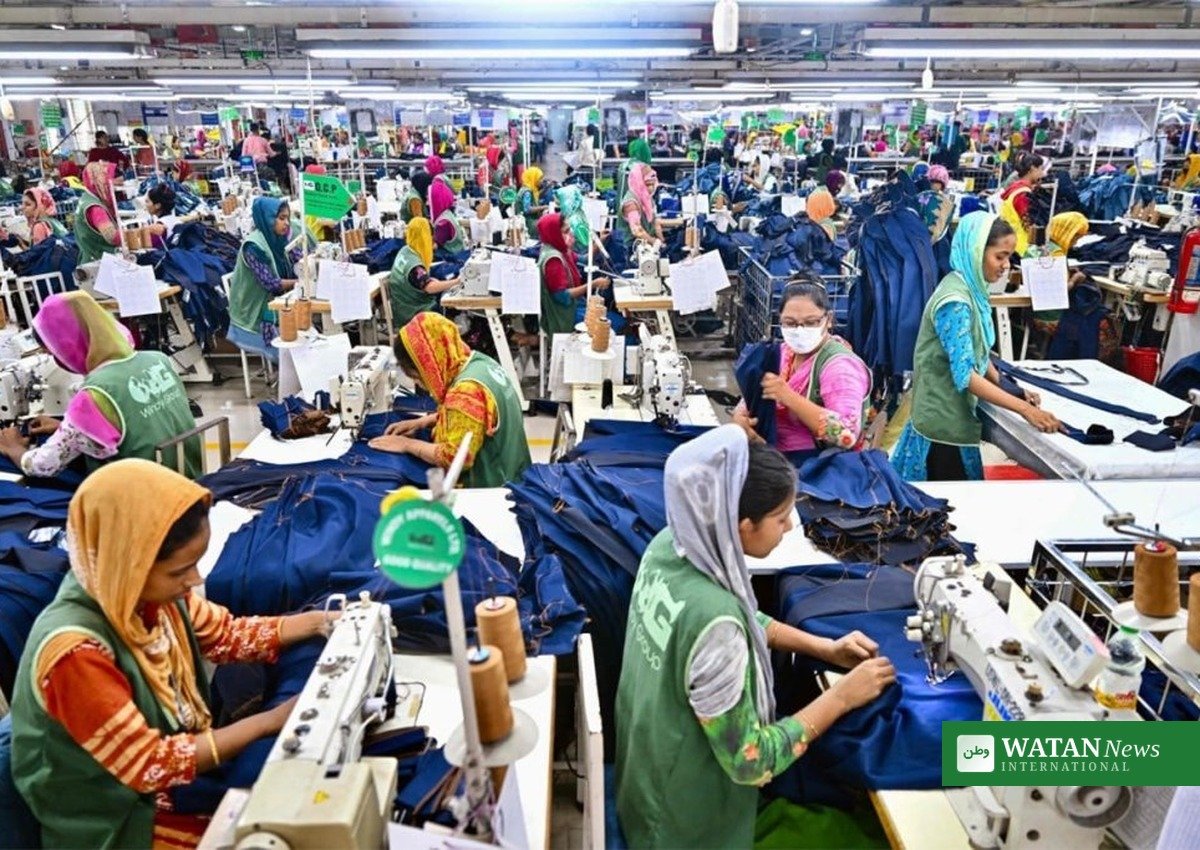
Bangladesh’s garment factories reopened on Monday after a day of widespread closures, as a wave of wage protests disrupted one of the world’s most important clothing supply chains. Manufacturers welcomed the return to work but warned that fresh unrest remains possible while workers press for a sharp rise in the minimum wage.
FAKTA
- Factories affected: 529, with nearly one million workers caught up in the disruption, according to the industry association BGMEA.
- Wage demand: a minimum monthly pay of 30,000 taka (about $243), up from the present 12,500 taka.
- Government response: a six-member minimum wage board formed on Sunday to review the demand.
- Sector weight: ready-made garments provide more than 80% of Bangladesh’s export earnings and employ about four million people.
Sunday’s disruption
The latest unrest flared on Sunday, when workers blocked roads in several industrial areas and production stopped at hundreds of plants. Police in the capital, Dhaka, used tear gas and water cannon to clear demonstrators, and security forces were deployed to keep factory areas open.
Factory owners say the stoppages put export shipments at risk and unsettled international buyers. Bangladesh is the world’s second-largest apparel exporter after China, so even a short disruption is felt quickly by brands and retailers that depend on its workshops.
Why the wage demand matters
At the heart of the dispute is the gap between pay and prices. Workers say the current minimum of 12,500 taka a month no longer covers basic household costs after a long stretch of high inflation, and they are seeking 30,000 taka instead.
Labour representatives argue that Bangladesh still has some of the lowest garment wages anywhere, and that factory owners should press foreign buyers for fairer prices if they say they cannot afford higher pay. The industry association, however, warns that a sudden jump would raise production costs at a time when energy bills are uncertain and demand in major markets is soft.
What happens next
The government moved on Sunday to set up a six-member wage board, bringing worker and employer representatives into a formal review. The step has not yet calmed the dispute, and factory leaders have urged workers to let the board do its work.
The BGMEA president, Mahmud Hasan Khan, has warned that owners could apply a ‘no work, no pay’ rule if new protests force further closures, and industry representatives were due to meet the home minister to discuss security around the plants. Economists following the dispute suggest a phased rise, better productivity and fairer buyer prices as a way to protect both workers’ living standards and the industry’s future.
For now, the machines are running again — but with the wage review still ahead, both sides know the calm may prove fragile. More international coverage is available on Watan News.
Author

usmanch0013@gmail.com
Related Posts

ADNOC and OpenAI Strike Deal to Deploy Frontier AI Across Energy Operations
- 0
- 495 words
ADNOC, G42 and OpenAI have signed a multi-year deal at ADIPEC in Abu Dhabi to deploy OpenAI's frontier AI across the energy...
Read out all
Supermarket Freezer Cyberattack Hits Shops in Seven European Countries
- 0
- 711 words
Dozens of supermarkets in seven European countries have been hit by a suspected cyber-attack that warmed their freezers to as high as...
Read out all
Russia Leaves Europe’s Anti-Torture Convention, Ending Independent Prison Monitoring
- 0
- 479 words
Russia's withdrawal from the European anti-torture convention took effect on 1 November 2026, ending nearly 30 years of independent inspections of its...
Read out all
Antonelli Becomes Youngest Formula 1 World Champion With Mexico Podium
- 0
- 661 words
Kimi Antonelli, 20, finished third at the Mexico City Grand Prix to clinch the 2026 Formula 1 title, becoming the youngest world...
Read out all
Bharat Renewable Energy Summit 2026 Opens in New Delhi
- 0
- 737 words
The Bharat Renewable Energy Summit and Expo 2026 opens in New Delhi on 2 November, bringing participants from more than 130 countries...
Read out all
2026 State of the Climate Report: Seven Vital Signs at Record Extremes
- 0
- 847 words
The 2026 State of the Climate report finds seven of 16 planetary vital signs at record extremes, with carbon dioxide above 428...
Read out all