- 0
- 1,349 word
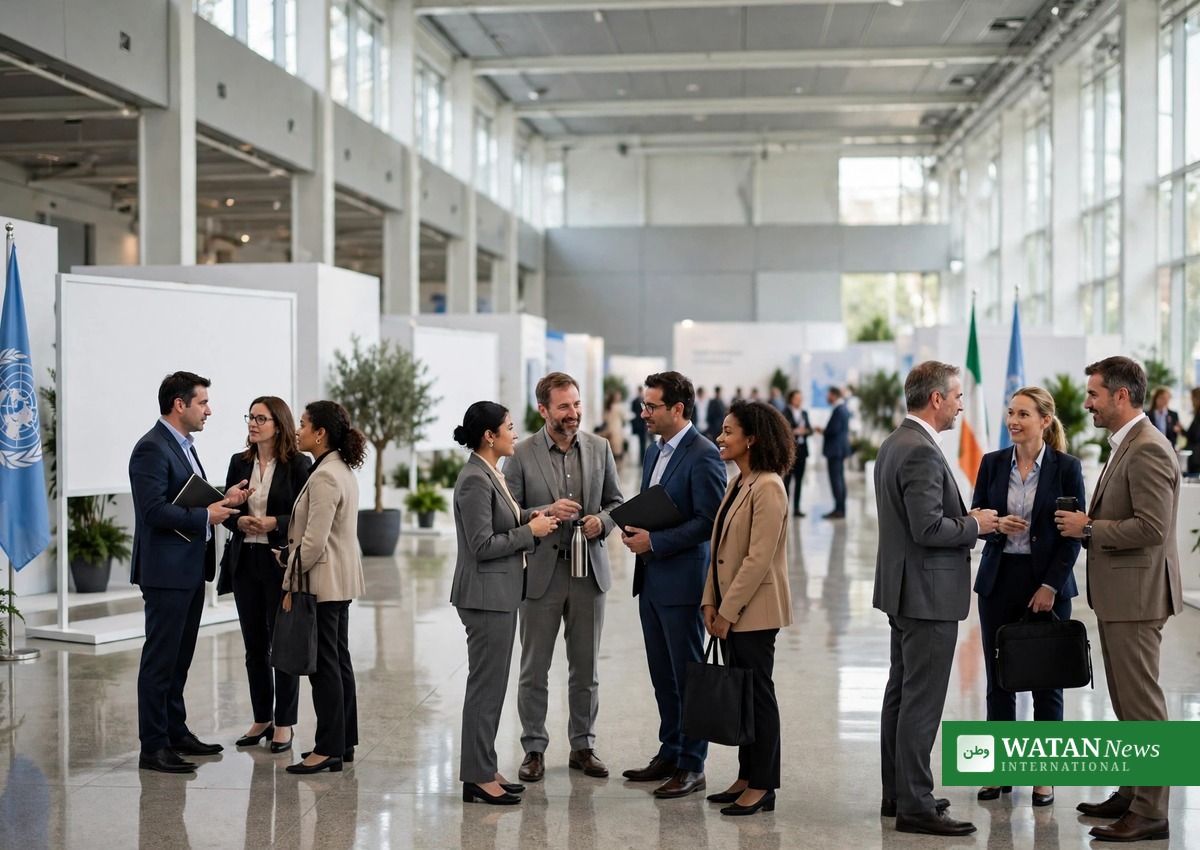
Sixteen international standards bodies, led by the International Electrotechnical Commission (IEC), the International Organization for Standardization (ISO) and UL Standards & Engagement, have opened the Standards Pavilion at COP31 in Antalya, championing International Standards as the practical tools that turn climate promises into measurable action.
A pavilion built for implementation
The Pavilion, which opened on 9 November 2026 as COP31 got under way at the Antalya Expo Center, is a dedicated space in the Blue Zone, hall D620, for the international standards community and its partners. This is the third edition of the Standards Pavilion at a COP, and its message matches the COP31 Presidency’s theme of Dialogue, Consensus, Action: the conference, which runs until 20 November, is focused on implementation and the clean energy transition.
The Pavilion aims to empower climate action by providing trusted tools that make progress measurable and accountable, to amplify impact by showing how standards drive real outcomes in policy, finance and implementation, to harmonise solutions by aligning approaches across countries, sectors and reporting systems, and to demonstrate global leadership by building alliances for a more sustainable future.
Why standards matter at COP31
Standards provide the technical foundations that help climate solutions scale safely and effectively, according to the Pavilion’s organisers. They give governments, businesses and investors globally agreed frameworks to translate commitments into action, measure progress and build trust in the results — the difference, the organisers say, between setting ambition and delivering it consistently and credibly around the world.
“COP31 is about accelerating implementation, and that requires practical tools that work across technologies, sectors and borders,” said Philippe Metzger, Secretary-General and Chief Executive Officer of the IEC. “We want to show policymakers and business leaders that many of the tools needed to deliver climate action already exist, and that using them can help turn commitments into measurable progress.”
“The challenge now is not only setting climate ambition, but delivering it consistently and credibly around the world,” said Sergio Mujica, Secretary-General of ISO. “International Standards provide globally agreed frameworks that help governments and businesses translate commitments into action, measure progress and build trust in the results. At COP31, our focus is on implementation — showing how standards can help turn global goals into practical action across countries, sectors and supply chains.”
“Advancing climate solutions requires technologies and approaches that are safe, reliable, and built on trust,” said Jeff Marootian, President and Chief Executive Officer of UL Standards & Engagement. “Standards play a critical role in that process, helping translate innovation and scientific knowledge into practical, measurable approaches that can be implemented at scale.”
The same logic connects the Pavilion to the work of the COP31 Climate High-Level Champions, who opened the conference’s Global Climate Action programme in Antalya. The Champions’ programme puts implementation, and the tools that prove it, at the centre of the summit.
What is on the programme
The Pavilion’s programme runs across the two weeks of COP31, bringing together policymakers, international organisations, business leaders and standards experts. Among the highlights:
11 November: a roundtable on building sustainable and resilient supply chains through sustainability standards, organised by the Standards and Metrology Institute for Islamic Countries (SMIIC) and the United Nations Food Systems Summit; a session on standards for battery circularity across the energy system, led by UL Standards & Engagement; and a fireside chat on the importance of standards for meeting the COP31 objectives, with the leaders of the IEC, ISO and UL Standards & Engagement.
12 November: a fireside chat on halal standards, food security and resilient food systems in the countries of the Organisation of Islamic Cooperation, led by SMIIC; and a session on advancing climate resilience in the built environment, led by UL Standards & Engagement.
13 November: a workshop on the cost of comparing companies across standards and what investors need from climate transition plans, organised by the Turkish Standards Institution (TSE) and the United Nations Sustainable Stock Exchanges Initiative; and a fireside chat on scaling high-integrity Scope 3 projects, led by Verra.
14 November: a workshop on a toolkit for better adaptation decisions, organised by ISO with the German Institute for Standardization (DIN) and the French Standardization Association (AFNOR), drawing on the Paris Statement adopted by ISO on 1 October 2026 and on ISO 14091, the standard for climate risk assessment; and a children, youth and young professionals meetup co-hosted by ISO, the World Meteorological Organization, the United Nations Institute for Training and Research and the International Trade Centre.
16 November: a workshop on closing the policy-to-practice gap in the energy transition, led by ISO; and a fireside chat on enabling credible net-zero implementation through International Standards and the BRIDGE initiative, organised by TSE, drawing on the ISO 14064 family of standards for greenhouse gas quantification, reporting and verification.
Who is behind the Pavilion
The Pavilion is initiated by the IEC, ISO and UL Standards & Engagement, and brings together 16 standards bodies, international organisations, United Nations agencies and private sector coalitions. Among the partners and supporters listed by the Pavilion are the Organisation for Economic Co-operation and Development, the United Nations Conference on Trade and Development, the United Nations Development Programme, the United Nations Economic Commission for Europe, the United Nations Environment Programme Finance Initiative, the United Nations Food Systems Summit and the United Nations Industrial Development Organization.
Its sessions also involve the International Code Council, ASTM International, the World Trade Organization, the Forest Stewardship Council, the Roundtable on Sustainable Palm Oil, the Programme for the Endorsement of Forest Certification, the Global Reporting Initiative, the IFRS Foundation and the Science Based Targets initiative — a breadth the organisers present as the point: no single country, sector or reporting system can deliver climate implementation alone, and shared standards are what let solutions cross borders.
FAKTA
- What: the COP31 Standards Pavilion, the third edition of the Standards Pavilion at a COP.
- Where: Blue Zone, hall D620, Antalya Expo Center, Antalya, Türkiye.
- When: 9–20 November 2026, for the duration of COP31.
- Who: 16 standards bodies, international organisations, UN agencies and private sector coalitions, led by IEC, ISO and UL Standards & Engagement.
- Goal: to position International Standards at the heart of climate implementation, making progress measurable, accountable and verified.
- Programme highlights: battery circularity and supply chains on 11 November; food security and resilient buildings on 12 November; transition plans and Scope 3 integrity on 13 November; adaptation tools and a youth meetup on 14 November; energy implementation and credible net-zero on 16 November.
Frequently asked questions
What is the Standards Pavilion at COP31?
It is a dedicated space in the Blue Zone of COP31 in Antalya where the international standards community and its partners show how International Standards can turn climate ambition into credible, practical action. It is the third edition of the Pavilion at a COP.
Why do climate standards matter?
Standards are globally agreed frameworks for measuring, reporting and verifying climate action. They help governments and businesses translate commitments into action, compare results across countries and supply chains, and build trust that reported progress is real — which is why COP31, a conference focused on implementation, has given them a central stage.
Who runs the Pavilion?
It is initiated by three organisations — the International Electrotechnical Commission (IEC), the International Organization for Standardization (ISO) and UL Standards & Engagement — working with 13 other international partners, including United Nations agencies and bodies such as the OECD, UNCTAD, UNDP, UNECE, UNEP Finance Initiative, the UN Food Systems Summit and UNIDO.
What happens there?
Across 9–20 November the Pavilion hosts roundtables, fireside chats, workshops and networking sessions on battery circularity, resilient supply chains, food security, climate-resilient buildings, corporate transition plans, Scope 3 integrity, adaptation tools, energy implementation and credible net-zero reporting.
How does this help COP31’s implementation goal?
COP31’s Presidency has made implementation its central theme. Standards supply the practical tools — for example ISO 14091 for climate risk assessment and the ISO 14064 family for greenhouse gas accounting — that let countries and companies prove progress, unlock investment and scale solutions across borders.
Conclusion
As COP31 moves from negotiation to delivery, the Standards Pavilion makes a quiet but far-reaching claim: much of the machinery of implementation already exists. Sixteen global bodies are in Antalya to champion it — and to show that the road from climate promises to verified progress runs through shared, trusted standards.
Author

usmanch0013@gmail.com
Related Posts
COP31 omsætter løfter til handling: Tyrkiets klimaaftale på 1,6 mia. dollar med AIIB og den grønne industrialiseringskompakt
- 0
- 1,392 word
Tyrkiet, vært for COP31 i Antalya, underskrev den 12. november en rekordstor klimapolitisk aftale på 1,6 mia. dollar med Den Asiatiske Infrastrukturinvesteringsbank,...
Read out all
کاپ31 میں عملی اقدامات: ترکیہ کا 1.6 ارب ڈالر کا موسمیاتی معاہدہ اور گرین انڈسٹریلائزیشن کمپیکٹ
انطالیہ میں کاپ31 کے میزبان ترکیہ نے 12 نومبر کو ایشیائی انفراسٹرکچر انویسٹمنٹ بینک سے 1.6 ارب ڈالر کا ریکارڈ موسمیاتی پالیسی...
Read out all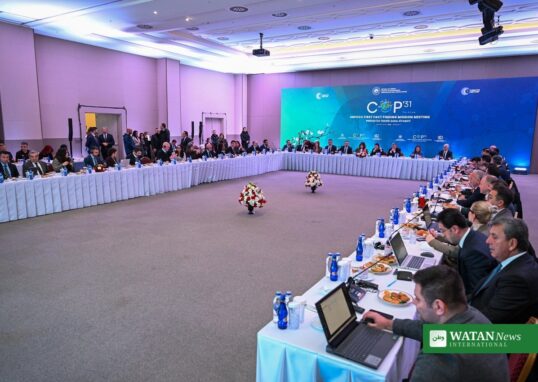
COP31 Turns Pledges into Action: Türkiye’s $1.6bn AIIB Climate Deal and Green Industrialisation Compact
- 0
- 1,388 word
Türkiye, host of COP31 in Antalya, signed a record $1.6 billion climate policy deal with the Asian Infrastructure Investment Bank on 12...
Read out all
Kerry til COP31: USA vender tilbage til klimakampen, mens køreplan for fossile brændstoffer tager form
- 0
- 1,767 word
USA's tidligere klimasærudsending John Kerry sagde til COP31 i Antalya, at USA vil vende tilbage til klimakampen, da Brasilien fremlagde en køreplan...
Read out all
کاپ31 میں جان کیری کا اعلان: امریکہ موسمیاتی جدوجہد میں واپس آئے گا
سابق امریکی موسمیاتی ایلچی جان کیری نے انٹالیا میں کاپ31 سے کہا کہ امریکہ موسمیاتی جدوجہد میں قیادت کے کردار میں واپس...
Read out all
Kerry Tells COP31 the US Will Return as Fossil-Fuel Roadmap Takes Centre Stage
- 0
- 1,662 word
Former US climate envoy John Kerry told COP31 in Antalya the United States will return to climate leadership, as Brazil presented a...
Read out all