- 0
- 480 words
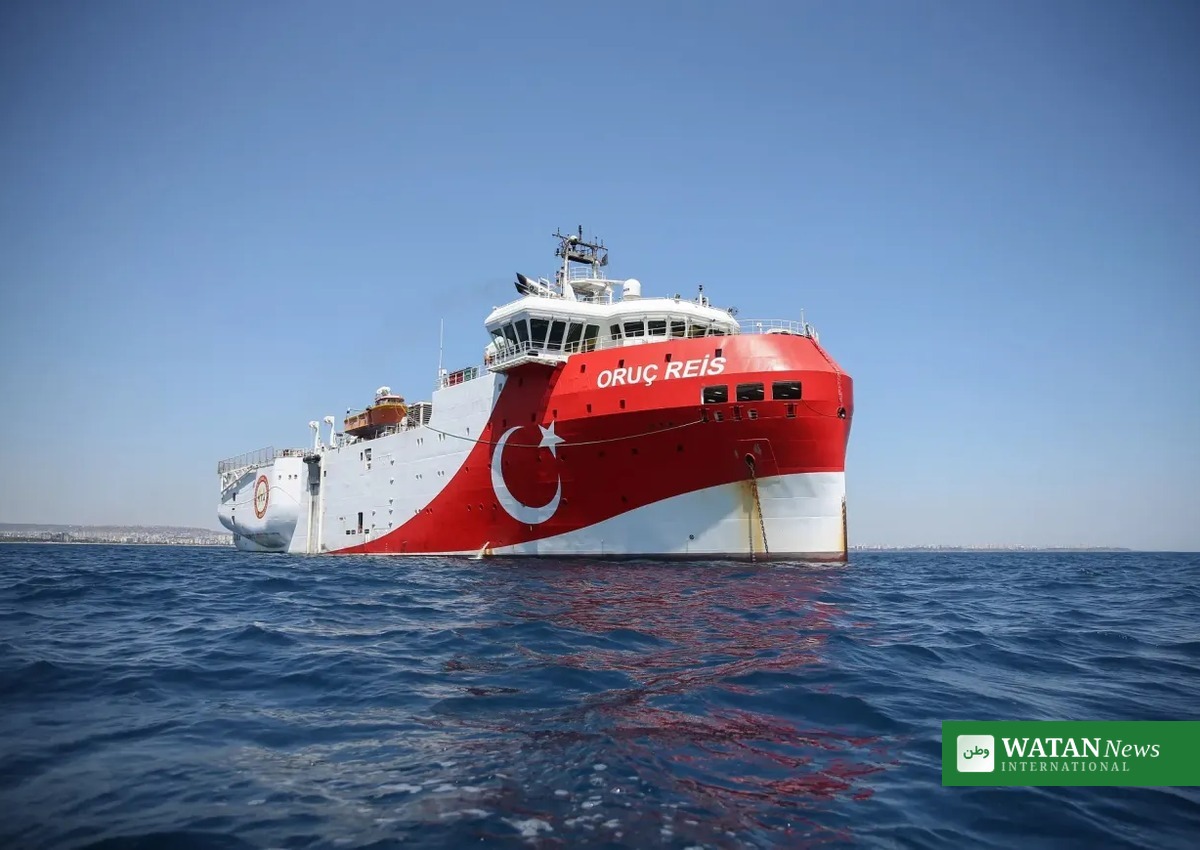
Pakistan and Türkiye have opened a new chapter in their energy partnership, as Türkiye’s seismic research vessel Oruç Reis arrived at Karachi Port on Friday to begin surveying Pakistan’s offshore waters for oil and gas.
The 87-metre ship was welcomed by Turkish Energy Minister Alparslan Bayraktar, Pakistan’s Deputy Prime Minister and Foreign Minister Ishaq Dar, and Petroleum Minister Ali Pervaiz Malik. It will use sound waves to map rock formations beneath the seabed, helping experts judge where future drilling might be worthwhile.
FAKTA
- Vessel: Oruç Reis, an 87-metre Turkish seismic research ship
- Arrival: Karachi Port, Friday 20 November 2026
- Survey areas: Indus and Makran offshore basins in the Arabian Sea
- Work planned: Three-dimensional survey over 670 square kilometres; two-dimensional survey along 2,353 kilometres of lines
- Next step: Drilling targeted for 2027 if the survey results justify it
- Deals signed: Mineral and technical-cooperation agreements in Balochistan
Surveys to map the seabed in Pakistan Türkiye offshore energy push
The first phase will cover the Indus-C block off Karachi, gathering three-dimensional seismic data across about 670 square kilometres over roughly 50 days. The ship will then return to Karachi before moving to the Makran blocks for a two-dimensional survey along some 2,353 kilometres of lines, expected to take around 25 days. Turkish officials estimate the full programme could take five to six months.
Bayraktar said the mission marked a new phase in energy cooperation, adding that drilling could begin in 2027 in areas the survey identifies as promising. Dar said Pakistani geologists and engineers would work alongside their Turkish counterparts, with universities from both countries also cooperating on marine geology and offshore engineering.
Officials stressed that a seismic survey alone cannot prove commercially viable oil or gas exists. Its purpose is to map underground structures and point to the locations most worth testing by exploratory drilling.
Mineral deals signed alongside the survey
Pakistan’s Mineral Development Corporation and Türkiye’s MTA International agreed to develop antimony deposits in Pishin, Balochistan, while Mari Energies and MTA IC signed a joint venture to explore copper, gold and other minerals in Chagai, Balochistan.
Pakistan’s Geological Survey also signed a three-way memorandum with MTA and MTA IC covering technical exchanges and stronger capabilities in mineral development. Dar said both countries should turn their longstanding friendship into practical economic projects and invited Turkish investors to explore opportunities in Pakistan, promising government support.
Offshore search resumes after two decades
The mission revives Pakistan’s offshore exploration after a pause of nearly twenty years. The government has awarded 23 offshore blocks covering about 53,500 square kilometres, with initial commitments of around 80 million dollars. Investment could reach 750 million to one billion dollars if the programme advances to drilling.
For Türkiye, it is the vessel’s second overseas assignment after a survey off Somalia, as its state energy company expands abroad through partnerships and joint ventures. More international energy coverage is available on Watan News.
Author

usmanch0013@gmail.com
Related Posts
COP31 Final Day: $24.4 Billion in Climate Action Pledges as the Deal Stays Unfinished
- 0
- 1,309 word
As COP31 reaches its scheduled final day in Antalya, the action outside the negotiating rooms already totals $24.42 billion in announced climate...
Read out all
Bukele Registers for Third Term as El Salvador President
- 0
- 699 words
El Salvador's President Nayib Bukele has officially registered to seek a third consecutive term in February's elections, after constitutional changes removed presidential...
Read out all
Türkiye’s 300 Youth Climate Envoys Carry a Generation’s Demands to COP31’s Final Day
- 0
- 1,576 word
More than 300 youth climate envoys from 209 universities across Türkiye gathered at COP31 in Antalya, carrying young people's demands into the...
Read out all
Nepal PM Balendra Shah to Visit India for First Bilateral Trip, Meet Modi
- 0
- 478 words
Nepal Prime Minister Balendra Shah will visit India on November 22-23 for his first bilateral trip abroad, holding talks with Prime Minister...
Read out all
Russia Launches Massive Kyiv Bridges Attack, Killing Five
- 0
- 768 words
Russia launched one of the largest air attacks of the war overnight, hitting three bridges across the Dnipro in Kyiv and killing...
Read out all
COP31 Climate Champions Close the Action Agenda: “Science Calls, the Action Agenda Delivers”
- 0
- 1,490 word
COP31's Climate High-Level Champions closed the Global Climate Action Agenda in Antalya on Thursday, reporting on delivery across electrification, cities and nature...
Read out all