
- 0
- 1,164 word
SHENZHEN, China — The leaders of the United States, China and Russia met face to face for the first time on Thursday, 19 November 2026, and issued a joint four-point peace declaration, in a summit that brought the world’s three largest nuclear powers to the same table for the first time. US President Donald Trump, Chinese President Xi Jinping and Russian President Vladimir Putin gathered at Kylin Villa in Shenzhen, on the sidelines of the Asia-Pacific Economic Cooperation (APEC) summit, for talks that lasted less than two hours.
Read this story on Watan News: Trump, Xi and Putin Hold First Three-Way Summit in Shenzhen
FAKTA
- When: Thursday, 19 November 2026, on the sidelines of the APEC summit in Shenzhen, China.
- Who: US President Donald Trump, Chinese President Xi Jinping and Russian President Vladimir Putin.
- Where: Kylin Villa, Shenzhen; the meeting lasted less than two hours.
- Outcome: A four-point joint declaration on nuclear risk, United Nations reform, energy supplies and immunity for state officials.
- Not covered: The declaration made no mention of the wars in Ukraine or Iran.
- First: The first time the leaders of the three largest nuclear powers have sat down together.
A First Meeting of the Three Nuclear Powers
The meeting was the first trilateral sit-down among the three leaders. Trump had arrived in China for the APEC leaders’ summit, where he held separate meetings with Xi and with Putin before the three gathered together. The three countries control the world’s largest nuclear arsenals, which gave the encounter a weight that went beyond its short length.
Trump described the meeting in glowing terms afterwards. Speaking to NBC News, he rated it a 12 on a scale of zero to 10. He also told Reuters by telephone as he flew back to Washington that an agreement to limit nuclear weapons would be hard to achieve, but that he would keep working on it.
On Friday, Trump said he and Putin had held very good talks on Ukraine during the trip, and that there was a real chance of getting a deal done, while adding that he did not want to discuss security guarantees for Ukraine without an agreement in place.
What the Four-Point Declaration Says
The joint declaration, released by all three governments, rested on four commitments. The text reaffirmed that a nuclear war cannot be won and must never be fought, and it set out shared positions on reforming the United Nations, stabilising energy supplies and the immunity of state officials before international courts.
| Point | What the declaration says |
|---|---|
| 1. Nuclear risk | A nuclear war cannot be won and must never be fought. |
| 2. United Nations reform | The UN should be reformed with a focus on international security. |
| 3. Energy supplies | Energy flows should be stabilised, including supplies of refined petroleum products. |
| 4. Immunity of officials | State officials should be immune from prosecution, opposing what the leaders called jurisdiction abuse by the International Criminal Court. |
The declaration was described by the White House as a declaration toward peace. It was issued as a five-paragraph text after a meeting of under two hours.
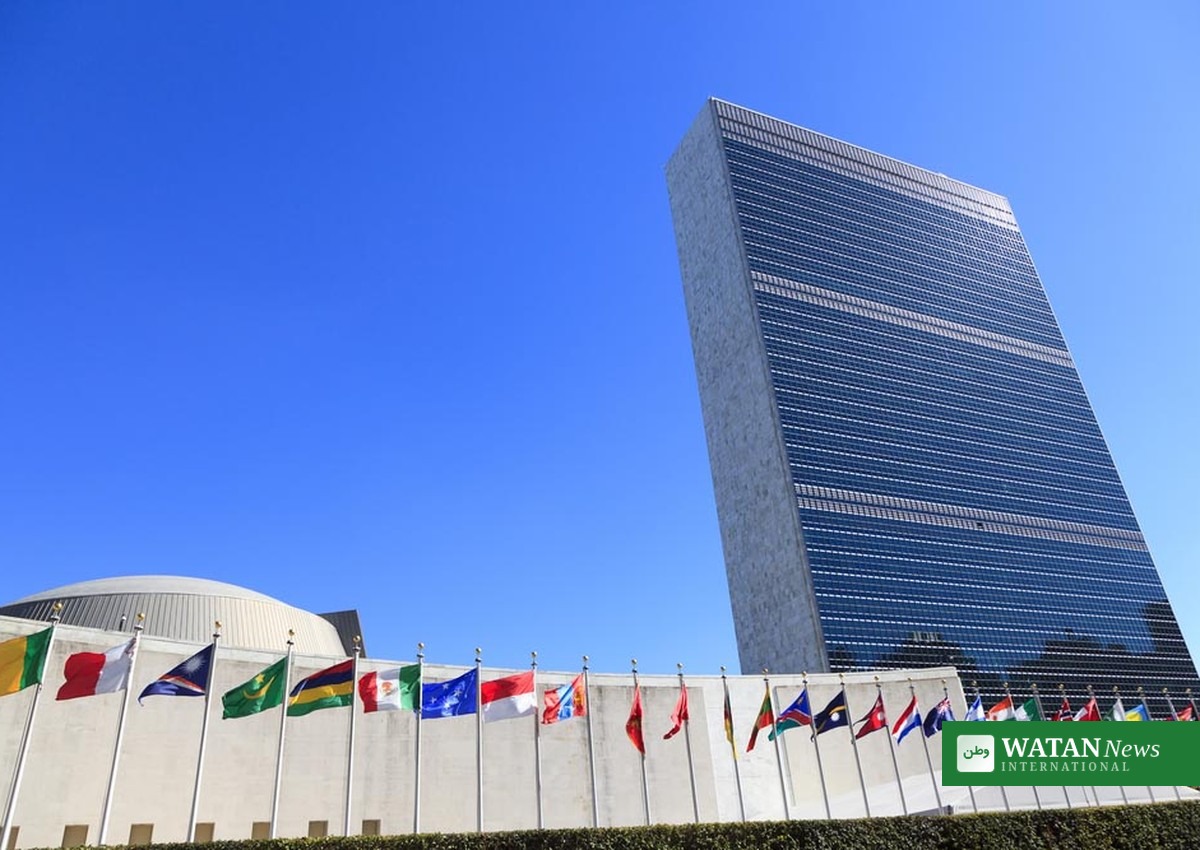
The declaration calls for reform of the United Nations and for immunity for state officials from international prosecution.
No Mention of Ukraine or Iran
Notably, the declaration said nothing about the war in Ukraine or the war with Iran, the two conflicts that dominate the three leaders’ agendas. Trump arrived at his meeting with Xi ready to talk about ending the war in Ukraine, raising it almost immediately and saying he and Xi could work together to end the fighting. Xi’s opening remarks made no mention of Ukraine.
Analysts noted the gap between the summit’s symbolism and its substance. Christopher Preble, a senior fellow at the Stimson Center think tank in Washington, said it was hard to see any substantive progress made on any major issue, even though Trump got the pageantry he values. The leaders announced no plans for arms control talks, and showed no sign of advances on Iran, Ukraine, Taiwan, trade or artificial intelligence.
Reactions at Home and Abroad
European leaders reacted with unease. Ukraine and the European governments were not at the table, and European allies warned that no deal on Ukraine should be cut without them. On the same day, Ukraine’s European allies met in Berlin and said Europe had a united position for negotiations with Russia.
The Yalta comparison
Putin defended comparisons between the Shenzhen meeting and the 1945 Yalta Conference, denying that either event aimed to carve the world into spheres of influence. He said Yalta had simply acknowledged the realities that emerged after the Second World War. Ukraine’s foreign minister, Andrii Sybiha, mocked the comparison, writing that Shenzhen was not the Yalta of Putin’s dreams.
What comes next
The White House said Trump would meet with anyone in order to advance his country’s interests. The next meeting that could bring the three leaders together would be the G20 summit in Miami on 14 December 2026. Whether the Shenzhen declaration leads to real negotiations on nuclear arms, or remains a symbolic statement, is still to be seen.
Related Articles
- Trump Heads to Asia for ASEAN and APEC Summits and First-Ever Meeting with Xi and Putin
- Europe Ready to Enter Ukraine Peace Talks, Leaders Say After Berlin Meeting
- Hakeem Jeffries Wins House Speaker Nomination, Set to Make History
Frequently Asked Questions
When did Trump, Xi and Putin meet in Shenzhen?
The three leaders met on Thursday, 19 November 2026, on the sidelines of the APEC summit in Shenzhen, China. The meeting lasted less than two hours.
What did the peace declaration say?
The four-point declaration reaffirmed that a nuclear war cannot be won and must never be fought, and covered United Nations reform, stabilising energy supplies and immunity for state officials from International Criminal Court jurisdiction.
Did the declaration mention Ukraine or Iran?
No. The text made no mention of the war in Ukraine or the war with Iran, even though Trump raised Ukraine directly with Xi and Putin.
Why is the summit described as historic?
It was the first time the leaders of the three largest nuclear powers have sat down together, and the first three-way summit of its kind between the United States, China and Russia.
What did analysts say about the outcome?
Analysts said the summit delivered symbolism rather than substance, with no arms control talks announced and no progress on Ukraine, Iran, Taiwan, trade or artificial intelligence.
When could the three leaders meet again?
The next meeting that could bring them together would be the G20 summit in Miami on 14 December 2026.
Conclusion
The Shenzhen summit was a striking image: the leaders of the three largest nuclear powers sitting together for the first time, issuing a declaration that a nuclear war must never be fought. Yet the text left the hardest questions untouched, saying nothing about Ukraine or Iran and promising no negotiations. Whether the meeting becomes a step toward real arms control or remains a moment of pageantry will be decided by what the three governments do next.
Author

usmanch0013@gmail.com
Related Posts
US Stocks Fall for a Sixth Straight Session as Nikkei Tumbles 4.8%
- 0
- 795 words
US stocks fell sharply on 19 November 2026, with the S&P 500 down 2.02% for a sixth straight loss, and the sell-off...
Read out all
US New Home Sales Fall 11.7% as Builder Confidence Hits a 14-Year Low
- 0
- 1,030 word
US new home sales fell 11.7% in October 2026 and builder confidence dropped to its lowest level since April 2012, as mortgage...
Read out all
New York City Bans Horse-Drawn Carriages, Ending a 160-Year Tradition
- 0
- 963 words
Mayor Zohran Mamdani signed Romanch's Law on 19 November 2026, phasing out New York's horse-drawn carriages by June 2028 and ending a...
Read out all
Gap Studio Unveils Winter 2026 Capsule Designed by Zac Posen
- 0
- 755 words
Gap Studio has unveiled its 12-piece Winter 2026 capsule, designed by creative director Zac Posen, alongside a week of major fashion launches...
Read out all
Anthropic Shares Close 17% Above $83 IPO Price in Record Nasdaq Debut
- 0
- 792 words
Anthropic, the maker of the Claude chatbot, closed at $97.17 on its first day of Nasdaq trading on 19 November 2026, 17%...
Read out all
Iraqi Forces Enter Kataib Hezbollah Stronghold of Jurf al-Sakhar Under Deal
- 0
- 1,096 word
Iraqi security forces entered Jurf al-Sakhar on Friday under a compromise deal, taking up positions in the Kataib Hezbollah stronghold south of...
Read out all