- 0
- 1,076 word
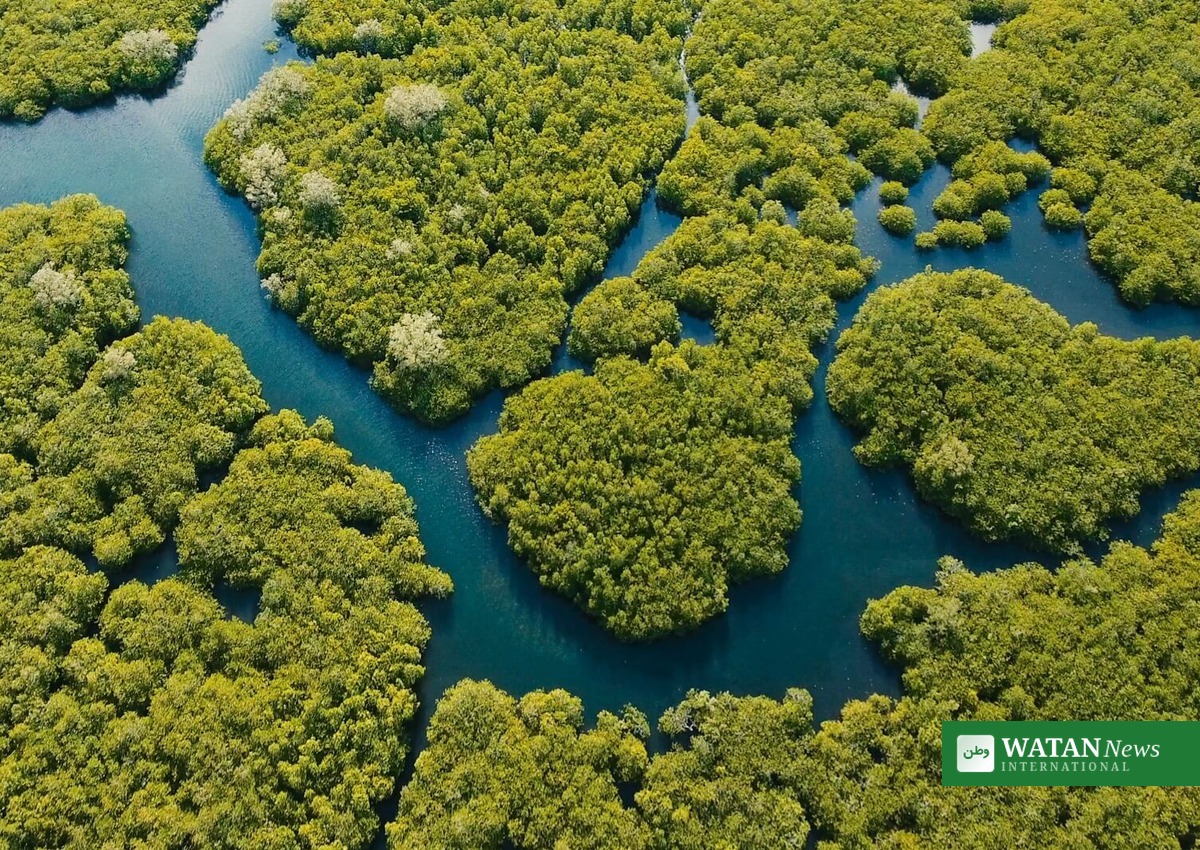
After decades of steady decline, the world’s mangrove forests are growing again. Satellite maps covering nearly 40 years show mangroves have gained almost 2,000 square kilometres since 2010, reversing a long trend of loss, according to research published in the journal Science and highlighted by NASA on 13 November.
FAKTA
- What changed: Mangrove forests lost nearly 3,000 square kilometres between 1984 and 2010, then gained nearly 2,000 square kilometres after 2010.
- The evidence: Landsat satellite images from 1984 to 2023, analysed by researchers led by Tulane University; the study was published in Science.
- Where: Growth is led by Asia, Australia and South America; losses still outweigh gains in West and Central Africa.
- Why it matters: Mangrove ecosystems store up to four times as much carbon as taller inland tropical forests and shield coasts from erosion and storm surges.
- The warning: Researchers say the rebound is no reason for complacency — protection and restoration must continue.
What the satellites found
Scientists have mapped mangrove forests from space since the 1970s, when the first Landsat satellite launched. For decades, the story those maps told was one of loss. The new study, led by environmental scientist Zhen Zhang of Tulane University, is the first to map the world’s mangroves across such a long period — nearly 40 years of Landsat imagery, from 1984 to 2023.
The numbers mark a clear turn. Between 1984 and 2010, the world lost nearly 3,000 square kilometres of mangroves — about 1,200 square miles. After 2010, the trend reversed: mangroves gained nearly 2,000 square kilometres, about 770 square miles. About two-thirds of the expansion came from mangroves colonising new ground, and the other third from restoration and regrowth in degraded areas, Zhang said.
The forests are not only spreading — they are getting healthier. Many of today’s mangrove forests have denser, more closed canopies than they did in 2010, a sign of less degraded forest, particularly in South America.
Where the comeback is strongest
The rebound is led by Asia, Australia and South America. One of the most striking reversals is in Myanmar, in Southeast Asia. The country lost mangroves rapidly in the 1980s and 1990s as agriculture, aquaculture and firewood harvesting spread along its coasts — but the trend turned around 2010. The researchers link the change to greater awareness and restoration after the devastating Indian Ocean tsunami of 2004, stronger legal protections for forests, and high rates of sedimentation that opened up new mudflats for young mangroves to colonise.
The figures for Myanmar show how deep the loss was — and how real the recovery is. The country lost 28.6 percent of its mangrove area between the 1980s and 2010. Since then, its mangrove area has grown by about 10 percent. In Palaw Township, in the Myeik District, satellite images show both the regeneration of degraded forest and new trees spreading into abandoned rice fields, while people on nearby Pyin Bukyi Island have experimented with conservation projects and tree planting to support the mangroves.
Elsewhere, nature has done much of the work. Around the mouth of the Amazon River and in northern Australia, sediment carried by rivers has built new mudflats that mangroves have colonised, driving steady increases since the 1990s. At the northern and southern edges of their range — including the south-eastern United States — warmer temperatures and fewer freezes have let mangroves push into areas that were previously too cold.
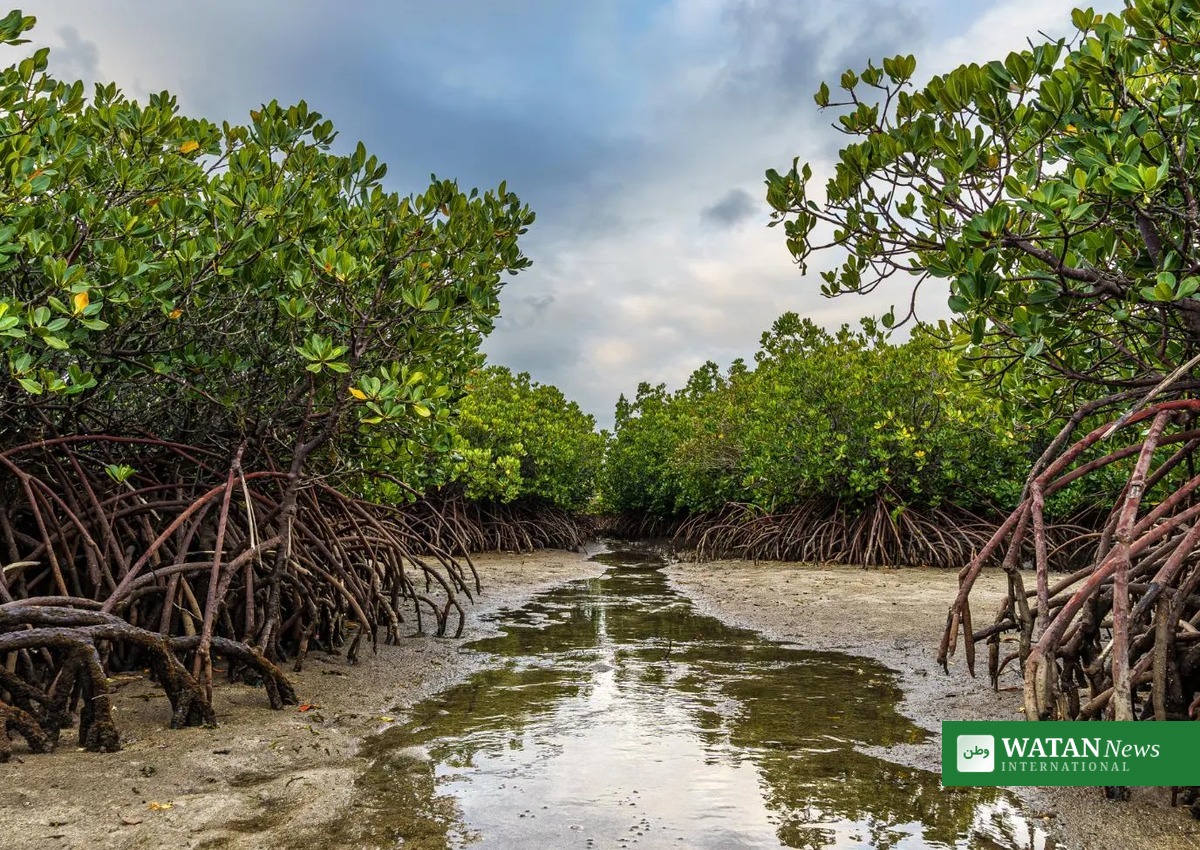
Mangrove trees with exposed prop roots at low tide. Their tangled roots hold shorelines together, shelter young fish and store carbon in the mud below.
Why mangroves matter
Mangrove trees are relatively small — averaging about 13 metres tall — but they punch far above their height. Mangrove ecosystems store up to four times as much carbon as taller inland tropical forests, locking it away in waterlogged mud where it decays only very slowly. Their stilt-like roots hold shorelines in place against erosion, soften storm surges, and provide nursery grounds for fish, shrimp, crabs and other marine life.
That is why restoration has become a central plank of forest climate policy — from Indonesia, which told COP31 that planting trees alone is not enough and that degraded forests must be restored, to the ASEAN leaders’ plan to grow one billion trees across Southeast Asia. Read our coverage of Indonesia’s call for restoration beyond planting and ASEAN’s one billion trees plan.
The losses have not stopped everywhere
The global picture is hopeful, but it is not uniform. Substantial mangrove losses in the Niger Delta have reduced the total mangrove area in West and Central Africa since 2010. North America and southern Africa have seen widespread degradation after tropical cyclones damaged broad areas of mangrove.
“The global successes we’ve seen with mangroves during the past decade should not be seen as grounds for complacency,” Zhang cautioned. “This underscores that conservation and slowing deforestation can lead to huge positive impacts when coupled with natural expansion and regeneration.”
The lesson reaches beyond mangroves. The draft COP31 cover decision kept the goal of halting and reversing deforestation by 2030 — and the satellite record now shows that where protection holds and pressure eases, forests can come back. The recovery is real, but it depends on the protection continuing.
Frequently asked questions
What are mangrove forests?
Mangroves are coastal forests that grow in salty water on tropical shorelines. Their tangled, stilt-like roots anchor them in tidal mud, protect coasts from erosion and storm surges, and shelter young fish, shrimp and crabs.
How much mangrove forest has the world gained?
Nearly 2,000 square kilometres since 2010, after losing nearly 3,000 square kilometres between 1984 and 2010, according to Landsat satellite data analysed in the study published in Science.
What caused the rebound?
About two-thirds of the gain came from mangroves colonising new areas, such as fresh mudflats, and one-third from restoration and regrowth. Stronger legal protection, restoration work after the 2004 Indian Ocean tsunami and natural sedimentation all played a part.
Why do mangroves matter for the climate?
They store up to four times as much carbon as taller inland tropical forests, holding it in waterlogged mud. They also protect coastal communities from erosion and storm surges.
Is the recovery secure?
No. West and Central Africa are still losing mangroves, and cyclones have degraded forests in North America and southern Africa. The study’s authors warn that the gains depend on conservation continuing — they are not a reason for complacency.
For a forest that spent decades shrinking, the turn is remarkable: the world’s mangroves are growing again, and the satellite record shows that protection, restoration and nature’s own powers of recovery can reverse even a long decline. The task now is to keep it that way.
Author

usmanch0013@gmail.com
Related Posts

Houthis Attack Aramco’s Jazan Refinery, Saudi Coalition Says
- 0
- 628 words
Yemen's Houthis attacked Saudi Aramco's Jazan refinery on Thursday, the Saudi-led coalition said, a day after the group claimed a strike on...
Read out all
De fleste regeringer mangler en strategi for klimainformation, viser første globale kortlægning
- 0
- 1,455 word
Forum on Information and Democracy’s første globale kortlægning af 23 lande og EU finder, at de fleste regeringer ikke har nogen selvstændig...
Read out all
پہلی عالمی جانچ میں انکشاف: اکثر حکومتوں کے پاس موسمیاتی معلومات کی کوئی قومی حکمت عملی نہیں
ایف آئی ڈی کی پہلی عالمی جانچ میں 23 ممالک اور یورپی یونین کا جائزہ لیا گیا: اکثر حکومتوں کے پاس موسمیاتی...
Read out all
Most Governments Lack a Climate Information Strategy, First Global Mapping Finds
- 0
- 1,427 word
The Forum on Information and Democracy’s first global mapping of 23 countries and the EU finds most governments have no standalone strategy...
Read out all
Elektrisk hjem kan spare en typisk britisk husstand 1.200 pund om året
- 0
- 1,080 word
Ny analyse fra Storbritanniens Climate Change Committee viser, at en typisk husstand kan spare 1.200 pund om året ved at blive elektrisk...
Read out all
بجلی کی طرف منتقلی سے عام برطانوی گھرانا سالانہ 1,200 پاؤنڈ بچا سکتا ہے
برطانیہ کی موسمیاتی تبدیلی کمیٹی کے نئے تجزیے کے مطابق عام گھرانا بجلی کی طرف منتقلی سے سالانہ 1,200 پاؤنڈ بچا سکتا...
Read out all