- 0
- 949 words
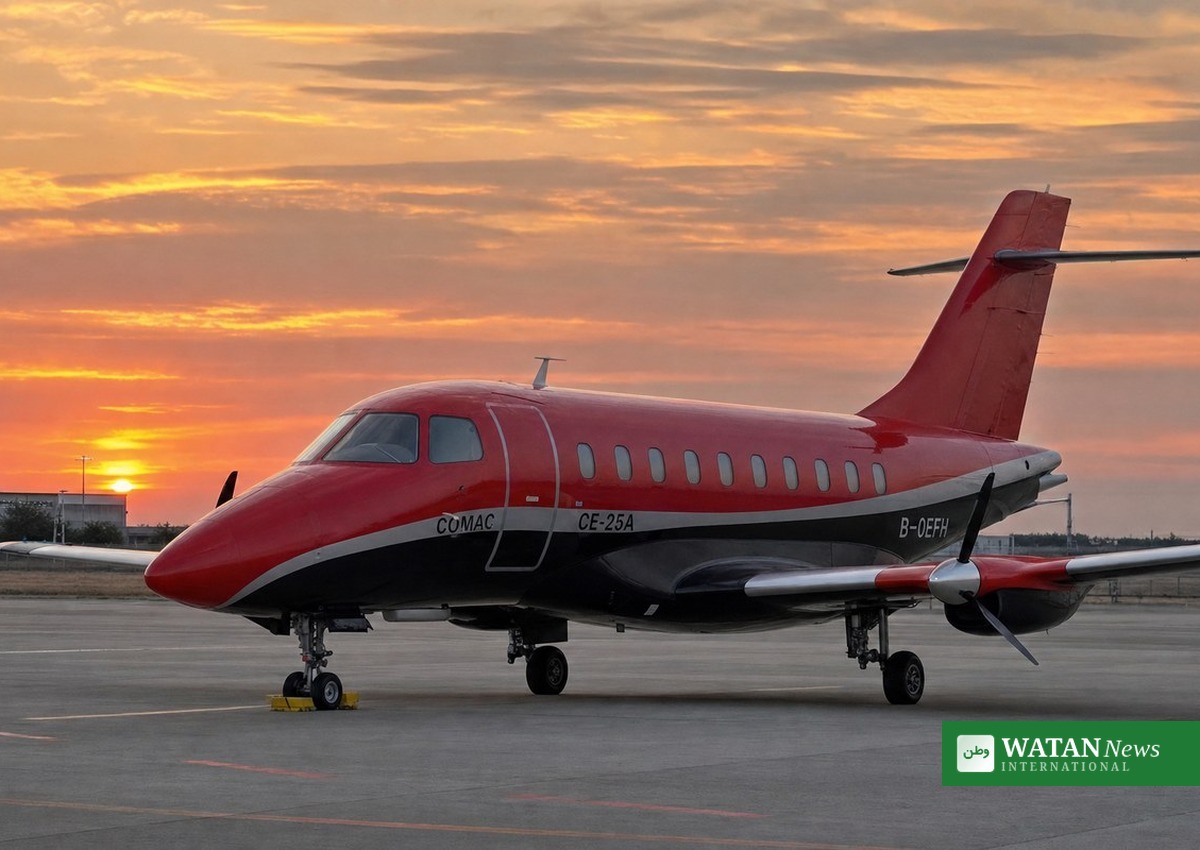
China’s first battery-electric airliner has flown with a crew on board. The 19-seat COMAC CE-25A took off from Binzhou in Shandong province on Saturday, 14 November, carrying two pilots and a flight-test engineer, and stayed airborne for 16 minutes and 38 seconds over a distance of 60.4 kilometres. COMAC said the aircraft operated normally and all performance indicators met expectations.
FAKTA
- What: The COMAC CE-25A completed its first crewed flight on 14 November 2026 in Binzhou, Shandong province, China.
- The aircraft: 19 seats, 10-tonne class, cruising speed 300 kilometres per hour, cruising altitude 2,400 metres, range about 400 kilometres; ten electric ducted fans.
- The flight: 16 minutes and 38 seconds in the air, 60.4 kilometres; first uncrewed flight on 2 February 2026, followed by 19 uncrewed validation flights.
- Status: Still a test aircraft — it cannot carry fare-paying passengers until China’s aviation regulator certifies it, and no date for that has been announced.
- The context: Sustainable aviation fuel supplied just 0.8 percent of airline fuel in 2026, while aviation’s net-zero plan assigns 65 percent of the task to it — and 13 percent to new technology including electric and hydrogen aircraft.
The aircraft and the flight
The CE-25A is COMAC’s first electric commercial aircraft, developed with battery maker CATL, Shanghai Jiao Tong University and other partners. It is designed mainly for short flights between cities. Instead of jet engines, it uses a distributed electric propulsion system: ten electric ducted fans mounted along its wings.
The programme moved step by step. The aircraft first flew without a crew on 2 February 2026 and completed 19 uncrewed autonomous validation flights before a crew boarded. The crewed flight lasted just under 17 minutes — short, but a deliberate first step: test flights grow longer only once the basics are proven.
By seats, the CE-25A is the largest battery-electric aircraft yet flown with a crew, and at about 10 tonnes maximum take-off weight it is among the largest electric aircraft ever flown.
Why short hops come first
Batteries are heavy, and the energy they hold per kilogram is far below jet fuel. That is why electric flight starts with short regional hops: a 400-kilometre range covers city pairs that today are flown by small turboprops, or driven for hours. The CE-25A’s target — 19 passengers at 300 kilometres per hour — fits exactly that gap.
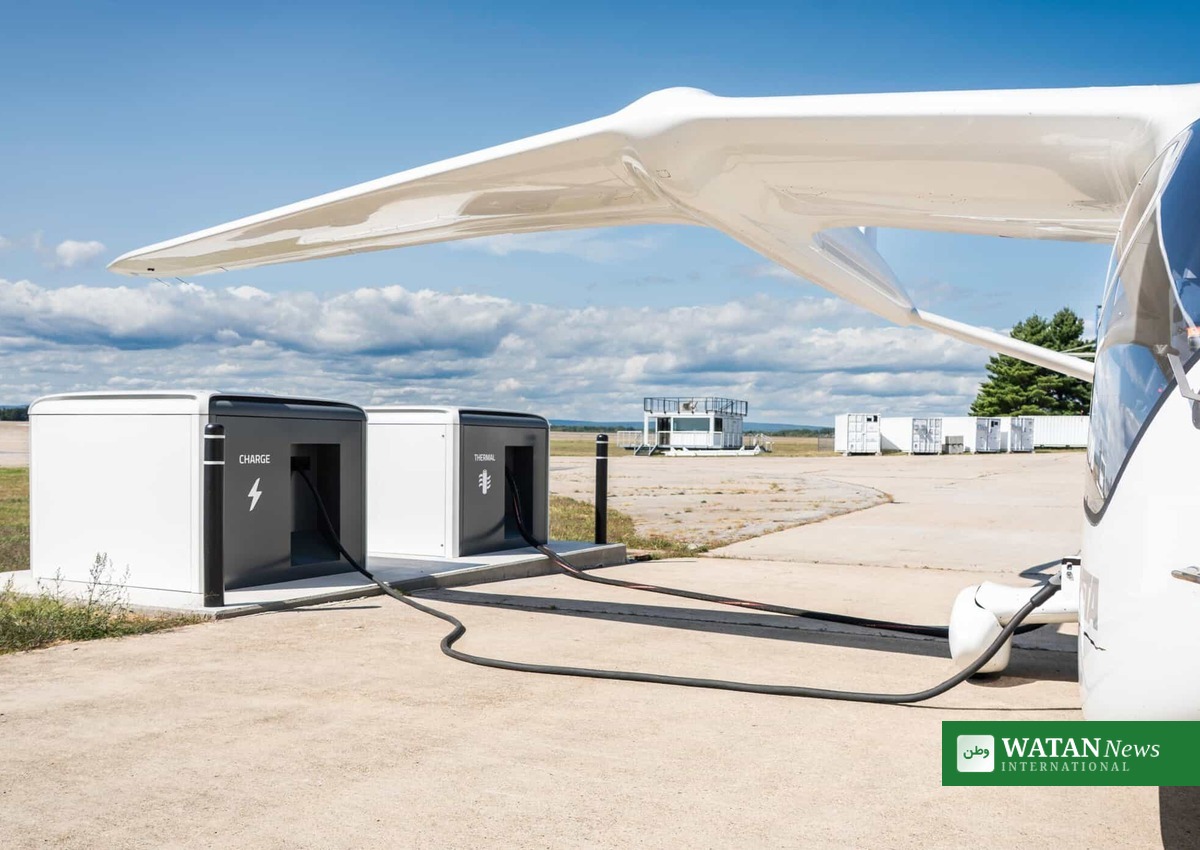
An electric aircraft charging at an airport. Charging infrastructure on the ground will decide how fast electric flight moves from test flights to timetables.
The ground side matters as much as the aircraft. Electric planes need chargers, not fuel bowsers, and airports will have to build that infrastructure before scheduled electric services can begin.
The wider picture: fuel still dominates
For now, electric flight is a promise for the future, while the industry’s main answer remains sustainable aviation fuel — and that answer is struggling. IATA, the global airline body, says SAF production is expected to reach about 2.4 million tonnes in 2026, just 0.8 percent of the fuel airlines burn, at an extra cost of $4.3 billion. Its director general, Willie Walsh, called 2026 “another disappointing year” for SAF production. Read our coverage of the race to make green fuel for flying.
The gap matters because aviation’s own net-zero plan assigns 65 percent of the emissions cuts needed by 2050 to SAF — and only 13 percent to new technology, including electric and hydrogen aircraft. ICAO, the UN aviation agency, says certified SAF volumes more than doubled in 2025, saving an estimated 1.1 million tonnes of CO2, but the fuel still supplies less than one percent of what airlines burn.
International aviation sits outside the national targets of the Paris Agreement and is handled by ICAO, whose CORSIA offsetting scheme starts applying to flights between participating states from 2027. COP31, which closed in Antalya on 22 November without a final deal, left aviation’s future to that process. Tourism, which depends on flying, is under the same pressure — destinations are already publishing guides for cutting the footprint of coastal travel, as our coverage of PATA’s coastal tourism sustainability guide shows.
What happens next
COMAC has announced no launch customer, price or service date for the CE-25A, and certification has no published timetable. The aircraft remains a test programme — but it is now a test programme with a crew on board, and the largest electric passenger aircraft yet to reach that stage.
The flight does not solve aviation’s emissions problem. What it does is show that battery-electric flight has moved from drawings and drones to a 19-seat airliner carrying people — and that the shortest routes, where batteries work best, are where greener flying will arrive first.
Frequently asked questions
What is the COMAC CE-25A?
A 19-seat, battery-electric airliner built by China’s COMAC with CATL and Shanghai Jiao Tong University. It is COMAC’s first electric commercial aircraft, designed for short flights between cities.
How far and how fast can it fly?
Its target is a cruising speed of 300 kilometres per hour, a cruising altitude of 2,400 metres and a range of about 400 kilometres. The first crewed flight covered 60.4 kilometres in 16 minutes and 38 seconds.
When will passengers be able to fly on it?
Not yet. It is a test aircraft and cannot carry fare-paying passengers until China’s aviation regulator certifies it. No launch customer, price or service date has been announced.
Why does electric flight matter for the climate?
Electric aircraft produce no exhaust emissions in flight, and short regional routes are where batteries work best. IATA’s net-zero plan assigns 13 percent of aviation’s emissions cuts to new technology, including electric and hydrogen aircraft.
What about sustainable aviation fuel?
SAF is the industry’s main plan, assigned 65 percent of the 2050 task, but production is expected to reach only about 2.4 million tonnes in 2026 — 0.8 percent of airline fuel use. IATA’s director general called 2026 “another disappointing year” for SAF.
Author

usmanch0013@gmail.com
Related Posts

World’s Best Destinations for 2027: From Santorini to Samarkand
- 0
- 1,685 word
Lonely Planet and National Geographic have named the world's best destinations for 2027, from the Veneto and the California redwoods to Chengdu,...
Read out all
1.3 Million New Yorkers Rely on Food Pantries as Hardship Bites
- 0
- 1,047 word
Nearly 1.3 million New Yorkers used food pantries in 2025 and 2.6 million experienced food hardship, a Robin Hood and Columbia University...
Read out all
Luxury Market Returns to Growth in 2026 as Jewellery Shines
- 0
- 986 words
Bain & Company expects personal luxury goods sales to return to growth in 2026, rising about 2 per cent to 367 billion...
Read out all
Erasmus+ Opens 2027 Call With €5.36 Billion for Study and Training
- 0
- 901 words
The European Commission has opened the Erasmus+ 2027 call with a budget of 5.36 billion euros, expected to reach 1.6 million participants...
Read out all
Christie’s Acquires Dreweatts in Return to the Antiques Market
- 0
- 828 words
Christie's has acquired Dreweatts, the 266-year-old British auction house, in a deal announced on 25 November 2026 that returns the global auctioneer...
Read out all
US Home Prices Fall for Fourth Straight Week as Payments Ease
- 0
- 727 words
US home-sale prices fell for a fourth straight week, Redfin reported on 19 November 2026, with the median price at $388,516 and...
Read out all