- 0
- 494 words
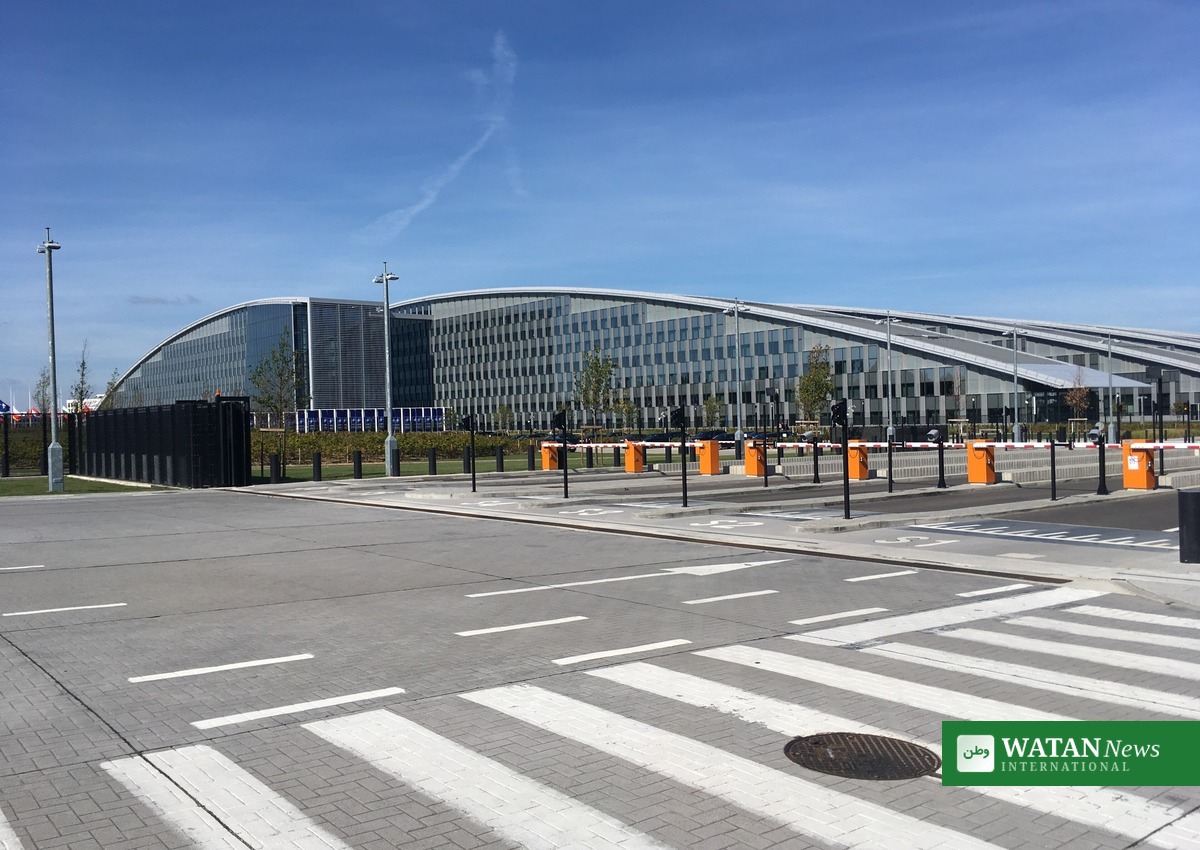
Poland has taken the Russian missile incursion into its airspace to NATO’s highest decision-making body, asking allies at an extraordinary session in Brussels on Monday to strengthen defences along the alliance’s eastern flank. Warsaw will present specific proposals at the meeting of the North Atlantic Council, three days after three Russian cruise missiles crossed into Polish territory during a large-scale attack on Ukraine.
FAKTA
- Meeting: an extraordinary North Atlantic Council session at NATO headquarters, Brussels, Monday 23 November 2026.
- Poland’s delegation: Deputy Defence Minister Paweł Zalewski will represent Warsaw.
- Incident: three Russian Kh-101 cruise missiles entered Polish airspace early on 20 November and crashed in south-eastern Poland.
- Casualties: none reported, and no structural damage at the three crash sites.
- Poland’s request: more allied forces under NATO’s Eastern Sentry mission, including AWACS surveillance aircraft and F-35 fighter jets.
- NATO’s position: Secretary General Mark Rutte said the alliance will defend “every inch” of Polish territory.
Three Missiles, Three Crash Sites
The objects crossed into Poland during a major Russian attack on western Ukraine in the early hours of 20 November. They came down at three locations in the Subcarpathian and Lublin regions, near the villages of Mołodycz, Rudnik nad Sanem and Nowy Lipowiec.
Polish prosecutors said on Sunday that all three were Russian Kh-101 cruise missiles, revising earlier reports that one may have been a jet-powered drone. Debris analysis indicated they were made in late 2026 at a facility in Dubna, near Moscow.
A Swedish Gripen fighter patrolling Polish airspace was authorised to shoot down one missile but held fire because poor weather prevented visual confirmation, according to reports.
What Poland Wants From Its Allies
Defence Minister Władysław Kosiniak-Kamysz said Poland expects strong support from its NATO allies at Monday’s session. Zalewski said Warsaw would present its own assessment of how the missiles crossed the border, seek clear confirmation of political support from all 32 member states, and table concrete proposals to strengthen air defence on the eastern flank.
Poland had already asked on 20 November for reinforcements under Operation Eastern Sentry, the alliance’s standing eastern-flank mission. Warsaw has not invoked Article 4 of the NATO treaty, the consultation mechanism it used after a mass drone incursion in September 2025, choosing instead to seek help through existing missions.
Alliance Response So Far
Rutte travelled to Warsaw on Saturday, 21 November, saying NATO needed to establish exactly what had happened. He asked the alliance’s Supreme Allied Commander Europe, General Alexus Grynkewich, to assess possible threats and decide whether changes to NATO’s defence plans were needed.
Kosiniak-Kamysz said he had discussed the incident and possible responses with Grynkewich and thanked Rutte for his support. Eastern Sentry, launched in September 2025 after earlier drone incursions, coordinates allied jets, surveillance aircraft and air defences along the eastern flank, with contributions from France, Denmark, Germany and the United Kingdom.
No joint statement is expected; Rutte is expected to speak after the talks.
More international news: https://watannews.dk/en/
Author

usmanch0013@gmail.com
Related Posts

Houthis Attack Aramco’s Jazan Refinery, Saudi Coalition Says
- 0
- 628 words
Yemen's Houthis attacked Saudi Aramco's Jazan refinery on Thursday, the Saudi-led coalition said, a day after the group claimed a strike on...
Read out all
Most Governments Lack a Climate Information Strategy, First Global Mapping Finds
- 0
- 1,427 word
The Forum on Information and Democracy’s first global mapping of 23 countries and the EU finds most governments have no standalone strategy...
Read out all
Going Electric Could Save a Typical UK Household £1,200 a Year, Climate Advisers Say
- 0
- 1,090 word
New analysis from the UK's Climate Change Committee finds the typical household can save £1,200 a year by going electric — and...
Read out all
Iranian Drone Strike in Kuwait Kills Two Italian Technicians
- 0
- 486 words
Two Italian technicians working for Rheinmetall Italia were killed in an Iranian drone attack on an air-defence station in Kuwait, Italy's foreign...
Read out all
North Korea Pushes Ahead With Nuclear Expansion as Kim Tours Weapons Plants
- 0
- 470 words
Kim Jong Un has ordered North Korea to expand its nuclear arsenal, touring uranium enrichment plants and calling for more tactical nuclear...
Read out all
Cleantech Solar to Invest $880 Million in 1.1 GW of Renewables in Tamil Nadu
- 0
- 823 words
Cleantech Solar has signed an agreement with Tamil Nadu to invest about $880 million in 1.1 GW of solar, wind and battery...
Read out all