- 0
- 1,051 word
The Ebola outbreak in the Democratic Republic of Congo has passed 12,000 confirmed cases, government data showed on Thursday 26 November 2026, as fighting in the east of the country disrupts efforts to contain the disease. Confirmed infections now total 12,021, and 5,904 people have died, according to data from Congo’s Ministry of Health.
The outbreak, caused by the rare Bundibugyo species of the Ebola virus, was declared in mid-May in Ituri province in the north-east of the country and has since spread to eight of Congo’s 26 provinces. There is no approved vaccine or treatment for this species of the virus, and health officials say the epidemic is not yet under control.
FAKTA
- Confirmed cases: 12,021 as of 26 November 2026, according to the DRC Ministry of Health.
- Deaths: 5,904 confirmed deaths, a case fatality ratio of about 49 per cent.
- Virus: Bundibugyo species of Ebola, for which there is no approved vaccine or treatment.
- Declared: mid-May 2026, in Ituri province; now in eight of Congo’s 26 provinces.
- Global status: the World Health Organization determined on 18 November that the outbreak remains a public health emergency of international concern.
- Spread: 400 to 500 new cases are still reported every week; cases have also been reported in Kenya and Nigeria.
Why the Congo Ebola outbreak is still growing
Responders are struggling to bring the outbreak under control for several reasons. Only 15 per cent of new cases come from contacts already known to health authorities, according to data presented by Africa CDC earlier in November, which means many chains of transmission are still being missed. The World Health Organization has said that two-thirds of confirmed deaths occur outside Ebola treatment centres, a sign that infections are being found too late.
Delayed detection, armed conflict and strained health services have led to a faster spread than in previous outbreaks. The Associated Press described it as the fastest-growing Ebola outbreak in history, and the deadliest of Congo’s 17 outbreaks.
Fighting disrupts the response
Fighting between the army and the Convention pour la révolution populaire (CRP) rebels resumed on Thursday morning in Iga-Barrière, a mining town about 25 kilometres north of Bunia, the capital of Ituri province and a major hub for the Ebola response. The clashes sent new waves of displaced people towards the city.
Fighting earlier in the week had already prevented teams from reaching some communities, disrupted the monitoring of people exposed to the virus and left some treatment centres short of staff, Dr Catherine Smallwood, the World Health Organization’s Ebola incident manager, said on Wednesday. About a dozen people, including two WHO personnel and Congolese health officials, were evacuated to Bunia on Tuesday after spending three full days trapped in a hospital in Akwe, north-east of the provincial capital, amid intense crossfire.
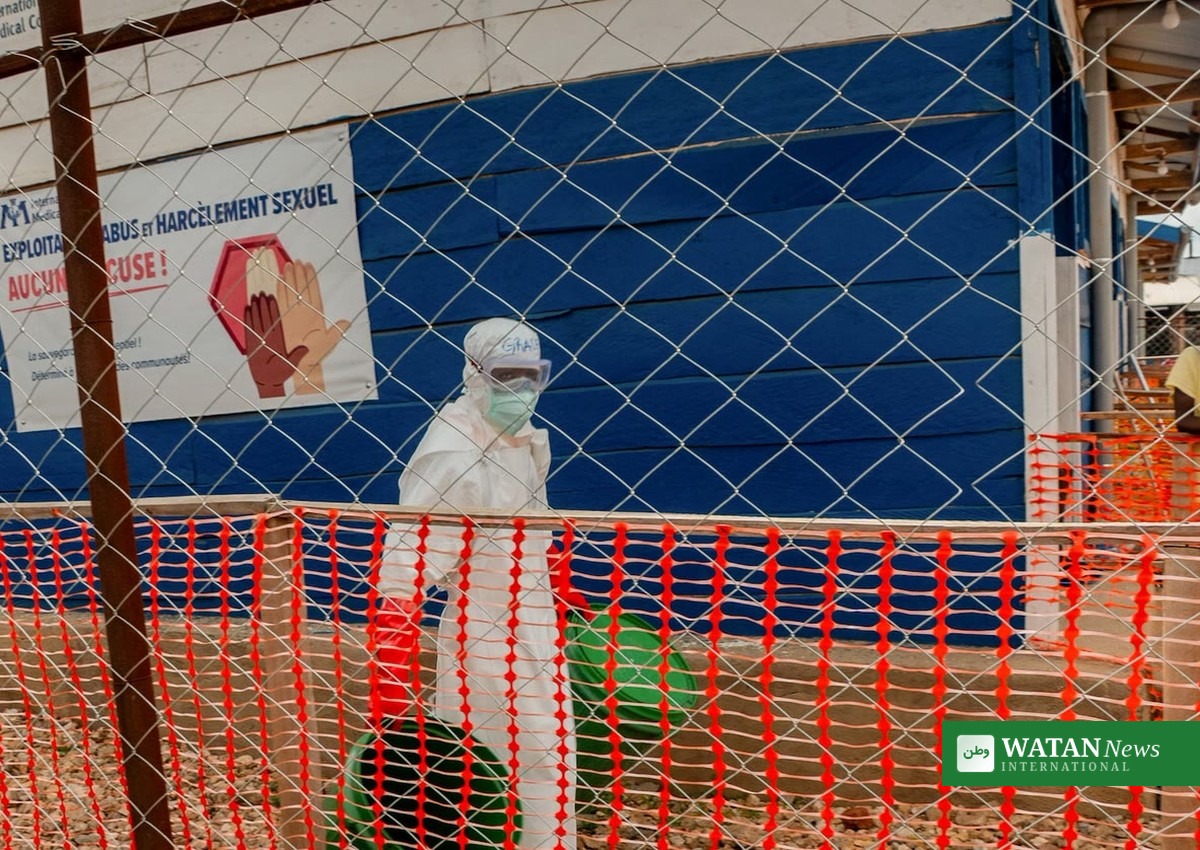
A health worker in protective equipment at the Ebola treatment centre at Bunia General Referral Hospital in Ituri province, DR Congo.
Congo Ebola outbreak in numbers
The current epidemic is the second-largest and deadliest Ebola outbreak on record, behind only the 2014–2016 West African outbreak. It is also the largest Ebola outbreak ever recorded in the Democratic Republic of Congo, regardless of virus species, according to the World Health Organization.
| Outbreak | Confirmed cases | Deaths |
|---|---|---|
| DR Congo, Bundibugyo, 2026 (as of 26 Nov) | 12,021 | 5,904 |
| West Africa, 2014–2016 | More than 28,600 | More than 11,000 |
| DR Congo, 17 November 2026 (WHO count) | 11,613 | 5,678 |
Cases beyond Congo
The outbreak has spread beyond Congo’s borders. Kenya reported nine confirmed cases, including one death, all linked to an imported case in a traveller returning from DR Congo via Uganda, while Nigeria reported its first imported case in a traveller with recent travel history to Uganda on 20 October. The World Health Organization keeps the risk in DR Congo at very high, and the risk for Kenya and Nigeria at high. A healthcare worker who tested positive while supporting the response in DR Congo was medically evacuated to the United Kingdom on 4 November.
Help reaching the front line
Aid groups are continuing to deliver supplies despite the insecurity. Direct Relief said it had delivered 53 tons of Ebola-specific medical aid, valued at about $15 million, to partners in Congo, Uganda and South Sudan as of 5 November, including more than 425,000 items of personal protective equipment. Two Bundibugyo vaccine candidates have joined a World Health Organization trial, but no vaccine or treatment is yet approved for this species.
What happens next
The World Health Organization’s emergency committee met on 17 November and the WHO Director-General determined the following day that the outbreak remains a public health emergency of international concern, with updated recommendations to follow. Containing the disease requires quickly identifying and treating patients in isolation, monitoring people who may have been exposed and safely burying the dead — all of which depend on responders being able to reach affected communities safely.
Conclusion
With more than 12,000 confirmed cases and nearly 6,000 deaths, the Bundibugyo Ebola outbreak in DR Congo is already the second-largest on record, and fighting in Ituri province is making it harder to stop. Until transmission chains are traced and treatment reaches people earlier, health officials expect the weekly case count to remain high.
Related Articles
- Hidden Graves Reveal Congo Ebola Death Toll Far Higher Than Official Count
- Kenya and DR Congo Agree to Restore Diplomatic Ties After Three-Year Rift
- Zimbabwe’s 30 Circular Enterprises Turn Waste Into Business in AfriCircular Cohort 2
FAQ
How many Ebola cases have been confirmed in DR Congo?
12,021 confirmed cases and 5,904 deaths, according to the DRC Ministry of Health on 26 November 2026.
What is the Bundibugyo virus?
Bundibugyo is a rare species of the Ebola virus. It causes Ebola disease, and unlike the Zaire species, there is no approved vaccine or treatment for it.
How does Ebola spread?
Ebola spreads through direct contact with the blood or other bodily fluids of people who are sick with the disease or have died from it.
Which countries are affected?
The outbreak began in Ituri province, DR Congo, and has spread to eight of the country’s 26 provinces. Imported cases have also been reported in Kenya and Nigeria.
Why is the outbreak so hard to contain?
Only 15 per cent of new cases come from known contacts, so many transmission chains are missed. Armed conflict, poor roads, late detection and mistrust among residents all hamper the response.
Is the outbreak a global emergency?
Yes. The World Health Organization determined on 18 November 2026 that the outbreak remains a public health emergency of international concern.
Author

usmanch0013@gmail.com
Related Posts

World’s Best Destinations for 2027: From Santorini to Samarkand
- 0
- 1,685 word
Lonely Planet and National Geographic have named the world's best destinations for 2027, from the Veneto and the California redwoods to Chengdu,...
Read out all
1.3 Million New Yorkers Rely on Food Pantries as Hardship Bites
- 0
- 1,047 word
Nearly 1.3 million New Yorkers used food pantries in 2025 and 2.6 million experienced food hardship, a Robin Hood and Columbia University...
Read out all
Luxury Market Returns to Growth in 2026 as Jewellery Shines
- 0
- 986 words
Bain & Company expects personal luxury goods sales to return to growth in 2026, rising about 2 per cent to 367 billion...
Read out all
Erasmus+ Opens 2027 Call With €5.36 Billion for Study and Training
- 0
- 901 words
The European Commission has opened the Erasmus+ 2027 call with a budget of 5.36 billion euros, expected to reach 1.6 million participants...
Read out all
Christie’s Acquires Dreweatts in Return to the Antiques Market
- 0
- 828 words
Christie's has acquired Dreweatts, the 266-year-old British auction house, in a deal announced on 25 November 2026 that returns the global auctioneer...
Read out all
US Home Prices Fall for Fourth Straight Week as Payments Ease
- 0
- 727 words
US home-sale prices fell for a fourth straight week, Redfin reported on 19 November 2026, with the median price at $388,516 and...
Read out all