- 0
- 989 words
New research — Running a home air conditioner on solar power at 24°C can cut the annual environmental cost of cooling by 74 to 91 percent in dengue-prone parts of tropical Asia, a new peer-reviewed study published today, 27 November 2026, has found. But the same thermostat setting sits on a fine line: warmer rooms use less energy yet can favour the mosquitoes that spread dengue.
The study, published in the journal Environmental Science & Technology and led by Venkata K. K. Upadhyayula of Umeå University and the Indian Institute of Technology Hyderabad, is the first to weigh the climate cost of home cooling and the health cost of dengue together, household by household, across eight cities in tropical Asia. Researchers from the University of South Dakota, Purdue University and the South Dakota School of Mines and Technology also took part.
Key facts
- Published: 27 November 2026, in Environmental Science & Technology.
- Headline finding: at a 24°C thermostat setting, solar-powered room air conditioners cut annual environmental costs by 74–91% compared with grid-powered units.
- The trade-off: set points above about 24°C cut cooling-related impacts but raised the modelled dengue burden; lower set points cut transmission at a greater energy and environmental cost.
- No universal optimum: the balance point near 24°C varies from city to city.
- Context: air conditioners and electric fans use nearly 20% of the electricity consumed in buildings worldwide, according to the International Energy Agency (IEA).
The 24°C balancing point
The researchers built a new measure, an integrated annual eco-efficiency metric, that brings together annualised private costs, life-cycle environmental externalities, mosquito-control costs and modelled dengue hospitalisation costs at the household scale. A mechanistic transmission model estimated the indoor basic reproduction number of dengue across the eight cities, and machine-learning analysis of observed dengue records provided an independent check on the modelled temperature response.
Raising the thermostat above about 24°C reduced cooling-related impacts but increased the estimated dengue burden, with the size of the effect differing from city to city. Lower settings reduced modelled transmission but at a greater energy and environmental cost. The researchers describe a city-dependent transition region near 24°C rather than a single universal optimum, and they report their results with 2.5th–97.5th percentile uncertainty intervals.
Why solar power changes the maths
At 24°C, decentralised solar-powered air conditioning cut annual environmental costs by 74–91% relative to the same cooling drawn from the national grid. Rooftop solar turns the most energy-hungry hours of the day — the hot afternoons when air conditioners work hardest — into the hours when the panels produce most.
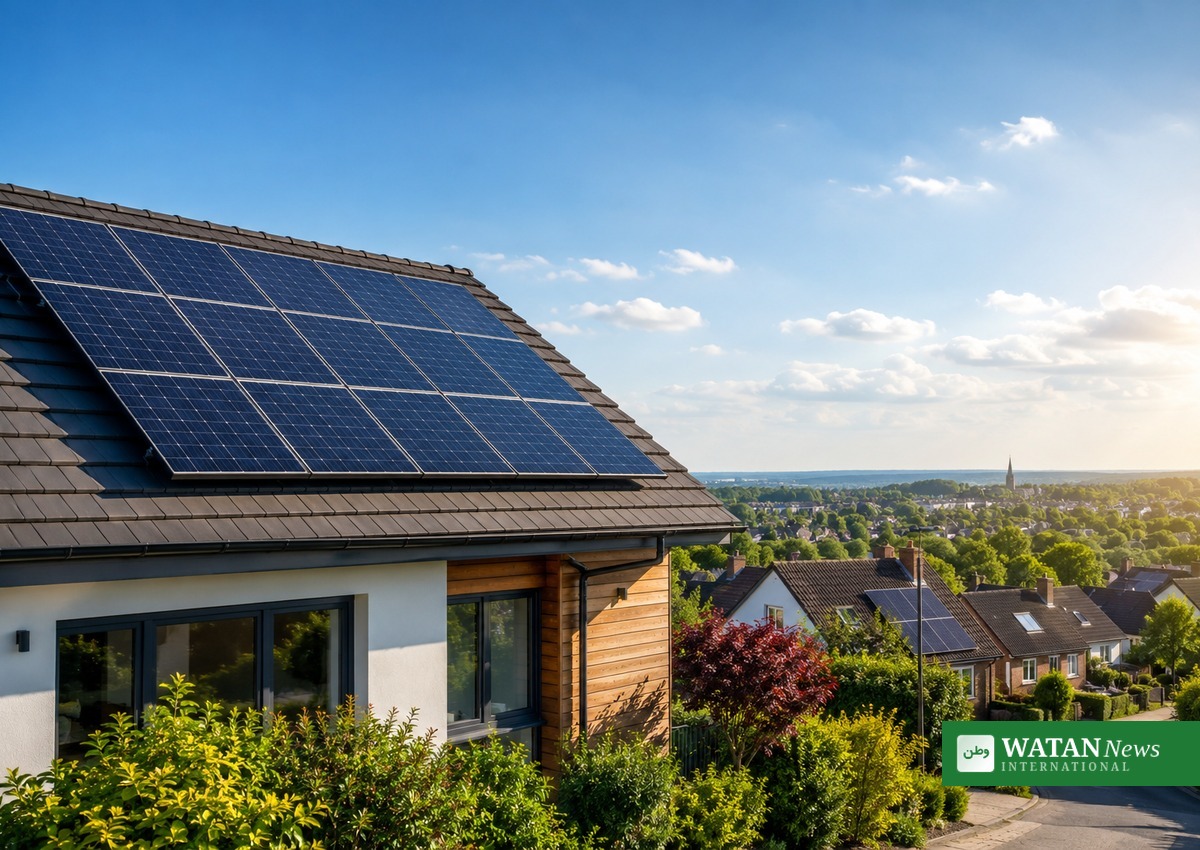
But the study is careful on household bills: solar-powered cooling was cheaper than natural ventilation in only some of the cities modelled. The environmental case is strong; the private-cost case depends on local electricity prices, sunshine and equipment costs.
Solar power is already scaling fast across the region: VinEnergo broke ground today on a 126 MWp solar plant in Sagay City in the Philippines, the first project under its cooperation framework with the Philippine energy department.
Cooling is a climate problem of its own
Cooling demand is one of the fastest-growing sources of energy use in the world. According to the IEA, air conditioners and electric fans already account for nearly 20% of the electricity used in buildings — about 10% of all global electricity consumption. Without action on efficiency, energy demand for space cooling will more than triple by 2050, and the global stock of air conditioners is projected to rise from 1.6 billion to 5.6 billion units. By 2050, around two-thirds of the world’s households could have an air conditioner.
Dengue’s growing burden
The health side of the equation is growing just as fast. According to the World Health Organization, about half of the world’s population is now at risk of dengue, with an estimated 100–400 million infections occurring each year. Reported cases rose from 505,430 in 2000 to 14.6 million in 2024 — the highest ever recorded in a 12-month period — with more than 12,000 dengue-related deaths reported that year.
What this means for households
For households in hot, dengue-prone climates, the study points to a practical starting point: set the thermostat at 24°C, and pair the air conditioner with rooftop solar where that is possible. Shading, ventilation and efficient equipment all help, but the research is clear that no single setting suits every city — local climate, electricity prices and dengue risk all shift the balance.
Cooling alone is not dengue control. The study counts mosquito-control spending as part of the household cost of cooling — a reminder that keeping a home cool and keeping mosquitoes out belong in the same household budget. In the end, the thermostat is no longer just an energy choice; in the tropics, it is a health choice too.
Frequently asked questions
What did the new study find?
Published on 27 November 2026 in Environmental Science & Technology, it found that solar-powered room air conditioners set at 24°C cut the annual environmental cost of cooling by 74–91% compared with grid-powered units across eight cities in dengue-prone tropical Asia.
Why is 24°C the key number?
Around 24°C, the study found a city-dependent transition region: above it, cooling uses less energy but the modelled dengue burden rises; below it, transmission falls but energy and environmental costs climb. It is a balance point, not a universal rule.
Does solar-powered air conditioning really cut environmental costs by 74–91%?
That is the study’s modelled result for annual environmental costs — the monetised life-cycle externalities of cooling — at a 24°C setting, comparing decentralised-solar air conditioning with grid-powered units. The range reflects differences between the eight cities modelled.
Why does air conditioning affect dengue at all?
Cooler indoor temperatures slow the mosquitoes that spread dengue and the virus’s development inside them. Warmer rooms can therefore favour transmission, which is why the study weighs cooling energy against modelled dengue hospitalisation costs.
What can households in hot climates do?
Use 24°C as a starting point, pair air conditioning with rooftop solar where possible, and keep mosquito control — screens, repellents and removing standing water — as part of the same household routine. Local conditions decide the exact balance.
Author

usmanch0013@gmail.com
Related Posts
Solkøling ved 24 °C kan skære boligkølingens miljøomkostninger med op til 91 %, viser studie
- 0
- 971 words
Et nyt studie finder, at solcelledrevet aircondition ved 24 °C kan skære de årlige miljøomkostninger ved boligkøling med 74–91 % i dengue-ramte...
Read out all
شمسی ٹھنڈک 24 ڈگری پر ماحولیاتی خرچ 91 فیصد تک کم کر سکتی ہے، تحقیق
نئی تحقیق کے مطابق ڈینگی سے متاثرہ اشنکٹبندیی ایشیا میں 24 ڈگری پر شمسی بجلی سے چلنے والا ایئر کنڈیشنر گھر کی...
Read out all
Russian Soldiers Who Fled the Army Seek Asylum in Finland
- 0
- 441 words
Two Russian soldiers who left their army have crossed illegally into Finland and applied for asylum, Finnish public broadcaster Yle has reported.
Read out all
UN Warns Hunger Will Worsen in 16 Hotspots as Famine Threatens Millions
- 0
- 613 words
The UN's FAO and WFP warn hunger will worsen significantly in 16 global hotspots over the next six months, with famine threatening...
Read out all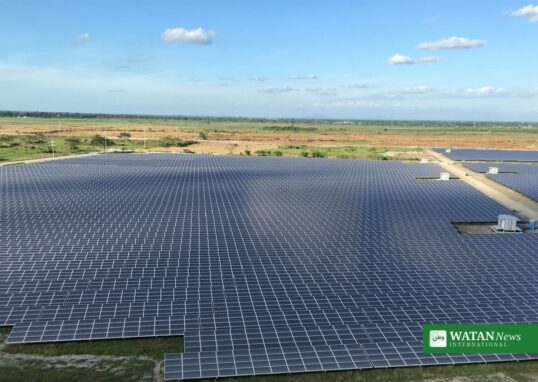
VinEnergo bryder jorden til 126 MWp solcelleanlæg i Sagay på Filippinerne
- 0
- 1,041 word
VinEnergo har brudt jorden til et 126 MWp solcelleanlæg i Sagay City — det første projekt under samarbejdet med Filippinernes energiministerium, med...
Read out all
وین انرگو نے فلپائن میں 126 میگا واٹ پیک ساگے شمسی پلانٹ کی تعمیر شروع کر دی
وین انرگو نے فلپائن کے شہر ساگے میں 126 میگا واٹ پیک شمسی پلانٹ کی تعمیر شروع کر دی ہے۔ یہ منصوبہ...
Read out all