- 0
- 1,238 word
How many single-use plastic bottles does the world use each year? The UN Environment Programme does not answer that question — it counts by the minute instead. A UNEP piece dated 17 November 2017 says an estimated 1 million plastic bottles are bought every minute, and that they make up a significant share of marine litter. It never converts the minute into a day or a year, never says the million is only bottled water, and gives no tonnage for bottle waste alone. That deliberate narrowness is the point of the piece — and of its proposed fix.
FAKTA: what the UN says about plastic bottles
- The headline figure: an estimated 1 million plastic bottles bought every minute (UNEP, 17 November 2017). No annual or daily total is given.
- Ocean plastic: about 8 million tons of plastic leak into the oceans every year — all plastic, not bottles alone.
- The damage: the waste harms hundreds of species, and plastic fragments are entering human food chains with consequences the UN calls unknown.
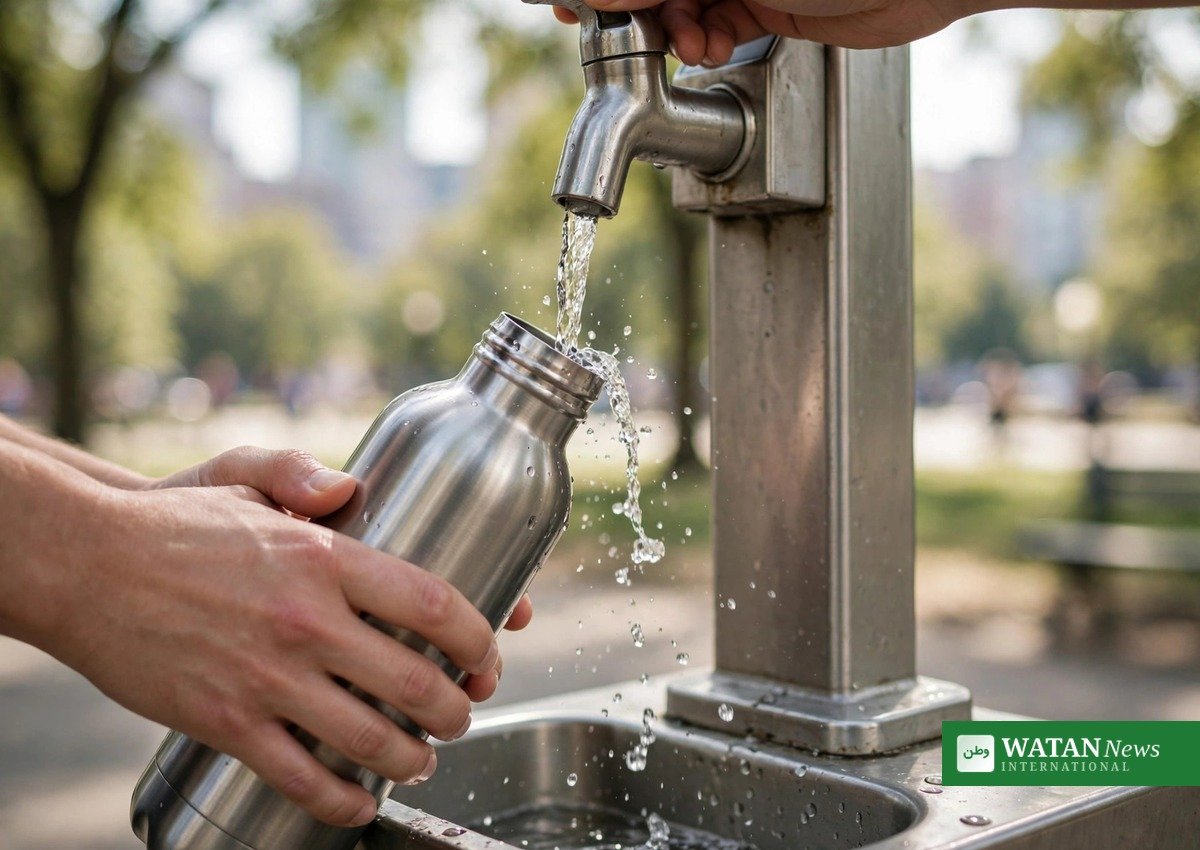
- The UN’s answer: fewer bottles, more refillables, and collection for recycling or safe disposal — driven by deposit-return schemes.
- How deposits work: a small extra fee on each bottle, refunded when the empty is returned; five cents is described as common in the United States, often via a reverse vending machine in a supermarket.
- The 2017 example: the UK — ministers in London and the Scottish and Welsh governments were examining a scheme (not yet running one). Campaigners, not the UN, predicted a rise from a 57 per cent collection rate toward the 80–90 per cent seen in Germany and Sweden.
- The limit: in low-income countries 40–60 per cent of waste is organic and as much as 60 per cent may go uncollected — collection has to come before a deposit.
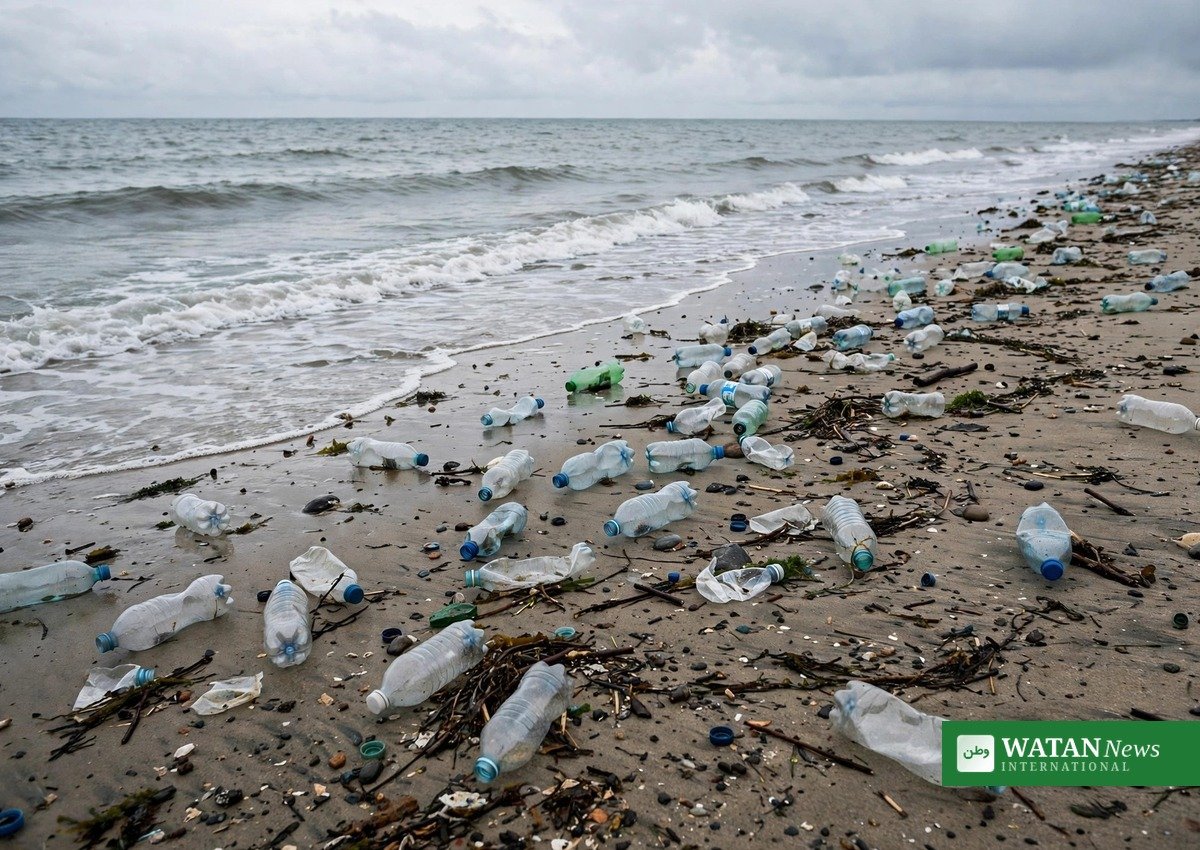
A million a minute — and no annual total
The per-minute framing is unusual, and it is deliberate. Annual totals for bottle use are produced by market researchers — Euromonitor figures cited in 2017 put sales above 480 billion plastic drinking bottles a year, heading past half a trillion — but the UN piece refuses to do the arithmetic itself. The minute figure keeps the scale visceral: by the time you finish this paragraph, several million more bottles have been bought somewhere in the world.
It also keeps the UN honest about what it does not know. Bottle waste tonnage is not separated from total plastic waste in most national statistics, and the piece does not pretend otherwise. Two figures stay carefully apart: bottles as a large share of litter at sea, and 8 million tons of plastic a year entering the oceans as a whole.
Why plastic bottles end up in the sea
Bottles are light, buoyant and made overwhelmingly of PET — polyethylene terephthalate — which floats and travels across entire ocean basins into the great garbage patches. The UNEP piece notes the waste harms hundreds of species and that plastic fragments are entering human food chains, with consequences it describes as unknown. The damage is not only distant: bottles, caps and lids consistently rank among the top litter items on surveyed beaches.
Collection is the weak link. Fewer than half of the bottles sold in the mid-2010s were collected for recycling at all, and only a small fraction of those collected were turned back into new bottles — most ended up in landfill or the ocean. That gap is what the deposit is designed to close.
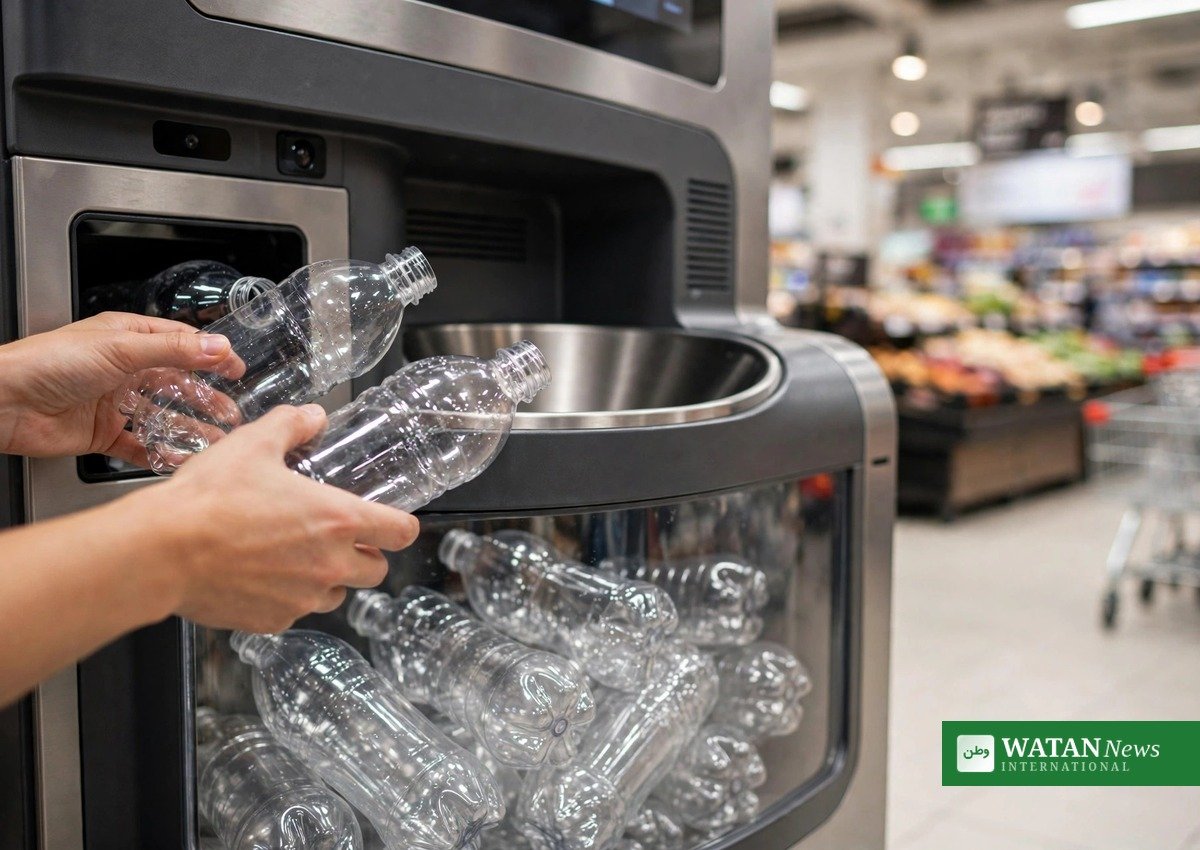
The deposit answer for plastic bottles: five cents and a reverse vending machine
The mechanism the UN piece champions is disarmingly simple. The buyer pays a small extra amount — five cents is described as common in the United States, often settled through a reverse vending machine in a supermarket — and gets it back with the empty bottle. Glass has worked this way for decades, the piece notes. The economics are predictable: higher deposits deliver higher return rates, which is why countries with mature schemes, such as Germany and Sweden, collect 80 to 90 per cent of containers while deposit-free systems languish far below.
A UNDP analysis of container deposit laws reaches the same conclusion: deposits of 5 to 25 cents per container are among the most effective tools for keeping PET out of the sea, and studies from Hawaii to Australia show they measurably reduce local marine plastic pollution.
Britain’s 2017 moment
The piece’s worked example is the United Kingdom, frozen in November 2017. Ministers in London and the Scottish and Welsh governments were examining a deposit scheme; none is described as having introduced one. The forecast of a leap from a 57 per cent collection rate toward German and Swedish levels came from campaigners, the piece is careful to say — not from the UN itself. The caution was warranted: England’s scheme would spend years in consultation before launch.
What UN Environment’s Claudia Giacovelli did say, on the record, was that deposits “could help recycling to really take off and reduce the littering and dumping that scars many developing countries.” Then came the caveat that makes the piece more than a campaign leaflet.
Where deposits cannot work yet
In low-income countries, 40 to 60 per cent of waste is organic, and as much as 60 per cent of all waste may never be collected at all. A deposit on a bottle means little where there is no collection truck, no reverse vending machine and no supermarket to host one. The piece’s sequencing is explicit: basic collection comes first; the deposit refines a system that already exists. For much of the developing world, the bottle tide is a collection crisis before it is a recycling crisis.
Readers following Watan News’ climate coverage will recognise the pattern: the countries least responsible for the waste stream face the steepest climb in managing it.
Conclusion
Nine years on, the UN’s minute has not slowed. The piece’s honesty — one firm number, clearly bounded, with the unknowns labelled as unknowns — is a model for how to talk about plastic: 1 million bottles a minute bought, 8 million tons of plastic a year lost to the sea, and a five-cent nudge that works wherever the collection system exists to catch it. The full story is on the main Watan News site.
Frequently Asked Questions
How many plastic bottles are bought every minute?
The UN Environment Programme estimates about 1 million plastic bottles are bought every minute worldwide, a figure it published on 17 November 2017.
Why doesn’t the UN give an annual total?
The UNEP piece deliberately does not convert the minute into a day or a year, and gives no tonnage for bottle waste alone — bottle waste is not separately tracked in most national statistics.
What is a deposit-return scheme?
The buyer pays a small extra fee — five cents is described as common in the US — and gets it back when the empty bottle is returned, often via a reverse vending machine in a supermarket.
Do deposit schemes actually work?
Yes, where collection systems exist: Germany and Sweden collect 80–90 per cent of containers, and UNDP cites studies showing deposit laws measurably reduce marine plastic pollution.
Why won’t deposits solve the problem everywhere?
In low-income countries up to 60 per cent of waste may go uncollected and most of it is organic — basic collection has to come before a deposit can function.
Author

watannews321@gmail.com
Related Posts
Renee Good’s family sues Trump officials after ICE agent killing
- 0
- 890 words
The family of Renee Good, a US citizen fatally shot by an Immigration and Customs Enforcement (ICE) officer in Minneapolis, has filed...
Read out all
Rawalpindi Police arrest 5 suspects, recover 6 stolen motorcycles
- 0
- 527 words
Rawalpindi Police arrested five suspects from three gangs and recovered six stolen motorcycles, cash and weapons in a targeted crackdown across the...
Read out all
New crew launches to space station aboard SpaceX’s Crew Dragon from Florida
- 0
- 1,117 word
NASA's SpaceX Crew-13 mission launched four astronauts to the International Space Station on October 1, 2026, on a record-fast 7-hour-50-minute flight. Meet...
Read out all
Denmark vs Portugal LIVE: UEFA Nations League clash unfolds
- 0
- 835 words
Denmark host Portugal at Parken Stadium tonight in the UEFA Nations League — kickoff 20:45 local time. Preview, head-to-head and live updates.
Read out all
Governments register COP31 delegates through the UNFCCC online system
- 0
- 761 words
COP31 registration is open in the UNFCCC Online Registration System for Parties, observers, UN bodies, IGOs and NGOs.
Read out all
Newsrooms name one focal point to get COP31 press badges
- 0
- 999 words
COP31 press accreditation uses ORS, then one Indico media focal point per newsroom, by 16 October 2026.
Read out all