- 0
- 1,117 word
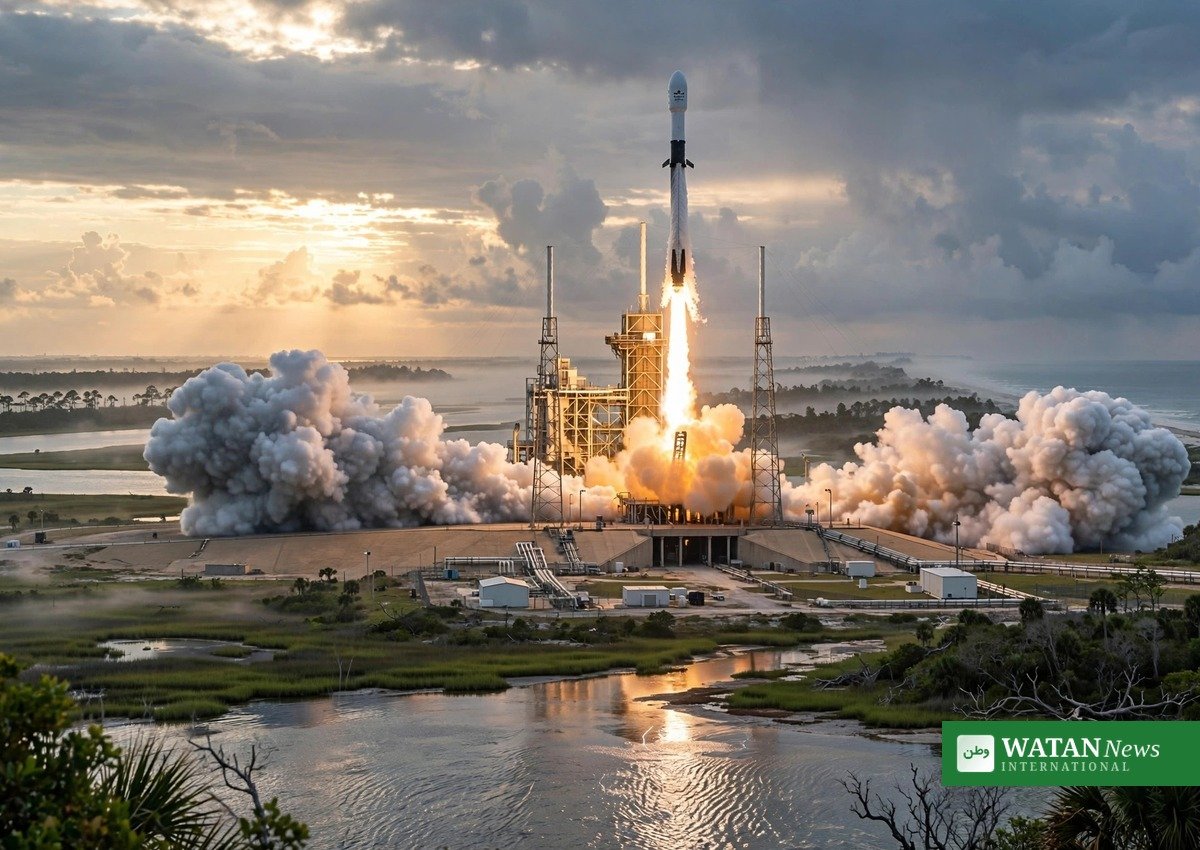
A SpaceX Falcon 9 rocket carrying NASA’s Crew-13 mission thundered off the pad at Cape Canaveral Space Force Station on Thursday, October 1, 2026, sending four astronauts on a record-fast flight to the International Space Station. Liftoff came at 11:10 a.m. ET from Space Launch Complex 40, three weeks after the mission’s original target date, following repairs to a leaking fuel system on the Dragon capsule. If the flight goes as planned, the crew will dock with the station less than eight hours later — the fastest trip to the orbiting laboratory ever attempted by a U.S. spacecraft.
FAKTA: Crew-13 at a glance
- Launch: October 1, 2026, 11:10 a.m. ET — Space Launch Complex 40, Cape Canaveral Space Force Station, Florida
- Rocket and spacecraft: SpaceX Falcon 9 Block 5 and the Crew Dragon capsule Grace
- Crew: Jessica Watkins (commander, NASA), Luke Delaney (pilot, NASA), Joshua Kutryk (mission specialist, Canadian Space Agency), Sergey Teteryatnikov (mission specialist, Roscosmos)
- Flight to the ISS: approx. 7 hours 50 minutes — would set a U.S. speed record
- Docking: planned around 7–8 p.m. ET at the forward-facing port of the Harmony module
- Mission: six months aboard the ISS as part of Expedition 75; return to Earth planned for March 2027
- Delay: the mission was originally targeted for September 12 but was held back to repair a leaking propulsion system on Dragon
Crew-13 launch aims for record-fast trip to the ISS
Thursday’s launch day began under a mixed forecast: launch weather officers with the 45th Weather Squadron at Cape Canaveral predicted only a 55 percent chance of favorable conditions, with scattered showers and gusty winds moving across Florida. Mission managers pressed ahead, and the Falcon 9 lifted off right at the planned moment.
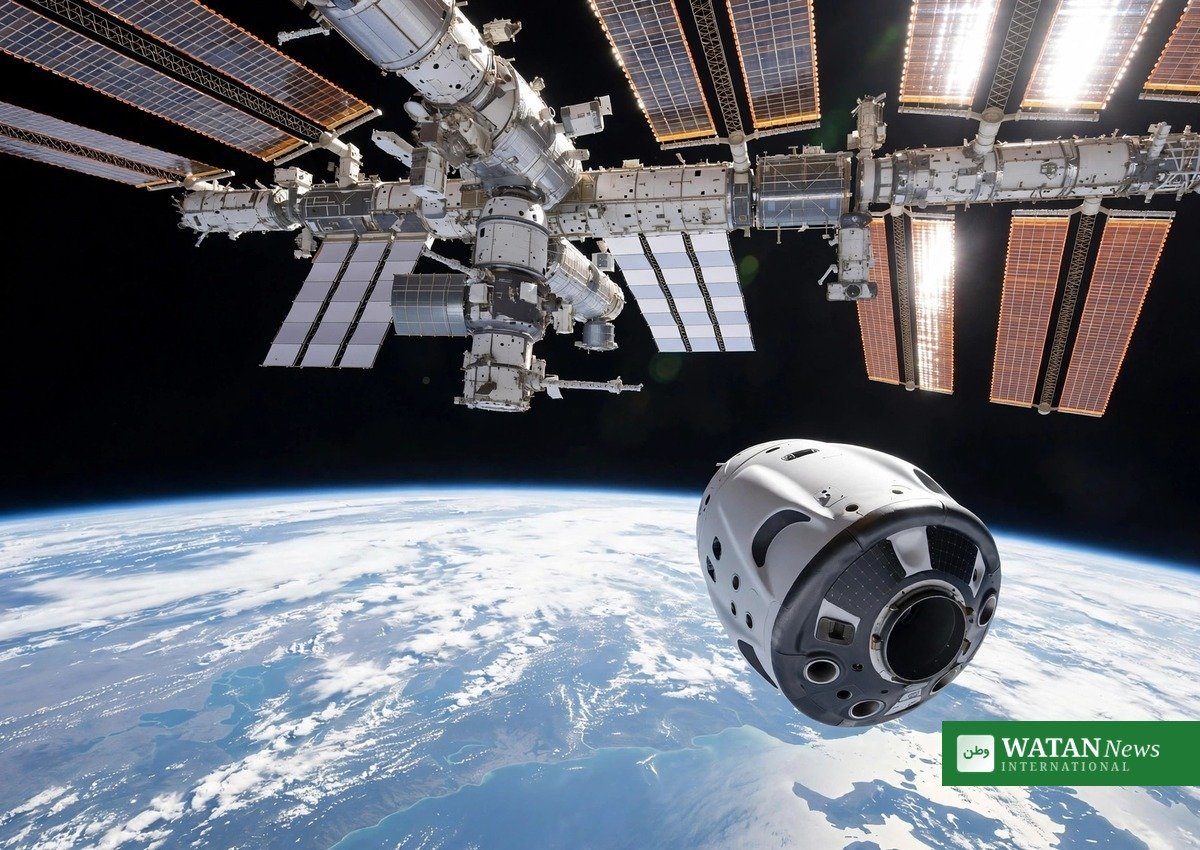
NASA says the planned 7-hour, 50-minute flight from liftoff to docking would be the quickest journey to the station ever flown by a U.S. spacecraft. The Dragon capsule is expected to arrive at the International Space Station at about 7 p.m. ET, where it will link up with the forward-facing port of the Harmony module. Follow mission updates on NASA’s official Crew-13 blog.
Crew-13 is the thirteenth operational flight of NASA’s Commercial Crew Program and the 21st crewed orbital flight of a Crew Dragon spacecraft. Once aboard, the four astronauts will become members of the station’s Expedition 75 crew, replacing four colleagues who have been living and working on the station since February. You can follow this story and more space coverage on our main site at watannews.dk.
Meet the four Crew-13 astronauts
The crew brings together two Americans, one Canadian, and one Russian — a continuation of the international partnership that keeps the station flying. Commander Jessica Watkins of NASA is making her second spaceflight after spending 170 days on the station in 2022. A geologist who once worked with NASA’s Curiosity Mars rover team, Watkins has become the first Black woman to command a crew heading to orbit.
Her three crewmates are all first-time space fliers. Pilot Luke Delaney is a NASA astronaut and former naval aviator; mission specialists Joshua Kutryk (Canadian Space Agency) and Sergey Teteryatnikov (Roscosmos) round out the crew. The four arrived at NASA’s Kennedy Space Center on September 26 and spent their final prelaunch days in quarantine before Thursday’s liftoff.

The Grace capsule and the three-week delay
Crew-13 is flying aboard the Crew Dragon named Grace, SpaceX’s fifth and final Crew Dragon spacecraft. Grace previously carried the private Axiom Ax-4 crew to the ISS, and it was readied for this NASA mission over the summer — until engineers discovered a leak in the capsule’s propulsion system.
The September 12 launch date was scrapped while technicians repaired the leak, replacing a faulty oxidizer valve. With the fix complete and final reviews signed off, NASA and SpaceX cleared the mission for its October 1 launch date. The capsule is expected to bring the crew home to a Pacific Ocean splashdown in March 2027.
Six months of science aboard the station
During their roughly six-month stay, the Crew-13 astronauts will conduct a packed schedule of scientific experiments and technology demonstrations aimed at supporting future missions to the Moon and Mars. NASA highlights research using human stem-cell-derived tissues to improve treatments and testing for heart disease and Parkinson’s disease, alongside studies of crop production in space, blood-flow changes in microgravity, and new equipment for monitoring astronauts’ health.
The crew will also handle routine station maintenance, systems upgrades, and potential spacewalks. Their work continues the ISS’s role as the world’s only permanent microgravity laboratory — read more world news like this in the World section on watannews.dk.
Conclusion
The successful Crew-13 launch extends the unbroken run of NASA’s Commercial Crew Program and underscores the continued partnership between NASA, the Canadian Space Agency, and Roscosmos in keeping a human presence aboard the International Space Station. The mission’s record-fast flight profile, the historic command role of Jessica Watkins, and the science planned for Expedition 75 make this one of the year’s most significant human spaceflight missions. The crew’s safe arrival at the station — expected Thursday evening — will close out launch day, but their real work is only just beginning.
Frequently Asked Questions
Who is on the Crew-13 mission?
The four-person crew consists of NASA commander Jessica Watkins, NASA pilot Luke Delaney, Canadian Space Agency mission specialist Joshua Kutryk, and Roscosmos mission specialist Sergey Teteryatnikov. Watkins is on her second spaceflight; the other three are first-time fliers.
When did the Crew-13 launch take place?
NASA’s SpaceX Crew-13 mission lifted off on Thursday, October 1, 2026, at 11:10 a.m. ET from Space Launch Complex 40 at Cape Canaveral Space Force Station in Florida.
How long will the crew stay on the ISS?
The astronauts will spend approximately six months aboard the International Space Station as members of Expedition 75, with their return to Earth planned for March 2027.
Why was the Crew-13 launch delayed?
The mission was originally targeted for September 12, 2026, but was pushed back about three weeks so SpaceX technicians could repair a leak in the Dragon capsule’s propulsion system, replacing a faulty oxidizer valve.
What science will the crew conduct on the station?
Planned research includes studies using human stem-cell-derived tissues for heart disease and Parkinson’s treatments, crop production experiments, blood-flow studies in microgravity, and tests of new astronaut health-monitoring equipment — all supporting future Moon and Mars missions.
Author

usmanjaved13132@gmail.com
Related Posts
Renee Good’s family sues Trump officials after ICE agent killing
- 0
- 890 words
The family of Renee Good, a US citizen fatally shot by an Immigration and Customs Enforcement (ICE) officer in Minneapolis, has filed...
Read out all
Rawalpindi Police arrest 5 suspects, recover 6 stolen motorcycles
- 0
- 527 words
Rawalpindi Police arrested five suspects from three gangs and recovered six stolen motorcycles, cash and weapons in a targeted crackdown across the...
Read out all
The UN counts plastic bottles by the minute, not the year
- 0
- 1,238 word
UNEP says an estimated 1 million plastic bottles are bought every minute. It gives no yearly total, no daily total and no...
Read out all
Denmark vs Portugal LIVE: UEFA Nations League clash unfolds
- 0
- 835 words
Denmark host Portugal at Parken Stadium tonight in the UEFA Nations League — kickoff 20:45 local time. Preview, head-to-head and live updates.
Read out all
Governments register COP31 delegates through the UNFCCC online system
- 0
- 761 words
COP31 registration is open in the UNFCCC Online Registration System for Parties, observers, UN bodies, IGOs and NGOs.
Read out all
Newsrooms name one focal point to get COP31 press badges
- 0
- 999 words
COP31 press accreditation uses ORS, then one Indico media focal point per newsroom, by 16 October 2026.
Read out all