- 0
- 1,187 word
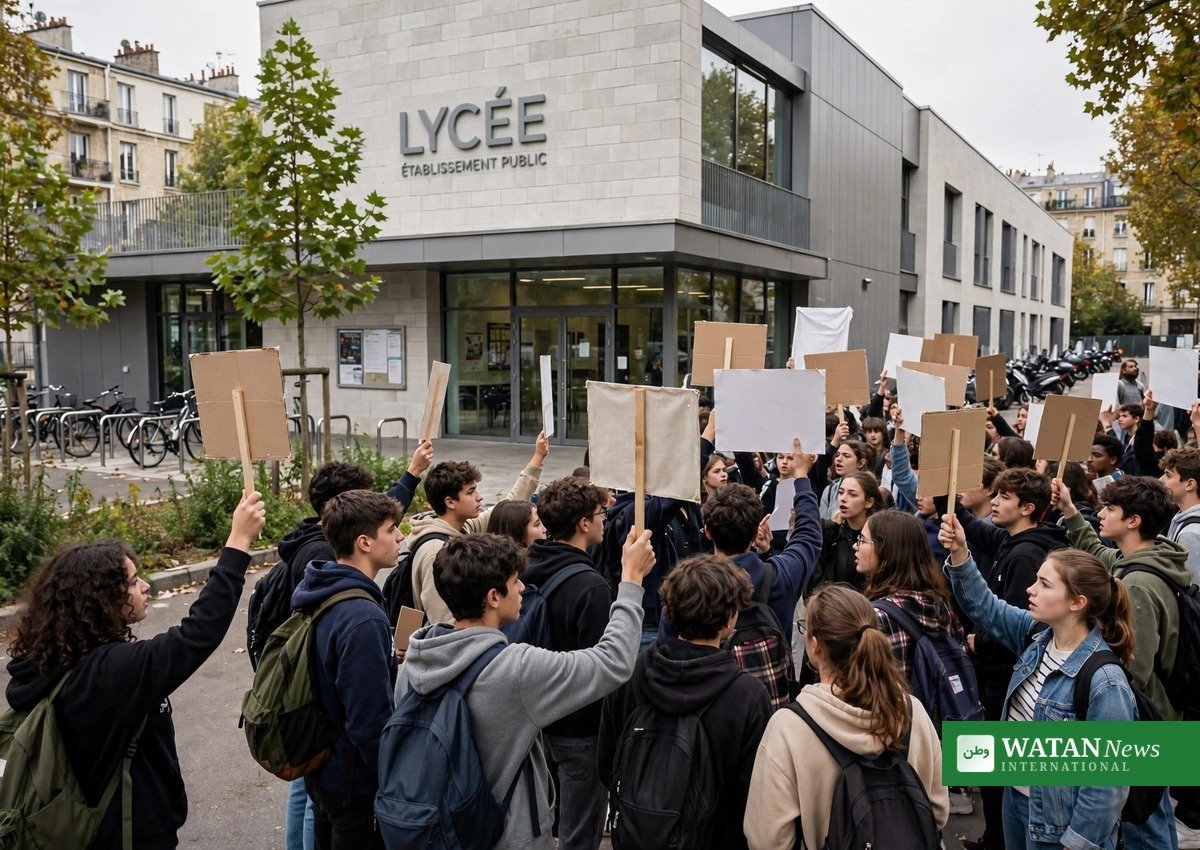
Students at the Lycée Paul-Éluard in Saint-Denis have been blockading the northern Paris suburb’s largest high school since late September in a Saint-Denis students protest for the same educational opportunities as pupils in “more privileged areas”. What began with peaceful school blockades over crumbling buildings and missing teachers has grown into a nationwide movement — with burning barricades, tear gas and hundreds of arrests.
FAKTA
- Where: Lycée Paul-Éluard, Saint-Denis (Seine-Saint-Denis) — the municipality’s largest lycée, with nearly 2,000 students
- What: student blockade in place since Friday 25 September 2026; fourth consecutive day of clashes on 30 September
- Demands: renovated buildings, heating and ventilation, usable toilets, more teachers, smaller classes, less overloaded timetables — parity with wealthier districts
- Police response: tear gas, charges and arrests on 28 and 30 September after bins and barricades were set alight and fireworks thrown at officers
- National scale: roughly 400–416 lycées blocked on 29 September (union figures); 440 arrested that day, 164 on 28 September; 76 injuries since the movement began (official figures)
- Key figures: Saint-Denis mayor Bally Bagayoko; Education Minister Édouard Geffray; Interior Minister Laurent Nuñez; President Emmanuel Macron
The Saint-Denis students protest for the same opportunities as pupils in wealthier districts
In front of the school gates, the students describe a building that is unsanitary and falling apart: no heating in winter, no ventilation in summer, unusable restrooms, repeated vandalism and even rodents. They also denounce overcrowded classrooms, teacher absences that are never filled, a lack of supervisory staff and growing anxiety about the baccalaureate exams.
“We’re just asking for the school to be renovated,” one student summed up, telling reporters that the movement’s primary goal was simply to be heard. Teachers at the school, who have been denouncing the deteriorating conditions since the start of the school year, confirm the demands are practical and focused on everyday learning conditions — not abstract politics.
Staff have gone further than sympathy: teachers and other personnel were on strike for a third consecutive day in support of the blockading students, and staff formed human chains to shield pupils from police lines.
Blockade, barricades and tear gas outside Paul-Éluard
Tensions turned physical on Monday 28 September, when students fired fireworks at police outside the school and officers responded with tear gas, making at least one arrest. On Wednesday 30 September — the fourth consecutive day of the blockade — trash cans and makeshift barricades were set ablaze in front of the entrance, projectiles and fireworks were launched at police and firefighters arriving to douse the fires, and police again answered with tear gas and arrests. When a crowd formed, police with anti-riot shields struck students and an AFP journalist with batons, according to AFP’s account of the clashes.
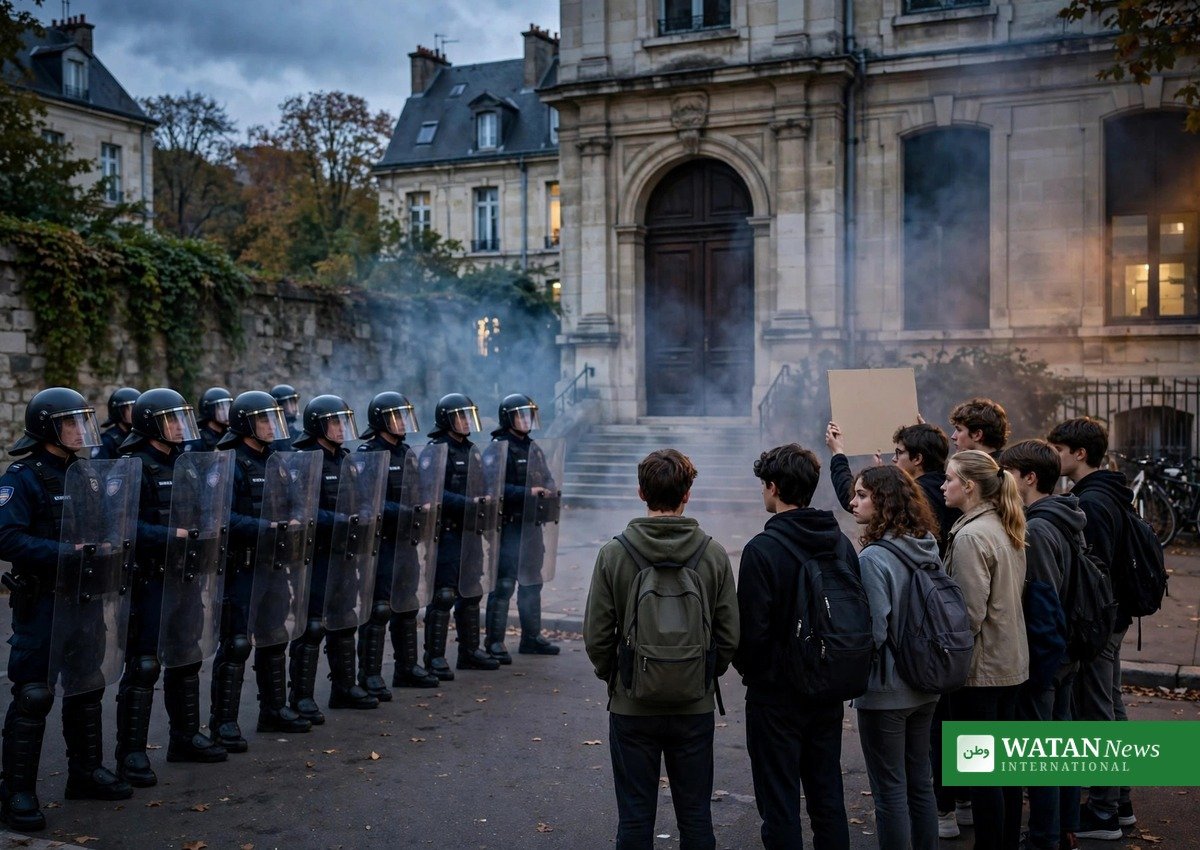
The Créteil education authority notes the movement keeps growing and that social media is acting as an amplifier — while the specific demands vary considerably from one high school to another. Education Minister Édouard Geffray said the right to demonstrate is fundamental but “the violence must stop”, denouncing what he called “inqualifiable” violence and reporting at least ten education staff and several pupils wounded.
Mayor Bally Bagayoko’s visit ignites a political firestorm
Saint-Denis mayor Bally Bagayoko twice visited the blockaded school, leading students in a rendition of the Marseillaise and calling their demands “completely legitimate”, arguing that low-income areas receive fewer resources than higher-income ones. But a widely circulated video showing him near a burning trash bin triggered accusations that he encouraged the unrest.
Bagayoko and his La France insoumise (LFI) allies released longer clips saying he had tried to move or extinguish the bin and was calming pupils — and the mayor insisted he had himself been exposed to tear gas, urging the education minister to meet the students. He also told reporters that “violence can be legitimate at a given moment”, adding: “If I slap you, you will react.”
Paris police prefect Patrice Faure referred the mayor to prosecutors in Bobigny for suspected provocation to commit an offence, saying he had presented a violent reaction as understandable. Right-wing figures from Les Républicains and the Rassemblement National condemned his presence, while LFI leader Jean-Luc Mélenchon called the pupils “harmless” and urged party officials to place themselves between students and police — prompting Prime Minister Sébastien Lecornu and others to accuse the hard left of encouraging the unrest.
From Seine-Saint-Denis to a nationwide movement
The movement began in mid-September in high schools across Île-de-France — in Seine-Saint-Denis and Val-de-Marne, from Stains and Saint-Ouen to Aubervilliers, Épinay-sur-Seine, Sevran and Rosny-sous-Bois — before spreading across the country. On Tuesday 29 September it converged with a nationwide day of public-sector action: unions claimed more than 300,000 participants and roughly 400 to 416 lycées partially or totally blocked, while Interior Minister Laurent Nuñez reported about 440 arrests and instructed prefects to apply “strict proportionality but not inaction”. A day-by-day overview of the escalating blockades tracks how the movement spread city by city.
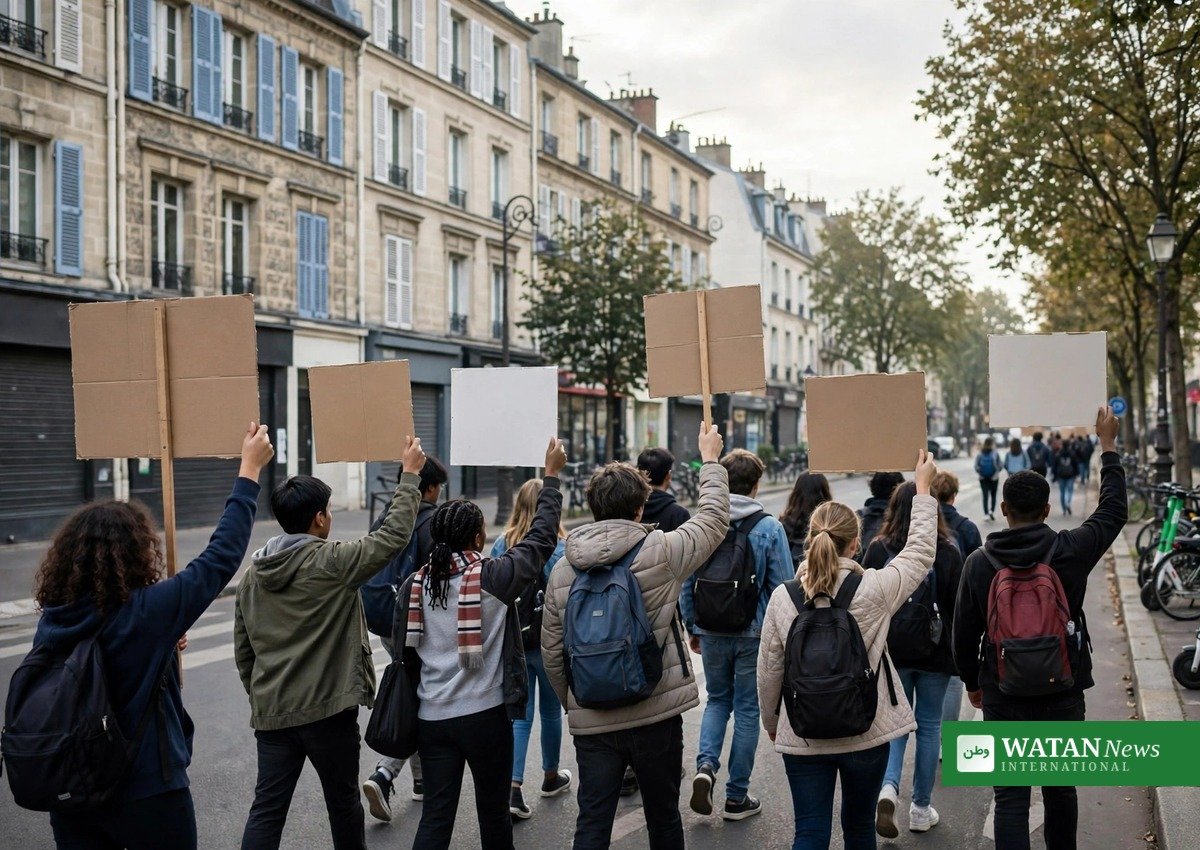
The student anger overlaps with a broader public-sector revolt against €58 billion in planned 2027 budget cuts: on the same day, around one in ten teachers struck nationwide and firefighters protested in Paris. President Emmanuel Macron, returning from Spain, intervened directly: “Under no circumstances can political leaders legitimize violence.” More on France in our World section.
Conclusion
The Saint-Denis blockade has become the symbol of a generation of French students who say they are simply asking for the same chance as their peers in privileged districts: a school that is heated, staffed and safe. Whether the government’s mixture of firm policing and ministerial appeals calms the movement — or the budget battle ahead pours fuel on it — will decide whether France’s classrooms reopen quietly or keep burning into autumn. Read this story on Watan News’ main site.
Frequently Asked Questions
What are the Saint-Denis students protesting for?
Students at Lycée Paul-Éluard are demanding a renovated school building — heating, ventilation, usable toilets — plus more teachers, smaller classes and less overloaded timetables: in short, the same learning conditions as students in wealthier areas.
How long has the blockade lasted?
The school has been mobilized since Friday 25 September 2026, with the blockade entering its fourth consecutive day on Wednesday 30 September and continuing into October.
How did the police respond?
Police used tear gas, charges and batons on 28 and 30 September after students set bins and barricades alight and launched fireworks and projectiles at officers and firefighters. Arrests were made on both days.
Why is Mayor Bally Bagayoko controversial in this story?
He visited the school twice and called the students’ demands legitimate, but a video of him near a burning trash bin led to accusations of encouraging unrest; Paris police prefect Patrice Faure referred him to prosecutors in Bobigny for suspected provocation, a claim Bagayoko rejects.
How big is the movement nationally?
On 29 September, unions reported roughly 400–416 lycées blocked across France alongside a public-sector day of action drawing 300,000+ people (union claim); the interior ministry reported about 440 arrests that day and 76 injuries since the movement began.
Author

usmanjaved13132@gmail.com
Related Posts
Funeral held for Palestinian man killed in occupied West Bank
- 0
- 827 words
Palestinian officials say Israeli settlers shot dead Mashhour Yassin, 51, during an attack on the village of Yasuf in the occupied West...
Read out all
Trump Says He Will ‘Blow Up’ Iran or Make a Deal as War Nears Decision Point
- 0
- 961 words
President Donald Trump said Wednesday the U.S. must decide whether to ‘blow up’ Iran or make a deal, warning the seven-month war...
Read out all
Three Oil Tankers Struck by Unknown Projectiles in Strait of Hormuz
- 0
- 908 words
Three Liberian-flagged oil tankers were struck by unknown projectiles while transiting the Strait of Hormuz on Tuesday, shipping intelligence says, in a...
Read out all
Radio Pakistan Multan concludes broadcasting training program
- 0
- 834 words
Radio Pakistan Multan has concluded a two-day broadcasting workshop for young comperes, radio jockeys, newsreaders and interns — part of a nationwide...
Read out all
Brazil AG: Trump funding meddling ‘cannot be tolerated
- 0
- 1,170 word
Brazil’s Attorney General Jorge Messias has condemned alleged Trump administration plans to direct funding toward a campaign against Brazil’s supreme court, declaring...
Read out all
Denmark Opens New Certified-Employer Work Permit Route for Foreign Workers From January 2027
- 0
- 956 words
Denmark's new certified-employer work permit scheme, adopted by Parliament on 3 September 2026, lets SIRI-certified companies hire foreign workers from 16 designated...
Read out all