- 0
- 1,063 word
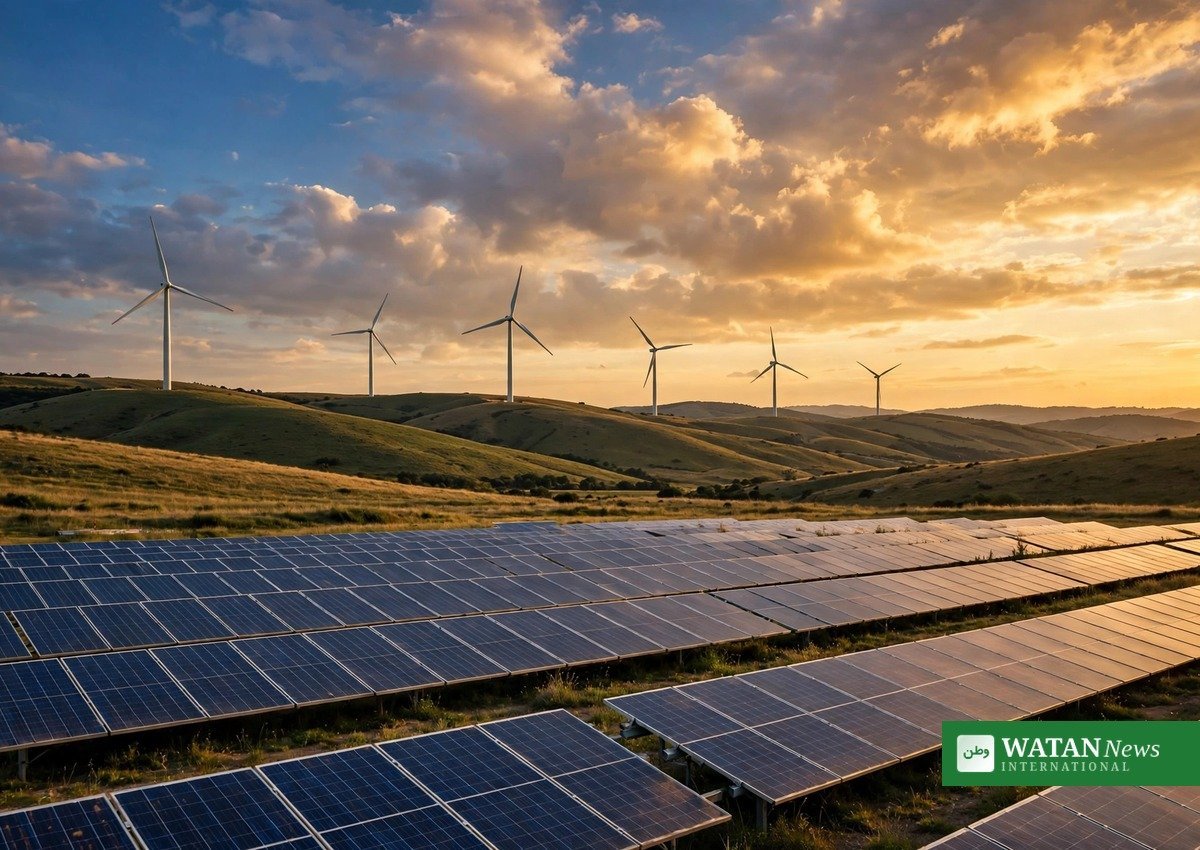
The world installed renewable power faster than ever in 2025 — yet still not fast enough. A new joint assessment by the International Renewable Energy Agency (IRENA), the COP31 Presidency and the Global Renewables Alliance reports that 693 gigawatts (GW) of new renewable capacity came online in 2025, bringing total installed renewable capacity to 5.15 terawatts. But to reach the COP28 goal of tripling global renewable energy capacity by 2030, average annual installations must reach about 1,200 GW a year between 2026 and 2030, the report finds.
The assessment, titled “Delivering on the UAE Consensus: Tracking Progress Toward Tripling Renewable Energy Capacity and Doubling Energy Efficiency by 2030”, is the third annual evaluation of the landmark energy package agreed at COP28 in Dubai in 2023. It was released during Climate Week NYC in late September, just weeks before COP31 opens in Antalya, Türkiye, from 9 to 20 November.
How far behind is the world on the renewable energy tripling 2030 goal?
The numbers show a record pace — and a widening gap. IRENA says renewable capacity expanded by 693 GW in 2025, a 15.5% annual increase, with renewables accounting for more than 85% of all new power capacity added worldwide. Solar drove the expansion with about 511 GW added, followed by wind with 158.7 GW; together they made up 96.8% of net renewable additions.
But the tripling target means reaching 11.2 terawatts by 2030, and if the 2025 growth rate holds, the world would reach only about 10.6 TW by the end of the decade — roughly 0.6 TW short. That projected gap has narrowed from 0.9 TW in last year’s assessment, but the pace still falls about 430 GW a year below the 1,122 GW average needed between 2025 and 2030.
The report also flags a second, quieter failure: energy intensity improved by only about 2% in 2025, well below the roughly 4% annual gain needed to fulfil the COP28 goal of doubling energy efficiency by 2030.
FAKTA
- Record year: 693 GW of new renewable power capacity added in 2025 — 15.5% annual growth (IRENA).
- Total capacity: 5.15 terawatts of renewable power installed worldwide at the end of 2025.
- 2030 target: Triple capacity to 11.2 TW by 2030; annual additions must rise to about 1,200 GW a year.
- Efficiency lag: Energy intensity improved ~2% in 2025, below the ~4% yearly gain needed to double energy efficiency.
- Grid gap: Nearly $1 trillion a year is needed for grids and flexibility between 2026 and 2030 — about twice the ~$525 billion invested in 2025.
- Next milestone: COP31 in Antalya, Türkiye, 9–20 November 2026; electrification goal — electricity supplying 35% of final energy by 2035 — is on the agenda.
Grids and money are the new bottlenecks
The bottleneck is no longer technology or cost. IRENA says more than 85% of new renewable projects are now cheaper than fossil-fuel alternatives, with solar power costs down 87% since 2010, onshore wind down 55% and battery storage down 93%. Renewables now represent about 49% of global installed power capacity.
Instead, the report points to grids, storage, permitting, financing and supply chains. Grid investment must nearly double — to close to $1 trillion a year from 2026 to 2030 — because solar and wind projects can be built faster than the transmission infrastructure needed to carry their power. Deployment also remains highly concentrated: China, the United States and the European Union accounted for 79.5% of all new renewable capacity added in 2025, while Africa managed only 1.6%.
IRENA Director-General Francesco La Camera said renewable energy can still close the gap to the 2030 target, but warned that rising electricity demand — from data centres, artificial intelligence, electric vehicles, industrial activity and cooling — plus slower progress on energy efficiency are adding to the challenge.
700 companies show climate action can deliver
The corporate world is offering a counterpoint of momentum. The Climate Pledge’s 2026 report counts 705 signatories across 49 countries and territories and 62 industries, with the pledge’s website now listing 728 companies and combined revenues of about $3.8 trillion. The coalition added 107 companies in 2025 alone — a 19% increase.

Companies under The Climate Pledge cut operational emissions by an average of 11%, with purchased-energy emissions down 35%. (Illustrative image)
Among 119 signatories analysed in the report — representing about 90% of publicly available signatory revenue — operational carbon emissions fell by an average of 11%, compared with a 7% average decline among other companies in the dataset. The median reduction was 21%. Scope 2 emissions — from purchased electricity, heat, steam and cooling — fell 35%, driven largely by renewable energy procurement, while Scope 1 emissions fell 4%.
The report estimates that if its signatories collectively reach net zero by 2040, they could eliminate at least 2.6 billion metric tons of CO2e annually — a projection, not a measured reduction already achieved. That projection aside, the data suggests that where companies can buy clean electricity, their emissions fall fastest — and where they cannot, the renewable gap itself becomes the constraint.
UN chief: “the brute power of market forces”
UN climate chief Simon Stiell, speaking at an Industry Acceleration Summit during the report’s launch, hailed the data as proof that the energy transition is now market-driven: “The brute power of market forces is taking hold. The shift to clean energy is now irreversible.”
Stiell added that “thanks to global renewables, humanity avoided almost half a trillion US dollars in fossil fuel costs” — “a mammoth decarbonization dividend” worth more than the national GDP of over three quarters of countries on Earth. Renewables remained the most cost-competitive source of new electricity in most markets in 2025, the assessment found.
The message aligns with the UN secretary-general’s call at the UN Climate Summit 2026 during September’s High-Level Week in New York, where António Guterres demanded that every country develop “a credible roadmap to transition away from fossil fuels — with clear timelines”, noting the G20 is responsible for around 80% of global emissions and that climate finance should reach $1.3 trillion a year by 2035.
What COP31 in Antalya must decide
The IRENA assessment urges more decisive measures ahead of COP31. On the agenda in Antalya: electrification as a central pillar, with a proposed goal of electricity supplying 35% of final energy by 2035; around-the-clock renewable systems pairing solar, wind and storage; faster permitting; and wider use of digitalisation and artificial intelligence to match growing electricity demand with clean supply.
The next assessment will arrive with COP31 only weeks away. The message from IRENA and the COP31 Presidency is unmistakable: the technology works, the money is moving, but the pace of action still decides whether the 2030 promise holds.
Sources: IRENA/COP31 Presidency/Global Renewables Alliance assessment “Delivering on the UAE Consensus” via Carbon Credits, ESG Times, IndexBox, Dubai Telegraph (AFP) and TechXplore; The Climate Pledge 2026 report via Carbon Credits; UN News on the UN Climate Summit 2026.
Author

usman2344913@gmail.com
Related Posts
Islamabad’s renewed plastic-free push puts everyday habits under scrutiny
- 0
- 760 words
Islamabad is intensifying its efforts to combat plastic pollution with a renewed “Plastic-Free Islamabad” campaign. This initiative aims to significantly reduce the...
Read out all
Sumitomo går ind i Hero Future Energies’ 500 MWp sol- og vindprojekt for vedvarende strøm døgnet rundt i Indien
- 0
- 831 words
Japans Sumitomo Corporation køber en 49%-andel i et nyt 500-megawatt sol- og vindprojekt med batterilagring i den indiske delstat Karnataka, bygget til...
Read out all
بھارت میں چوبیس گھنٹے قابل تجدید بجلی کے لیے سوموٹومو کی ہیرو فیوچر انرجیز کے 500 میگاواٹ شمسی و ہوا منصوبے میں سرمایہ کاری
جاپان کی سوموٹومو کارپوریشن بھارت کی ریاست کرناٹک میں شمسی اور ہوا توانائی کے ایک نئے 500 میگاواٹ منصوبے میں 49 فیصد...
Read out all
Sumitomo backs Hero Future Energies’ 500 MWp solar-wind project to deliver 24/7 renewable power in India
- 0
- 794 words
Japan’s Sumitomo Corporation will take a 49% stake in a new 500-megawatt solar-and-wind project with battery storage in the Indian state of...
Read out all
Vedvarende energi nåede rekord på 693 GW i 2025, men verden er stadig bagud i forhold til tredoblingsmålet for 2030 — IRENA
- 0
- 1,129 word
Verden tilføjede rekordstore 693 GW vedvarende elkapacitet i 2025, melder IRENA og COP31-formandskabet — men de årlige installationer skal op på ca....
Read out all
قابل تجدید توانائی نے 2025 میں ریکارڈ 693 گیگا واٹ کا اضافہ کیا مگر 2030 کے ہدف سے دنیا اب بھی پیچھے — آئی آر ای این اے
آئی آر ای این اے اور کاپ31 صدارت کی رپورٹ کے مطابق 2025 میں 693 گیگا واٹ ریکارڈ قابل تجدید بجلی صلاحیت...
Read out all