- 0
- 1,060 word
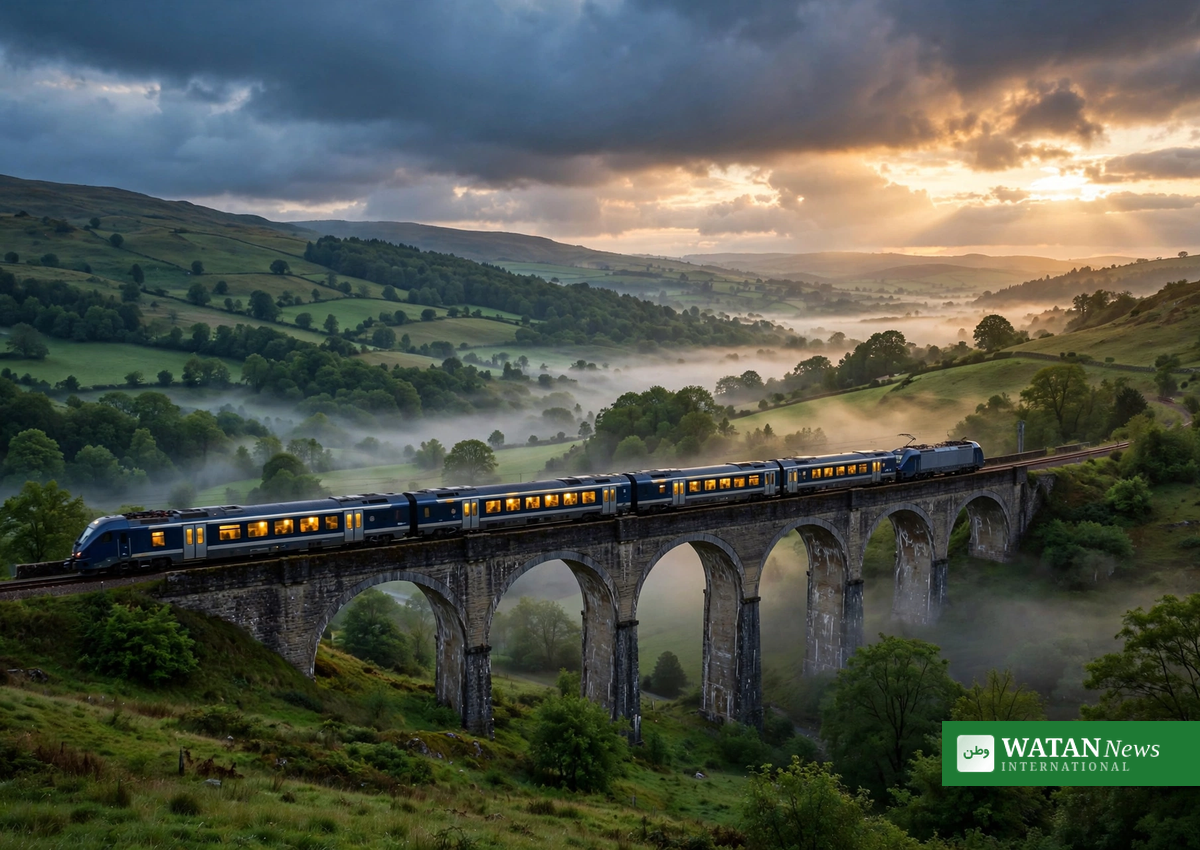
The night train is having a comeback. Across Europe, sleeper services that once seemed destined for the history books are returning to the timetable — and climate researchers say the timing could not be better. This is an awareness explainer from Watan News’ climate desk: not breaking news, but a look at why rail is becoming central to low-carbon travel, what the official figures say, and how travellers can make greener journeys.
The question matters because transport remains one of the hardest parts of the economy to clean up. The European Commission’s Sustainable and Smart Mobility Strategy, adopted in December 2020, sets the target: a 90 per cent cut in transport emissions by 2050, in line with the European Green Deal. Getting there, the Commission says, means shifting far more journeys onto sustainable modes — and rail is first in line.
FAKTA
- EU target: Transport emissions down 90% by 2050 compared with 1990, under the European Commission’s Sustainable and Smart Mobility Strategy.
- Aviation footprint: Flights departing EU and EFTA airports emitted 133 million tonnes of CO2 in 2023 — 10% below 2019 — and accounted for 12% of all transport greenhouse gas emissions in 2022, according to the European Aviation Environmental Report 2025.
- Per passenger-kilometre: A flight produces on average five times more CO2 than a train journey; on rail networks powered entirely by renewable electricity, aviation’s climate impact can be over 80 times greater, according to Greenpeace’s 2025 fare report.
- Lowest emissions per kilometre: The European Environment Agency finds that rail and waterborne transport have the lowest emissions per kilometre of any motorised transport, while aviation and road transport emit significantly more.
- Sleeper network: Around 205 regular night train lines are scheduled in Europe for 2026, according to the advocacy group Back-on-Track, which tracks sleeper routes across the continent.
Night trains: the low-carbon way to travel
The climate case for rail is unusually clear-cut. The European Aviation Environmental Report 2025 — produced by the European Commission together with the EU Aviation Safety Agency and the European Environment Agency — reports that the average flight departing Europe emitted 83 grams of CO2 per passenger-kilometre in 2023. Greenpeace’s comparison puts that at roughly five times the emissions of an equivalent train journey, and the gap widens dramatically when the train runs on renewable electricity.
The sector’s own roadmap shows how far aviation still has to go. The same report estimates that meeting the ReFuelEU sustainable aviation fuel mandate could cut net CO2 emissions by at least 65 million tonnes — 47 per cent — by 2050. But with 11.8 million flights a year projected by 2050, it stresses that traffic growth could wipe out those gains without further action. Shifting short and medium journeys to rail is the most immediate lever available.
Why sleeper trains are coming back
For decades, Europe’s night trains were in decline as budget airlines undercut them and national railways withdrew services. The revival is driven by three forces: climate policy, passenger demand, and better commercial models.
Policy is pushing journeys onto rail
France has banned domestic flights on routes where a direct rail alternative takes less than two and a half hours. The Netherlands is investing hundreds of millions of euros in sustainable aviation fuel, while the EU’s ReFuelEU rules require a minimum 2 per cent sustainable fuel share in aviation from 2025, rising to 6 per cent by 2030. Every policy makes the low-carbon option — the train — relatively more attractive.
Operators are making sleepers easier to book
One of the biggest barriers was never the tracks but the ticketing. This month, the cooperative operator European Sleeper introduced simpler rail booking linking Eurostar journeys from London with its overnight network through Brussels-Midi, connecting travellers onward to Berlin, Prague, Dresden, Hamburg, Milan and Lake Como, according to travel industry reporting. It is a small technical change with a big climate logic: remove the booking friction, and more people choose the flight-free journey.
New carriage designs target the economics
At the InnoTrans 2026 transport fair in Berlin this month, manufacturers showcased new sleeper carriage designs aimed at the night train’s core weakness: a sleeper car earns money mostly while people sleep. Convertible seating-to-bed concepts let the same carriage serve daytime, lounge and overnight markets, spreading costs across more of the day. If rolling stock earns more, more routes become viable.
The price problem that still favours flying
There is one reason the revival is slower than the climate math suggests: flying is often artificially cheap. Greenpeace’s 2025 fare comparison found that aviation fuel remains untaxed across the EU and international flight tickets are exempt from VAT, while rail operators pay full VAT, high track access charges and rising energy costs. On many routes, the train is still the more expensive ticket — though the study notes the share of routes where trains are cheaper rose by 14 percentage points since 2023.
Climate campaigners argue the market is distorted rather than efficient: the environmental cost of flying is not reflected in the ticket price. Until it is, they say, every nudge toward rail — better booking, more routes, fairer pricing — counts.
What travellers can do
For anyone planning a journey, the climate guidance is simple:
- Take the train for trips under roughly 800 kilometres — high-speed and night services now cover most European city pairs overnight.
- Choose night trains for longer distances — you sleep through the journey and wake up at your destination, with no airport queues and no hotel night needed.
- Book through-tickets where possible — combined bookings across operators are getting easier, and a single journey is more resilient to disruption.
- Fly only when rail is not a real option — and when you do, choose direct flights and airlines with newer, more efficient fleets.
The sleeper revival is still early: many routes remain seasonal, prices vary, and booking across borders can test anyone’s patience. But the direction is set. With some 205 night train lines scheduled across Europe this year, the low-carbon night journey is no longer a nostalgic exception — it is becoming a practical choice.
Conclusion
Decarbonising travel will need cleaner fuels, better aircraft and fairer pricing. But it will also need something much older: the overnight train, gliding through the dark while its passengers sleep. The figures say rail is among the lowest-emission ways to move between cities; the revival says travellers are ready. What is missing now is the same thing the industry has always needed — more tracks, more trains, and prices that tell the climate truth.
Read more environment and climate stories in the Climate section on watannews.dk.
Author

usman2344913@gmail.com
Related Posts

Irland lancerer GreenFutures: Første program forener AI-kompetencer og klimaundervisning
- 0
- 398 words
DUBLIN — Irland har lanceret det første nationale skoleprogram, der forener kunstig intelligens-kompetencer med klimaundervisning. GreenFutures, et gratis program på fire lektioner...
Read out all
آئرلینڈ کا گرین فیوچرز پروگرام: مصنوعی ذہانت اور موسمیاتی تعلیم کا پہلا مشترکہ نصاب
ڈبلن — آئرلینڈ نے مصنوعی ذہانت کی تعلیم کو موسمیاتی تعلیم سے جوڑنے والا پہلا قومی اسکولی پروگرام شروع کیا ہے۔ گرین...
Read out all
Ireland Launches GreenFutures: First Programme to Link AI Literacy and Climate Education
- 0
- 420 words
DUBLIN — Ireland has launched the first national school programme to link artificial intelligence literacy with climate education. GreenFutures, a free four-lesson...
Read out all
Hawaiis ungdomsklimatopmøde 2026: Unge tager til delstatens kongres for at forme klimalovgivning
- 0
- 330 words
HONOLULU — Unge på tværs af Hawaii inviteres til at overtage delstatskongressen og forvandle deres klimaidéer til lov. Hawaiis ungdomsklimatopmøde afholdes lørdag...
Read out all
ہوائی یوتھ موسمیاتی سربراہی اجلاس 2026: نوجوان ریاستی اسمبلی میں موسمیاتی قانون بنانے کے لیے آگے آئیں گے
ہونولولو — ہوائی کے نوجوان اب موسمیاتی قوانین کی شکل دینے کے لیے براہ راست قانون سازوں کے سامنے پیش ہوں گے۔...
Read out all
Hawaii Youth Climate Summit 2026: Young People Head to State Capitol to Shape Climate Law
- 0
- 422 words
HONOLULU, Hawaii — Young people across Hawaii are being invited to take over the State Capitol and turn their climate ideas into...
Read out all