- 0
- 1,091 word
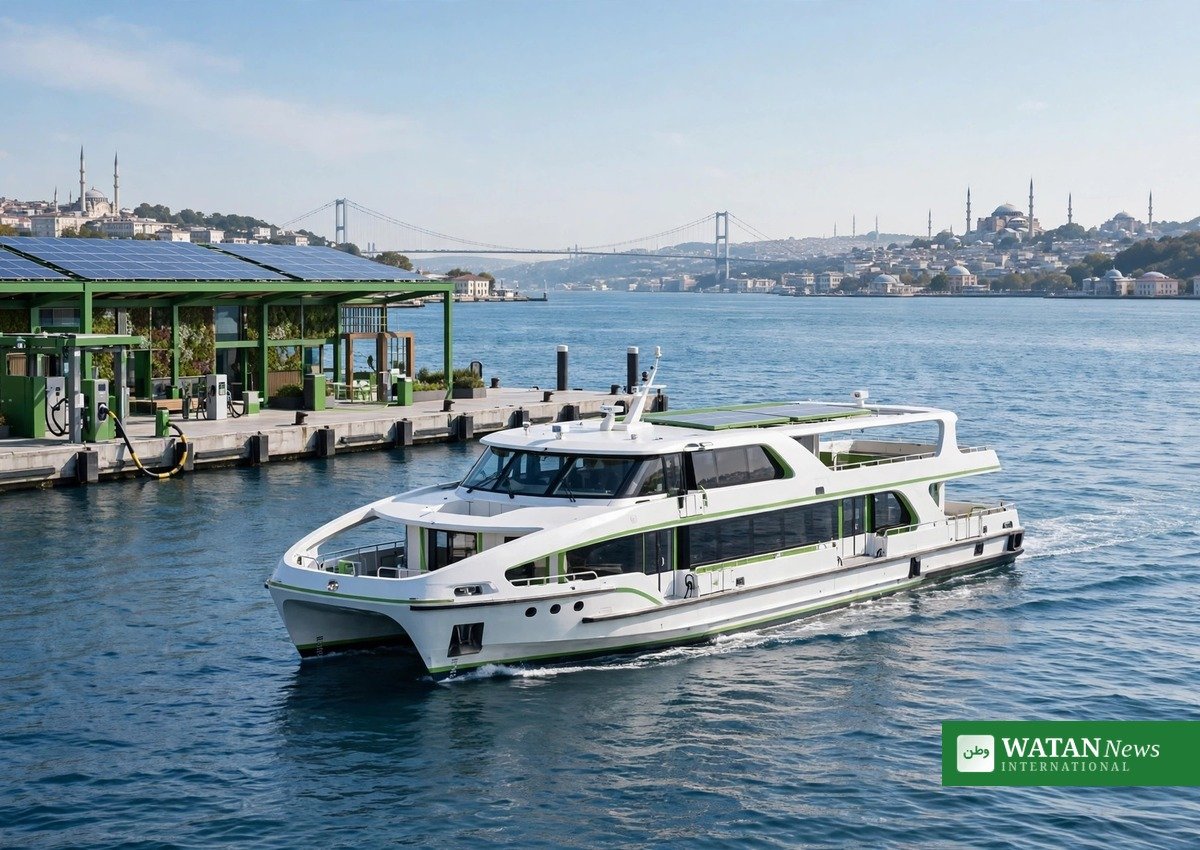
Electric ferries could reshape one of the world’s busiest short-sea ferry networks: Türkiye’s Sea of Marmara ferry fleet could cut its greenhouse gas emissions by 63 percent by 2050 by switching to a mix of hybrid and fully electric vessels, according to a new study by the International Maritime Organization. The assessment found no major technical barriers to electrification, and the change could also avoid nearly half a billion euros in health and environmental damage costs while supporting around 1,100 jobs a year.
What the IMO study assessed
The study was initiated by Türkiye’s Ministry of Transport and Infrastructure and supported through the IMO’s GreenVoyage2050 programme. It assessed 67 roll-on/roll-off (Ro-Ro) and roll-on/roll-off passenger (Ro-Pax) ferries operating across 26 ports in the Sea of Marmara. The network carries around 25 million passengers and seven million vehicles each year.
The researchers found that battery-electric and hybrid propulsion are technically feasible across all the Ro-Pax and Ro-Ro ferry operations assessed. The study identified an optimum scenario combining hybrid and fully electric vessels to balance emissions reductions and costs. Under this scenario, annual GHG emissions could fall by around 63 percent by 2050 compared with business-as-usual operations using diesel fuel.
Electric ferries: the optimum scenario
Going further, converting the entire fleet to fully electric operations could cut GHG emissions by 84 percent by 2050, the study found. This could rise to as much as 95 percent if Türkiye’s electricity grid decarbonizes in line with the country’s 2053 net-zero target — a reminder that the climate benefit of electric ferries depends not only on the vessels but also on the electricity that charges them.
The transition would also reduce local air pollution and could avoid an estimated €492 million in cumulative health and environmental damage costs. Under the optimum hybrid-electric scenario, the required investment could support an average of around 1,100 jobs a year through to 2050, with vessel construction and retrofit jobs expected to be concentrated in Turkish shipyards. Ferry electrification would build on Türkiye’s established shipbuilding expertise, boosting clean technology industries in the country and reducing reliance on imported marine fuels.
The main challenges to large-scale deployment are not the vessels themselves, according to the study, but charging infrastructure, upfront investment, coordinated energy planning and the domestic regulatory framework.
What happens next: charging, pilots and policy
To turn the findings into action, the study recommends a coordinated approach involving government, municipalities, ports, ferry operators and the energy sector. Priority actions include expanding shoreside charging infrastructure and high-voltage grid connections at ports, securing a low-carbon electricity supply at ports, introducing targeted financial incentives and emissions-based port fees, integrating electrification into transport and energy planning, embedding environmental criteria into public ferry procurement, and supporting detailed feasibility studies and pilot projects.
Türkiye’s Ministry of Transport and Infrastructure is now looking to advance a first pilot electrification project in the Sea of Marmara to demonstrate the technical, environmental and commercial benefits identified in the study.
A global wave of electric ferries
The Marmara study lands as battery-electric ferries move from pilots to scheduled fleet replacement around the world. On 16 October 2026, Marine Log reported that Estonia’s first fully electric ferry will be built by Polish shipyard Crist SA for the Estonian State Fleet: a 95-metre vessel with a 3 MWh battery system, carrying up to 380 passengers and 110 passenger vehicles on the Virtsu–Kuivastu route, expected to enter operation in late 2028. In the United States, the Louisiana Department of Transportation and Development christened the hybrid-electric ferry Holly Beach on 14 October 2026, the first of a US$49.7 million two-vessel project replacing a ferry built in 1964, with service planned for December 2026, according to Baird Maritime. Toronto, meanwhile, is progressing a programme to replace its ageing ferry fleet with electric vessels, with the first vessel scheduled for delivery in late 2026, according to the City of Toronto.
Together, these projects show that the electrification of short ferry routes — a climate-friendly way to keep people and goods moving across seas, straits and rivers — is gathering speed. For more coverage of clean transport and climate solutions, see Watan News in English.
FAKTA
- 63% — the GHG reduction by 2050 under the optimum hybrid-electric scenario for the Sea of Marmara ferry network, compared with diesel business-as-usual.
- 67 — Ro-Ro and Ro-Pax ferries assessed across 26 ports; the network moves around 25 million passengers and seven million vehicles annually.
- €492 million — estimated cumulative health and environmental damage costs avoided by the transition.
- ~1,100 — jobs a year the investment could support through 2050, mainly in Turkish shipyards.
- 95% — the potential GHG reduction with a fully electric fleet if Türkiye’s grid decarbonizes in line with its 2053 net-zero target.
Conclusion
The IMO study makes the case for electric ferries with hard numbers: deep emissions cuts, cleaner air, hundreds of millions of euros in avoided damage costs and over a thousand jobs a year. The technology is ready, the study found — the decisive work now lies in charging infrastructure, financing and coordinated planning. If Türkiye’s first Marmara pilot delivers as modelled, it will give ferry operators around the world a working template for greener travel across the water.
Frequently Asked Questions
What is an electric ferry?
An electric ferry is a passenger or vehicle vessel propelled by electric motors powered by batteries that are charged from shore-based electricity, instead of burning diesel fuel on board. Hybrid ferries combine battery-electric propulsion with a backup fuel system.
How much can electric ferries cut emissions?
According to the IMO study for the Sea of Marmara, an optimum mix of hybrid and fully electric ferries could cut the network’s annual GHG emissions by around 63 percent by 2050 compared with continued diesel operations. A fully electric fleet could reach 84 percent, or up to 95 percent with a decarbonized electricity grid.
Why is the Sea of Marmara a good test case?
The network has 67 ferries operating short, regular routes across 26 ports with around 25 million passengers a year — short crossings are ideal for battery-electric propulsion because vessels return to port frequently to recharge. The IMO study found battery-electric and hybrid propulsion technically feasible across all assessed operations.
What is the next step in Türkiye?
Türkiye’s Ministry of Transport and Infrastructure is now looking to advance a first pilot electrification project in the Sea of Marmara to demonstrate the technical, environmental and commercial benefits of the study before wider deployment.
Are electric ferries already operating elsewhere?
Yes. Estonia’s first fully electric ferry is due to enter operation in late 2028, Louisiana’s hybrid-electric Holly Beach ferry is planned to enter service in December 2026, and Toronto is replacing its ageing ferry fleet with electric vessels from late 2026.
Author

usman2344913@gmail.com
Related Posts
Elektriske færger kan skære Marmarahavets emissioner med 63 % ifølge IMO-undersøgelse
- 0
- 1,114 word
Elektriske færger kan forvandle et af verdens travleste nærfærgenetværk: Tyrkiets færgenetværk i Marmarahavet kan skære sine drivhusgasemissioner med 63 procent inden 2050...
Read out all
Klimabevidsthed på rekord: 85 % af briterne ramt af klimaændringer — ONS
- 0
- 1,020 word
Klimabevidstheden i Storbritannien er på rekordhøjt niveau: Mere end fire ud af fem voksne i Storbritannien siger, at klimaændringerne har ramt dem...
Read out all
برقی فیریاں بحیرۂ مرمرہ کے اخراج میں 63 فیصد کمی کر سکتی ہیں، آئی ایم او مطالعہ
برقی فیریاں دنیا کے مصروف ترین چھوٹے سمندری سفری نظاموں میں سے ایک کی صورت بدل سکتی ہیں: بین الاقوامی بحری تنظیم...
Read out all
موسمیاتی آگہی عروج پر: 85 فیصد برطانوی کہتے ہیں کہ موسمیاتی تبدیلی نے انہیں متاثر کیا
برطانیہ میں موسمیاتی آگہی نئے ریکارڈ پر پہنچ گئی ہے: برطانوی سرکاری شماریاتی ادارے آو این ایس کے ایک نئے سروے کے...
Read out all
Fatalities Confirmed After ‘Serious Incident’ and Major Fire at Canada’s CFB Wainwright Base
- 0
- 636 words
Canadian Defence Minister David McGuinty has confirmed that a “serious incident” at Canadian Forces Base Wainwright in Alberta has caused fatalities and...
Read out all
Climate Awareness Hits Record: 85% of Britons Say Climate Change Affected Them in Past Year, ONS Finds
- 0
- 972 words
Climate awareness in Britain has reached a new record: more than four in five adults in Great Britain say climate change has...
Read out all