- 0
- 993 words
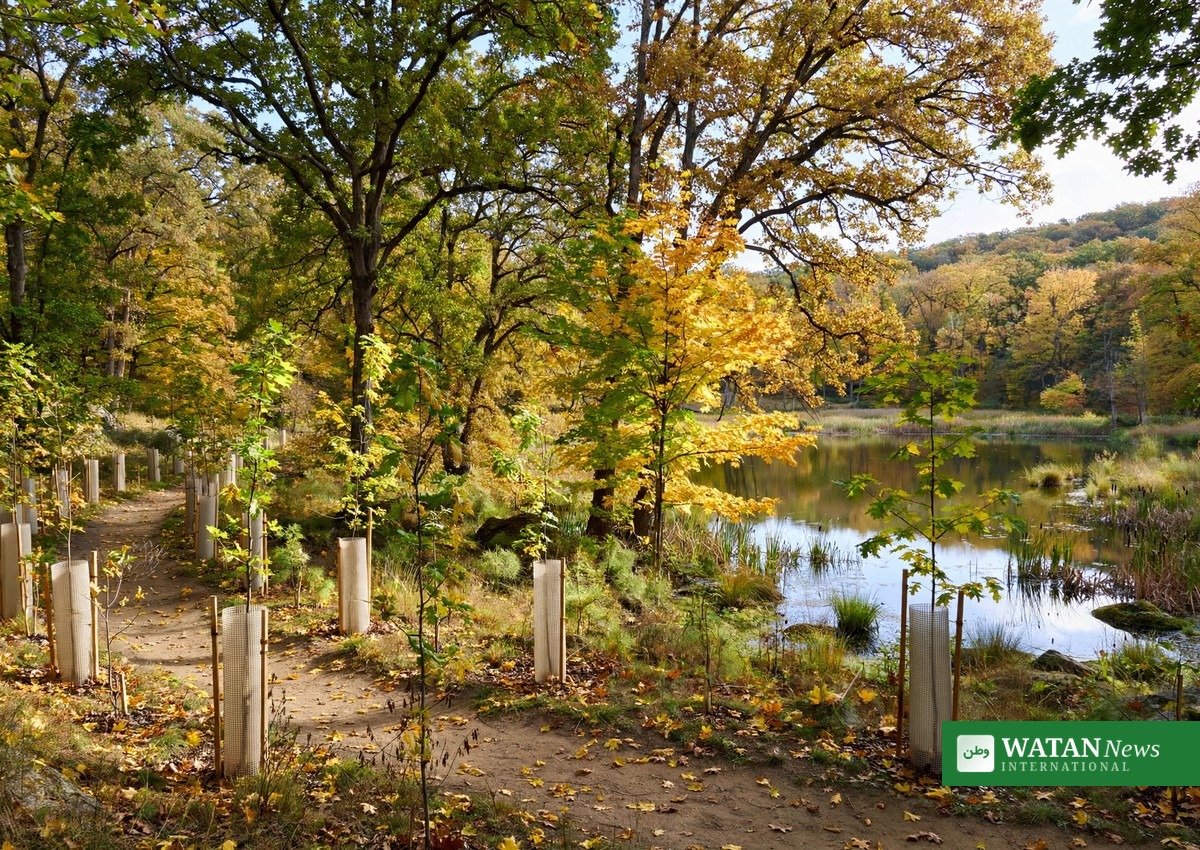
Delaware State Parks has planted its 75,000th tree, completing a commitment made in its 2021–2026 strategic plan. The Delaware 75,000 trees milestone was marked on 19 October at Trap Pond State Park, where Delaware Department of Natural Resources and Environmental Control (DNREC) Secretary Greg Patterson joined staff, partners and volunteers to plant a Liberty Tree near the Bob Trail by the causeway.
The planting celebrates two anniversaries at once: the 75th anniversary of Delaware’s first state park and the 250th anniversary of the signing of the Declaration of Independence. According to DNREC, the milestone tree is an American holly, the state tree, given a place of honour as a Liberty Tree in 16 of the state’s 17 state parks.
Delaware 75,000 trees: where they were planted
The trees were placed strategically across the state park system. The largest numbers went to Killens Pond, with 29,900 trees, and Trap Pond, with 29,200, followed by White Clay Creek with 10,072, Auburn Valley with 5,110 and Bellevue with 447.
DNREC says the trees were planted to enhance existing forests, improve habitats, create riparian buffers, control erosion, promote natural succession, diversify the understory, replace dead trees, expand native plantings and stabilise riparian zones.
Alongside the American holly, the plantings included a wide variety of native trees: cherry, oak, persimmon, maple, sycamore and pine. Tree shelters were fitted to protect the young trees from extreme weather and wildlife.
A Liberty Tree for two anniversaries
Liberty trees carry a particular meaning in American history. Secretary Patterson explained that liberty trees were planted across the colonies as symbols of freedom before the American Revolution, serving as natural landmarks and meeting places as well as signs of freedom.
“Today, these trees will stand as a commitment by the state to protect our natural resources and invite visitors to gather and enjoy the great outdoors,” Patterson said.
Delaware’s park system began in 1951 with three parks. It has since grown to 17 state parks, 22 nature preserves, the Brandywine Zoo and the Indian River Marina, protecting more than 27,000 acres.
One million trees by 2030
The planting forms part of A Tree for Every Delawarean, known as TEDI, a statewide programme with the goal of planting one million new trees — one for every resident of the state — by 2030. DNREC is one of three state agencies taking part in the programme.
More than half a million trees have already been added across Delaware under TEDI, according to DNREC. Funding for the state parks trees came from TEDI funds, Environment Stewardship funds, Friends groups and other public and private sources.
Volunteers played a central role, including Friends groups, school and college groups, corporate partners and individuals. Governor Matt Meyer thanked them at the milestone planting.
“Delaware’s state parks belong to all of us, and this milestone shows what happens when neighbors come together to protect them,” Meyer said. “Every tree planted is a gift to the families who will walk these trails long after we’re gone.”
Matt Ritter, director of DNREC’s Division of Parks and Recreation, said the goal would not have been reached so quickly without the volunteers and staff. “Without these passionate Friends, corporate groups and individuals, we would have never been able to get this done in such a short timeframe,” he said.
What happens next
The work does not stop at 75,000. Park staff, Friends groups and volunteers continue to improve park habitats, with a further 88 trees scheduled to be planted on 28 October at Fox Point State Park. DNREC says trees improve air and water quality, preserve soil and support wildlife — benefits that grow as the new forests mature.
For readers following climate action in their own communities, the Delaware story is a reminder of what steady, local planting can add up to: a strategic plan, public funding, volunteers and native species, carried through park by park until the target is met.
Read more climate news in our climate section.
Key facts
- 75,000th tree planted on 19 October at Trap Pond State Park, near the Bob Trail by the causeway.
- The milestone marks the 75th anniversary of Delaware’s first state park and the 250th anniversary of the signing of the Declaration of Independence.
- American holly, the state tree, was planted as a Liberty Tree in 16 of the 17 state parks.
- Largest plantings: Killens Pond 29,900; Trap Pond 29,200; White Clay Creek 10,072; Auburn Valley 5,110; Bellevue 447.
- Statewide TEDI goal: one million new trees by 2030; more than half a million already planted.
- Next planting: 88 trees on 28 October at Fox Point State Park.
Frequently asked questions
What is A Tree for Every Delawarean?
It is a statewide programme, known as TEDI, with the goal of planting one million new trees — one for every Delaware resident — by 2030. DNREC is one of three state agencies taking part, alongside the Delaware Forest Service’s Urban and Community Forestry programme and other partners.
Why was an American holly chosen for the 75,000th tree?
The American holly is Delaware’s state tree. It was planted as a Liberty Tree, recalling the liberty trees planted across the American colonies as symbols of freedom before the Revolution, and it now holds a place of honour in 16 of the 17 state parks.
Where were most of the 75,000 trees planted?
Killens Pond received the most, with 29,900 trees, followed by Trap Pond with 29,200, White Clay Creek with 10,072, Auburn Valley with 5,110 and Bellevue with 447. The trees were placed to strengthen forests, protect riverbanks and improve wildlife habitat.
Who funded and planted the trees?
Funding came from TEDI funds, Environment Stewardship funds, Friends groups and other public and private sources. Planting was carried out by park staff with volunteers from Friends groups, schools and colleges, corporate partners and individuals.
Can the public help with future plantings?
Yes. DNREC says park staff, Friends groups and volunteers continue to improve park habitats, and Delaware State Parks runs a volunteer programme for future tree plantings. The next scheduled planting is 88 trees on 28 October at Fox Point State Park.
Source: Delaware Department of Natural Resources and Environmental Control (DNREC) announcement, 20 October 2026, with EIN Presswire republication.
Author

usman2344913@gmail.com
Related Posts
China Defends Coast Guard Patrols Around Taiwan-Controlled Pratas Atoll
- 0
- 820 words
China said on Wednesday that its coast guard was “safeguarding order” around the Pratas atoll, the Taiwan-controlled island group at the northern...
Read out all
Tekno-optimistiske forskere tager færre klimatiltag, viser studie af 9.000 forskere
- 0
- 758 words
Forskere, der tror, at teknologi stort set vil løse de problemer, som klimaforandringerne skaber, tager målbart færre klimatiltag selv. Det viser en...
Read out all
ٹیکنالوجی پر حد سے زیادہ امید رکھنے والے سائنس دان کم موسمیاتی اقدامات کرتے ہیں، نو ہزار سائنس دانوں کی تحقیق
وہ سائنس دان جو یہ مانتے ہیں کہ ٹیکنالوجی موسمیاتی تبدیلی سے پیدا ہونے والے مسائل کو بڑی حد تک حل کر...
Read out all
Two Dead Near Kharkiv as Fresh Russian Strikes Hit Three Ukrainian Cities
- 0
- 496 words
Russian drones killed two people near Ukraine’s second-largest city, Kharkiv, during overnight attacks, regional governor Oleh Syniehubov said on Wednesday, 21 October....
Read out all
Techno-Optimistic Scientists Take Fewer Climate Actions, Study of 9,000 Scientists Finds
- 0
- 705 words
Scientists who believe technology will largely solve the problems caused by climate change take measurably fewer climate actions themselves, according to a...
Read out all
Ansøgninger åbne til African Climate Alliance Ambassador Programme 2027 for unge klimaaktivister
- 0
- 719 words
Ansøgningerne er åbne til African Climate Alliance (ACA) Ambassador Programme 2027, et ni måneder langt hybridprogram, der uddanner nye klimaaktivister til at...
Read out all