- 0
- 705 words
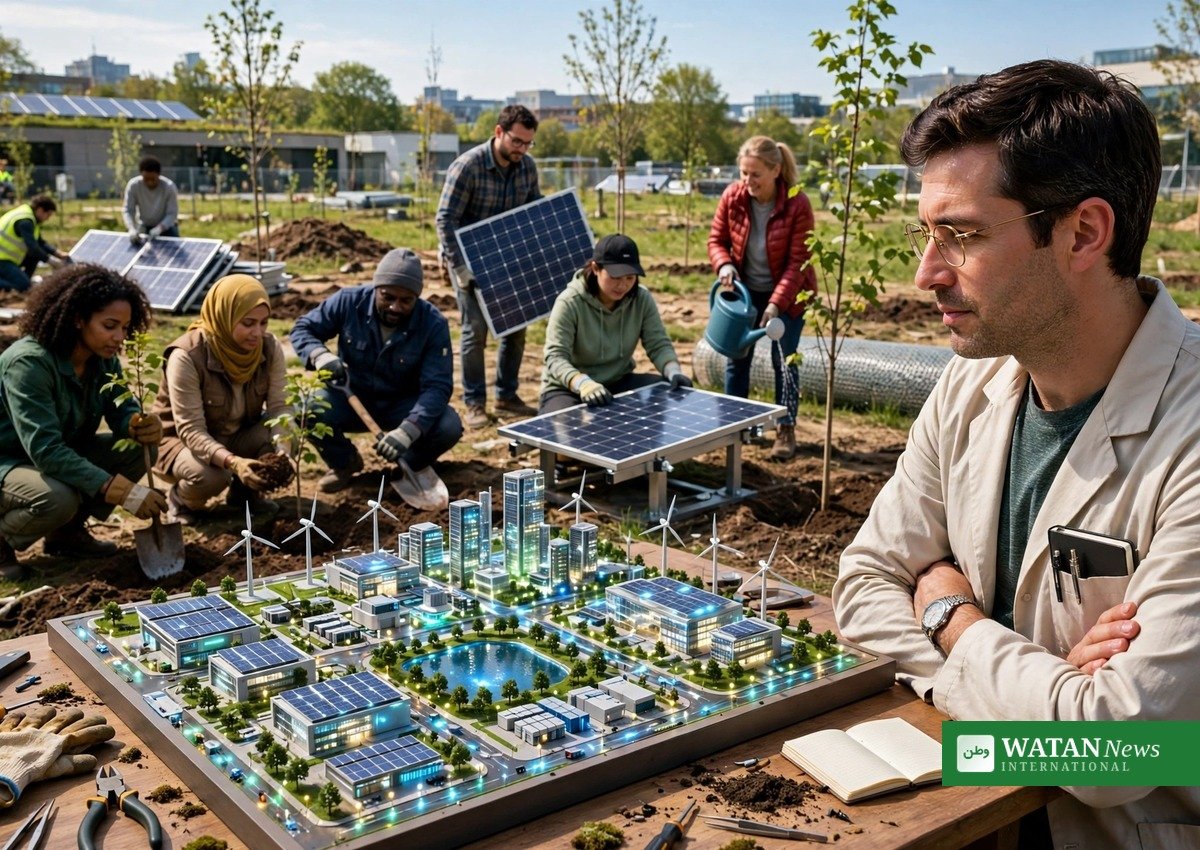
Scientists who believe technology will largely solve the problems caused by climate change take measurably fewer climate actions themselves, according to a new study of more than 9,000 scientists across 115 countries. The research, from the London School of Economics and published in Environmental Research Letters, finds that these “techno-optimistic” scientists sign fewer petitions, protest less and make fewer high-impact lifestyle changes than their peers.
Lead author Fabian Dablander and colleagues asked scientists whether they agreed with the statement that technology will largely solve the problems caused by climate change. Overall, 27 percent agreed, 44 percent disagreed and 29 percent neither agreed nor disagreed. The researchers then compared what each group actually did.
Techno-optimistic scientists act less
The differences were consistent. Averaging across all civic actions, the share of techno-optimistic scientists engaging in a civic action was 7 percentage points smaller than among non-techno-optimistic scientists — a 23 percent lower engagement rate on average. Techno-optimists reported signing fewer petitions (41 percent versus 52 percent), engaging in less protest (17 percent versus 28 percent) and engaging in less advocacy (25 percent versus 33 percent). They were also 18 percent less likely to make high-impact lifestyle changes, such as reducing air travel or adopting a plant-based diet.
The believers were not climate deniers: most said they were worried about the climate. They simply did less about it, according to the study’s findings.

Who is most techno-optimistic?
Techno-optimistic views were most common among scientists with right-leaning political orientations and those working in applied sciences (31 percent) and natural sciences (29 percent). They were least common in the social and behavioural sciences (23 percent) and the humanities (23 percent). Strikingly, techno-optimism hardly varied with how closely scientists’ own research was related to climate change — suggesting that broader worldviews, not expertise, shape how experts think about climate solutions.
Technology cannot replace societal change
The authors warn that faith in technology can lead to over-reliance on unproven solutions at the expense of the far-reaching socioeconomic transformations needed to address the climate and nature crisis. They point out that current climate mitigation scenarios rely heavily on the future rollout of speculative negative-emissions technologies — a reliance that hampers the development of alternative decarbonisation pathways focused on the behavioural, political and structural changes needed for sustainability transformation.
“Technological solutions are often politically attractive because they promise to address climate change without requiring changes to how people live and consume,” said Dablander. “Yet technology cannot substitute for the broader societal changes and large-scale shifts in consumption that are also needed.”
Because the study is based on a survey taken at one point in time, it shows an association between techno-optimism and lower climate action, not proof that one causes the other.
Read more climate stories on Watan News in our Climate section.
Key facts
- Study: Dablander, Cologna, Sachisthal and Haslbeck (2026), Environmental Research Letters, 21(19), 194012
- Survey: More than 9,000 scientists across 115 countries
- Techno-optimists: 27% agreed technology will largely solve climate problems; 44% disagreed; 29% neutral
- Civic engagement: 23% lower on average among techno-optimists (petitions 41% vs 52%; protest 17% vs 28%; advocacy 25% vs 33%)
- Lifestyle changes: 18% less likely to reduce flights or adopt plant-based diets
- Most common in: applied sciences (31%) and natural sciences (29%); right-leaning political orientations
- Key message: Technology cannot substitute for broader societal change
Frequently asked questions
What is techno-optimism?
The study defines it as the belief that technology will largely solve the problems caused by climate change — a view held by 27 percent of the surveyed scientists.
What did the study measure?
It compared scientists’ agreement with the techno-optimism statement against their reported climate actions: signing petitions, protesting, advocacy, and high-impact lifestyle changes such as reducing air travel or adopting plant-based diets.
Does believing in technology cause climate inaction?
Not proven. The study is a survey taken at one point in time, so it shows an association between techno-optimism and lower climate action — it does not prove that one causes the other.
Which scientists were most techno-optimistic?
Techno-optimism was most common among scientists with right-leaning political orientations and in applied and natural sciences. It hardly varied with how closely their research was related to climate change.
What do the authors conclude?
That over-reliance on unproven technological solutions can hamper the behavioural, political and structural changes needed for sustainability — and that technology cannot substitute for broader societal change.
Author

usman2344913@gmail.com
Related Posts
سیئٹل کالجز کو کیمپس میں کاربن کے خاتمے پر 2026 کے زیرو پلس چیمپئن آف سسٹینیبلٹی کا اعزاز
سیئٹل کالجز کو 2026 کے زیرو پلس چیمپئن آف سسٹینیبلٹی کا اعزاز دیا گیا ہے، جو اس کے تین کالجوں پر مشتمل...
Read out all
Seattle Colleges Named 2026 Zero+ Champion of Sustainability for Campuswide Decarbonization
- 0
- 621 words
Seattle Colleges has been named a 2026 Zero+ Champion of Sustainability, recognising its work to decarbonise campuses across its three-college district and...
Read out all
GoImpact Green Tech Summit 2026 åbner i Hongkong for at vende klimarisici til muligheder
- 0
- 508 words
GoImpact Green Tech Summit 2026 åbnede i Hongkong den 21. oktober og samler mere end 50 eksperter og ledere samt over 400...
Read out all
ہانگ کانگ میں گو امپیکٹ گرین ٹیک سمٹ 2026 کا آغاز، موسمیاتی خطرات کو مواقع میں بدلنے پر زور
ہانگ کانگ میں گو امپیکٹ گرین ٹیک سمٹ 2026 کا آغاز 21 اکتوبر کو ہوا، جس میں 50 سے زیادہ ماہرین اور...
Read out all
GoImpact Green Tech Summit 2026 Opens in Hong Kong to Turn Climate Risks into Opportunities
- 0
- 519 words
The GoImpact Green Tech Summit 2026 opened in Hong Kong on 21 October, bringing more than 50 experts and leaders and over...
Read out all
Bangladesh Awaits Saudi Response Over Execution of Two Nationals
- 0
- 495 words
Bangladesh is still waiting for an official response from Saudi Arabia after two of its nationals were executed in the kingdom on...
Read out all