- 0
- 621 words
Seattle Colleges has been named a 2026 Zero+ Champion of Sustainability, recognising its work to decarbonise campuses across its three-college district and turn its buildings into a living laboratory for students.
The award, from McKinstry in partnership with Lumen Field, honours organisations making measurable progress in sustainability. Monica Brown, president of South Seattle College, accepted the award on 11 October at Lumen Field.
Seattle Colleges is Washington’s largest college district, serving tens of thousands of students each year across North Seattle College, Seattle Central College and South Seattle College, as well as five specialty training centers, with more than 130 workforce and academic programmes.
Seattle Colleges Zero+ Champion of Sustainability: the EcoDistrict plan
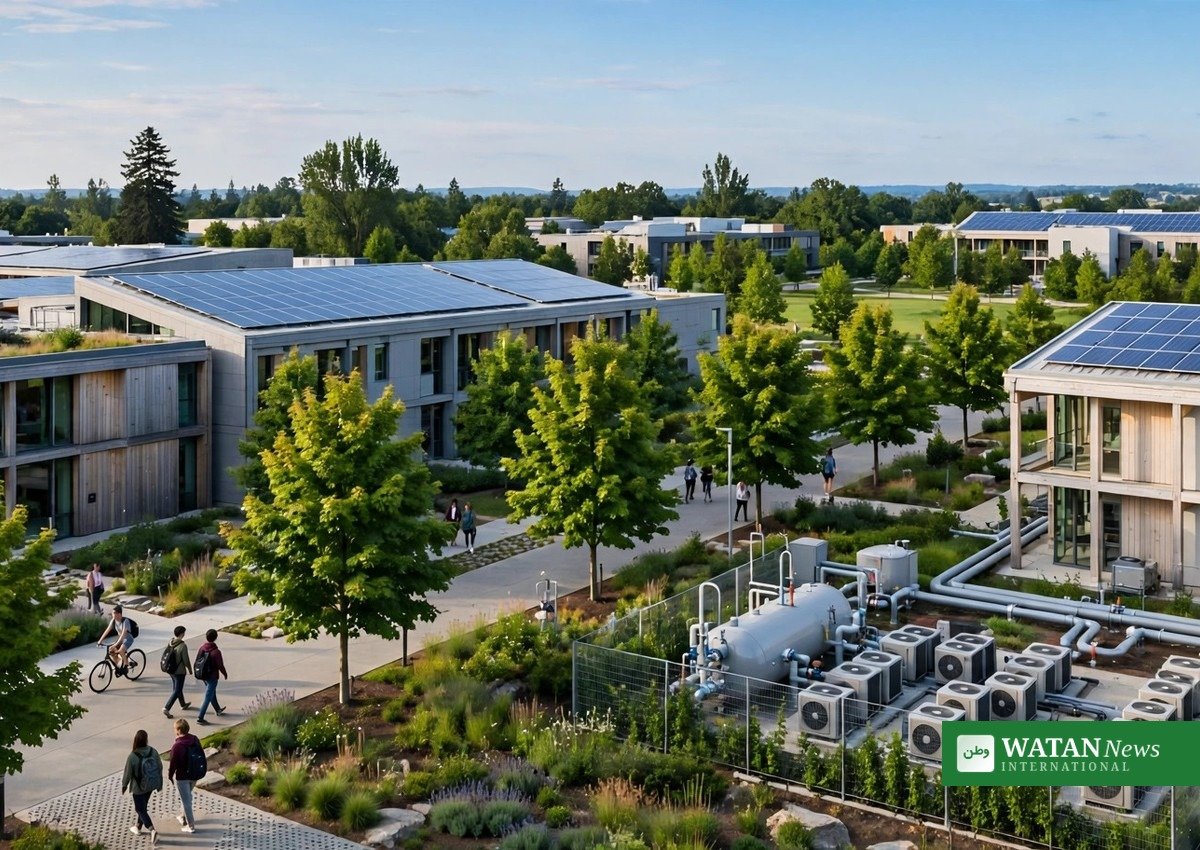
The district’s most ambitious effort is taking shape at Seattle Central College, where an ageing steam heating system is being replaced with a planned 500,000-square-foot EcoDistrict designed to share energy across campus buildings.
Instead of replacing the fossil-fuelled steam system with another steam plant, Seattle Central is pursuing a heat pump-based district energy system using commercially available air-to-water and water-to-water heat pumps. The planned system will deliver 160-degree hot water to campus buildings and could eventually expand beyond the college, and could eliminate steam use across the campus.
The college secured a 755,000-dollar Washington State Department of Commerce Clean Energy Fund grant to help launch the effort, which is being advanced through the state’s Energy Savings Performance Contracting programme.
A districtwide strategy, not one building
The EcoDistrict is only one part of a broader approach. In 2022, all three campuses received Washington State Department of Commerce solar grants to install on-campus solar arrays. The district also secured state energy efficiency grants in 2021 for heating, cooling, lighting, plumbing, sensors and controls.
In recent years, the district has secured roughly 2.28 million dollars in climate and sustainability grants. The work builds on more than a decade of formal sustainability planning: Seattle Colleges launched its Chancellor’s Sustainability Initiative in 2009 and established a districtwide Sustainability Committee of students, faculty and staff, with its Sustainability Plan structured around the national AASHE STARS framework.
For Seattle Colleges, the value extends beyond energy and carbon reductions. Students and faculty can see new energy technologies operating in the buildings where they study, and engage with the same decarbonisation challenges facing communities, businesses and building owners across Washington.
Key facts
- Award: 2026 Zero+ Champion of Sustainability, from McKinstry in partnership with Lumen Field
- Winner: Seattle Colleges — North Seattle College, Seattle Central College and South Seattle College
- Accepted: 11 October at Lumen Field, by Monica Brown, president of South Seattle College
- Flagship project: 500,000-square-foot EcoDistrict at Seattle Central College, replacing an ageing steam system with heat pumps
- Funding: roughly 2.28 million dollars in climate and sustainability grants, including a 755,000-dollar Clean Energy Fund grant
For more climate champion coverage, see the climate section on Watan News.
Frequently asked questions
What is the Zero+ Champion of Sustainability award?
It is an award launched by McKinstry in partnership with Lumen Field to recognise organisations making measurable progress in sustainability.
Why did Seattle Colleges win?
According to McKinstry, the district is advancing decarbonisation across its entire portfolio while using its campuses as living laboratories for students.
What is the EcoDistrict at Seattle Central College?
It is a planned 500,000-square-foot shared-energy district that replaces an ageing steam heating system with a heat pump-based system, delivering 160-degree hot water to campus buildings.
How is the work funded?
The district has secured roughly 2.28 million dollars in climate and sustainability grants in recent years, including a 755,000-dollar Washington State Department of Commerce Clean Energy Fund grant for the EcoDistrict.
What does this mean for students?
Students study in buildings where new energy technologies operate in practice, connecting their education with the decarbonisation challenges facing communities and employers across Washington.
Author

usman2344913@gmail.com
Related Posts

US Envoy Witkoff Lands in St Petersburg for Talks With Putin on Ending Ukraine War
- 0
- 484 words
United States special envoy Steve Witkoff arrived in St Petersburg on Wednesday for talks with Russian President Vladimir Putin, in a fresh...
Read out all
Seattle Colleges kåret som 2026 Zero+ Champion of Sustainability for grøn omstilling af campusser
- 0
- 647 words
Seattle Colleges er blevet kåret som 2026 Zero+ Champion of Sustainability, som anerkendelse af arbejdet med at reducere CO2-udledningen på tværs af...
Read out all
سیئٹل کالجز کو کیمپس میں کاربن کے خاتمے پر 2026 کے زیرو پلس چیمپئن آف سسٹینیبلٹی کا اعزاز
سیئٹل کالجز کو 2026 کے زیرو پلس چیمپئن آف سسٹینیبلٹی کا اعزاز دیا گیا ہے، جو اس کے تین کالجوں پر مشتمل...
Read out all
GoImpact Green Tech Summit 2026 åbner i Hongkong for at vende klimarisici til muligheder
- 0
- 508 words
GoImpact Green Tech Summit 2026 åbnede i Hongkong den 21. oktober og samler mere end 50 eksperter og ledere samt over 400...
Read out all
ہانگ کانگ میں گو امپیکٹ گرین ٹیک سمٹ 2026 کا آغاز، موسمیاتی خطرات کو مواقع میں بدلنے پر زور
ہانگ کانگ میں گو امپیکٹ گرین ٹیک سمٹ 2026 کا آغاز 21 اکتوبر کو ہوا، جس میں 50 سے زیادہ ماہرین اور...
Read out all
GoImpact Green Tech Summit 2026 Opens in Hong Kong to Turn Climate Risks into Opportunities
- 0
- 519 words
The GoImpact Green Tech Summit 2026 opened in Hong Kong on 21 October, bringing more than 50 experts and leaders and over...
Read out all