
- 0
- 486 words
Oil prices fell on Thursday as hopes of revived peace talks between the United States and Iran eased market fears of a wider supply disruption in the Middle East, reversing part of the previous session’s sharp gains.
Brent crude futures declined $1.22, or 1.1 percent, to $114.10 a barrel, while US West Texas Intermediate crude dropped $1.33, or 1.3 percent, to $101.45. The falls came a day after Brent had risen 1.3 percent and US crude had climbed 3 percent.
FAKTA: Oil Prices at a Glance
- Brent crude: down 1.1 percent to $114.10 a barrel on Thursday
- US WTI crude: down 1.3 percent to $101.45 a barrel
- Diplomatic trigger: US Vice President JD Vance contacted Iran’s security chief Mohsen Rezaei to revive peace negotiations
- Limiting the fall: continued Houthi attacks and fears of US military action against Iran after the November 3 midterm elections
- US inventories: crude stocks fell 1.9 million barrels to 410.6 million barrels in the week ended October 23
Diplomatic Opening Behind the Market Move
Investor sentiment improved after reports that US Vice President JD Vance had written to Mohsen Rezaei, secretary of Iran’s Supreme National Security Council, in an effort to restart peace negotiations. The Wall Street Journal reported, citing US officials and people familiar with the matter, that President Donald Trump had approved the contact and that discussions had focused on a possible framework for talks rather than a detailed peace proposal.
Yuki Takashima, an economist at Nomura Securities, said selling pressure was prevailing amid expectations that peace talks may resume, but added that the decline remained limited. Qatari mediators have presented Iran with a revised draft aimed at ending the conflict, though a senior Iranian official dismissed it as unacceptable. Iranian Foreign Minister Abbas Araghchi said Tehran remained in contact with intermediaries and continued to give diplomacy a chance.
Regional Attacks Keep Supply Risks Alive
The market’s caution reflects continued fighting around the region. The Saudi-led coalition said early on Thursday that its air defences had intercepted and destroyed a ballistic missile fired by Yemen’s Houthi group towards Saudi Arabia’s eastern region. Yemeni government forces also reported an attack on Aden airport on Wednesday.
The developments followed a Houthi claim that the group had struck Saudi Arabia’s Ras Tanura refinery with a ballistic missile. Saudi authorities have not confirmed the claimed strike or any damage to the facility, which can process 550,000 barrels of crude oil per day. Expectations of recovering Russian output also weighed on prices: JPMorgan analysts reported that Russian refinery processing rose by about 350,000 barrels per day last week to 4 million barrels per day. For more international business coverage, visit Watan News International.
What Traders Watch Next
Traders will now watch whether the reported US-Iran contacts develop into formal talks, and whether attacks on Gulf energy infrastructure continue. The market is balancing two forces: hope that diplomacy can lower tensions, and the knowledge that a single major incident in the Gulf could quickly push prices back up.
Author

usmanch0013@gmail.com
Related Posts

UN Report: Ocean Carbon Intelligence Needed as Climate Weakens Ocean Carbon Sink
- 0
- 1,180 word
UNEP's 2026 Climate Technology Progress Report warns the ocean carbon sink has weakened by about 6 per cent and calls for Ocean...
Read out all
Cuauhtémoc Cárdenas, Icon of Mexico’s Democratic Change, Dies at 92
- 0
- 458 words
Cuauhtémoc Cárdenas, the Mexican opposition leader whose disputed 1988 presidential campaign helped end decades of one-party rule, has died aged 92.
Read out all
Serbia’s State TV Chief Resigns After Student-Led Election Victory
- 0
- 529 words
RTS director Manja Grcic has resigned after the student-led Student List's landslide election victory, following union talks and demands for change at...
Read out all
Learning Planet Opens Youth Design Challenge for Young Climate Ambassadors
- 0
- 821 words
The Learning Planet Institute in Paris has opened its 2026-27 Youth Design Challenge for young people aged 15 to 26, with environment...
Read out all
World Bank Sees Wheat Prices Rising Sharply in 2026 as Black Sea Shipments Falter
- 0
- 434 words
The World Bank expects benchmark wheat prices to jump about 28 percent in 2026 as Black Sea disruptions and weaker harvests tighten...
Read out all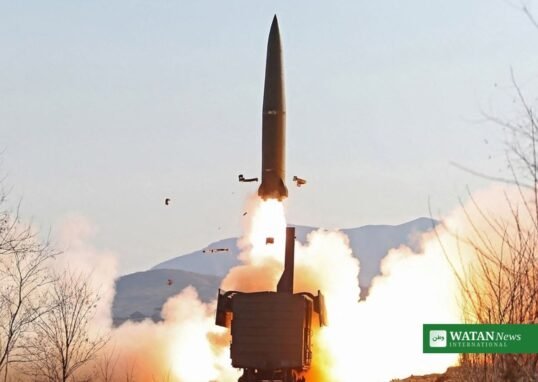
North Korea Fires Around 10 Ballistic Missiles Toward East Sea, Seoul Says
- 0
- 669 words
North Korea fired around 10 short-range ballistic missiles from the Wonsan area toward the East Sea on October 29, South Korea's military...
Read out all