- 0
- 629 words
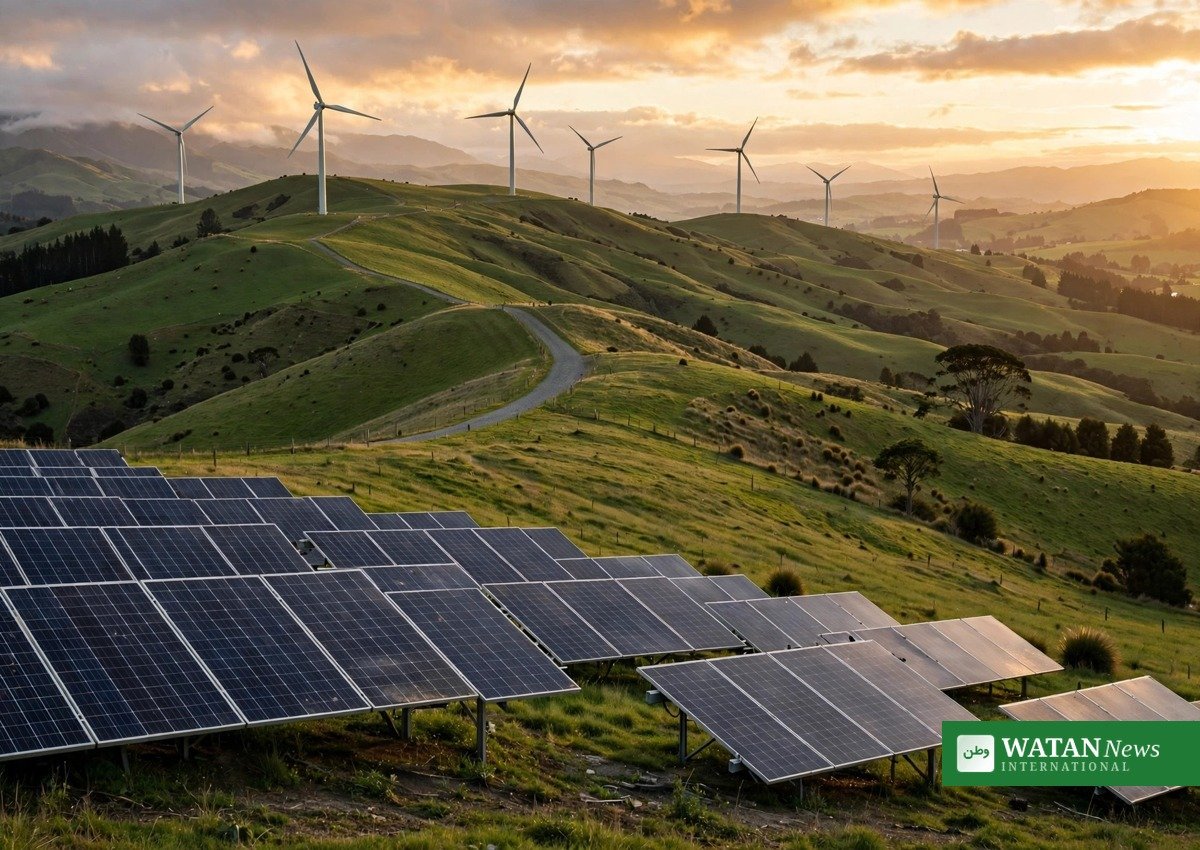
Abu Dhabi-based renewable energy company Masdar has signed an agreement with Invest New Zealand to explore investments of up to 1 billion New Zealand dollars in solar, wind and battery storage projects in New Zealand, according to reports published on 28–30 October 2026.
The memorandum of understanding sets up a framework for identifying, developing and advancing renewable energy opportunities in the country. It also opens the door to co-investment with New Zealand companies and Māori-owned businesses, according to the reports.
What the Masdar agreement covers
Under the agreement, Masdar and Invest New Zealand, the government’s foreign investment agency, will establish a steering committee and a dedicated project team to agree on a work programme and a pipeline of opportunities.
Invest New Zealand chief executive Robert Wall said the immediate priority would be to identify renewable energy opportunities and advance selected projects towards commercial due diligence.
Masdar chief executive Mohamed Jameel Al Ramahi said New Zealand could use its renewable energy resources to strengthen energy security, adding that long-term partnerships are fundamental to unlocking that potential.
The reports are clear about what the agreement does not do: it does not name individual projects, locations or generation capacities, it does not say how the 1 billion New Zealand dollars might be split between solar, wind and storage, and it does not publish a development timeline or confirm whether the agreement is legally binding.
Why New Zealand, and why now
The agreement builds on the New Zealand–United Arab Emirates Comprehensive Economic Partnership Agreement, which came into force in August 2025, alongside a bilateral investment agreement.
New Zealand’s solar sector is expanding fast. Figures from the Ministry of Business, Innovation and Employment, cited in the reporting, show solar electricity generation rose 56 percent year-on-year to a record 242 gigawatt-hours in the second quarter of 2026. Over a rolling 12-month period, solar generation exceeded coal-fired electricity generation for the first time, and renewable sources accounted for 92 percent of the country’s electricity generation during the quarter.
New Zealand Trade and Investment Minister Todd McClay linked the agreement to the government’s target of doubling renewable energy generation by 2040.
Recent milestones underline the momentum: Harmony Energy and Igneo Infrastructure Partners commissioned the 202 megawatt-peak Tauhei solar project in Waikato in July 2026, then the country’s largest solar installation, and Prime Minister Christopher Luxon inaugurated the 168 megawatt-direct-current Kōwhai Park solar plant at Christchurch Airport earlier in October.
Key facts
- Partners: Masdar and Invest New Zealand.
- Amount under exploration: up to 1 billion New Zealand dollars.
- Technologies: solar photovoltaic, wind power and battery energy storage.
- Co-investment: open to New Zealand companies and Māori-owned businesses.
- Not yet disclosed: specific projects, locations, capacities or a timeline.
- Context: renewables supplied 92 percent of New Zealand’s electricity in the second quarter of 2026.
For readers following the global energy transition, the deal is a reminder that the shift to renewables is increasingly driven by cross-border partnerships as well as domestic policy. Read more climate coverage on Watan News here: COP31 and the zero-waste methane agenda.
Frequently asked questions
Is the 1 billion New Zealand dollars already committed to specific projects?
No. The reports describe an agreement to explore investments of up to that amount. No individual projects, locations or capacities have been named.
Which technologies are covered?
Solar photovoltaic power, wind power and battery energy storage.
Who else could invest alongside Masdar?
According to the reports, co-investment opportunities are open to New Zealand companies and Māori-owned businesses.
How renewable is New Zealand’s electricity already?
Renewable sources accounted for 92 percent of electricity generation in the second quarter of 2026, according to Ministry of Business, Innovation and Employment figures cited in the reporting.
What happens next?
A steering committee and project team will identify opportunities and advance selected projects towards commercial due diligence. No timeline has been published.
Author

usmanch0013@gmail.com
Related Posts

Drone Attack Sets Ufa Oil Refinery Ablaze as Russian Energy Sites Come Under Fire Again
- 0
- 503 words
A fire broke out at the Bashneft-Novoil refinery in Ufa after a reported drone attack, likely hitting the L-35 reforming unit, a...
Read out all
Oleshky Evacuees Arrive Back in Ukraine as Families Reunite After Years Apart
- 0
- 1,126 word
Hundreds of Oleshky residents arrived back in Ukraine on Saturday, 31 October, under a rare joint ceasefire, reuniting families separated for years...
Read out all
Lakers’ $12.5 Billion Sale Terms Agreed as Walter and Kushner Finalise Deal
- 0
- 646 words
Mark Walter and Josh Kushner have agreed all terms of a record $12.5 billion Los Angeles Lakers sale, with former Disney chief...
Read out all
امریکہ میں چھتوں پر شمسی توانائی نے پائیدار گھروں کا نیا دور شروع کر دیا
امریکہ میں چھوٹے پیمانے پر شمسی پیداوار ایک عشرے میں چار گنا بڑھ کر 92979 گیگاواٹ گھنٹے تک پہنچ گئی ہے جس...
Read out all
Tag-sol driver en ny æra for bæredygtige hjem i Amerika
- 0
- 685 words
Den amerikanske småskala-solproduktion er firedoblet på et årti til 92.979 gigawatt-timer, anført af Californien — og ændrer, hvordan et bæredygtigt hjem ser...
Read out all
Rooftop Solar Powers a New Era of Sustainable Homes in America
- 0
- 657 words
US small-scale solar generation has quadrupled in a decade to 92,979 gigawatt-hours, led by California — changing what a sustainable home looks...
Read out all