- 0
- 657 words
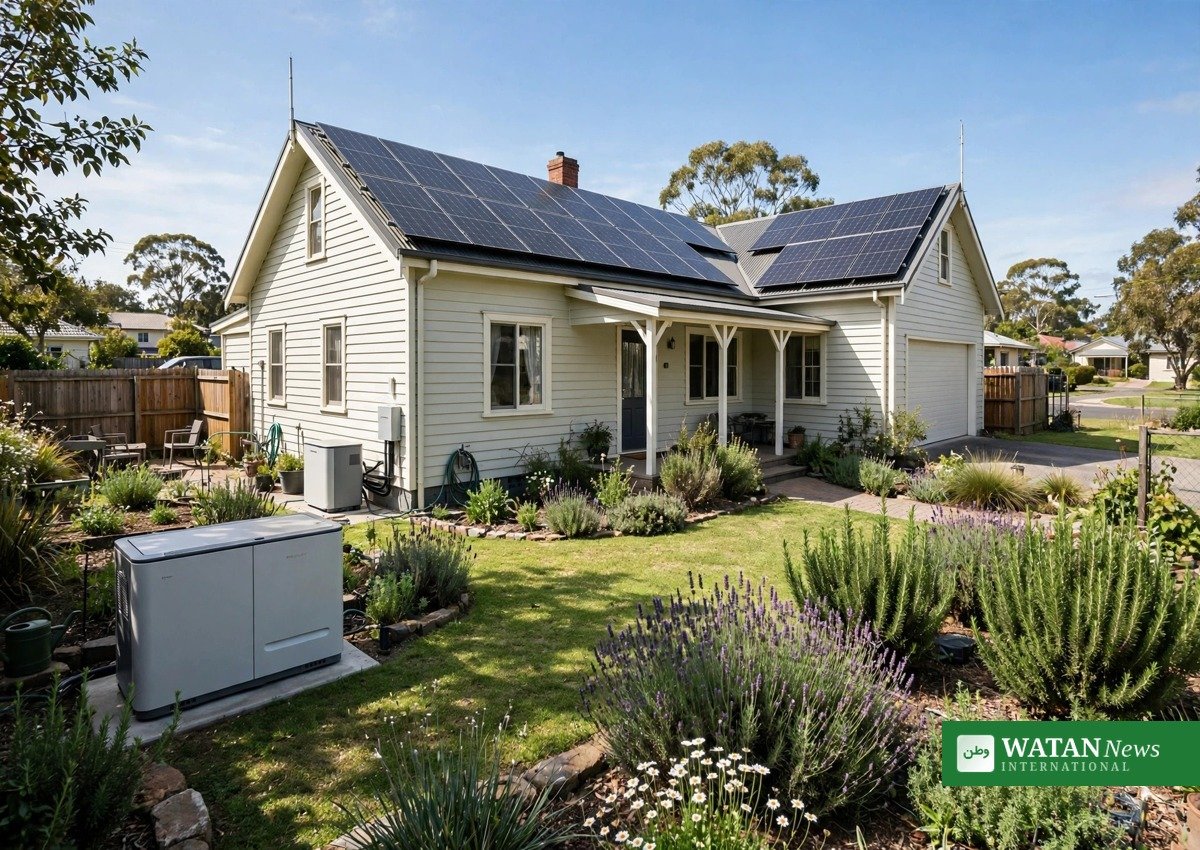
Electricity from small rooftop solar systems in the United States has grown from 18,812 gigawatt-hours a decade ago to 92,979 gigawatt-hours, according to the US Energy Information Administration (EIA) in an analysis published on 16 October 2026 — a fourfold rise that is quietly changing what a sustainable home looks like.
Small-scale solar means photovoltaic systems smaller than 1 megawatt — in practice, the panels on homes, small businesses and community buildings. The EIA estimates generation using utility surveys of customer numbers and capacity, combined with modelling tools from the National Renewable Energy Laboratory.
A decade of rooftop growth
California remains by far the largest contributor, accounting for 37 percent of total US small-scale solar generation in 2025, at 34,411 gigawatt-hours. Its small-scale capacity rose from 18 gigawatts in 2024 to 20 gigawatts in 2025, while generation grew 8 percent over the same period.
Arizona ranked second in 2025 with 5,795 gigawatt-hours, more than 6 percent of the national total. Texas generation rose from 391 gigawatt-hours in 2016 to 5,408 gigawatt-hours in 2025, and Florida from 205 gigawatt-hours to 5,198 gigawatt-hours. New York ranked fifth, supported by state incentives and improving technology despite lower sunshine levels.
Growth peaked in 2022, when total small-scale output expanded 25 percent year-on-year amid record capacity additions. The EIA notes that annual growth rates have moderated since then, even as total generation keeps rising year by year.
What this means for sustainable living
For households, the shift is practical rather than abstract. A rooftop system turns a home from a pure consumer of grid electricity into a small producer, and pairing panels with a home battery lets families use more of their own solar power in the evening. A 29 October 2026 round-up by Climate Action Now reported that 45 percent of new US installations in the first three months of 2026 also included a home battery, and that the country had passed 6 million solar installation sites, 97 percent of them rooftop systems.
Renters and apartment dwellers, who cannot use their own roof, are also gaining options: several US states passed balcony-solar accessibility laws in 2026, according to the same round-up, allowing small plug-in panels for people without roof access.
The lesson for sustainable living is not that every home must have panels. Insulation, efficient heating and cooling, lower energy waste and mindful consumption still matter — but where a roof and local rules allow it, rooftop solar is now one of the most proven ways for an ordinary home to cut its emissions and its bills at the same time.
Key facts
- US small-scale solar generation: 18,812 gigawatt-hours a decade ago, rising to 92,979 gigawatt-hours (EIA estimate).
- Largest state: California, with 37 percent of the 2025 total (34,411 gigawatt-hours).
- Second: Arizona, with 5,795 gigawatt-hours in 2025.
- Fastest growth year: 2022, when output rose 25 percent year-on-year.
- Definition: systems smaller than 1 megawatt, mostly rooftop solar.
- Trend since 2022: growth continues, but at a slower annual rate.
Homes sit at the centre of the climate challenge — and, as the figures show, increasingly at the centre of the solution. Read more climate coverage on Watan News here: COP31 and the zero-waste methane agenda.
Frequently asked questions
What counts as small-scale solar?
Photovoltaic systems smaller than 1 megawatt of capacity, according to the EIA — in practice, rooftop systems on homes and small buildings.
Which US state generates the most rooftop solar power?
California, with 37 percent of total US small-scale solar generation in 2025, at 34,411 gigawatt-hours.
Why has growth slowed since 2022?
The EIA reports that annual growth rates have moderated since the record 2022 expansion, while total generation still rises each year. Changes to incentive schemes, such as California’s move from Net Energy Metering 2.0 to the Net Billing Tariff in April 2023, are part of the changing landscape.
Can renters benefit from solar?
Yes, in places where the rules allow it. Several US states passed balcony-solar accessibility laws in 2026, according to a 29 October 2026 round-up, letting renters and apartment dwellers use small plug-in panels without owning a roof.
Does a home battery matter?
A battery lets a household store daytime solar power for evening use, increasing self-consumption. The same round-up reported that 45 percent of new US installations in early 2026 included a home battery.
Author

usmanch0013@gmail.com
Related Posts

Oleshky Evacuees Arrive Back in Ukraine as Families Reunite After Years Apart
- 0
- 1,126 word
Hundreds of Oleshky residents arrived back in Ukraine on Saturday, 31 October, under a rare joint ceasefire, reuniting families separated for years...
Read out all
Lakers’ $12.5 Billion Sale Terms Agreed as Walter and Kushner Finalise Deal
- 0
- 646 words
Mark Walter and Josh Kushner have agreed all terms of a record $12.5 billion Los Angeles Lakers sale, with former Disney chief...
Read out all
امریکہ میں چھتوں پر شمسی توانائی نے پائیدار گھروں کا نیا دور شروع کر دیا
امریکہ میں چھوٹے پیمانے پر شمسی پیداوار ایک عشرے میں چار گنا بڑھ کر 92979 گیگاواٹ گھنٹے تک پہنچ گئی ہے جس...
Read out all
Tag-sol driver en ny æra for bæredygtige hjem i Amerika
- 0
- 685 words
Den amerikanske småskala-solproduktion er firedoblet på et årti til 92.979 gigawatt-timer, anført af Californien — og ændrer, hvordan et bæredygtigt hjem ser...
Read out all
Masdar vil undersøge investering på 1 milliard dollar i vedvarende energi i New Zealand
- 0
- 616 words
Masdar har indgået en aftale med Invest New Zealand om at undersøge investeringer på op til 1 milliard newzealandske dollar i sol-,...
Read out all
مصدر نیوزی لینڈ میں ایک ارب ڈالر کی قابل تجدید توانائی سرمایہ کاری کے امکانات تلاش کرے گا
مصدر نے انویسٹ نیوزی لینڈ کے ساتھ شمسی توانائی، ہوا سے بجلی اور بیٹری ذخیرہ کرنے کے منصوبوں میں ایک ارب نیوزی...
Read out all