
- 0
- 1,114 word
Manila: Leaders of the 11 member states of the Association of Southeast Asian Nations (ASEAN) have formally backed a plan to grow one billion trees across Southeast Asia, adopting a declaration that puts forest restoration at the centre of the region’s climate response.
The ASEAN Leaders’ Declaration on the One Billion Trees Growing Initiative was adopted during the 49th ASEAN Summit in the Philippines and issued on Sunday 15 November, according to the Philippine News Agency. It brings together Brunei Darussalam, Cambodia, Indonesia, Laos, Malaysia, Myanmar, the Philippines, Singapore, Thailand, Timor-Leste and Viet Nam.
What the leaders agreed
The declaration commends the initiative as a regional effort to promote tree planting, forest restoration and sustainable forest management. Rather than setting binding national quotas, it relies on voluntary efforts: each country contributes through tree-growing, ecosystem restoration and sustainable land management in line with its own laws, policies, capacities and development priorities.
Leaders agreed to restore and rehabilitate degraded forest landscapes, including mangroves, peatlands and watersheds, and to use native and climate-resilient species. They also committed to protecting existing primary forests, which the declaration describes as vital for biodiversity, ecological balance and the livelihoods of local communities.
The plan is tied directly to climate goals. The declaration calls on members to strengthen the region’s forest carbon sinks and to align the work with each country’s Nationally Determined Contributions (NDCs) under the Paris Agreement. It also encourages digital technologies and traceability tools to improve forest monitoring and transparency, and calls on dialogue partners, international organisations, financial institutions, the private sector and non-governmental organisations to provide sustainable financing and technical support.
Key facts
- 11 ASEAN member states adopted the declaration at the 49th ASEAN Summit in the Philippines.
- The goal: grow one billion trees across Southeast Asia through voluntary national efforts.
- Restoration will prioritise mangroves, peatlands and watersheds, using native and climate-resilient species.
- ASEAN’s forests cover more than 200 million hectares — nearly half of Southeast Asia’s land area — and support about 300 million rural residents.
- Forest cover in the Philippines is about 24.5 per cent of land area, against a regional average of 44.6 per cent.
- The initiative’s concept note was endorsed by ASEAN agriculture and forestry ministers in October 2025.
Why Southeast Asia’s forests matter
According to the ASEAN Secretariat, the region’s forests cover more than 200 million hectares, nearly half of Southeast Asia’s land area, and support an estimated 300 million rural residents. The declaration recognises forests as vital assets that sustain biodiversity, support livelihoods, enhance ecosystem services and act as major carbon sinks.
The host country shows why the work is urgent. Forests cover only about 24.5 per cent of the Philippines’ land area, among the lowest levels in ASEAN and well below the regional average of 44.6 per cent.
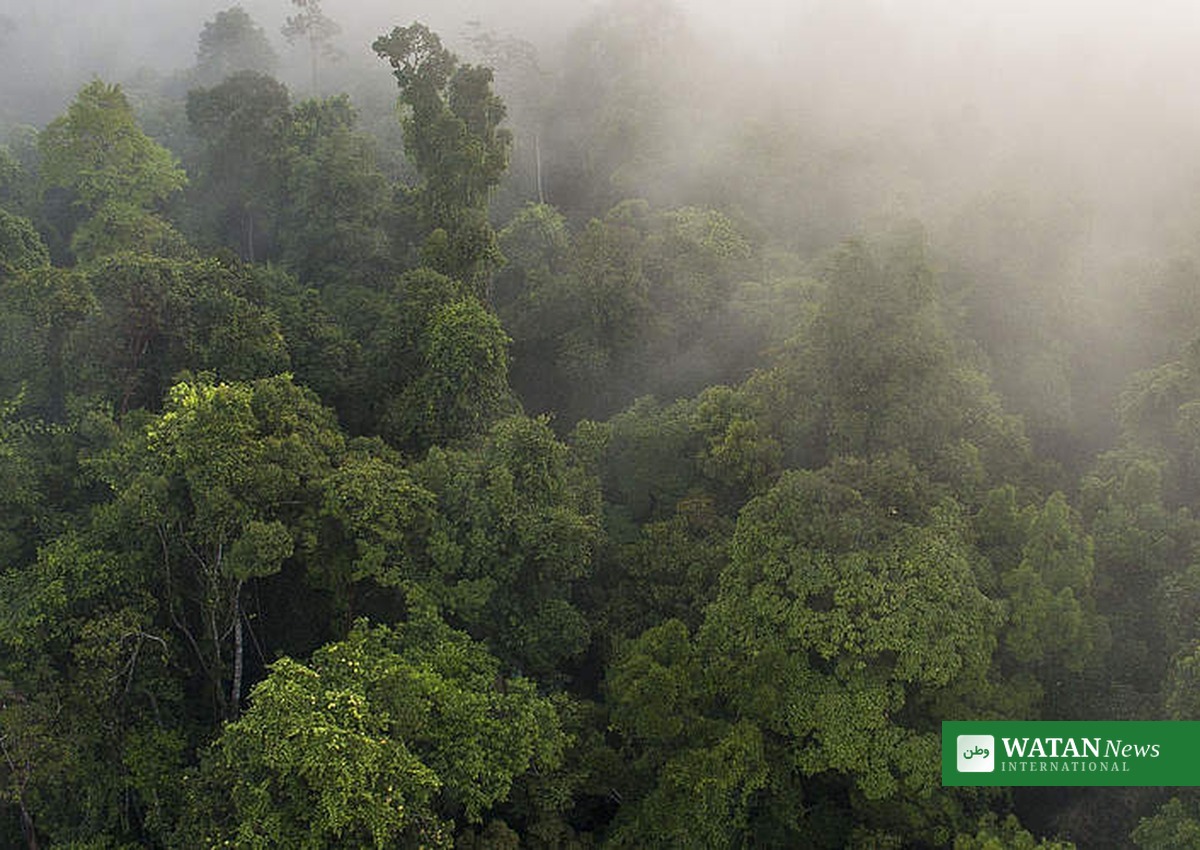
The declaration also links forest work to people’s livelihoods. It calls for empowering local communities and forest-dependent populations through green jobs, capacity development and equitable access to forest resources, and for the inclusion of youth, women and local communities in forest management, including community-based forest management and social forestry.
The pressures behind the pledge
The initiative comes as Southeast Asia faces mounting climate pressures, including prolonged dry spells associated with El Niño that can intensify forest fires, water shortages and ecosystem degradation, as well as recurring transboundary haze from forest fires.
That context matters because the region has already lost large areas of forest. A peer-reviewed study published in February 2026 in the journal Land Degradation & Development found that Southeast Asia lost about 678,979 square kilometres of forest between 2001 and 2023, with Indonesia, Malaysia and the Greater Mekong Subregion accounting for more than 83 per cent of the loss. The study found forest loss was turning many areas from net carbon sinks into emission sources.
Indonesia’s experience shows the scale of the task — and the shift in thinking. At COP31 in Antalya, Indonesia’s forestry ministry told delegates that planting trees alone is not enough, and restoration must go “beyond planting” to cover watersheds, forests and mangroves together. ASEAN’s declaration takes the same approach, pairing tree-growing with the restoration of whole landscapes.
What happens next
Implementation will run through the ASEAN Secretariat and the region’s sectoral bodies, which will help member states share best practices and harmonise national reforestation strategies. The declaration also promotes awareness and knowledge-sharing on the benefits of ecosystem restoration among all ASEAN stakeholders.
The idea is not new: ASEAN agriculture and forestry ministers endorsed a concept note for the One Billion Trees Growing Programme in October 2025. The leaders’ declaration now gives it political weight at the highest level. The 49th ASEAN Summit concluded on 17 November, with the chair passing to Singapore.
At one billion trees, the pledge is four times the Great Lakes region’s target of 250 million trees by 2033, and it stands beside other national efforts such as Kazakhstan’s 9-million-tree plan, presented at COP31.
A regional answer to a global goal
The declaration places the initiative inside the world’s wider restoration effort, recalling the UN Decade on Ecosystem Restoration and the goals of the UN climate, biodiversity and desertification conventions. The global urgency to halt deforestation and forest degradation is also reflected in the draft COP31 cover decision negotiated in Antalya, which keeps language on halting and reversing deforestation by 2030.
Whether the pledge delivers will depend on what follows the declaration: national plans, funding and the monitoring systems the leaders promised. The declaration’s own test is measurable results — digital tracking, transparent reporting and projects that can scale across borders.
For now, Southeast Asia has put a number on its ambition: one billion trees, grown across 11 countries, rooted in the landscapes that need them most.
Frequently asked questions
What is the ASEAN One Billion Trees Growing Initiative?
It is a regional effort by ASEAN’s 11 member states to promote tree planting, forest restoration and sustainable forest management across Southeast Asia, formalised in a leaders’ declaration adopted at the 49th ASEAN Summit in the Philippines.
Which countries are part of it?
Brunei Darussalam, Cambodia, Indonesia, Laos, Malaysia, Myanmar, the Philippines, Singapore, Thailand, Timor-Leste and Viet Nam — all 11 ASEAN member states.
Is the one-billion-tree target binding?
No. The declaration relies on voluntary efforts: each country contributes through tree-growing, ecosystem restoration and sustainable land management in line with its own national circumstances, laws, policies, capacities and development priorities.
What will be restored, besides planting new trees?
Degraded forest landscapes, including mangrove forests, peatlands and watersheds, using native and climate-resilient species. Existing primary forests are also to be protected.
How will progress be tracked?
The declaration encourages digital technologies and traceability tools to improve forest monitoring and transparency, with the ASEAN Secretariat and sectoral bodies helping member states share best practices and harmonise strategies.
Author

usmanch0013@gmail.com
Related Posts
Bayelsa Boat Disaster Death Toll Rises to 24 as Search Continues
- 0
- 703 words
At least 24 people have died after a boat carrying funeral mourners capsized in Bayelsa State, Nigeria, as rescuers continue searching the...
Read out all
ASEAN vil plante en milliard træer for at genoprette Sydøstasiens skove
- 0
- 1,105 word
ASEANs 11 ledere har vedtaget en erklæring om at plante en milliard træer i hele Sydøstasien, genoprette mangrover, tørvemoser og vandområder og...
Read out all
آسیان رہنماؤں نے جنوب مشرقی ایشیا کے جنگلات کی بحالی کے لیے ایک ارب درخت لگانے کے منصوبے کی منظوری دے دی
آسیان کے 11 رہنماؤں نے جنوب مشرقی ایشیا بھر میں ایک ارب درخت لگانے کا اعلامیہ منظور کیا ہے، جس میں مینگروو،...
Read out all
World’s Best Destinations for 2026: Santorini to Samarkand
- 0
- 1,605 word
From Santorini's cliff-top villages to the Maldives' turquoise lagoons, Kyoto's temples to Samarkand's Registan — our guide to the world's best destinations...
Read out all
‘Hunger Games’ Prequel Scores $56 Million Opening Day
- 0
- 726 words
The Hunger Games: Sunrise on the Reaping earned $56 million on its opening day in North America and is heading for a...
Read out all
Hoplite Raises $5.5 Million From Stripe’s Collison Brothers
- 0
- 884 words
Irish-founded Hoplite has raised $5.5 million in seed funding to build cloud infrastructure for AI coding agents, backed by Y Combinator and...
Read out all