- 0
- 1,009 word
Dubai: India’s GREEN Olympiad has won the Organizations category at the ninth edition of the Mohammed bin Rashid Al Maktoum Knowledge Award (MBRKA), a major international recognition for environmental education that reaches millions of young people. The award was announced on 25 November 2026 during the special edition of the Knowledge Summit 2026 in Dubai.
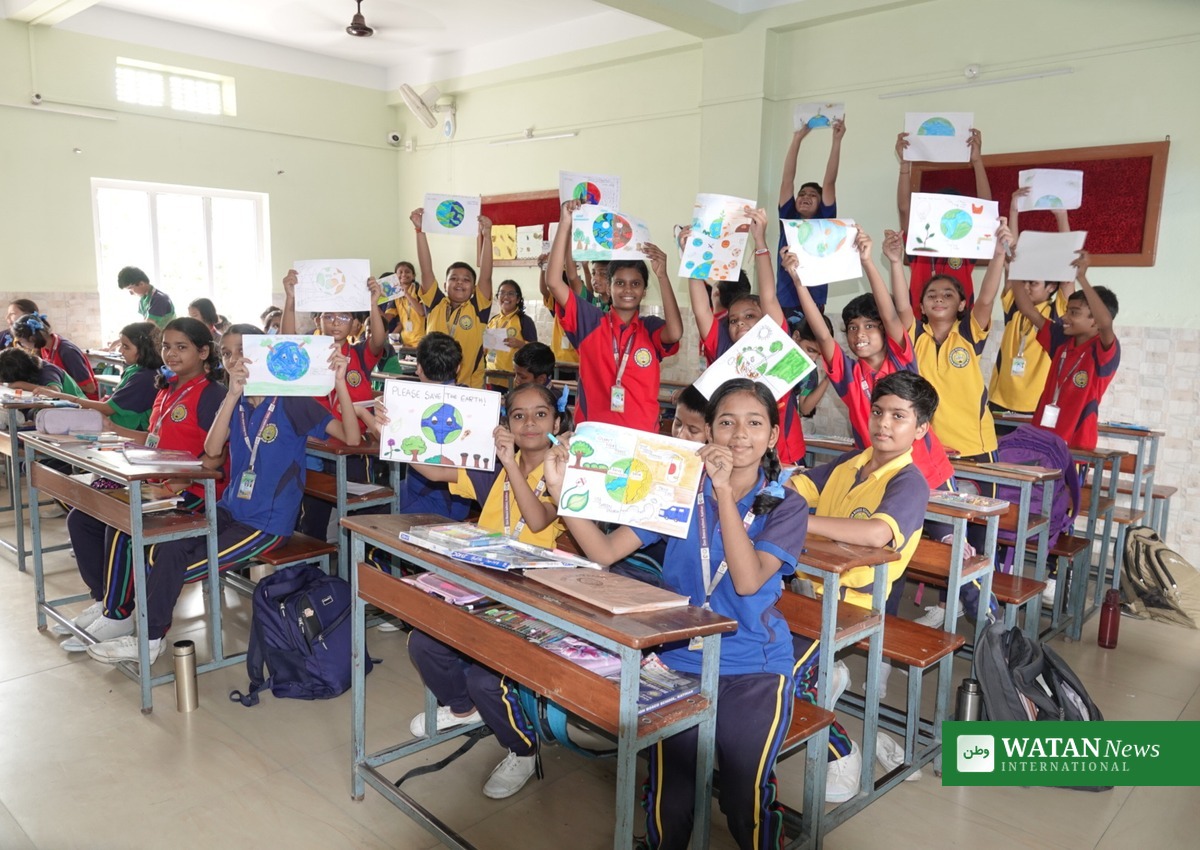
The GREEN Olympiad is a flagship initiative of The Energy and Resources Institute (TERI) in India. The award recognises its contribution to advancing environmental literacy, promoting sustainability awareness and equipping future generations with the knowledge to face global sustainability challenges.
What the GREEN Olympiad does
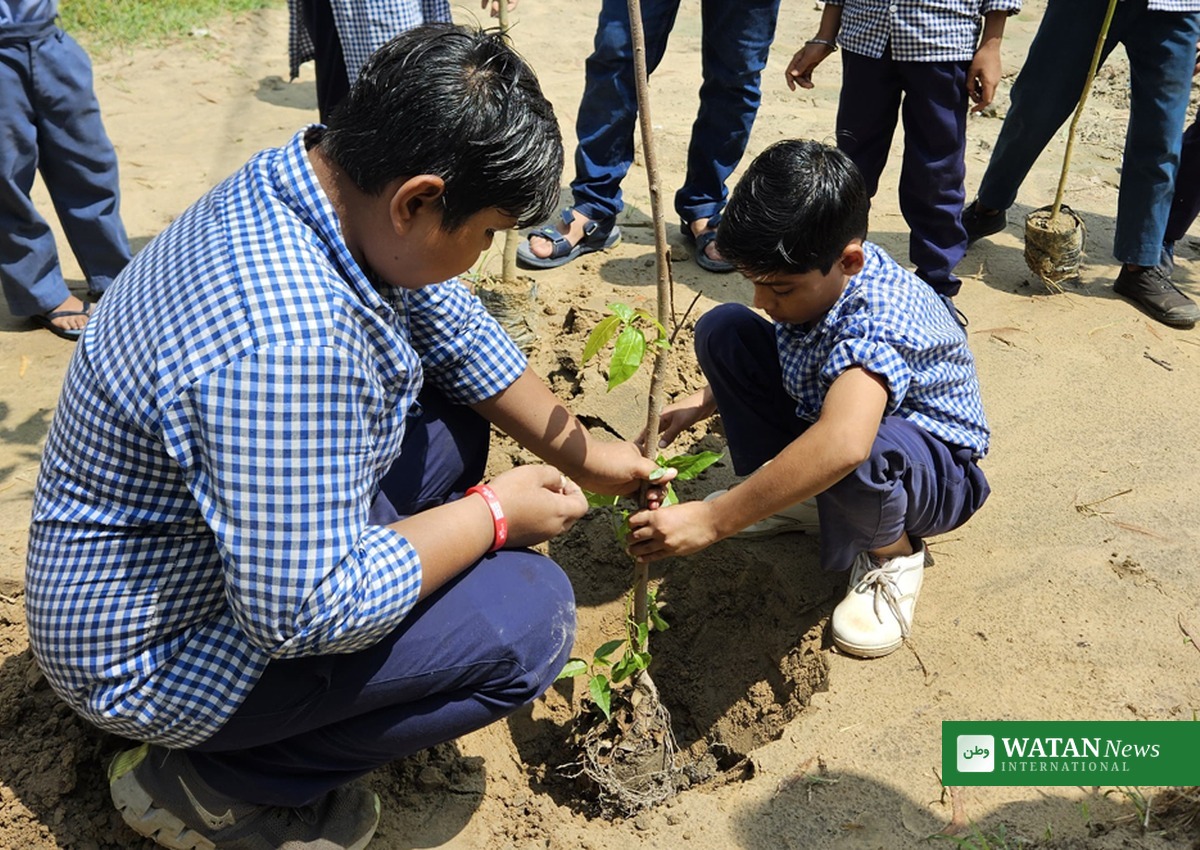
For more than two decades, the GREEN Olympiad has helped strengthen students’ environmental awareness, critical thinking and practical problem-solving skills. It is organised by TERI’s Environment Education and Awareness Division and goes beyond conventional academic examinations: students are encouraged to apply their understanding to real-world challenges such as climate change, water scarcity, biodiversity conservation and waste management.
Its syllabus covers climate change, biodiversity conservation, natural resource management, the circular economy, waste management and sustainable lifestyles. In its previous edition, the Olympiad reached more than 580 districts and engaged over 120,000 students across India. It is offered in seven languages: Assamese, English, Hindi, Kannada, Marathi, Odia and Tamil.
The initiative’s influence extends beyond India to more than 15 countries, including the United Arab Emirates, the United States, Singapore and Türkiye. In 2020, TERI introduced the GREEN Olympiad for Youth (GO4Youth), extending sustainability learning to students in higher education and young adults, with a focus on environmental challenges, green skills and sustainability policies.
The award and the other 2026 winners
The winners were honoured during the Knowledge Summit, organised by the Mohammed bin Rashid Al Maktoum Knowledge Foundation (MBRF) in partnership with the United Nations Development Programme (UNDP) at the Grand Hyatt Dubai, under the theme “Knowledge: Navigating Crises in a Changing World.” MBRKA was established in 2015 and is administered by MBRF.
In the Individuals category, the award went to Professor Henry Snaith, Binks Professor of Renewable Energy at the University of Oxford, recognised for pioneering work on photovoltaic technology and high-efficiency perovskite solar cells, including perovskite-silicon tandem technologies. As co-founder and Chief Scientific Officer of Oxford PV, he also supports the commercial deployment of next-generation solar technology.
The second individual winner was Professor Sir Partha Dasgupta, Frank Ramsey Professor Emeritus of Economics at the University of Cambridge, recognised for his contributions to environmental economics, biodiversity and natural capital. His landmark report, The Economics of Biodiversity: The Dasgupta Review, commissioned by the UK Treasury, set out a framework for integrating nature into economic decision-making.
Why environmental education matters now
The GREEN Olympiad aligns with India’s Mission LiFE (Lifestyle for Environment), the National Education Policy 2020 and Target 4.7 of the United Nations Sustainable Development Goals, which promotes education for sustainable development.
The recognition comes days after COP31 in Antalya closed without a final agreement, and it underlines a point youth delegates made throughout the summit: lasting climate action depends on the next generation understanding the crisis. At COP31, the Antalya Protocol for Action put climate education at the centre, aiming to bring climate into curricula by 2030 and build strong climate awareness across society by 2035. A UNESCO review in 2021 found that more than half of national curricula made no mention of climate change.
Young people are already leading climate work in many places. In Bermuda, a youth climate summit closed this month with a five-year pact between the Bermuda Underwater Exploration Institute (BUEI) and UNDP to support young climate leaders. The GREEN Olympiad shows the same idea at scale: when students learn how climate, nature and everyday choices connect, they carry that understanding into their communities.
Read more: Bermuda Youth Climate Summit Ends With UNDP Five-Year Pact for Young Climate Leaders
Read more: COP31 Puts Climate Education at the Centre: Antalya Protocol Targets Literacy by 2030
FAKTA: GREEN Olympiad wins MBRKA 2026
- Award: Mohammed bin Rashid Al Maktoum Knowledge Award (MBRKA), ninth edition, Organizations category
- Winner: GREEN Olympiad, a flagship initiative of The Energy and Resources Institute (TERI), India
- Announced: 25 November 2026, at the Knowledge Summit 2026 in Dubai
- Organisers: Mohammed bin Rashid Al Maktoum Knowledge Foundation (MBRF) with the United Nations Development Programme (UNDP)
- Reach: More than two decades of work; over 120,000 students and 580+ districts in the previous edition; active in 15+ countries; offered in seven languages
- Individual winners: Professor Henry Snaith (University of Oxford, solar energy) and Professor Sir Partha Dasgupta (University of Cambridge, environmental economics)
Frequently asked questions
What is the GREEN Olympiad?
It is an environmental education initiative of The Energy and Resources Institute (TERI) in India. Rather than a conventional exam, it encourages school students to apply critical thinking and problem-solving to real-world environmental challenges, including climate change, biodiversity, waste and sustainable lifestyles.
What is the Mohammed bin Rashid Al Maktoum Knowledge Award?
MBRKA is an international award established in 2015 and administered by the Mohammed bin Rashid Al Maktoum Knowledge Foundation (MBRF). It honours individuals and organisations whose work uses knowledge and innovation to address global challenges, including sustainability and education.
Who else won MBRKA in 2026?
In the Individuals category, Professor Henry Snaith of the University of Oxford won for pioneering work on perovskite solar cells, and Professor Sir Partha Dasgupta of the University of Cambridge won for his work on environmental economics and the value of nature.
How many students does the GREEN Olympiad reach?
According to TERI, the previous edition reached more than 580 districts and engaged over 120,000 students in India. The initiative has run for more than two decades and now reaches more than 15 countries.
What is GO4Youth?
GO4Youth is the GREEN Olympiad’s programme for students in higher education and young adults, introduced in 2020. It extends sustainability learning beyond schools, focusing on environmental challenges, green skills and sustainability policies.
The GREEN Olympiad’s award is a reminder that climate progress is built in classrooms as well as in negotiation halls. When millions of students learn how the climate, nature and their daily choices connect, the next generation arrives ready to act.
Author

usmanch0013@gmail.com
Related Posts

Indiens GREEN Olympiad vinder MBRKA 2026 for miljøundervisning
- 0
- 1,021 word
Indiens GREEN Olympiad har vundet organisationskategorien ved den niende Mohammed bin Rashid Al Maktoum Knowledge Award (MBRKA), offentliggjort den 25. november 2026...
Read out all
بھارت کے گرین اولمپیاڈ نے ماحولیاتی تعلیم کے فروغ پر ایم بی آر کے اے 2026 جیت لیا
بھارت کے گرین اولمپیاڈ نے محمد بن راشد المکتوم نالج ایوارڈ (ایم بی آر کے اے) کے نویں ایڈیشن میں تنظیموں کے...
Read out all
Macy’s Thanksgiving Day Parade Postponed to Saturday in First-Ever Weather Delay
- 0
- 514 words
The 100th Macy's Thanksgiving Day Parade has been postponed to Saturday, November 28, after a powerful nor'easter forced the first weather delay...
Read out all
SJ EuroNight vender tilbage: Nattoget Stockholm–Berlin kører igen fra 13. december
- 0
- 988 words
SJ og RDC Deutschland genstarter i fællesskab nattoget Stockholm–Berlin den 13. december 2026 og bringer SJ EuroNight-navnet tilbage på ruten gennem Danmark...
Read out all
ایس جے یورونائٹ کی واپسی: اسٹاک ہوم–برلن نائٹ ٹرین 13 دسمبر سے دوبارہ چلے گی
ایس جے اور آر ڈی سی ڈوئچ لینڈ 13 دسمبر 2026 سے مشترکہ طور پر اسٹاک ہوم–برلن نائٹ ٹرین دوبارہ چلائیں گی،...
Read out all
SJ EuroNight Returns: Stockholm–Berlin Night Train Relaunches on 13 December
- 0
- 997 words
SJ and RDC Deutschland will jointly relaunch the Stockholm–Berlin night train on 13 December 2026, restoring the SJ EuroNight brand on the...
Read out all