- 0
- 997 words
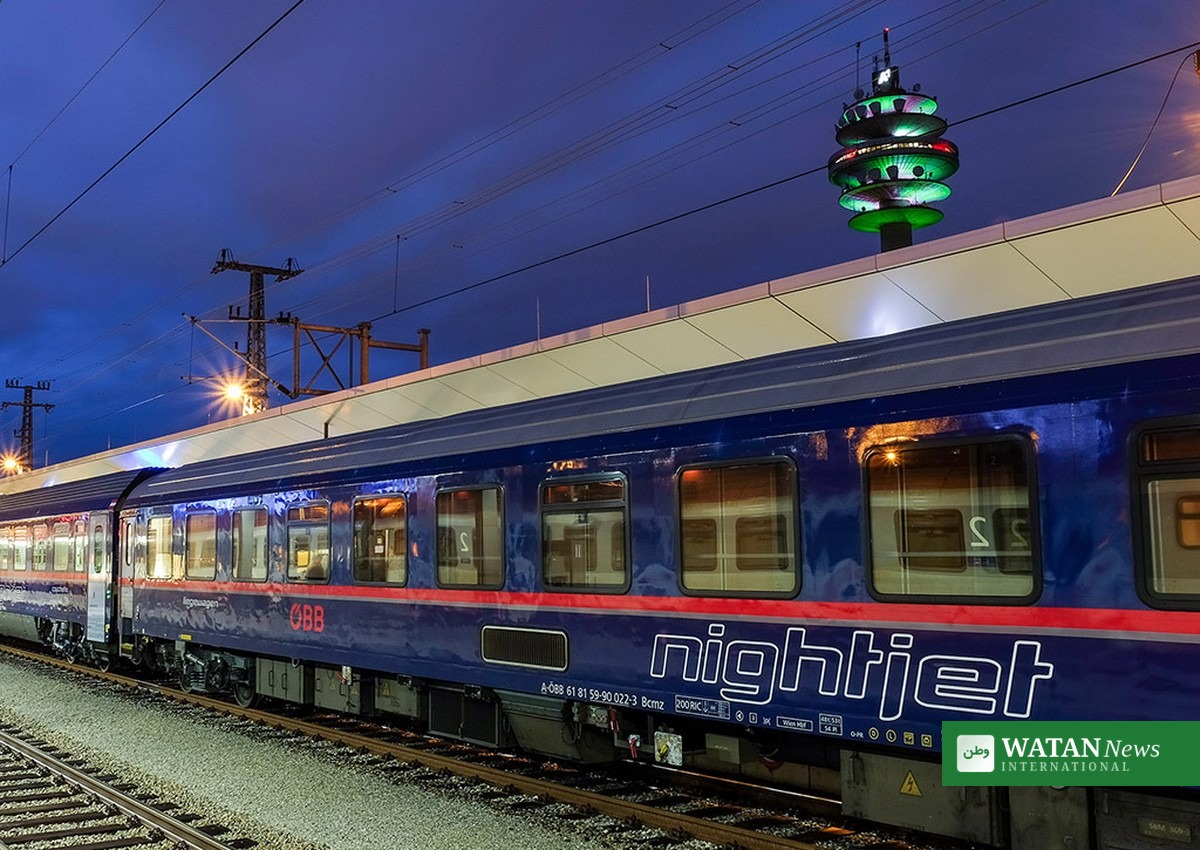
The Stockholm–Berlin night train is coming back under its old name. Swedish operator SJ and German railway RDC Deutschland will jointly relaunch the SJ EuroNight on 13 December 2026, restoring a direct overnight link between Scandinavia and Germany that runs through Denmark.
FAKTA
- What: SJ EuroNight relaunches on 13 December 2026, with the 2027 timetable change, on the Stockholm–Hamburg–Berlin route (trains EN 344/345).
- Who: SJ is responsible for sales and for operations in Sweden and Denmark; RDC Deutschland provides the rolling stock and runs operations in Germany.
- How often: Three departures a week in each direction. For the time being, one weekly round trip runs through to Berlin and the other two end in Hamburg, according to RDC.
- The route: Stockholm – Lund – Copenhagen Airport – Padborg – Hamburg – Berlin, crossing Denmark via the Öresund Bridge and the Great Belt and Little Belt links.
- Background: SJ launched the service in 2022. The Swedish state subsidy ended in summer 2026, SJ withdrew in September 2026, and RDC has kept the train running alone as RDC EuroNight since 1 September 2026.
- Tickets: For travel up to 31 January 2027, tickets are sold via the night-train websites nachtexpress.de and nattexpressen.se. From 1 February 2027, tickets will be sold via sj.se, the SJ app, DB Navigator and bahn.de.
The deal that saved the route
SJ and RDC Deutschland signed a cooperation agreement for the joint night train service, announced on 12 November 2026. Under the deal, the train will again be marketed as SJ EuroNight when the 2027 timetable starts on 13 December 2026.
The relaunch is built to work without the state subsidy that originally underpinned the route. Operation has been simplified: a single dual-voltage locomotive will be used for the entire trip, and the train will run as a longer formation with fewer departures. SJ said in its announcement that the route could be economically viable on that basis.
“We see strong demand for international train travel and want to continue developing the possibilities for train travel between Scandinavia and the rest of Europe,” said Jonas Abrahamsson, chief executive of SJ. “Together with RDC, we can restart SJ EuroNight and at the same time create better conditions for stable and long-term sustainable traffic.”
“Together with SJ, we are now creating a common basis for traffic, where each party contributes what it does best,” said Markus Hunkel, chief executive of RDC.
The route through Denmark
Denmark sits at the centre of the route. The train leaves Stockholm in the evening, crosses the Öresund Bridge to Copenhagen Airport station — the stop for travellers connecting to flights, rather than Copenhagen Central — and continues overnight through Denmark, over the Great Belt and Little Belt links and through Padborg, before reaching Hamburg and Berlin in the morning.
The Danish section remains an overnight transit corridor rather than a standalone service, but it makes Denmark the physical spine of the connection between Sweden and central Europe. The exact stopping pattern may still be fine-tuned before or after the relaunch, and travellers should check SJ’s journey planner once the new timetable is fully loaded.
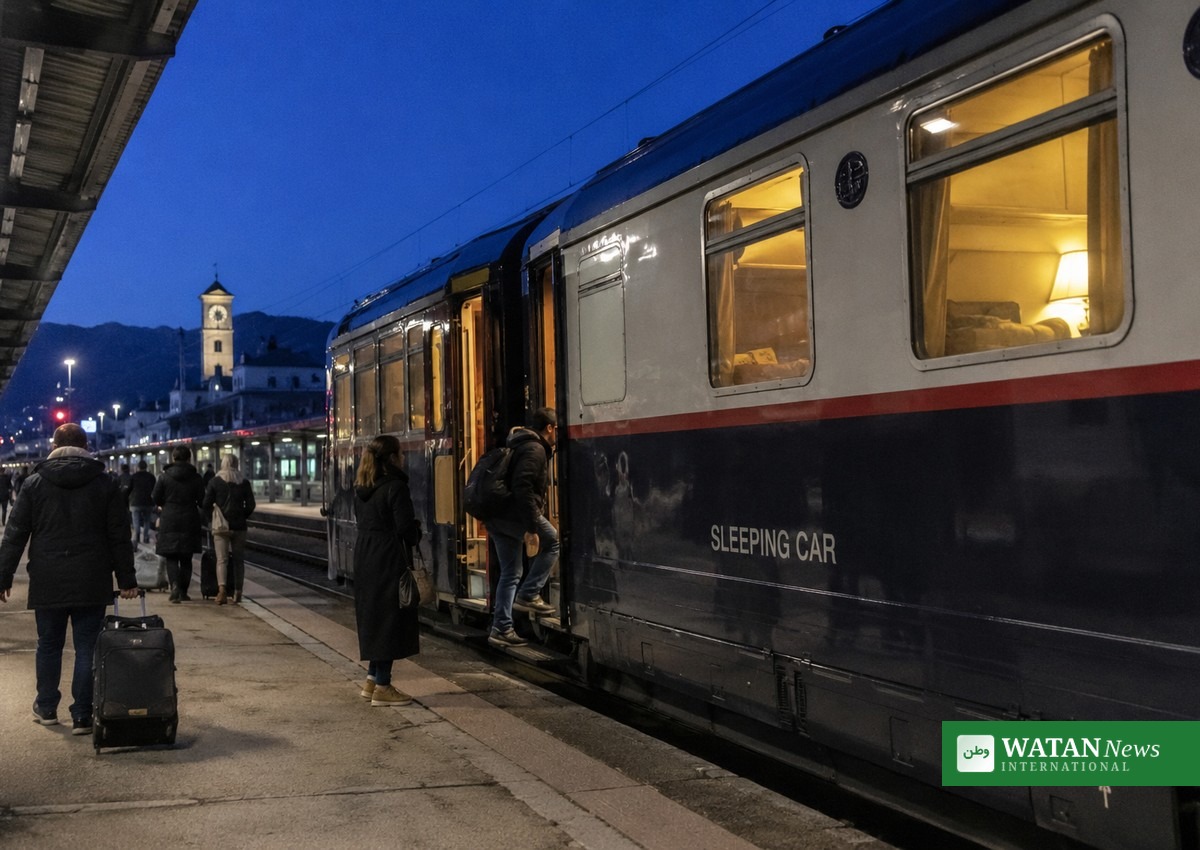
Passengers board a sleeping car at dusk. A night train replaces both a flight and a hotel night — and the journey itself becomes part of the trip.
Why the night train matters for the climate
A night train is one of the clearest low-carbon alternatives to a short-haul flight. According to the European Environment Agency, air passenger transport emits on average about 160 grams of CO2 per passenger-kilometre, while rail passenger transport emits about 33 grams — well-to-wheel, excluding infrastructure-related emissions. The exact figures depend on the electricity mix and how full the train is, but the gap between the two modes is wide on every comparison.
The sleeper adds a second saving: the train replaces a hotel night as well as a flight, since passengers sleep on board. Berths and accommodation types continue to include sleeper and couchette options, and the operators say they intend to develop the service step by step.
A wider night-train revival
The EuroNight is not the only sleeper making headlines this month. Swedish operator Snälltåget ran a special Northern Lights night train from Malmö via Stockholm to Narvik in northern Norway, departing 23 November on a 2,156-kilometre journey past the Arctic Circle, with the return due on 27 November. Private operator European Sleeper has outlined plans for future Brussels or Amsterdam to Copenhagen and Malmö services from around 2028 — announced plans, not confirmed services.
Not every project survives. A proposed Basel–Malmö night service via Denmark was shelved after the Swiss parliament declined to provide funding, a reminder that long cross-border overnight routes still depend on public support and rolling stock. Read our earlier coverage of Europe’s sleeper revival and the low-carbon way to travel.
Frequently asked questions
When does SJ EuroNight return?
On 13 December 2026, with the change to the 2027 timetable, when SJ and RDC Deutschland jointly relaunch the Stockholm–Berlin night train under the SJ EuroNight name.
How often does the train run?
Three times a week in each direction. For the time being, one weekly round trip runs through to Berlin and the other two end in Hamburg, according to RDC.
Where does the train stop?
Stockholm, Lund, Copenhagen Airport, Padborg, Hamburg and Berlin. The train stops at Copenhagen Airport station rather than Copenhagen Central, which matters for travellers connecting to flights.
Where can I buy tickets?
For travel up to 31 January 2027, tickets are sold via nachtexpress.de and nattexpressen.se. From 1 February 2027, tickets will be sold via sj.se, the SJ app, DB Navigator and bahn.de.
How much lower are train emissions than flying?
According to the European Environment Agency, air passenger transport emits on average about 160 grams of CO2 per passenger-kilometre, compared with about 33 grams for rail — well-to-wheel, excluding infrastructure. The exact figure depends on the electricity mix and occupancy, but rail is far lower on this corridor.
For travellers between Scandinavia and Germany, the choice from 13 December is once again a real one: fly, or board in the evening in Stockholm and wake up in Hamburg or Berlin.
Author

usmanch0013@gmail.com
Related Posts

Indiens GREEN Olympiad vinder MBRKA 2026 for miljøundervisning
- 0
- 1,021 word
Indiens GREEN Olympiad har vundet organisationskategorien ved den niende Mohammed bin Rashid Al Maktoum Knowledge Award (MBRKA), offentliggjort den 25. november 2026...
Read out all
بھارت کے گرین اولمپیاڈ نے ماحولیاتی تعلیم کے فروغ پر ایم بی آر کے اے 2026 جیت لیا
بھارت کے گرین اولمپیاڈ نے محمد بن راشد المکتوم نالج ایوارڈ (ایم بی آر کے اے) کے نویں ایڈیشن میں تنظیموں کے...
Read out all
India’s GREEN Olympiad Wins MBRKA 2026 for Advancing Environmental Education
- 0
- 1,009 word
India's GREEN Olympiad has won the Organizations category at the ninth Mohammed bin Rashid Al Maktoum Knowledge Award (MBRKA), announced on 25...
Read out all
Macy’s Thanksgiving Day Parade Postponed to Saturday in First-Ever Weather Delay
- 0
- 514 words
The 100th Macy's Thanksgiving Day Parade has been postponed to Saturday, November 28, after a powerful nor'easter forced the first weather delay...
Read out all
SJ EuroNight vender tilbage: Nattoget Stockholm–Berlin kører igen fra 13. december
- 0
- 988 words
SJ og RDC Deutschland genstarter i fællesskab nattoget Stockholm–Berlin den 13. december 2026 og bringer SJ EuroNight-navnet tilbage på ruten gennem Danmark...
Read out all
ایس جے یورونائٹ کی واپسی: اسٹاک ہوم–برلن نائٹ ٹرین 13 دسمبر سے دوبارہ چلے گی
ایس جے اور آر ڈی سی ڈوئچ لینڈ 13 دسمبر 2026 سے مشترکہ طور پر اسٹاک ہوم–برلن نائٹ ٹرین دوبارہ چلائیں گی،...
Read out all