- 0
- 938 words
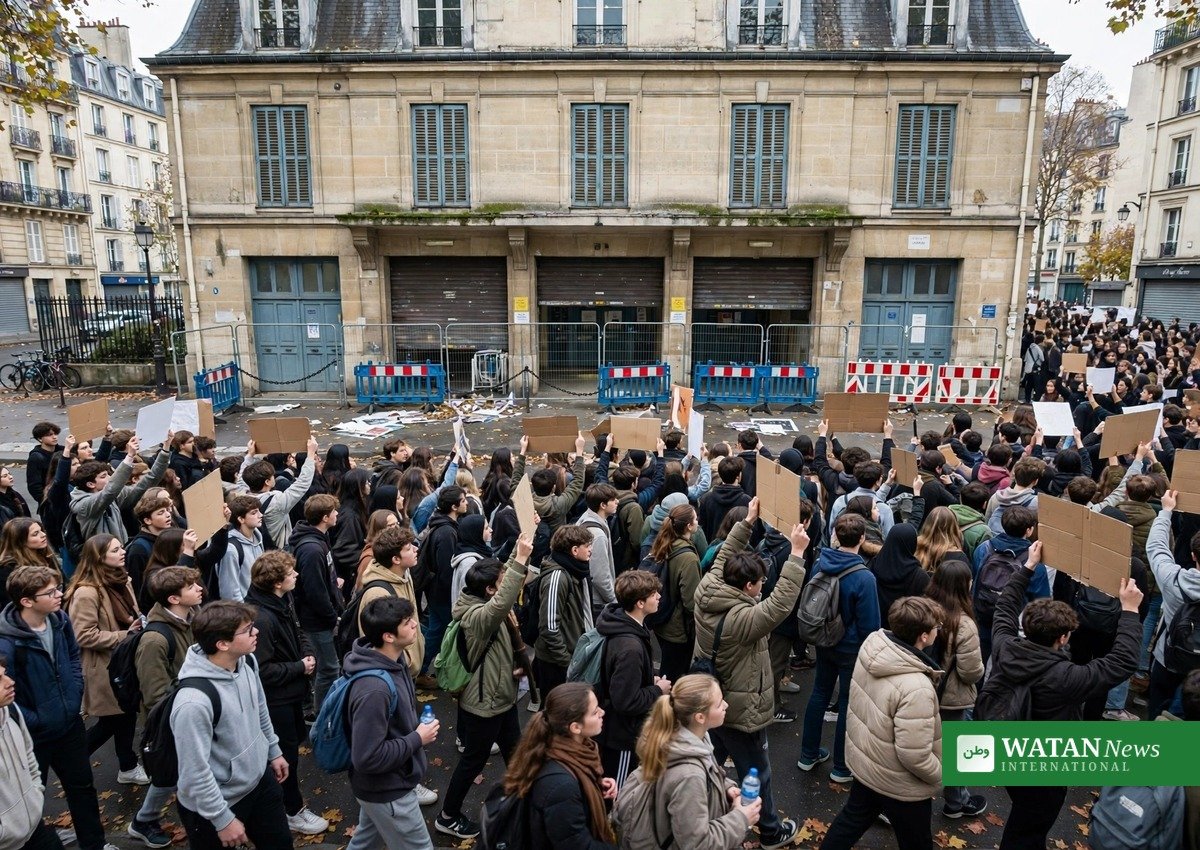
About 400 schools across France will remain closed on Friday after weeks of student protests over education grievances escalated into street violence in several cities, Education Minister Edouard Geffray said late Thursday. The France school protests have grown from blockades in the Paris suburbs into a national confrontation, with hundreds of arrests and dozens of injuries this week.
FAKTA: France school protests in key facts
- Scale: “A little over 400” schools and other educational establishments will stay closed on Friday, Geffray told France 2 on Thursday evening — out of roughly 3,700 schools nationwide, per Reuters.
- Grievances: Overcrowded classrooms, teacher shortages, school schedules running from 8am to 6pm, dilapidated buildings and sweltering classrooms during this year’s heatwaves. The movement began last month in the Paris region.
- Detentions: 440 people — mostly minors — were detained on Tuesday, with around two-thirds placed in police custody, according to Interior Minister Laurent Nuñez. Monday saw 164 detentions; hundreds of arrests have been made this week.
- Injuries: At least 10 teachers, several students and 48 police officers were injured on Tuesday. Officials say hydrochloric acid was thrown at officers in seven separate incidents.
- Politics: Prime Minister Sébastien Lecornu told a crisis meeting that intelligence agencies say the movement was initiated by hard-left politicians including La France Insoumise (LFI) figures — a claim LFI lawmaker Louis Boyard denied.
From the Paris suburbs to a national movement
The protests began last month in the Paris region, where students started blockading their schools over what they describe as a broken education system. One 16-year-old told AFP there are “34 of us in each class, and it’s just not feasible. The teachers are overworked.” Students have carried banners against schedules running from 8am to 6pm that leave them too little time to sleep.
The student union Union Syndicale Lycéenne put the number of blockaded schools at around 400 and called students to join a nationwide public-sector strike. Tuesday’s unrest coincided with a one-day strike by civil servants — including teachers, firefighters and hospital staff — protesting a proposed fourth consecutive freeze of the public-sector pay index and a €54 billion savings plan in the draft 2027 budget. Unions said hundreds of thousands marched nationwide, adding pressure on the government ahead of next year’s presidential election.
Thursday: fires, petrol and torched cars
The week turned violent as the protests spread. Student protesters started fires in at least two high schools on Thursday, while teachers were inadvertently splashed with petrol at a third in the southern city of Marseille, officials said. At least one car was torched in Strasbourg in the east and riot police clashed with youths in Toulouse in the southwest.
Earlier in the week, masked youths set fire to bins and bicycles outside schools in Lille, smashed bus shelters and pulled down a traffic signal as police responded with tear gas. Clashes were also reported in Bordeaux, Rennes, Nantes and Marseille. Geffray said on X that students have the right to protest, but condemned the violence as “indefensible”.
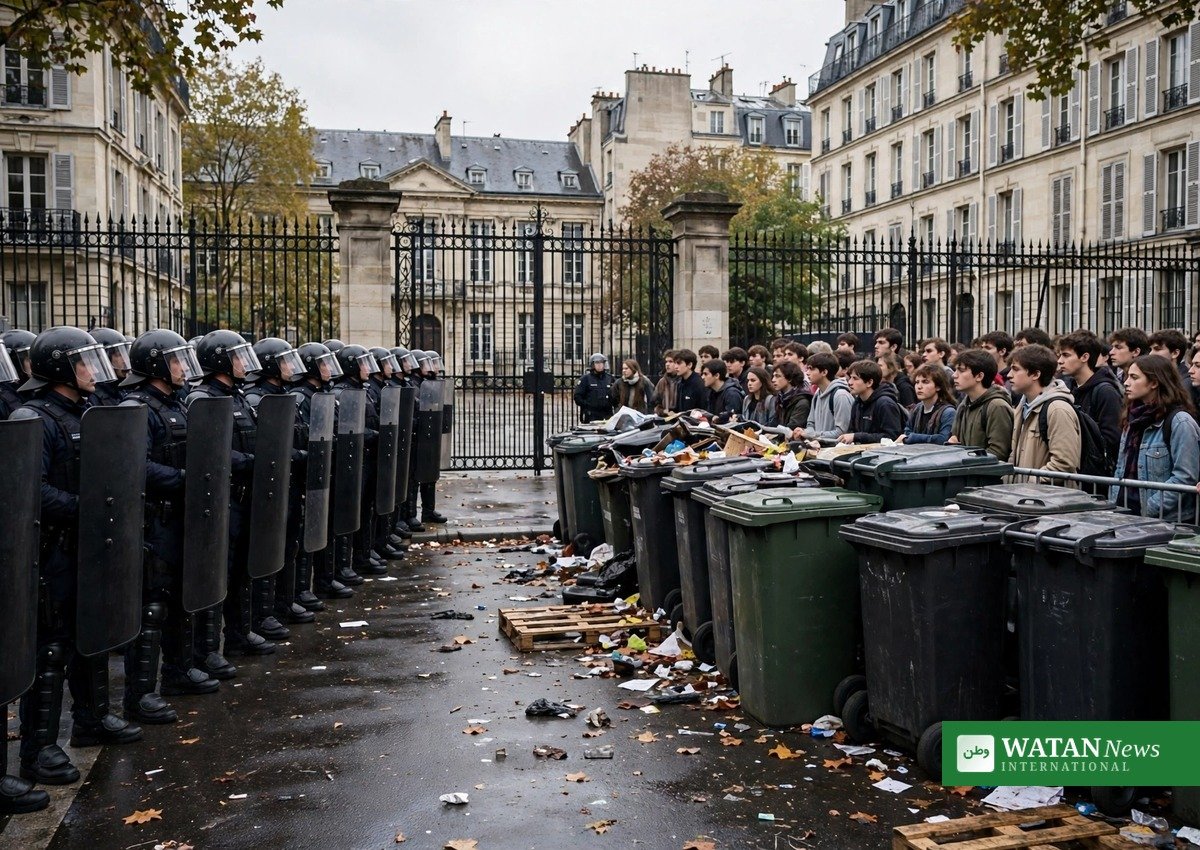
Riot police face student protesters at a blockaded school gate as the France school protests turn violent. (Image: Watan News)
The government’s response
Lecornu has called any further escalation “irresponsible”, while saying “the difficulties of high schools must be heard and addressed”. At Thursday’s crisis meeting, sources close to the prime minister said intelligence agencies briefed that the protest movement had been initiated by politicians from the hard left, including members of La France Insoumise.
LFI lawmaker Louis Boyard denied the claim. Party leader Jean-Luc Mélenchon called the teenagers “harmless” and denounced what he termed a “ferocious” crackdown with “an unmistakably racist undertone”. Geffray has accused LFI lawmakers of encouraging students to expand the blockades. In Seine-Saint-Denis, mayor Bally Bagayoko joined a student demonstration, arguing the protests were understandable given the lower-income area receives fewer education resources; AFP reported riot police carrying shields used batons against students nearby.
Nuñez defended the police response as “carried out in an extremely proportionate manner”, and said the final tally of detentions was still being compiled.
What comes next
With the draft 2027 budget and its €54 billion in savings now at the centre of the national debate, the school protests have become entangled with wider anger over public spending. Unions have pledged further action, and student organisers have signalled that blockades could continue next week. Read more: France: 400 Schools Close Amid Escalating Urban Violence Protests on Watan News, and see the Reuters report on the school closures for the latest details.
Conclusion
What began as a student revolt over overcrowded classrooms and exhausted teachers has become France’s most serious school protest wave in years — and a political test for Lecornu’s government. The closures of 400 schools may end the week, but with the budget battle and a presidential election looming, the underlying grievances show little sign of going away.
Frequently Asked Questions
Why are French students protesting?
Overcrowded classrooms, teacher shortages, long 8am–6pm schedules, dilapidated buildings and hot classrooms during heatwaves — grievances the student union says the government has ignored.
How many schools are closed?
Education Minister Edouard Geffray said “a little over 400” schools and educational establishments will remain closed on Friday.
How many people have been detained?
440 people, mostly minors, were detained on Tuesday alone, with around two-thirds placed in custody. Hundreds more arrests have been made across the week.
Has anyone been hurt?
Yes — at least 10 teachers, several students and 48 police officers were injured on Tuesday, and acid was thrown at officers in seven incidents.
What does the government say?
Lecornu calls escalation “irresponsible” but says student difficulties “must be heard and addressed”. Intelligence briefed that hard-left figures initiated the movement — a claim LFI denies.
Author

usmanjaved13132@gmail.com
Related Posts
Lukashenko Says Trump Should Not Dictate Ukraine’s Future
- 0
- 497 words
Belarusian President Alexander Lukashenko said on Friday that US President Donald Trump should not dictate Ukraine’s political future, declaring that only the...
Read out all
Russian Drone Strikes Kill Three Across Ukraine, Cut Power to 370,000
- 0
- 419 words
Russian drone strikes across Ukraine killed at least three people and knocked out electricity to around 370,000 residents in the northwestern Volyn...
Read out all
Israeli Settlers Torch Olive Trees, Injure Photojournalist in West Bank Harvest Attack
- 0
- 484 words
Dozens of Israeli settlers attacked Palestinian olive harvesters in Abu Falah, West Bank, torching olive trees and injuring two people, including a...
Read out all
Candiru Spyware Ads Planted Zero-Click Spyware on 45 Al Jazeera Devices, Citizen Lab Says
- 0
- 621 words
Researchers have uncovered the first confirmed case of mercenary spyware being delivered to victims through ordinary online advertisements, infecting dozens of devices...
Read out all
Indonesia Forest Fires: Prabowo Approves Foreign Help as Haze Chokes Region
- 0
- 500 words
Indonesia has approved foreign firefighting help as its worst forest fires in a decade choke the region. Hundreds of thousands face breathing...
Read out all
Saudi Coalition Intercepts Cruise Missile Over Medina, Houthis Deny Involvement
- 0
- 678 words
The Saudi-led coalition says it intercepted and destroyed a cruise missile over Medina province on Thursday; the Houthis deny involvement.
Read out all