- 0
- 1,149 word
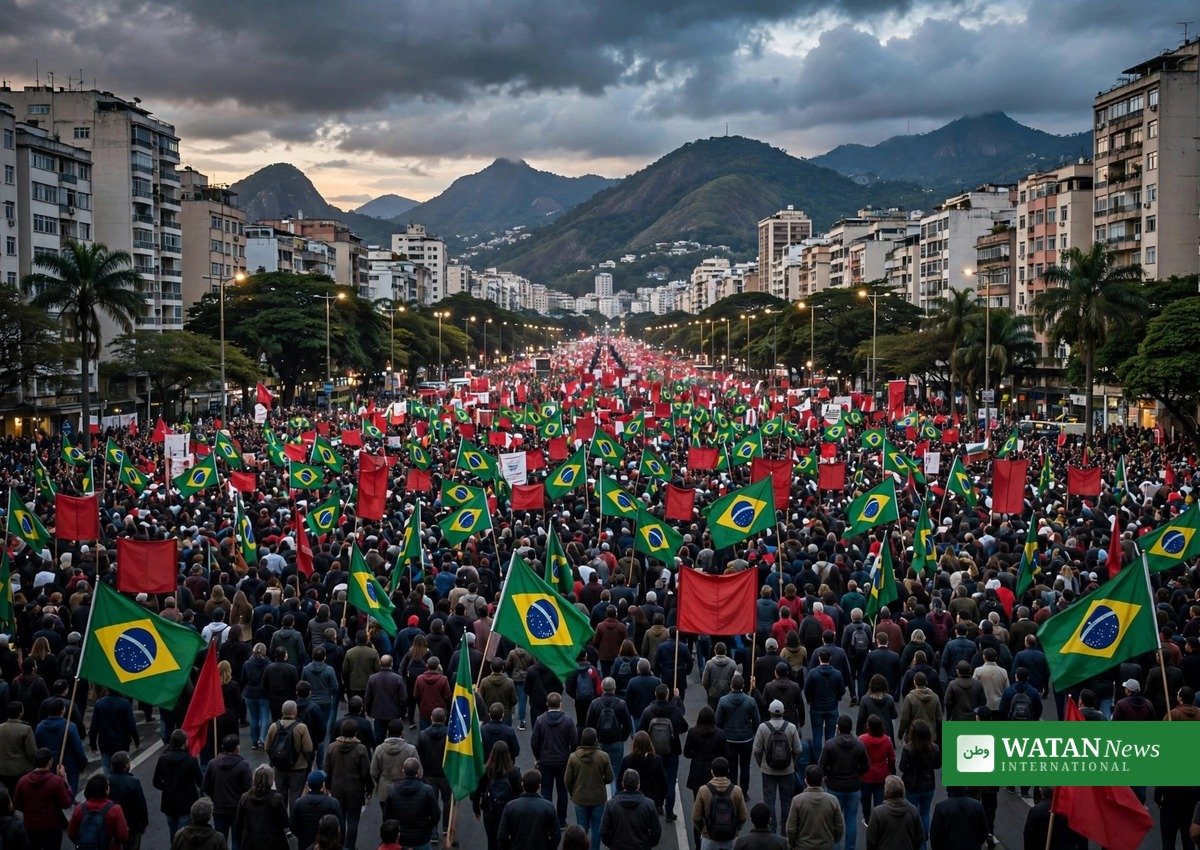
Brazilian President Luiz Inácio Lula da Silva has declared himself the only candidate who can stop the return of fascism in Brazil, framing the country’s Brazil election 2026 as a battle for democracy itself. Speaking at a massive campaign rally in Rio de Janeiro just two days before voters head to the polls on 4 October, the 80-year-old leader told supporters he must win an unprecedented fourth term to prevent the family of jailed former president Jair Bolsonaro from regaining power.
Key facts
- The election: Brazil’s presidential first round is held on 4 October 2026; a runoff is scheduled for 25 October if no candidate wins more than half the vote. Polls point to a neck-and-neck race.
- The candidates: Incumbent Luiz Inácio Lula da Silva (Workers’ Party), 80, seeking a fourth term, versus Senator Flávio Bolsonaro (Liberal Party), the 45-year-old son of former president Jair Bolsonaro.
- The rally: Lula led a “victory march” through central Rio, from Candelária church to Cinelândia, two landmarks of Brazil’s struggle against the 1964–1985 military dictatorship.
- The stakes, in Lula’s words: “It’s either me, or it’s barbarism” — only he, he said, can stop “these fascists” winning another election.
- The backdrop: Jair Bolsonaro was sentenced to 27 years in prison for orchestrating a coup attempt after Lula’s 2022 victory and is barred from the race. His son has pledged to “rescue Brazil”.
- The foreign dimension: Lula vowed that “no gringo is going to lay a finger on Brazil’s things”, a remark widely read as a warning against US interference under the Donald Trump administration.
A ‘Victory March’ Through Rio
Lula led supporters on a march through the streets of Rio de Janeiro that his campaign billed as a “victory march”. The roughly one-mile route connected two historically charged locations in Brazil’s fight for democracy: it began at the Candelária church, where more than a million people — Lula among them — gathered in 1984 to demand direct presidential elections, and ended at Cinelândia, the square where the 1968 “March of the Hundred Thousand” defied the military regime. The footage of the rally, carried by AFP, shows a campaign rally in Rio two days before Brazil’s too-close-to-call election on 4 October (AFP).
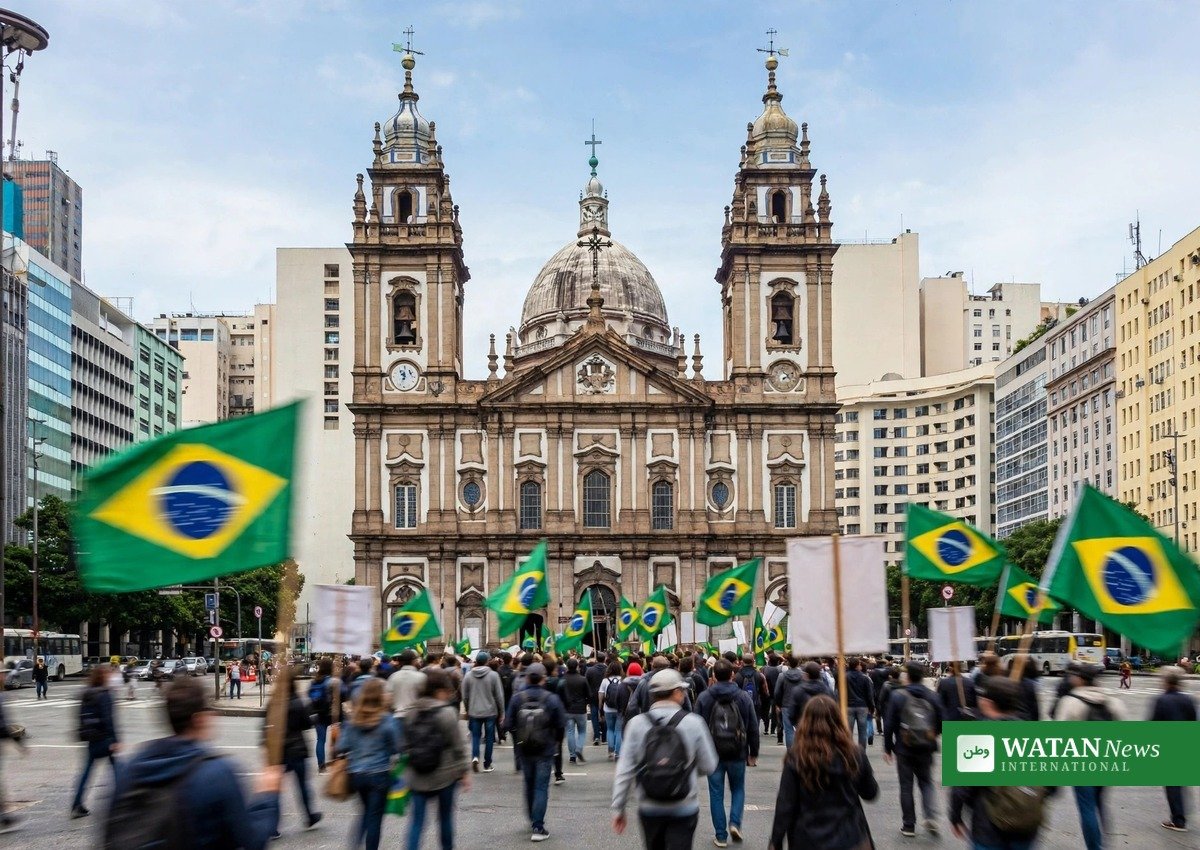
The choice of route was no accident. With the election framed by Lula’s team as a referendum on Brazilian democracy, the march through Rio’s historic centre was designed to remind voters of what was won in the transition from dictatorship — and what the campaign says is at risk now.
Brazil Election 2026: “It’s Either Me, or It’s Barbarism”
Addressing the crowd, Lula explained his decision to seek a fourth term — his seventh presidential campaign since 1989 — in the starkest possible terms. “If it weren’t for me standing up to these fascists they’d easily win another election,” he said. “I’m the one standing in their way.”
“What’s at stake is not the victory of one man, it is the victory of an idea, it’s the victory of democracy,” Lula continued. “Either we consolidate democracy, or we will lose it.” Supporters, clad predominantly in the red of his Workers’ Party, filled the streets in response.
Lula also alluded to alleged foreign pressure on the vote, declaring: “No gringo is going to lay a finger on Brazil’s things.” The remark was widely interpreted as an indirect reference to reported attempts by the Trump administration to influence the election in favour of Flávio Bolsonaro through economic and diplomatic pressure, including tariffs and a cancelled ambassador’s visa.
Flávio Bolsonaro: The Son as Challenger
The race is effectively a contest between two political dynasties — and a verdict on the Bolsonaro era. Senator Flávio Bolsonaro, 45, launched his campaign with a rally on Rio’s Copacabana beach, telling supporters: “You are looking at the next president of Brazil.” A victory, commentators note, could give him the power to pardon those convicted over the failed 2023 coup attempt, including his father.
Jair Bolsonaro is not on the ballot: he was convicted over the failed coup plot that followed his razor-thin defeat to Lula in 2022 and was sentenced to 27 years in prison. He remains the most polarising figure in Brazilian politics, and the 4 October vote is widely seen as a referendum on his legacy. Opinion polls have the two candidates neck and neck, with almost all forecasts pointing to a decisive runoff on 25 October.
A Deeply Divided Nation
The election-eve rally in Rio underscores the intense polarisation running through Latin America’s largest democracy. Lula’s campaign frames the choice as one between democratic progress and a return to what it describes as an authoritarian, regressive era; Bolsonaro’s camp casts itself as the last defence of freedom against a corrupt establishment, and has made the struggling economy — with nearly half of Brazilians saying it has worsened in the past year — the centrepiece of its attack.
The outcome will resonate far beyond Brazil’s borders — for the Amazon and global climate policy, for regional trade, and for the balance between left and right across Latin America, where pro-Trump candidates have recently won in Argentina, Chile and Colombia. Follow our continuing coverage in the world news section.
Conclusion
Lula’s declaration in Rio — that only he can prevent the rise of fascism under Bolsonaro’s son — sets the terms of what may be the most consequential election in the world this year. With the two candidates locked in a dead heat and a runoff looming, the 4 October vote will decide not just Brazil’s next president, but the direction of its democracy.
Frequently Asked Questions
Who is running against Lula in the Brazil election 2026?
Lula’s main challenger is Senator Flávio Bolsonaro, the son of former president Jair Bolsonaro. The election is on 4 October 2026, with a runoff expected on 25 October.
What did Lula say at the Rio rally?
Lula told supporters he is the only one who can prevent the rise of fascism under Bolsonaro’s son, declaring: “It’s either me, or it’s barbarism.”
Why can’t Jair Bolsonaro run himself?
Jair Bolsonaro was convicted over a failed coup attempt after his 2022 defeat and sentenced to 27 years in prison. He is barred from the race.
Why did the march go from Candelária to Cinelândia?
Both locations are landmarks of Brazil’s struggle against the 1964–1985 military dictatorship. Lula’s campaign chose them to frame the election as a battle for democracy.
What did Lula mean by “no gringo” touching Brazil’s things?
The remark was widely read as a warning against reported US interference in the election under the Trump administration, including tariffs and diplomatic pressure seen as favouring Flávio Bolsonaro.
Author

usmanjaved13132@gmail.com
Related Posts
Federal Minister for Poverty alleviation and Social Safety Syed Imran Ahmed Shah attends the closing ceremony
- 0
- 994 words
The Pakistan Global Mental Health Summit 2026 concluded in Islamabad on 2 October 2026 with the launch of the National Mental Health...
Read out all
Christa Pike on Ventilator After Botched Tennessee Execution
- 0
- 435 words
Christa Pike is unconscious, intubated and on a ventilator in a Nashville-area hospital two days after Tennessee's failed execution attempt, her attorneys...
Read out all
In Pictures: Lahore in Autumn — Mughal Splendour in Golden Light
- 0
- 367 words
Lahore in autumn — Badshahi Mosque, Lahore Fort and Shalimar Gardens glow in golden October light.
Read out all
In Pictures: Autumn in Dyrehaven — Deer in the Rutting Season
- 0
- 310 words
Autumn in Dyrehaven — red deer in the rutting season, morning mist and the Hermitage lodge in pictures.
Read out all
In Pictures: The Markhor — Pakistan’s National Animal
- 0
- 294 words
The markhor — Pakistan's national animal — with its astonishing corkscrew horns on the cliffs of the Karakoram.
Read out all
In Pictures: Northern Lights Cast Their Spell Over Scandinavia
- 0
- 280 words
The magic of the northern lights over Scandinavia — fjords, coastal villages and Lapland lakes in pictures.
Read out all