- 0
- 1,078 word
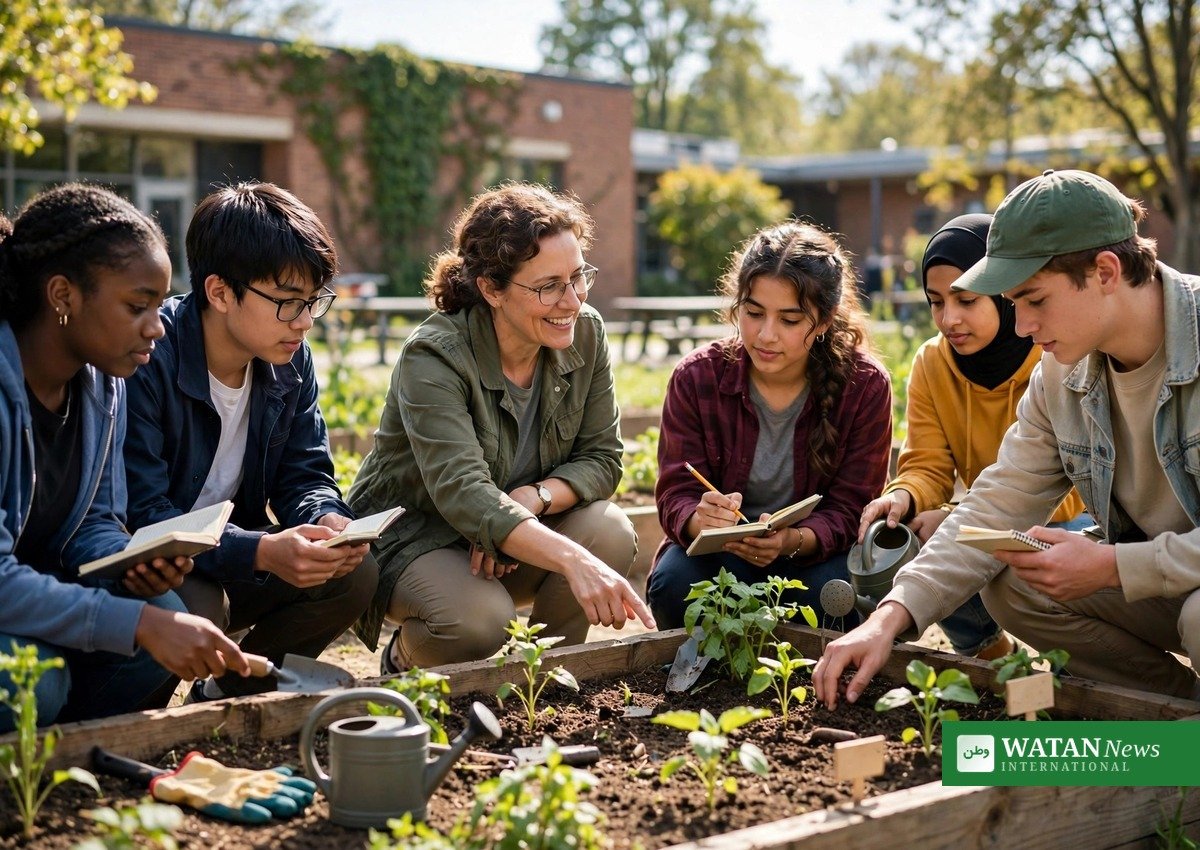
California has become the latest US state to put climate knowledge on the high school diploma, as Governor Gavin Newsom signed Senate Bill 1048 on 29 September 2026, creating a California State Seal of Climate Literacy. The voluntary distinction will recognise students who demonstrate climate knowledge and apply it through hands-on projects addressing real-world challenges in their communities.
The move places California alongside Colorado, which introduced its seal in 2024 and has already awarded it to an estimated 1,200 students, and Maine, which adopted its own version earlier this year. Youth coalitions in Hawaii and Minnesota are pushing for similar policies, according to a report by the education newsroom The Hechinger Report.
How the seal works
To earn the seal — an endorsement printed on diplomas and transcripts — students must complete at least two advanced courses covering the Earth’s climate systems and an approved project that tackles a climate issue in their own community.
The model began in Colorado, where one of the two courses must be a science class, such as environmental studies, biology or earth science, while the second can be taken in any discipline, including the humanities or fine arts. Student capstone projects so far include beaver-dam restoration, trail building, snow science and forestry management.
Participation is voluntary: school districts choose whether to offer the seal, and individual students decide whether to pursue it.

From Colorado classrooms to Sacramento
The idea for the seal originated with Lyra Colorado, a Denver nonprofit, whose chief executive Mary Seawell says rural students and educators wanted a way to explore climate change as a reality in their daily lives — not just as a dense unit in a textbook.
Since 2024, when Colorado lawmakers approved the seal, 26 of the state’s 179 school districts have adopted it, according to the nonprofit. State lawmakers provided less than $20,000 for the rollout, and many students fund their projects out of pocket or secure grants. Lyra created its own grant programme to help schools pay for teachers’ time, student projects and even graduation cords.
One graduate, Anthony Muñoz of Vista Academy, a charter school near Denver airport, built an “ozone garden” for his capstone project: a campus garden of native plants that can detect ground-level ozone pollution. He worked with climate scientists from the National Center for Atmospheric Research in Boulder on what data to collect and what the condition of leaves reveals about air quality. Muñoz co-wrote a $1 million grant proposal to the city to pay for the gardens at his school.
Muñoz is now a sophomore studying mechanical engineering at the Colorado School of Mines and serves as vice president of the college’s environmental club. Asked about climate leadership, he said students must decide whether to help the environment or “sit back and wait for someone else to change the world.”
California joins the movement
Senate Bill 1048, authored by Senator Josh Becker, was co-sponsored by the nonprofits Ten Strands and UndauntedK12, the California State PTA and Silicon Valley Youth Climate Action. It passed the state Senate by 39–0 on 27 August 2026, according to the National Center for Science Education, before landing on Governor Newsom’s desk.
The seal will join California’s existing Seal of Civic Engagement and Seal of Biliteracy. It takes effect in the 2028–29 school year: a new state education commissioner will recommend award criteria by the end of 2027, the State Board of Education will approve them, and local districts will then decide who is eligible and whether to take part.
Students played a central role in the campaign. Aahaan Jain, a student at Lynbrook High School in San Jose who led the advocacy work, said the seal sends a clear signal to colleges and employers that students carry valuable skills and real-world experience. Andra Yeghoian, chief innovation officer at Ten Strands, said students across California are eager to lead on climate solutions.
A bridge to green careers
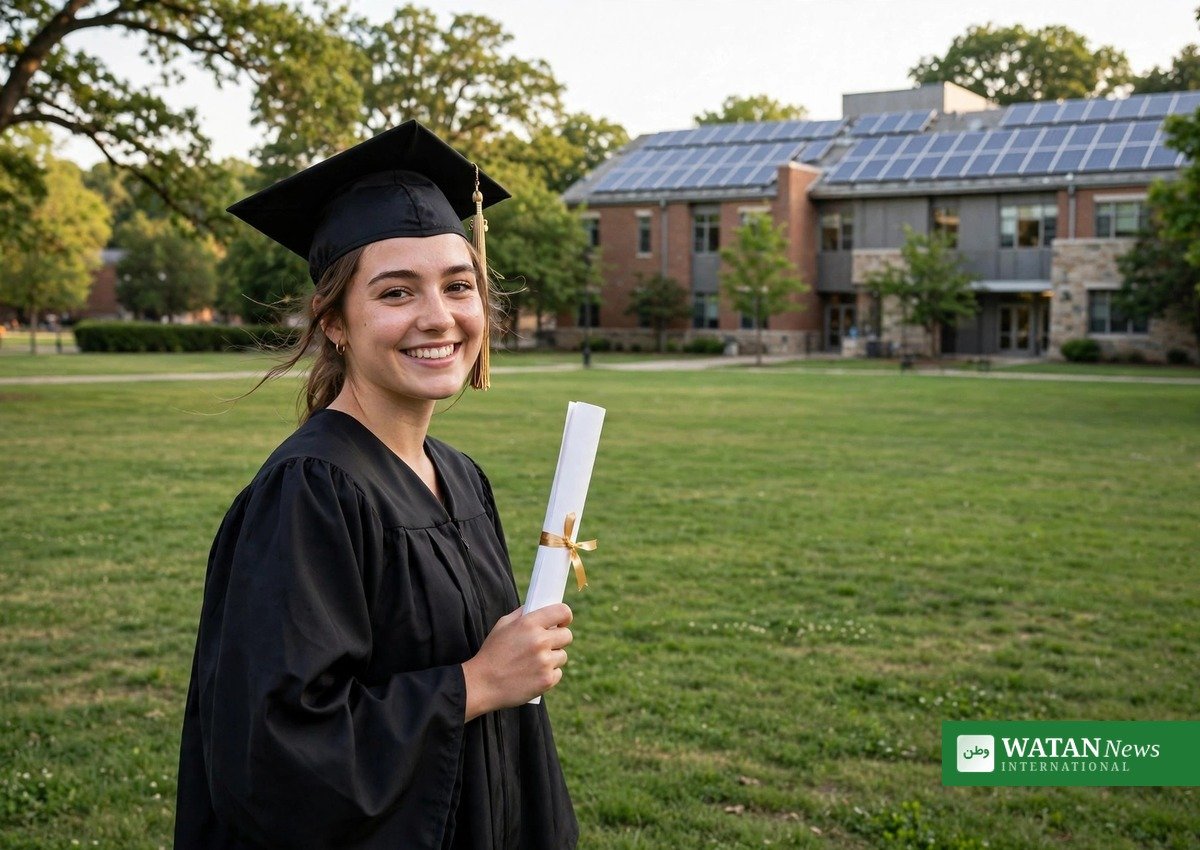
Laura Schifter, a senior fellow with the Aspen Institute’s climate education group This is Planet Ed, called the seal “a really promising policy” — a way for students to learn about a topic rarely covered in depth in K–12 classrooms, and a bridge to a rapidly expanding green workforce spanning solar grids, climate-resilient farms, water resource management and urban heat mitigation.
Lyra Colorado has begun working with institutions such as Colorado Mountain College to align the seal with certification in the skilled trades, from heat pump installation to solar grid maintenance and sustainable agriculture. The group hopes universities will one day offer course credit to incoming students who carry the endorsement.
In Maine, where state education officials adopted the seal directly, a spring pilot across nine high schools drew 57 senior applicants — far more than the dozen expected. Teddy Lyman, the state’s K–12 climate education specialist, said students often do the climate work already but lack recognition or a pathway to continue it as a career. Local capstone projects, he added, could help ease climate distress among young people by turning global worries into community action.
Hurdles ahead
The seal has faced obstacles. School district budgets are tight, and some worry the programme adds new burdens on schools. Federal officials have tried to challenge climate science, and Lyra Colorado reports that scrutiny of renewable energy and climate nonprofits has created a chilling effect among potential donors.
Critics argue the priority should be fundamentals. Lance Izumi of the free-market think tank Pacific Research Institute said he would rather see students focusing on core science learning, noting that only about a third of California students test as proficient in science. Supporters respond that the seal pairs climate coursework with exactly the hands-on scientific work its critics value.
FAKTA
- California Senate Bill 1048 — signed by Governor Gavin Newsom on 29 September 2026; takes effect in 2028–29 after award criteria are set
- Colorado’s seal (2024) — 26 of 179 school districts adopted it; an estimated 1,200 students have earned it
- Requirements: at least two advanced courses on the Earth’s climate systems plus an approved community capstone project
- Maine’s pilot — 57 seniors applied across nine high schools, far above expectations
- Push underway in Hawaii and Minnesota through youth coalitions
- Voluntary: districts decide whether to offer the seal; students decide whether to pursue it
For more of Watan News’ environment and climate coverage, see Watan News in English.
Author

usman2344913@gmail.com
Related Posts
UNESCO: Mindst 46 miljøjournalister dræbt siden 2010 — beskyttelse af pressen er beskyttelse af planeten
- 0
- 752 words
Oplysningsartikel: Klimarapportering er et af de farligste områder i moderne journalistik. UNESCO’s data viser, at miljøjournalister bliver angrebet, truet og i nogle...
Read out all
یونیسکو: 2010 سے اب تک کم از کم 46 ماحولیاتی صحافی قتل، صحافت کی حفاظت کا مطلب سیارے کی حفاظت
آگاہی مضمون: موسمیاتی رپورٹنگ جدید صحافت کا ایک خطرناک ترین میدان ہے۔ یونیسکو کے اعداد و شمار بتاتے ہیں کہ ماحولیاتی صحافیوں...
Read out all
UNESCO: At least 46 Environmental Journalists Killed Since 2010 — Protecting Press Freedom Protects the Planet
- 0
- 761 words
Awareness article: Climate reporting is one of the most dangerous beats in modern journalism. UNESCO data shows that environmental journalists are attacked,...
Read out all
International E-waste-dag 2026: ‘Fast Tech’ i centrum den 14. oktober
- 0
- 810 words
Hvert år smider verden elektronik ud hurtigere, end den kan genanvende det — og den 14. oktober 2026 sætter den niende internationale...
Read out all
بین الاقوامی ای ویسٹ ڈے 2026: 14 اکتوبر کو ‘فاسٹ ٹیک’ پر توجہ
ہر سال دنیا برقی فضلہ اتنی تیزی سے پھینکتی ہے کہ اسے ری سائیکل کرنے کی رفتار اس سے کم ہے —...
Read out all
International E-Waste Day 2026: ‘Fast Tech’ Takes Centre Stage on 14 October
- 0
- 822 words
Every year, the world throws away electronics faster than it can recycle them — and on 14 October 2026, the ninth International...
Read out all