- 0
- 822 words
Every year, the world throws away electronics faster than it can recycle them — and on 14 October 2026, the ninth International E-Waste Day turns the spotlight on the smallest, most overlooked part of the pile: “fast tech”. Led by the Brussels-based WEEE Forum, the global campaign urges consumers everywhere to stop binning small electronics and start bringing them back for reuse and recycling.
The message behind this year’s campaign is simple: “Fast Tech: Don’t bin it, bring it!” Around the world, 90 organizations from 44 countries have already registered collection drives, educational activities and social media campaigns for the day, according to the WEEE Forum.
What is “fast tech”?
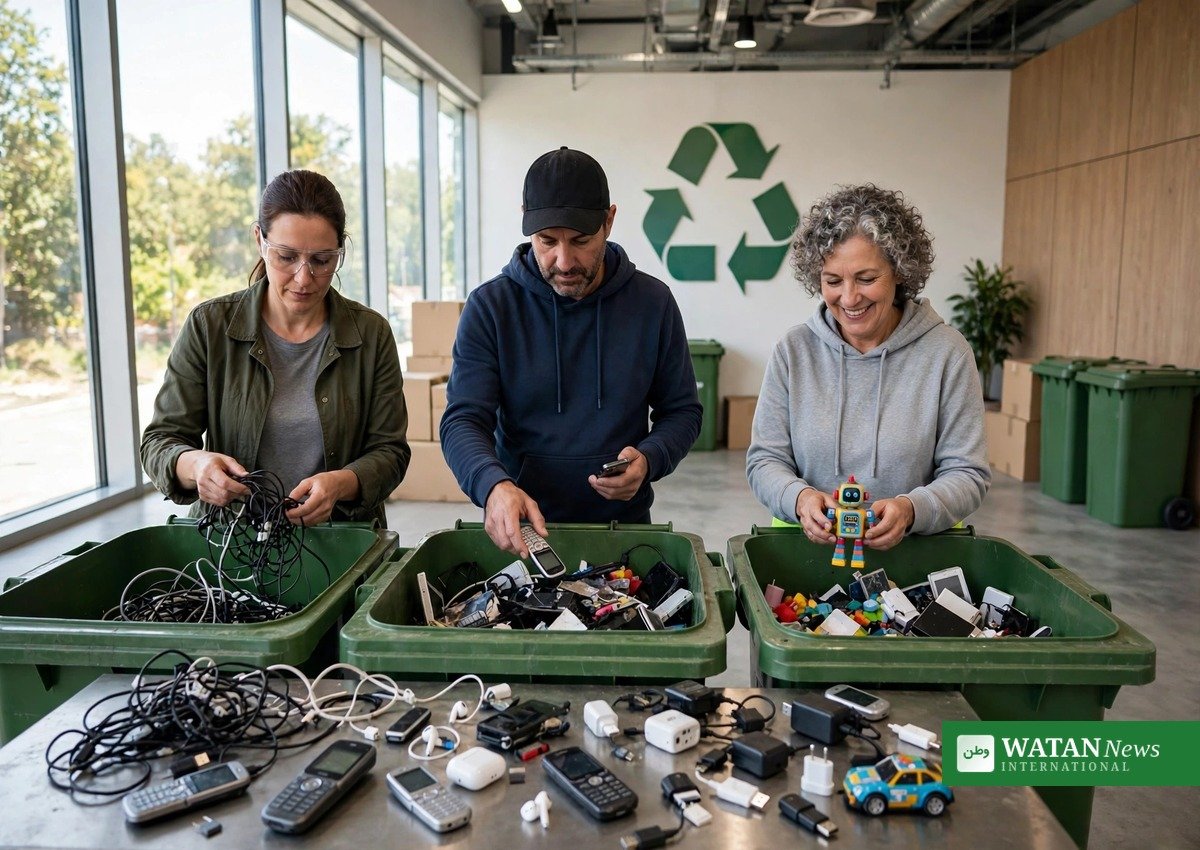
Fast tech is the e-waste that rarely gets recognized as waste at all. It covers the small, cheap electrical products that are bought on impulse, quickly replaced, forgotten in drawers — or simply thrown in the household bin:
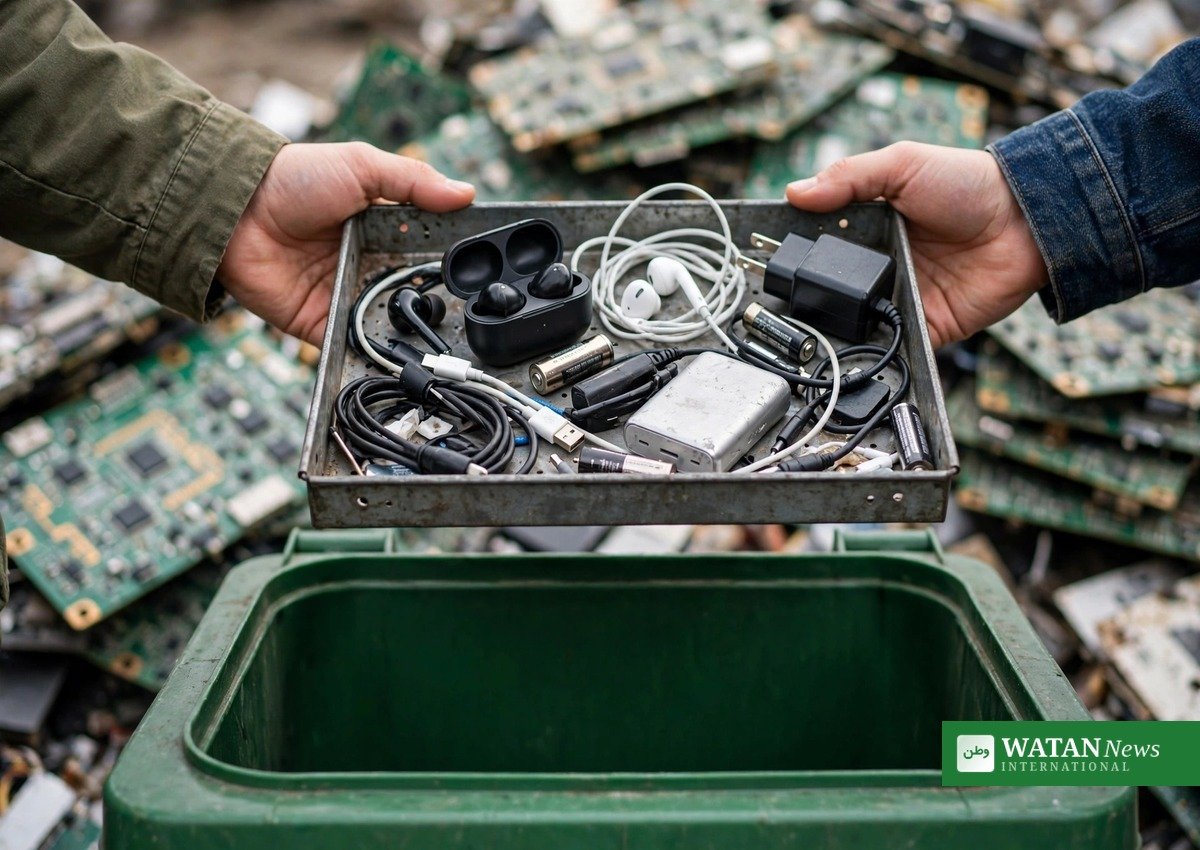
- Charging cables, USB adapters and earbuds
- LED lights and string lights
- Electronic toys and mini fans
- Single-use vapes and small gadgets with embedded batteries
WEEE Forum Director General Pascal Leroy has called fast tech “the blind spot of the e-waste world” — products that most people do not even register as e-waste when they throw them away. Items that seem harmless individually add up into a very large waste stream.
The scale of the problem in numbers
For the occasion, the WEEE Forum is releasing a new study on 14 October, developed by Bellegarde Scientific Consulting together with researchers Dimitri Naczaj and Eric Bonetto. Its headline findings:
- 87% of Europeans surveyed own at least one fast-tech device
- 78% bought at least one fast-tech item in the past 12 months
- In the UK alone, more than half a billion small fast-tech items were purchased in 2023 — around 16 every second
The wider picture is stark. According to the Global E-waste Monitor 2024, produced by the United Nations Institute for Training and Research (UNITAR) and the International Telecommunication Union (ITU), the world generated 62 million tonnes of e-waste in 2022 — up 82% since 2010. Only 22.3% of it was documented as formally collected and recycled. Generation is rising by roughly 2.6 million tonnes every year and is projected to reach 82 million tonnes by 2030, while the value of recoverable materials lost each year is estimated at $62 billion.
Many small devices also contain lithium batteries, which create fire risks when they end up in household waste bins or are crushed in collection trucks — a hazard that grows as fast-tech items multiply.
Reuse first: the EU’s new right-to-repair rules
For European consumers, this year’s campaign lands in a new legal landscape. The EU’s Right to Repair Directive began applying across all member states on 31 July 2026, giving consumers the right to have repairable products — from washing machines and phones to tablets and vacuum cleaners — repaired by manufacturers at a reasonable price even after the warranty has expired. Spare parts and repair tools must be made available to independent repairers at a reasonable, non-discriminatory price, and consumers who choose repair over replacement within the legal guarantee period get their guarantee extended by 12 months.
According to the European Commission, the new rules are expected to generate €4.8 billion in growth and investment — and a Eurobarometer survey found that 77% of EU citizens would rather repair their appliances than throw them away.
What you can do
The campaign’s core message applies to every household and office:
- Don’t bin it — small electronics never belong in household waste or recycling bins
- Bring it — take cables, adapters, earbuds and old gadgets to a collection point or take-back scheme
- Reuse first — repair a broken device, donate one that still works, or pass spare cables on to someone who needs them
- Respect the batteries — devices with embedded batteries need special handling to avoid fire risks
Why this matters for sustainable living
E-waste is the fastest-growing waste stream in the world. Beyond the waste itself, electronics carry a climate cost: recycling metals from old devices uses far less energy and produces far fewer carbon emissions than mining virgin materials. Extending a phone’s life from two years to seven cuts its footprint dramatically — which is why the campaign pairs the collection message with repair and reuse.
As the WEEE Forum puts it: a working device that stays plugged in never becomes e-waste at all. On 14 October, the invitation is to open the junk drawer — and do something better with what is inside.
Key facts
- International E-Waste Day 2026 falls on 14 October — the 9th annual campaign, led by the WEEE Forum
- 2026 theme: “Fast Tech” — small, cheap electronics like cables, earbuds and USB adapters
- World e-waste: 62 Mt in 2022, only 22.3% recycled; projected 82 Mt by 2030 (Global E-waste Monitor 2024)
- EU Right to Repair Directive applies since 31 July 2026: reasonable-price repairs even after warranty
- Campaign slogan: “Fast Tech: Don’t bin it, bring it!”
Read more: the EU’s new anti-greenwashing rules are changing how ‘eco-friendly’ claims reach shoppers — see EU Anti-Greenwashing Rules Now in Force.
Author

usman2344913@gmail.com
Related Posts

UNESCO: Mindst 46 miljøjournalister dræbt siden 2010 — beskyttelse af pressen er beskyttelse af planeten
- 0
- 752 words
Oplysningsartikel: Klimarapportering er et af de farligste områder i moderne journalistik. UNESCO’s data viser, at miljøjournalister bliver angrebet, truet og i nogle...
Read out all
یونیسکو: 2010 سے اب تک کم از کم 46 ماحولیاتی صحافی قتل، صحافت کی حفاظت کا مطلب سیارے کی حفاظت
آگاہی مضمون: موسمیاتی رپورٹنگ جدید صحافت کا ایک خطرناک ترین میدان ہے۔ یونیسکو کے اعداد و شمار بتاتے ہیں کہ ماحولیاتی صحافیوں...
Read out all
UNESCO: At least 46 Environmental Journalists Killed Since 2010 — Protecting Press Freedom Protects the Planet
- 0
- 761 words
Awareness article: Climate reporting is one of the most dangerous beats in modern journalism. UNESCO data shows that environmental journalists are attacked,...
Read out all
International E-waste-dag 2026: ‘Fast Tech’ i centrum den 14. oktober
- 0
- 810 words
Hvert år smider verden elektronik ud hurtigere, end den kan genanvende det — og den 14. oktober 2026 sætter den niende internationale...
Read out all
بین الاقوامی ای ویسٹ ڈے 2026: 14 اکتوبر کو ‘فاسٹ ٹیک’ پر توجہ
ہر سال دنیا برقی فضلہ اتنی تیزی سے پھینکتی ہے کہ اسے ری سائیکل کرنے کی رفتار اس سے کم ہے —...
Read out all
Indien vil nå 100 GW vindenergi i 2030: Windergy India 2026 åbner i Chennai
- 0
- 449 words
Indien har sat et mål om 100 GW installeret vindenergi i 2030. Det meddelte landets minister for ny og vedvarende energi, Pralhad...
Read out all