- 0
- 761 words
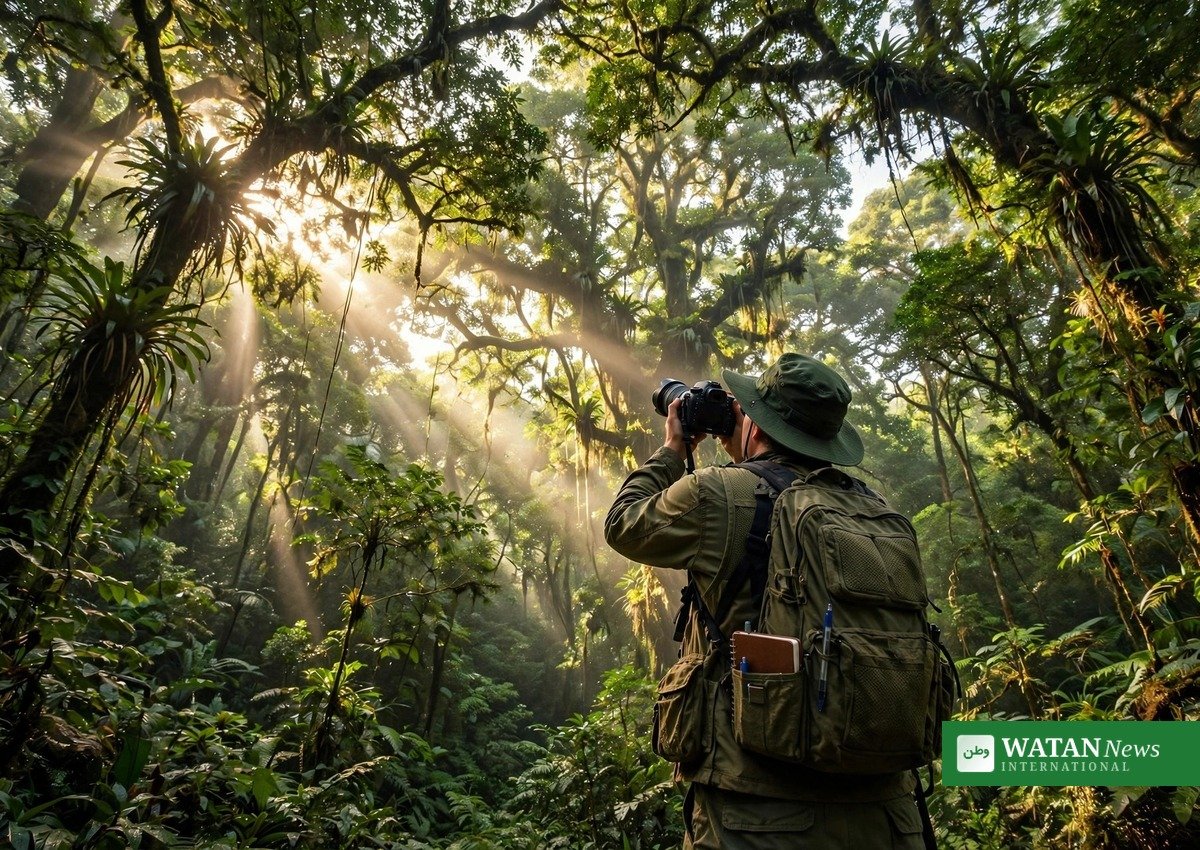
Awareness article: Climate reporting is one of the most dangerous beats in modern journalism. UNESCO data shows that environmental journalists are attacked, threatened and in some cases killed for their work — and that protecting the press is a prerequisite for protecting the planet.
Journalists who investigate illegal logging, poaching, pollution and the climate crisis often work where the stakes are highest. According to UNESCO, their reporting frequently intersects with highly profitable and sometimes illegal economic activity, which is one reason the risks they face are rising instead of falling.
What UNESCO found
UNESCO’s analysis of its World Trends in Freedom of Expression report, presented in 2026, finds that at least 46 environmental journalists have been killed since 2010, with perpetrators convicted in only six of those cases.
An earlier UNESCO investigation, “Press and Planet in Danger”, launched in 2024, documented that at least 749 journalists and media outlets reporting on environmental issues were targeted with murder, physical violence, detention and arrest, online harassment or legal attacks between 2009 and 2023. The attacks took place in 89 countries across all regions of the world, and the number of attacks rose by 42 percent in 2019–2023 compared with 2014–2018.
The agency surveyed more than 900 environmental journalists in 129 countries in March 2024. Seven in ten said they had experienced attacks, threats or pressure linked to their reporting; two in five of those had experienced physical violence. A third said they had been censored, and almost half said they self-censored out of fear of being attacked, having their sources exposed, or because their stories conflicted with the interests of powerful stakeholders. Women journalists reported being more exposed than men to online harassment.
The dangers on the ground
The 2022 killing of journalist Dom Phillips and indigenous expert Bruno Pereira in Brazil’s Amazon region, cited in reporting on journalist safety, stands as one of the most widely known cases illustrating the danger of environmental reporting. According to UNESCO, environmental defenders and activists have lost their lives in even greater numbers.
At the 2026 Society of Environmental Journalists conference in Chicago, held from 15 to 18 April, a plenary session titled “Protecting Environmental Journalists, Protecting the Planet” brought together more than 400 environmental journalists. The session, introduced by Kunda Dixit, author of the UNESCO report chapter on the subject, highlighted not only physical danger but also the growing mental-health burden on reporters, coordinated online abuse, trolling campaigns and strategic lawsuits intended to silence critical reporting.
Awards honouring the frontline
The risks have not stopped newsrooms from producing ambitious work. The 2026 Covering Climate Now Journalism Awards, announced on 17 September, named 49 winners selected from more than 1,200 entries by a panel of 120 journalists from over 30 countries.
Three Journalists of the Year were honoured: Kim Min-wook of MBC News in South Korea, Roli Srivastava, founder and editor of The Migration Story, which covers India’s migrant labour force through a climate lens, and Sammy Roth, founder of the Climate-Colored Goggles newsletter. The Guardian’s Fiona Harvey received the programme’s second Lifetime Achievement award for decades of climate reporting. The Earth Journalism Network’s cross-border investigation “Dark Side of the Boom”, produced with 14 newsrooms in 11 countries, won in the Large Projects and Collaborations category.
In Italy, the 2026 Romeo Bassoli Award for scientific journalism on climate and sustainability was presented on 15 October in Lecce to Agence France-Presse and Daniele Moretti of Sky TG24, recognising expertise, innovation and originality in climate coverage.
What protection looks like
UNESCO has called for stronger support for journalists who cover the environment, arguing that without reliable scientific information the world cannot overcome the climate crisis. One outcome of its 2024 World Press Freedom Day Global Conference in Santiago, Chile, was a Global Roadmap against Climate Disinformation, identifying roles for governments, the media, academia and researchers, civil society and digital platforms in protecting environmental journalists and promoting the integrity of environmental information online.
More broadly, journalist-safety organisations recommend better legal support against abusive lawsuits, stronger protections for women journalists facing online harassment, and newsroom support for reporters’ mental health.
FAKTA
- UNESCO: at least 46 environmental journalists killed since 2010; convictions in only 6 cases.
- 749 journalists and outlets targeted (2009–2023) across 89 countries; attacks up 42% in 2019–2023.
- 70% of surveyed environmental journalists report attacks, threats or pressure linked to their work.
- 2026 Covering Climate Now Awards: 49 winners from 1,200+ entries; Fiona Harvey honoured with Lifetime Achievement.
Climate journalism does not just document the crisis — it holds the powerful to account and shows the public what solutions are working. Protecting the people who do that work is, as UNESCO puts it, protecting the planet.
Read more climate coverage in English at Watan News.
Author

usman2344913@gmail.com
Related Posts
UNESCO: Mindst 46 miljøjournalister dræbt siden 2010 — beskyttelse af pressen er beskyttelse af planeten
- 0
- 752 words
Oplysningsartikel: Klimarapportering er et af de farligste områder i moderne journalistik. UNESCO’s data viser, at miljøjournalister bliver angrebet, truet og i nogle...
Read out all
یونیسکو: 2010 سے اب تک کم از کم 46 ماحولیاتی صحافی قتل، صحافت کی حفاظت کا مطلب سیارے کی حفاظت
آگاہی مضمون: موسمیاتی رپورٹنگ جدید صحافت کا ایک خطرناک ترین میدان ہے۔ یونیسکو کے اعداد و شمار بتاتے ہیں کہ ماحولیاتی صحافیوں...
Read out all
International E-waste-dag 2026: ‘Fast Tech’ i centrum den 14. oktober
- 0
- 810 words
Hvert år smider verden elektronik ud hurtigere, end den kan genanvende det — og den 14. oktober 2026 sætter den niende internationale...
Read out all
بین الاقوامی ای ویسٹ ڈے 2026: 14 اکتوبر کو ‘فاسٹ ٹیک’ پر توجہ
ہر سال دنیا برقی فضلہ اتنی تیزی سے پھینکتی ہے کہ اسے ری سائیکل کرنے کی رفتار اس سے کم ہے —...
Read out all
International E-Waste Day 2026: ‘Fast Tech’ Takes Centre Stage on 14 October
- 0
- 822 words
Every year, the world throws away electronics faster than it can recycle them — and on 14 October 2026, the ninth International...
Read out all
Indien vil nå 100 GW vindenergi i 2030: Windergy India 2026 åbner i Chennai
- 0
- 449 words
Indien har sat et mål om 100 GW installeret vindenergi i 2030. Det meddelte landets minister for ny og vedvarende energi, Pralhad...
Read out all