- 0
- 709 words
Apple Special-Projects Veteran Emerges With $100M to Put Dual-Arm Robots on Warehouse Floors
In 2024, Maven Robotics had what co-founder and chief executive Hamza Derbas later called “a cartoon of a robot and a team of people.” That same year, a large consumer-goods company was in town to meet four rival robot vendors about warehouse automation. Derbas talked his way into the conversation—not with a polished product demo, but with a request to visit the factories and warehouses first.
The approach worked. Maven won the deal over companies that already had machines on the floor. On Sept. 10, 2026, the Santa Clara startup emerged from stealth after raising a $100 million Series A, according to TechCrunch and SiliconANGLE, with plans to manufacture hundreds of third-generation robots and push deeper into industrial material handling.
The funding and the backers
RoboStrategy, a robotics-focused closed-end fund that listed on Nasdaq earlier in 2025–26 coverage, led the round. LocalGlobe, Vine Ventures and XTX Ventures also participated, TechCrunch and SiliconANGLE reported. SiliconANGLE, citing PitchBook, said earlier backers had put about $18 million into Maven before the Series A.
Derbas told TechCrunch the new capital would fund construction of 250 third-generation robots and early design work on a fourth-generation platform. Jack Pearson, an investor at RoboStrategy, told TechCrunch the gap that matters in industrial robotics is not a flashy demo but a machine that “survives three production shifts a day, seven days a week.”
What the robots actually do
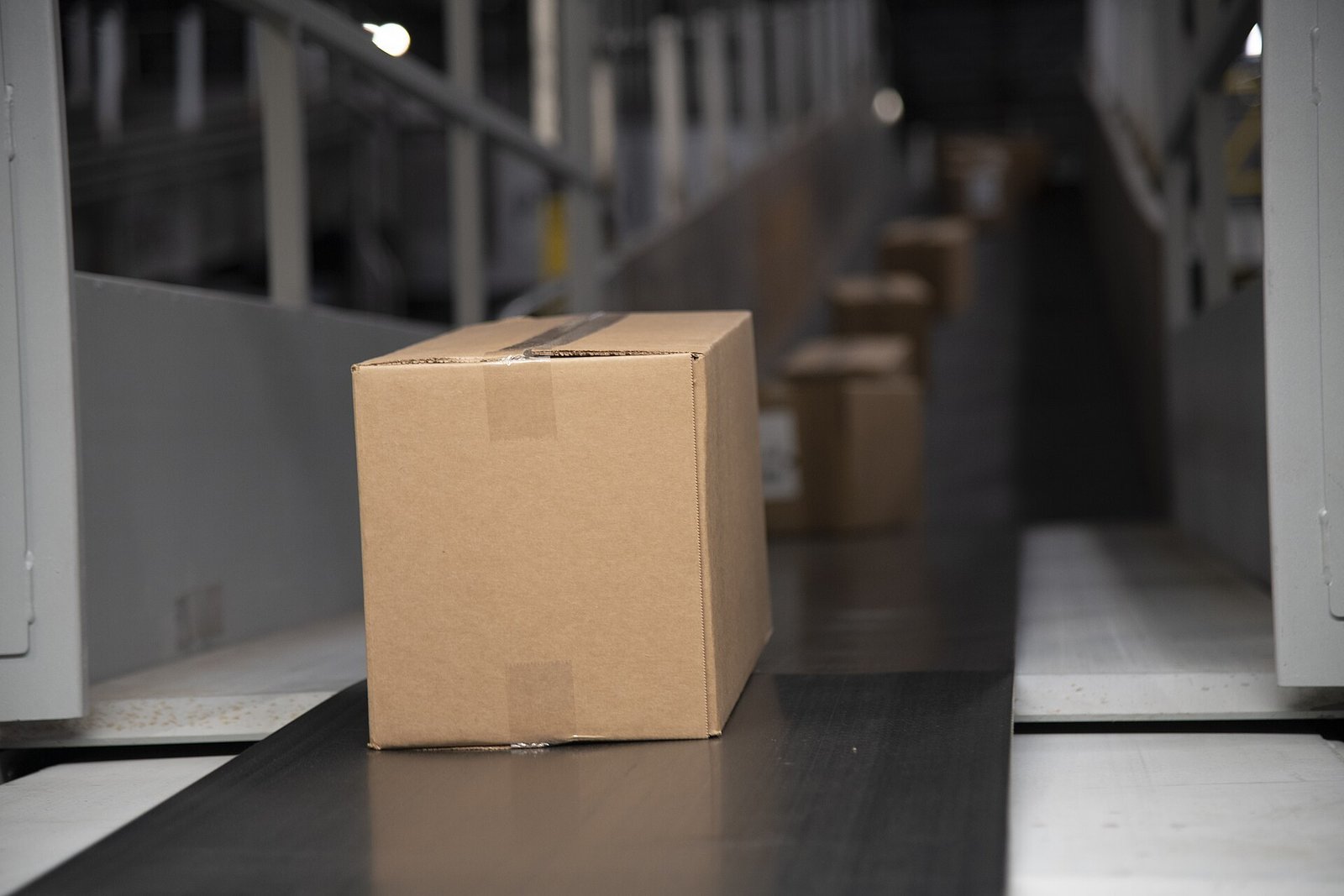
Maven’s first commercial focus is mixed-case palletizing and tote handling—tasks the company estimates sit in an roughly $80 billion market. Goods arrive from different factories on wooden pallets; at a distribution center, robots rebuild pallets with mixed SKUs matched to store-level demand that can change within 48 hours of goods hitting shelves. Today that work is largely human labor.
Hardware details reported by TechCrunch: wheeled bases capable of about 10 miles per hour, dual arms that lift up to 30 kilograms, and vacuum grippers for box handling. Derbas said Maven has as many as eight robots deployed, working 16-hour days with 99% or higher uptime. SiliconANGLE added that fleets run across multiple shifts at a Fortune 250 consumer packaged goods company, and that Maven expects more than 100,000 hours of autonomous operation by end-2026 and more than 1 million by end-2027—company targets, not audited third-party metrics.
A founder story rooted in automotive and Apple
Derbas built his career in automotive engineering with a focus on electric vehicles before spending nine years inside Apple’s special projects group—a unit widely reported to have worked on a self-driving car effort before Apple wound it down in 2024. That timing, he has said, coincided with Maven’s launch. He co-founded the company with his brother Khalid Derbas, who serves as CFO after a private-equity career. SiliconANGLE reported that the broader team includes veterans of Tesla, Rivian and Zoox.
That self-driving-adjacent DNA shows up in Maven’s operating loop: pull data from robots in the field within minutes or hours, retrain, evaluate, run ablation studies, redeploy, and repeat. Derbas has framed the company as competing not in a race for foundation models, but in a race to solve industrial labor problems at scale.
Differentiation in a crowded robot market
Maven bills its stack—hardware, software and AI—as general-purpose, yet its go-to-market is deliberately narrow: “one customer problem at a time,” Derbas told TechCrunch. He has publicly contrasted wheeled, dual-arm industrial systems with bipedal humanoids for warehouse palletizing, arguing legs add complexity, unreliability and cost where return on investment is the buying criterion. Agility Robotics, preparing a large SPAC path in contemporaneous coverage, is often cited as a peer focused on industrial workflows with a different form factor.
The strategic risk is obvious. If frontier labs suddenly unlock much stronger physical AI manipulation, task-by-task industrial specialists could be leapfrogged. Maven’s counter-bet is operational proof: robots already in customer facilities, high claimed uptime, and capital earmarked to multiply hardware on the floor rather than chase a single viral demo.
For founders watching 2026’s robotics boom, Maven’s news peg is concrete: a customer-first founding maneuver, two years of deployment work, and a nine-figure Series A that turns a warehouse workflow into a scaled manufacturing plan.
Sources
Author

watannews321@gmail.com
Related Posts
At 27, Tsinghua’s Youngest AI Professor Raises Nearly $50M for Self-Evolving Models
- 0
- 727 words
Yongchao Chen turned down a DeepMind path to found Beijing-based Apex Intelligence, betting that recursive self-improvement—not bigger chatbots—will define the next wave...
Read out all
Africa No Filter opens 2026 Voices for Climate Justice storytelling grants — deadline 25 September
- 0
- 444 words
Africa-focused green journalism call: 15–20 storytellers, up to US$4,000 grants, training on climate–debt–gender–fossil fuels; applications close 25 Sep 2026.
Read out all
Turkey’s ecological spotlight: Hrant Dink Award meets hard realities for environmental reporters
- 0
- 451 words
Süheyla Doğan’s 15 Sep 2026 Hrant Dink Award elevates Kazdağları ecology as ECPMF and RSF document SLAPPs and information barriers facing Turkey’s...
Read out all
After COP29, Azerbaijan journalists push deeper climate investigations through EaP network
- 0
- 428 words
n-ost’s EaP climate investigations programme pairs Azerbaijan and regional reporters with EU mentors for energy, forest and climate-justice probes after Baku’s COP29...
Read out all
COP31 presidency floats Antalya AI energy pledge and 35×35 electrification at Climate Week
- 0
- 598 words
At Climate Week NYC (21 Sep), Türkiye’s COP31 presidency unveiled Antalya AI energy pledge (draft pending) and 35% electricity share of final...
Read out all
IRENA: record 693 GW renewables in 2025, but annual build must roughly double for 2030
- 0
- 537 words
IRENA (21 Sep): ~693 GW renewables added in 2025; ~1,200 GW/year needed through 2030 to meet COP28 tripling to ~11.2 TW.
Read out all