- 0
- 779 words
When world leaders gather in Antalya in November for COP31, most people will follow the talks through the journalists covering them. How well that coverage is done, and how safely, is becoming a story in its own right.
A beat that now touches everything
In June, UNESCO and the OSCE Representative on Freedom of the Media launched “Reporting the Environment: A Practical Manual for Journalists” on World Environment Day. UNESCO says climate change, biodiversity loss and pollution are no longer only science stories. They increasingly shape public debate on health, food, water, housing, migration, jobs, security, technology and governance.
The manual deals with everyday problems on the beat, including misinformation and disinformation, false balance, digital security, legal threats, source protection, solutions reporting and the growing influence of AI.
“The challenge today is not only environmental change. It is ensuring that people have access to reliable information about that change,” said Mariya Gabriel, UNESCO’s Assistant Director-General for Communication and Information.
The cost of reporting
Citing its World Trends Report, UNESCO says at least 749 journalists, media outlets and reporting teams covering environmental issues were attacked in 89 countries between 2009 and 2023. At least 46 environmental journalists have been killed since 2010. UNESCO points to the powerful interests often at stake in stories about energy, land, mining and logging.
“When environmental journalists are unable to report freely and safely, societies lose one of their most important sources of accountability,” said Ambassador Jan Braathu, the OSCE Representative on Freedom of the Media.
UNESCO also warns that environmental disinformation, fuelled by AI-generated content, greenwashing and misleading claims, is breeding mistrust in society.
Where audiences now find the news
The Reuters Institute’s Digital News Report 2026 finds that, for the first time, platforms are more popular globally than both television and news websites and apps as sources of news. The report describes greater volatility than in 2025, with public responses ranging from “anxiety, disengagement, and cynicism” to openness to new sources and formats.
Disengagement is a particular risk for climate reporting. The UNESCO manual asks how newsrooms can report on environmental crises without leaving audiences overwhelmed and disengaged. Its answer is journalism grounded in evidence, context and accountability.
Working together
Some newsrooms are responding by pooling their efforts. Covering Climate Now, co-founded in 2019 by Columbia Journalism Review and The Nation, says it has more than 500 news and media partners in 60 countries. The group argues that unless news outlets dramatically improve their climate coverage, “there simply will not be the public awareness and political will needed to tackle the crisis.” It also says it is seeking additional funding to sustain the collaboration.
Its 2026 journalism awards drew more than 1,200 entries, judged by a panel of 120 journalists from more than 30 countries and territories. One winner in the large projects category was a collaboration of 14 newsrooms in 11 countries, led by Internews’ Earth Journalism Network, which examined how data centres across Asia draw on energy and water, often at the expense of climate-vulnerable communities.
Why Antalya matters
COP31 runs from 9 to 20 November at the Antalya EXPO Center. Türkiye hosts the conference and holds the COP Presidency, while Australia serves as President of Negotiations. A Pre-COP meeting takes place in Fiji from 5 to 8 October.
For reporters from poorer countries, getting to the talks is often the first hurdle. The Climate Change Media Partnership, led by the Earth Journalism Network and the Stanley Center for Peace and Security, says it has brought more than 550 journalists from low- and middle-income countries to the UN climate talks since 2007. For COP31, its 19th edition, the fellowship opened for the first time to independent creator journalists who deliver climate coverage through social media and other digital platforms.
Watan News reported on 26 September on the IFJ’s free online course in climate reporting.
FAQs
When and where is COP31?
From 9 to 20 November 2026 at the Antalya EXPO Center in Türkiye. A Pre-COP meeting is held in Fiji from 5 to 8 October.
How do journalists get accredited for COP31?
Media accreditation runs through the UNFCCC’s online registration system.
Can journalists still apply for the COP31 media fellowship?
No. Applications for the Climate Change Media Partnership’s COP31 fellowship closed on 17 June 2026, and the organisers said decisions would be communicated in early September.
Sources
- UNESCO, “New UNESCO and OSCE RFoM manual strengthens environmental journalism amid rising disinformation”: https://www.unesco.org/en/articles/new-unesco-and-osce-rfom-manual-strengthens-environmental-journalism-amid-rising-disinformation
- Reuters Institute for the Study of Journalism, Digital News Report 2026: https://reutersinstitute.politics.ox.ac.uk/digital-news-report/2026
- Covering Climate Now, About: https://coveringclimatenow.org/about/
- Covering Climate Now, The 2026 Covering Climate Now Journalism Awards: https://coveringclimatenow.org/projects/the-2026-ccnow-journalism-awards/
- Earth Journalism Network, COP31 Climate Change Media Partnership Reporting Fellowship for Journalists: https://earthjournalism.net/opportunities/cop31-climate-change-media-partnership-reporting-fellowship-for-journalists
Author

watannews321@gmail.com
Related Posts
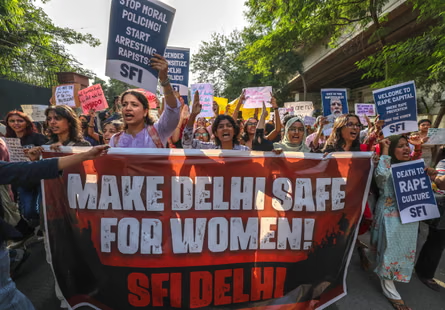
‘We want justice’: series of rapes trigger mass protests at Indian universities
- 0
- 939 words
Hundreds of women have taken to the streets of Delhi, protesting a series of brutal rapes that have shaken university campuses across...
Read out all
Lawyer hopeful for release of Pakistani scholar Junaid Hafeez after 13 years
- 0
- 822 words
A Pakistani scholar, Junaid Hafeez, imprisoned for 13 years under strict blasphemy laws, may soon find relief as his appeal against a...
Read out all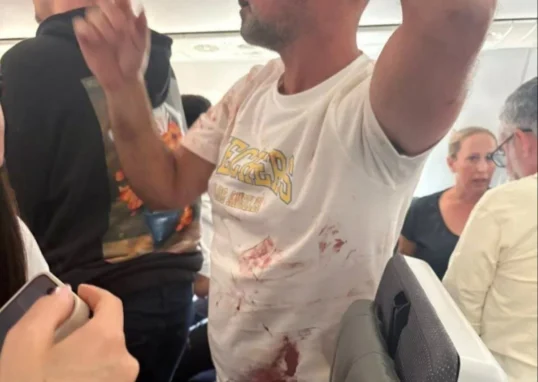
Israel Minister: ‘Terrorist’ Tried to Crash Tel Aviv Flight After Emergency Landing
- 2
- 921 words
An Israeli minister has claimed a terrorist attempted to crash a passenger jet bound for Tel Aviv after the FlyDubai emergency landing...
Read out all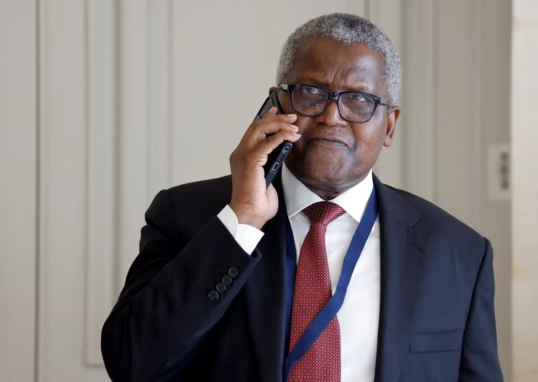
Africa’s Richest Man Opens Kenya Oil Refinery Amid Land Protests
- 0
- 745 words
Nigerian billionaire Aliko Dangote has officially broken ground on the Dangote Kenya refinery, a massive $16 billion oil refinery in Lamu, Kenya,...
Read out all
Morocco Appoints Fatima Ezzahra El Mansouri as First Female Prime Minister
- 0
- 872 words
Morocco has achieved a significant milestone in its political history with the appointment of Fatima Ezzahra El Mansouri as the nation’s first...
Read out all
Israel-bound flight diverted after fight between pilots
- 0
- 745 words
A Flydubai flight en route to Tel Aviv was diverted to Saudi Arabia on Wednesday morning following an alleged altercation between the...
Read out all