- 0
- 826 words
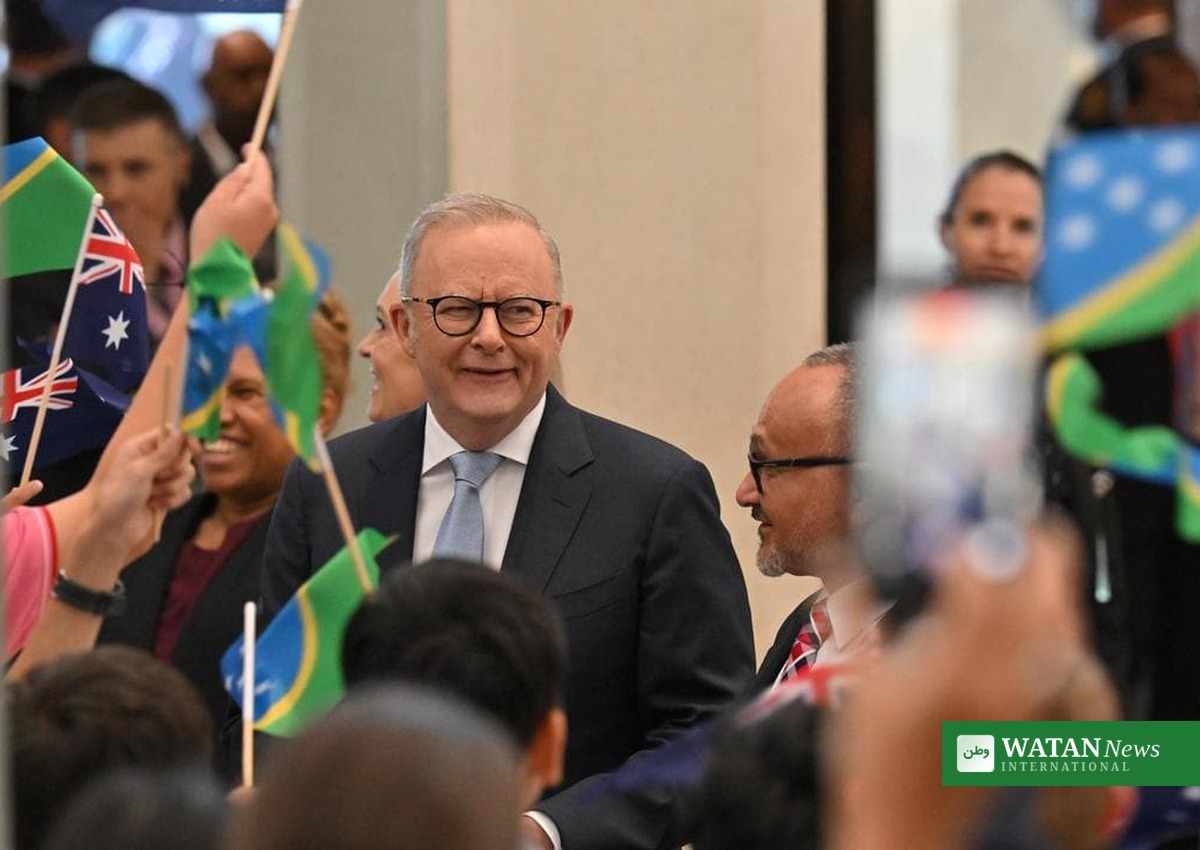
Australia and Solomon Islands have signed the Australia Solomon Islands treaty in Canberra, making Australia the Pacific nation’s primary security partner and reshaping the security map of the South Pacific four years after Honiara signed a secretive security pact with China.
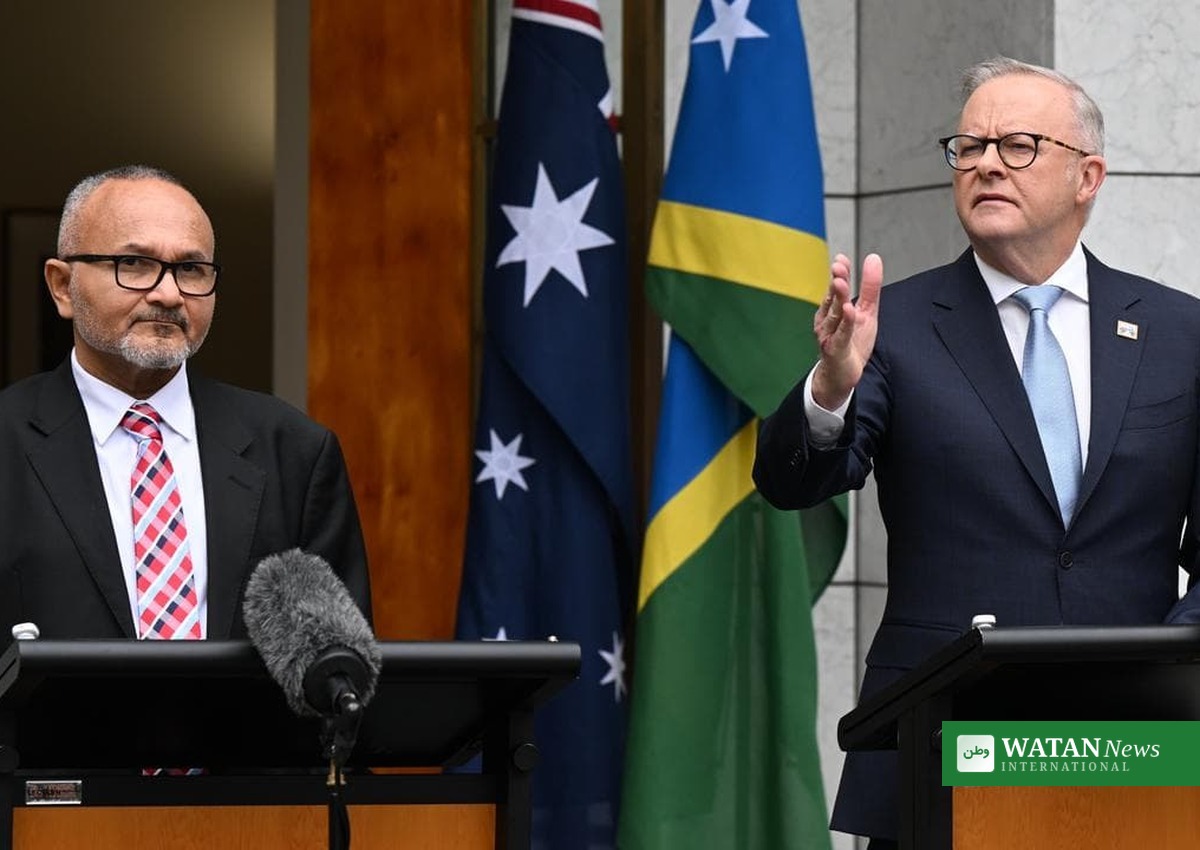
Australian Prime Minister Anthony Albanese and Solomon Islands Prime Minister Matthew Wale signed the treaty in Canberra on Wednesday, 25 November. Under the agreement, Australia will support the expansion and development of the Solomon Islands police and border force, while Honiara has pledged that no foreign power will be allowed to establish a military or security base on its soil.
FAKTA
- Signed: Wednesday, 25 November 2026, in Canberra, by Prime Ministers Anthony Albanese and Matthew Wale.
- Core deal: Australia becomes Solomon Islands’ primary security partner; no foreign military or security base will be allowed on Solomon Islands soil.
- Package: $740 million over the next decade — $670 million in grants and $70 million in loans.
- Support: police and border security, infrastructure, education, renewable energy, sport and easier visa arrangements.
- Background: the treaty follows a secretive 2022 security pact between Solomon Islands and China, which Australian media reported will lapse.
What the Australia Solomon Islands treaty promises
The treaty affirms Solomon Islands’ sovereignty and its capacity to determine its own security needs and partnerships, the two countries said in a joint statement. It reflects Solomon Islands’ sovereign choice of Australia as its primary security partner, the statement said.
“Australia is proud to be the Solomon Islands’ main security partner, and that’s a responsibility that we take seriously,” Albanese told a press conference in Canberra. “We’ll continue working with Solomon Islands to keep its communities safe, to strengthen its police force and improve border security, and we’ll do that in a way that completely respects Solomon Islands sovereignty.”
The treaty also requires Honiara to consult Australia on the development of critical infrastructure, and states that Solomon Islands’ sensitive infrastructure will remain free from militarisation, foreign interference and unauthorised access.
A turning point for the Pacific
The agreement marks a major shift for the Pacific archipelago, which signed a security deal with China only four years ago. Wale said in June that he would review the 2022 pact, and Australian media reported on Wednesday that it had been scrapped, although Wale declined to comment on the status of the deal, citing a non-disclosure agreement. China’s foreign ministry did not immediately respond to a request for comment.
“Solomon Islands has been for a number of years a source of uncertainty and doubt in the region. Those days are done,” Wale said at the press conference. “We don’t want to be there again, and that comes by being trusted by our neighbours.”
Analysts described the treaty as a significant setback for China’s ambitions in the region. “I think this deal, coupled with indications that Solomon Islands will let the China deal lapse, goes beyond the success of the previous deals” Australia has struck in the region, Connor Graham, a research fellow at the Sydney-based Lowy Institute, said. “It is a blow to Chinese security ambitions in the Pacific certainly.”
The treaty follows similar Australian agreements with Papua New Guinea, Vanuatu and Fiji as part of Canberra’s Pacific strategy. The agreement is the latest step in Australia’s deepening engagement with Pacific island nations, which has also covered climate and energy cooperation. The Solomon Islands, a nation of about 800,000 people spread across some 1,000 islands about 2,000 kilometres north-east of Australia, has been seen as Australia’s thorniest partner in the region and the place where China has the firmest foothold.
A $740 million package over a decade
Of the $740 million to be spent over the next decade, $670 million will be in grants, while $70 million will be spent as loans. Part of the funds will be used to support the Solomon Islands government’s free education policy, so that every child can be sent through school from kindergarten to year 12. Currently, one-third of children in the Solomon Islands do not go to school and just 19 per cent finish high school.
Money will also be set aside for infrastructure, renewable energy and sport, including the Solomon Kings Football Club, with funds also to be used by local MPs for projects in their own communities. Australia will also make it easier for Solomon Islanders to travel and work in Australia, including in aged care and child care, and will open a new visa office in Honiara.
Wale said he was confident the treaty would be ratified by his country’s parliament, despite the possibility of a vote of no confidence against him being on the cards in early 2027. He said the decision to sign had the unanimous backing of his caucus and his entire cabinet, and noted that 17 members of his cabinet had travelled to Canberra for the signing.
Author

usmanch0013@gmail.com
Related Posts

Houthis Attack Aramco’s Jazan Refinery, Saudi Coalition Says
- 0
- 628 words
Yemen's Houthis attacked Saudi Aramco's Jazan refinery on Thursday, the Saudi-led coalition said, a day after the group claimed a strike on...
Read out all
Most Governments Lack a Climate Information Strategy, First Global Mapping Finds
- 0
- 1,427 word
The Forum on Information and Democracy’s first global mapping of 23 countries and the EU finds most governments have no standalone strategy...
Read out all
Going Electric Could Save a Typical UK Household £1,200 a Year, Climate Advisers Say
- 0
- 1,090 word
New analysis from the UK's Climate Change Committee finds the typical household can save £1,200 a year by going electric — and...
Read out all
Iranian Drone Strike in Kuwait Kills Two Italian Technicians
- 0
- 486 words
Two Italian technicians working for Rheinmetall Italia were killed in an Iranian drone attack on an air-defence station in Kuwait, Italy's foreign...
Read out all
North Korea Pushes Ahead With Nuclear Expansion as Kim Tours Weapons Plants
- 0
- 470 words
Kim Jong Un has ordered North Korea to expand its nuclear arsenal, touring uranium enrichment plants and calling for more tactical nuclear...
Read out all
Cleantech Solar to Invest $880 Million in 1.1 GW of Renewables in Tamil Nadu
- 0
- 823 words
Cleantech Solar has signed an agreement with Tamil Nadu to invest about $880 million in 1.1 GW of solar, wind and battery...
Read out all