- 0
- 935 words
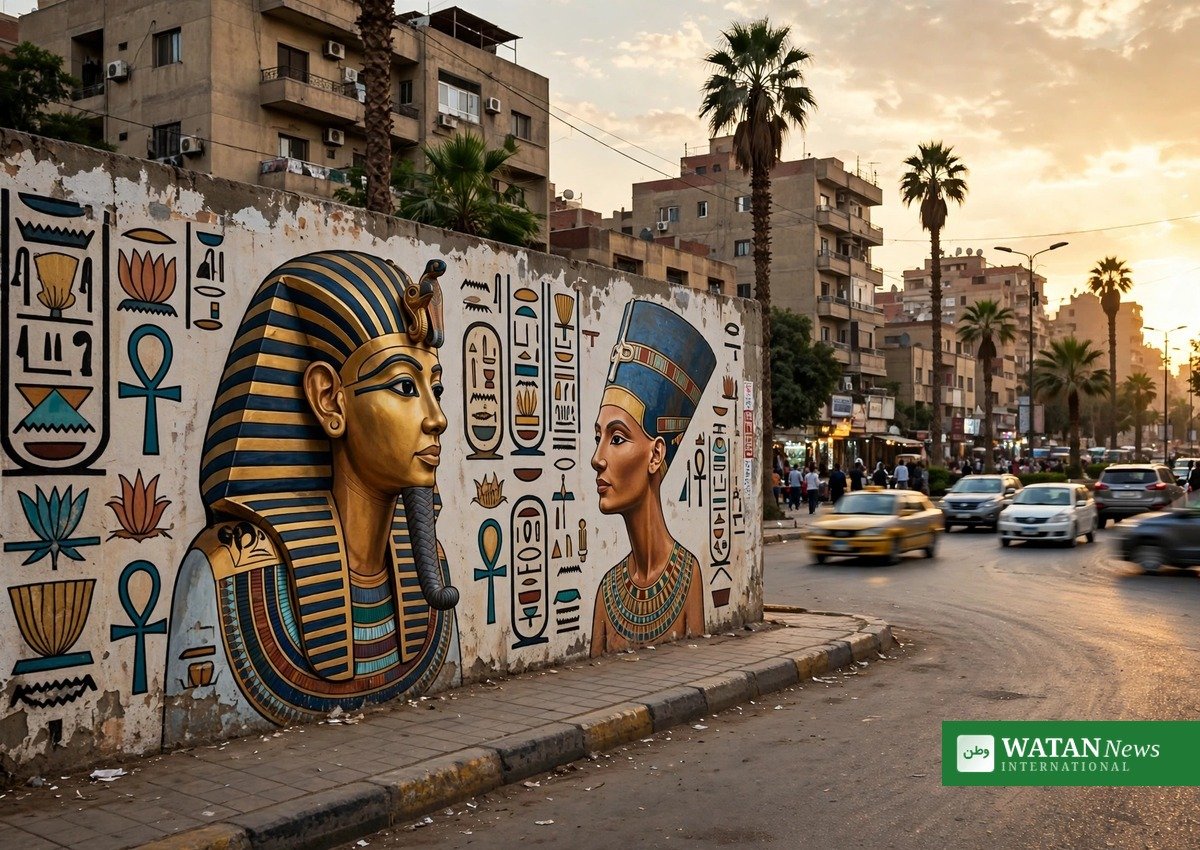
A 66-metre mural in Cairo’s Tahrir Square showing Pharaoh Tutankhamun and Queen Nefertiti with dark skin has been painted over after the Cairo mural controversy ignited a fierce debate online. Commissioned as one of 40 artworks to beautify the city for Chinese President Xi Jinping’s state visit, the mural was accused of reviving Afrocentric claims about ancient Egypt’s heritage. The Cairo governorate ordered it covered just before the president’s arrival.
Key Facts
- What: a 66-metre-long mural of Pharaoh Tutankhamun and Queen Nefertiti, depicted with dark skin
- Where: Tahrir Square, Cairo, near the Egyptian Museum
- When: painted over in early September 2026, hours before Chinese President Xi Jinping’s September 1–2 state visit
- Who painted it: the volunteer youth group Rasmet Basma, founded by 22-year-old Ahmed Moussa, using AI-generated designs
- What happened: a social media backlash over alleged Afrocentric messaging led the Cairo governorate to order the mural painted over
- Key voice: former antiquities minister Zahi Hawass backed the removal and criticised the lack of expert oversight
Painted in five days for Xi Jinping’s visit
The mural was one of 40 commissioned by Cairo authorities to smarten up the capital for Xi Jinping’s two-day state visit on September 1–2, 2026 — his first trip to Cairo in a decade. The volunteer youth group Rasmet Basma says it completed the 66-metre artwork in just five days, using AI tools, including ChatGPT, to generate the designs.
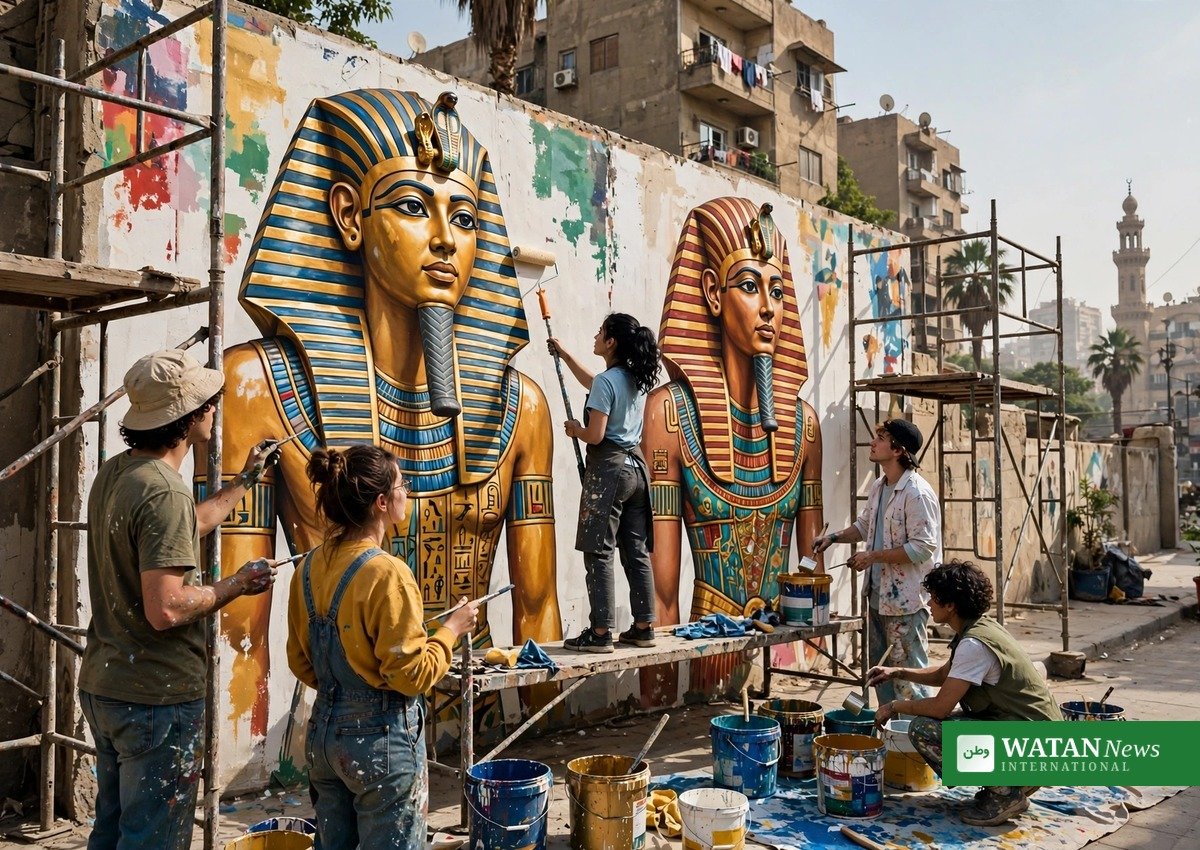
What was meant as a celebration of Egypt’s pharaonic heritage quickly became something else entirely once photographs of the finished mural began circulating online.
The Cairo mural controversy erupts
Images of the dark-skinned Tutankhamun and Nefertiti spread rapidly across social media, where critics accused the artists of pushing an Afrocentric agenda — the contested theory that ancient Egyptian civilisation was Black African in origin and population. The mural’s position a few steps from the Egyptian Museum, the flagship collection of Egyptian antiquities, intensified the anger. International coverage of the row, citing i24NEWS and Al Arabiya, described the murals as gone within days of the backlash.
The Cairo governorate, which had initially approved the design, asked the group to paint over the mural. The whitewash was completed just before the Chinese president’s arrival.
The artist’s explanation: lighting, not politics
Ahmed Moussa, the 22-year-old founder of Rasmet Basma, said the dark appearance of the figures was an unintended effect of the team’s artistic choices. According to Moussa, a golden-bronze tone used in the painting cast deep shadows at night, making the faces look dark-skinned in photographs.
Moussa insisted the group had no intention of making a political statement about race, but acknowledged a clear mistake: the team had not consulted archaeology or art specialists before painting two of Egypt’s most recognisable historical figures in such a prominent public space.
Hawass weighs in on the identity debate
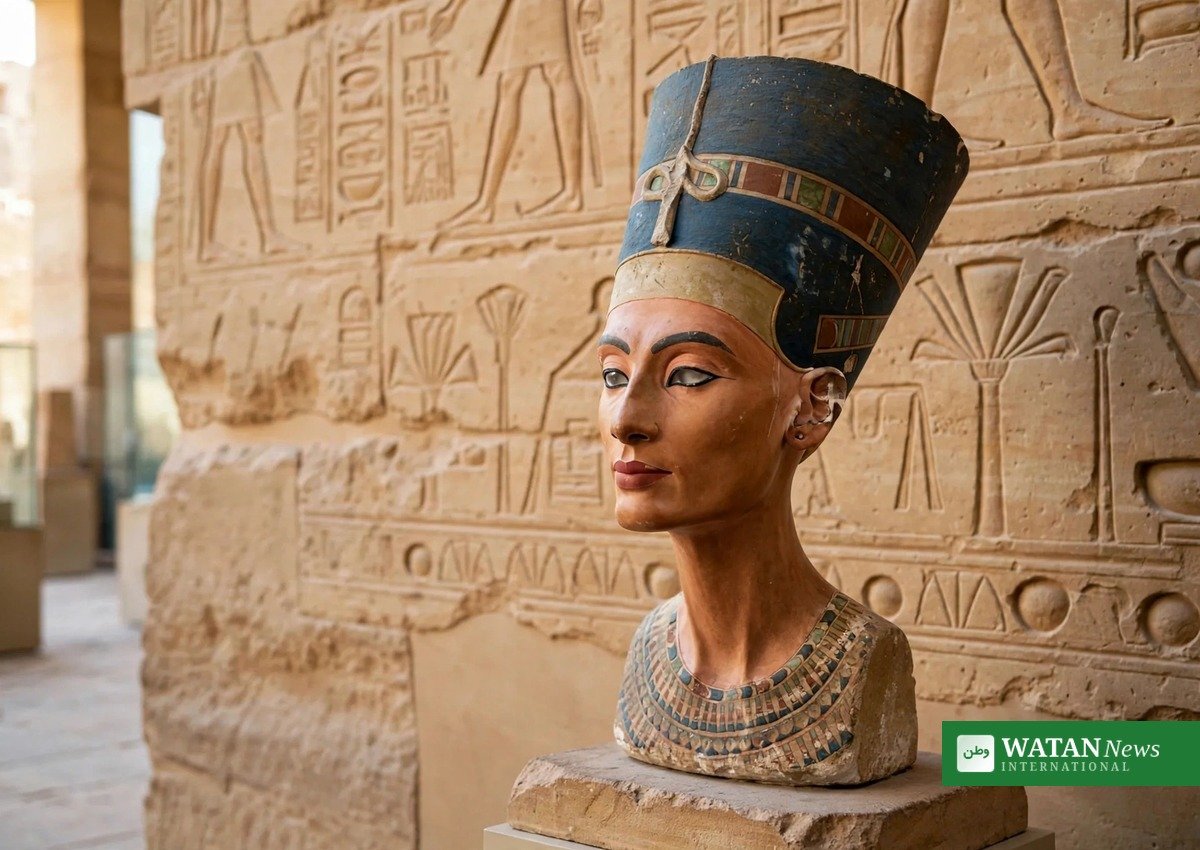
Zahi Hawass, Egypt’s former antiquities minister, said the public outrage was justified and criticised the mural’s creation without expert oversight. He dismissed claims linking ancient Egyptian civilisation to sub-Saharan Africa as unfounded, pointing to temple carvings that show Egyptian kings alongside captives from Africa, Libya, Syria and Palestine — with the kings themselves not depicted as dark-skinned.
The dispute taps into a long-running and sensitive argument over how ancient Egyptians should be represented, and who gets to define the country’s heritage. For more on Egypt and the wider region, see our world news coverage.
A recurring controversy
Egypt has been here before. In 2023, Netflix’s docudrama Queen Cleopatra cast a Black actress as the Ptolemaic queen, prompting an outcry in Egypt, where the antiquities ministry called it a falsification of Egyptian history. The Tahrir Square episode suggests the sensitivity around depicting ancient Egyptian figures has only grown — the British Museum’s guide to Tutankhamun traces how the boy king’s image has been reinterpreted ever since his tomb was discovered in 1922.
Conclusion
The Cairo mural controversy shows how quickly a beautification project can become a national argument about identity. The artists blamed lighting and haste; their critics saw a political statement; the authorities chose the paint roller. Until Egypt settles how its ancient figures should look in public, consulting experts at the design stage — rather than facing outrage after the fact — may be the only way to keep history on the wall.
Frequently Asked Questions
What was depicted in the Cairo mural?
The mural showed Pharaoh Tutankhamun and Queen Nefertiti — his stepmother and one of ancient Egypt’s most famous queens — with dark skin, in a 66-metre-long artwork in Tahrir Square.
Who painted the mural?
The volunteer youth group Rasmet Basma, founded by 22-year-old Ahmed Moussa. The group says it used AI tools to generate the designs and finished the work in five days.
Why was the mural painted over?
After a social media outcry accusing the artists of reviving Afrocentric claims about ancient Egypt, the Cairo governorate asked for the mural to be painted over, just before Xi Jinping’s state visit.
What did the artist say in response?
Moussa said a golden-bronze paint tone created shadows that made the faces appear dark-skinned, insisted there was no political intent, and admitted the team should have consulted archaeology and art experts.
What is Afrocentrism?
Afrocentrism is a movement asserting the Black African origins and population of ancient Egyptian civilisation — a view contested by many mainstream historians and archaeologists, including former antiquities minister Zahi Hawass.
Author

usmanjaved13132@gmail.com
Related Posts
Trump Rules Out Nuclear Strike on Iran, Warns of New Strikes on Pickaxe Mountain
- 0
- 694 words
Washington, D.C. — President Donald Trump has ruled out using nuclear weapons against Iran in the ongoing war, but warned that the...
Read out all
Cyprus Israel Lobby Row: Pro-Israel Parliamentary Group Sparks Political Dispute
- 0
- 480 words
NICOSIA — A Cyprus Israel lobby row has erupted on the divided Mediterranean island after six lawmakers launched a new parliamentary chapter...
Read out all
Brewers Sweep Dodgers to Reach World Series for First Time Since 1982
- 0
- 580 words
The Milwaukee Brewers are going to the World Series for the first time in 44 years. Down 4-0 in the early innings...
Read out all
Lukashenko Says Trump Should Not Dictate Ukraine’s Future
- 0
- 497 words
Belarusian President Alexander Lukashenko said on Friday that US President Donald Trump should not dictate Ukraine’s political future, declaring that only the...
Read out all
Russian Drone Strikes Kill Three Across Ukraine, Cut Power to 370,000
- 0
- 419 words
Russian drone strikes across Ukraine killed at least three people and knocked out electricity to around 370,000 residents in the northwestern Volyn...
Read out all
Israeli Settlers Torch Olive Trees, Injure Photojournalist in West Bank Harvest Attack
- 0
- 484 words
Dozens of Israeli settlers attacked Palestinian olive harvesters in Abu Falah, West Bank, torching olive trees and injuring two people, including a...
Read out all