- 0
- 974 words
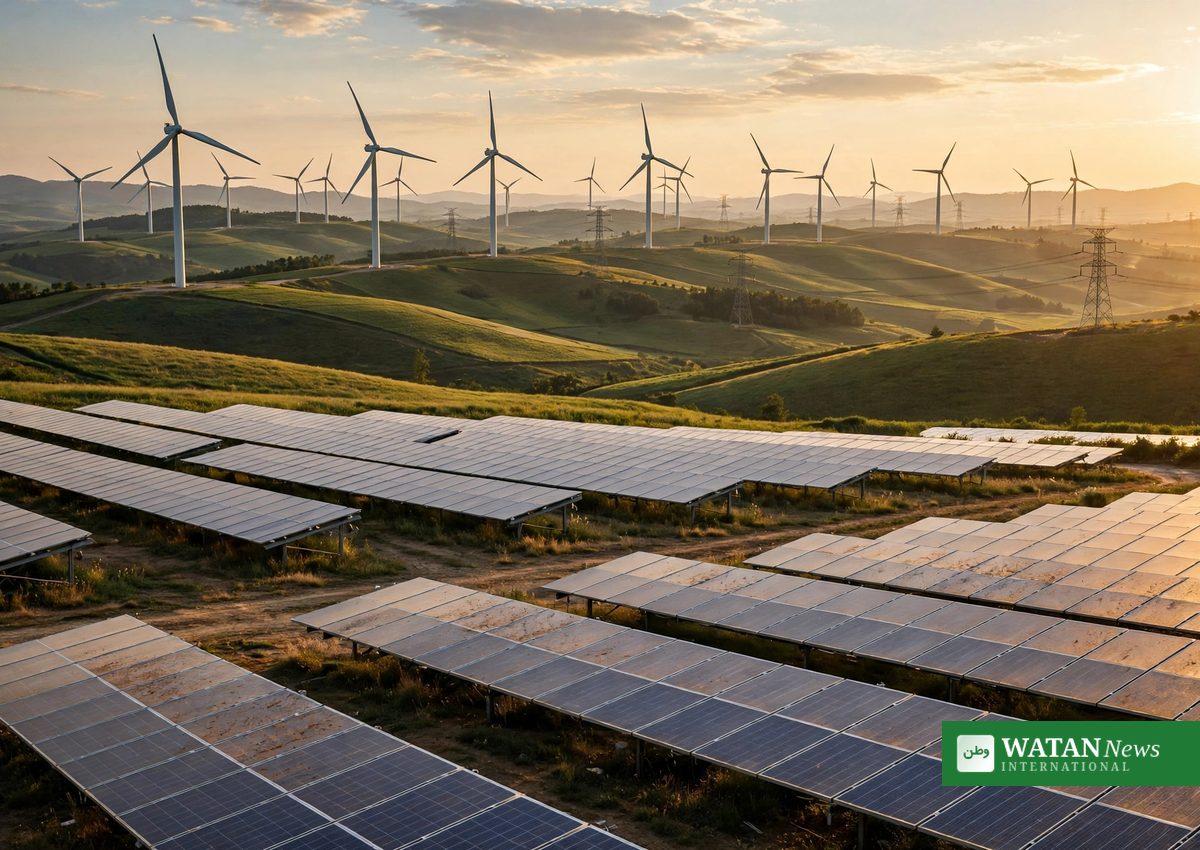
China’s combined wind and solar power capacity has passed 2 terawatts for the first time, reaching 2.01 terawatts at the end of September 2026, according to electricity statistics released by China’s National Energy Administration (NEA) on 26 October 2026. The milestone puts wind and solar at almost half of the country’s entire power generation capacity.
Key facts
- Combined wind and solar capacity: 2.01 terawatts (TW) at end-September 2026, the first time above 2 TW.
- Solar capacity: 1.31 TW, up 16.5 percent year on year; wind capacity: 700 gigawatts (GW), up 20.4 percent.
- New wind and solar capacity added in January–September 2026: about 170 GW.
- Wind and solar generation in the same nine months: 1,933.3 terawatt-hours, covering 64 percent of the growth in China’s electricity consumption.
- Wind and solar share of China’s total installed capacity: 48.7 percent, out of a national total of 4.13 TW.
The milestone in numbers
The NEA figures show solar doing most of the heavy lifting in absolute terms, while wind grew faster in percentage terms over the year. Solar capacity stood at 1.31 TW at the end of September, up 16.5 percent from a year earlier, and wind capacity reached 700 GW, up 20.4 percent. Together they account for 48.7 percent of China’s total installed generation capacity of 4.13 TW, itself up 11.2 percent year on year.
New wind and solar installations of about 170 GW in the first nine months of 2026 alone are larger than the entire power system of most countries. According to the China Electricity Council, the 2 TW total is roughly half of the world’s installed wind and solar capacity, and China has ranked first in the world for wind and solar installations for years.
Growth slowed — but stayed enormous
The headline milestone sits alongside a sharp cooling in the pace of new solar building. China added 110.83 GW of solar capacity in January–September 2026, down 53.9 percent from 240.27 GW in the same period of 2025, after a record build-out last year. Wind additions were steadier at 60.66 GW, down just 0.7 percent year on year.
September itself offered a more positive signal: monthly solar installations reached 13.64 GW, up 41.2 percent from September 2025 and 23.6 percent above August, following adjustments to the country’s renewable pricing mechanism. Thermal power additions rose 16.9 percent to 66.25 GW in the same nine months, a reminder that fossil capacity is still being added even as renewables dominate the total.
Wind and solar now carry demand growth
The output figures matter as much as the capacity figures. Wind and solar generated 1,933.3 terawatt-hours in January–September 2026, an increase of 193.7 terawatt-hours on a year earlier — equal to 64 percent of the rise in China’s electricity consumption over the same period. On the peak summer demand day of 2026, wind and solar output around midday exceeded 40 percent of total system load.
Investment is following the same direction: wind and solar accounted for about one-third of completed investment in China’s energy sector in the first nine months of 2026. Average utilisation hours of generation equipment stood at 2,174 hours, down 194 hours year on year, reflecting both rapid capacity growth and grid constraints.
The grid challenge behind the milestone
That grid constraint is now the central challenge. The head of the International Renewable Energy Agency (IRENA), Francesco La Camera, told reporters at Singapore International Energy Week on 27 October that the world will add less clean energy capacity in 2026 than in 2025 for the first time in five years, mainly because transmission and distribution networks have not kept pace with generation. China, he noted, turned away enough clean energy in the first half of 2026 to power Mexico for a year.
The message for the global transition is twofold: building wind and solar at record scale is now proven, but grids, storage and flexible demand must grow at the same pace, or clean power will increasingly be curtailed. For related coverage of another country’s renewable milestone, see Türkiye’s renewable capacity passing 80 GW.
Why it matters
China’s 2 TW milestone reshapes the global energy picture in three ways. First, it shows that wind and solar can scale to a size comparable with an entire continent’s power system. Second, it confirms that renewables, not fossil fuels, are now carrying most of the growth in the world’s largest electricity market. Third, it sharpens the next policy question — from how fast to build, to how fast to connect, store and use clean power.
With climate negotiations continuing towards COP31, the milestone is likely to feature in debates about whether the world’s largest emitter can peak and then cut emissions while meeting fast-rising electricity demand.
Frequently asked questions
What does 2 terawatts of wind and solar capacity mean?
It means wind turbines and solar panels in China together have a maximum rated output of about 2,010 gigawatts. Actual electricity generated depends on wind, sunshine and grid conditions, so capacity and output are different measures.
How is the 2 TW split between wind and solar?
Solar accounts for 1.31 TW and wind for 700 GW at the end of September 2026, according to the National Energy Administration. Solar has the larger installed base, while wind grew faster over the year, at 20.4 percent against solar’s 16.5 percent.
Did China’s renewable growth slow in 2026?
New solar additions fell sharply from the record pace of 2025, down 53.9 percent in the first nine months, but September installations rebounded strongly. The installed base still grew, because even slower additions are very large in absolute terms.
What share of China’s power system is now wind and solar?
Wind and solar make up 48.7 percent of China’s total installed generation capacity of 4.13 TW, and their output covered 64 percent of the growth in electricity consumption in January–September 2026.
What is the biggest obstacle now?
Grids and flexibility. IRENA’s chief has warned that transmission networks are failing to keep pace with generation, leading to curtailment — clean power switched off when the grid cannot carry it. Expanding transmission, storage and demand flexibility is now as important as building new turbines and panels.
Author

usmanch0013@gmail.com
Related Posts
Kinas vind- og solkapacitet passerer 2 terawatt i historisk milepæl
- 0
- 985 words
Kinas samlede vind- og solkapacitet nåede 2,01 terawatt ved udgangen af september 2026, første gang over 2 TW, og dækkede 64 procent...
Read out all
چین کی ہوا اور شمسی توانائی کی صلاحیت 2 ٹیرا واٹ سے تجاوز کر گئی
چین میں ہوا اور شمسی توانائی کی مجموعی صلاحیت ستمبر 2026 کے اختتام پر 2.01 ٹیرا واٹ تک پہنچ گئی، جو پہلی...
Read out all
Rays Stun Brewers in 12th Inning to Keep World Series Alive
- 0
- 684 words
Ben Williamson's 12th-inning walk-off single gave Tampa Bay a 4-3 win over Milwaukee in Game 4, cutting the Brewers' World Series lead...
Read out all
At Least 30 Dead as High-Speed Trains Collide in Central Spain
- 0
- 689 words
At least 30 people have been killed after a Renfe high-speed train ran into the rear of a stopped Iryo train near...
Read out all
EU præsenterer ramme for klimaresiliens mod hedebølger, oversvømmelser og tørke
- 0
- 1,389 word
Europa-Kommissionen har præsenteret en EU-ramme for klimaresiliens og en foreslået lov om klimaresiliens, der skal hjælpe Europa med at forudse, forberede og...
Read out all
یورپی یونین کا موسمیاتی لچک فریم ورک: گرمی، سیلاب اور خشک سالی سے یورپ کی تیاری
یورپی کمیشن نے 27 اکتوبر 2026 کو یورپی یونین کا موسمیاتی لچک فریم ورک اور مجوزہ موسمیاتی لچک قانون پیش کر دیا...
Read out all