- 0
- 1,562 word
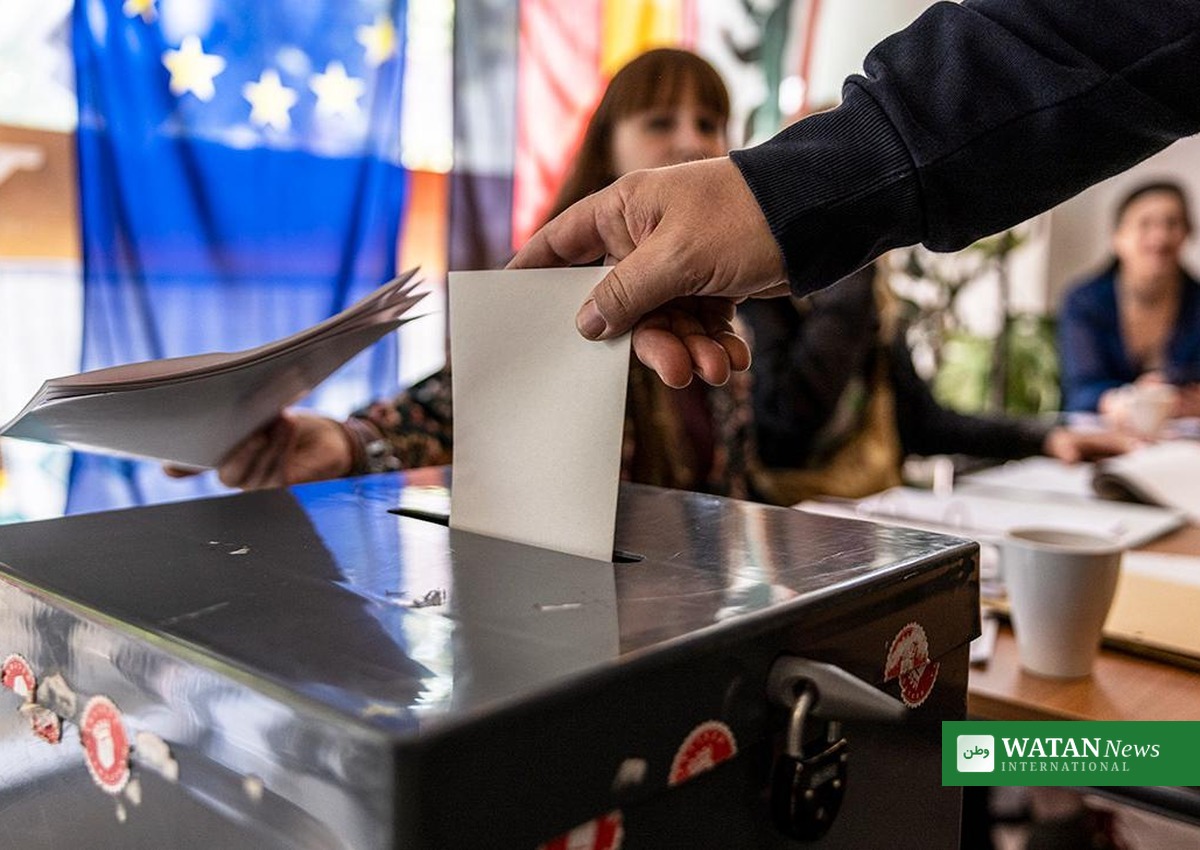
Three new public-opinion surveys published in Europe on 16 November 2026 point to the same conclusion: climate awareness has moved from concern to consequence. In Spain, France and Britain, large majorities say extreme weather has already touched their lives — and in Spain, a clear majority of voters say a politician who refuses to prepare for it will lose their vote.
FAKTA
- Spain: 69% of voters say they would probably or definitely not vote for a politician unwilling to prepare for extreme weather and climate change (CORE for Esfera Climática/CREAF, 5,027 adults).
- France: 64% say global warming is caused by human activity — the highest level since the question was first asked in 2022 (Ipsos BVA for Le Monde).
- Britain: 51% want faster climate action, and 58% say they would back it more if the costs and benefits were shared fairly (Co-op/Opinion Matters, 2,000 adults).
- The gap: only 55% of Spaniards link fossil fuels to worsening extreme weather — the link experts say communication must now make clear.
- The context: the surveys were published as COP31 ran in Antalya; the summit ended on 22 November without an overarching agreement.
Spain: voters put preparation on the ballot
The Spanish study, “Attitudes towards extreme weather events in Spain”, was carried out by the Climate Opinion Research Exchange (CORE) for Esfera Climática, a climate-communication project coordinated by the Centre for Ecological Research and Forestry Applications (CREAF). It surveyed 5,027 adults between 21 July and 3 August 2026, through an online panel run by Norstat, with a national margin of error of 1.39 percentage points. The sample was designed to represent Spain’s adult population by age, gender, education, region and 2023 vote.
The experience behind the answers is direct. Some 87% of respondents said they were worried about experiencing an extreme weather event, and nine in ten said heatwaves had already affected them. Droughts had affected 57%, intense storms 51%, floods 43% and wildfires 42%. More than half said they had experienced at least one extreme event.
Support for preparation is just as broad. Some 86% called extreme weather a national security issue, 88% backed early-warning alerts to mobile phones, nine in ten supported investment in emergency response services, and 85% said politicians should guarantee financial compensation for people affected.
That backing carries an electoral warning. Overall, 69% said they would probably or definitely not vote for a politician who did not want to prepare for extreme weather and climate change. The figure was 81% among people who identify with the centre-left and 57% among those who identify with the far right. The finding records a stated intention in a survey, not an observed vote — but the pattern holds across the whole political spectrum.
The survey also found strong support for the energy transition: 70% saw the shift from fossil fuels to renewables as an opportunity to reduce dependence on other countries, and 66% saw it as an opportunity for job creation and reindustrialisation.
Spain’s weather agency, AEMET, reported that October 2026 averaged 16.1°C across peninsular Spain, 1.5°C above the 1991–2020 average and the tenth-warmest October in its series. Torrential rain brought 620 millimetres at Pego, Alicante, on 18 October during Storm DANA Adam, and reservoirs stood at 55.3% of capacity on 10 November. Spain’s environment ministry, MITECO, has allocated €105.8 million for forest-fire preparedness and prevention from 2026 to 2028.
France: the human link is now the majority view
In France, the 14th edition of “French Fractures”, conducted by Ipsos BVA for Le Monde with the Sciences Po Center for Political Research (CEVIPOF), the Fondation Jean Jaurès and the Institut Montaigne, found that nearly two-thirds of those surveyed — 64%, up four points in a year — said they believed global warming was caused by human activity. It is the highest level measured since the question was first included in 2022.
More than eight in ten respondents (82%) said they were concerned about the phenomenon, eight points higher than last year. And 38% said climate change already had significant negative effects on their daily lives, including 31% on their health and 26% on their professional activity. The summer of 2026 was the hottest ever recorded in mainland France.
The human link now holds across political lines: 55% of supporters of the far-right Rassemblement National made the connection, and it was most noticeable among people under 35. Even so, one-third of respondents still took a sceptical position — saying climate change is a natural phenomenon, that it is impossible to know, or that there is no global warming.
When asked how to respond, 34% preferred changes in companies’ production methods, ahead of a fundamental transformation of lifestyles and ahead of technical progress. Protecting the environment remained among the top five concerns, named by 19% of respondents, but the cost of living overshadowed all else.

Britain: faster action — but only if it is fair
In Britain, research published by the Co-op on 16 November, carried out by Opinion Matters among 2,000 UK adults, found that half of Britons (51%) want the UK to make faster progress on climate action. The findings were published during COP31 and launched in the Houses of Parliament as part of the Co-op’s Climate Justice campaign.
Fairness decides whether that support holds. Some 58% said they would be more likely to support action if the costs and benefits were shared fairly across society, and 43% would back faster action if measures protected lower-income households and vulnerable communities. More than a third (37%) said lower energy bills would encourage them to support action.
Local action is the strongest inspiration: almost three-quarters (72%) said seeing successful environmental projects in their own community would inspire them to take greener action, and 62% said they were worried about the impact of climate change on future generations.
Affordability remains the barrier. More than a third (34%) said they did not feel financially able to make more environmentally sustainable choices, and one in four (25%) said sustainable products or services were simply too expensive. Some 30% said responsibility for action should sit with government, and 20% said those who contribute the most should pay more.
What the three surveys show together
Read together, the surveys describe a public that is ahead of the politics. Awareness is no longer the bottleneck: people have lived through the heat, the drought and the floods, and they connect them to their daily lives. The gaps now are delivery and communication.
On delivery, earlier surveys published around COP31 found the same pattern worldwide: a seven-country survey by the Accelerator for Systemic Risk Assessment found majorities in five of seven countries saying their government was unprepared for climate change — a finding reported in Watan News’ report on the COP31 climate awareness gap. On communication, the Spanish survey found that only 55% of respondents believed fossil fuels contribute to worsening the impacts of extreme weather. Esfera Climática coordinator Andrea Arnal said communication about that link should be a priority, and researcher Pablo Meira of the University of Santiago de Compostela, who was independent of the study, said communication and education need to connect the structural causes of climate change with its most damaging effects on society.
The language matters too. Research from the University of Southern California’s Schaeffer Center, surveying 5,137 Americans, found that plain terms such as “climate change” and “global warming” drew more interest than alarming phrases such as “climate crisis” or “climate emergency” — jargon, it found, talks over people’s heads.
That is the backdrop against which COP31 ended in Antalya on 22 November without an overarching agreement, the longest UN climate conference on record, as reported in Watan News’ account of what survived the no-deal summit. A More in Common survey published during the summit found that only 20% of Britons thought COP summits had a positive impact on climate change, and only 17% were confident countries would keep the commitments they make there. The European surveys suggest why: voters already understand the problem. What they are now asking for is preparation they can see — and politicians who will deliver it.
Frequently asked questions
What did the Spanish survey find?
Among 5,027 adults surveyed by CORE for Esfera Climática, 87% worried about experiencing an extreme weather event, and 69% said they would probably or definitely not vote for a politician unwilling to prepare for extreme weather and climate change. The survey was published on 16 November 2026.
What did the French survey find?
In Ipsos BVA’s “French Fractures” survey for Le Monde, 64% said global warming is caused by human activity — the highest since 2022 — and 82% said they were concerned about it. Some 38% said it already had significant negative effects on their daily lives.
What do Britons want on climate action?
According to the Co-op survey of 2,000 UK adults, 51% want faster climate action, but support depends on fairness: 58% would back action more if costs and benefits were shared fairly, and 72% said successful local environmental projects would inspire them to act.
Do the surveys prove voters will punish unprepared politicians?
No. The 69% figure in Spain is a stated intention in a survey, not an observed vote, and survey breakdowns carry larger margins of error than the national figure. What the surveys do show is a consistent, cross-party pattern: concern about extreme weather now spans the political spectrum in all three countries.
Why is the fossil-fuel link still a communication gap?
Only 55% of Spanish respondents believed fossil fuels contribute to worsening extreme weather, even though 87% feared an extreme event. Researchers say climate communication must connect the structural causes of climate change with the effects people already feel — in plain language, not jargon.
Europe’s voters have made their position clear: they have felt the heat, they expect preparation, and they say the ballot box is where that expectation will be counted.
Author

usmanch0013@gmail.com
Related Posts

Houthis Attack Aramco’s Jazan Refinery, Saudi Coalition Says
- 0
- 628 words
Yemen's Houthis attacked Saudi Aramco's Jazan refinery on Thursday, the Saudi-led coalition said, a day after the group claimed a strike on...
Read out all
De fleste regeringer mangler en strategi for klimainformation, viser første globale kortlægning
- 0
- 1,455 word
Forum on Information and Democracy’s første globale kortlægning af 23 lande og EU finder, at de fleste regeringer ikke har nogen selvstændig...
Read out all
پہلی عالمی جانچ میں انکشاف: اکثر حکومتوں کے پاس موسمیاتی معلومات کی کوئی قومی حکمت عملی نہیں
ایف آئی ڈی کی پہلی عالمی جانچ میں 23 ممالک اور یورپی یونین کا جائزہ لیا گیا: اکثر حکومتوں کے پاس موسمیاتی...
Read out all
Most Governments Lack a Climate Information Strategy, First Global Mapping Finds
- 0
- 1,427 word
The Forum on Information and Democracy’s first global mapping of 23 countries and the EU finds most governments have no standalone strategy...
Read out all
Elektrisk hjem kan spare en typisk britisk husstand 1.200 pund om året
- 0
- 1,080 word
Ny analyse fra Storbritanniens Climate Change Committee viser, at en typisk husstand kan spare 1.200 pund om året ved at blive elektrisk...
Read out all
بجلی کی طرف منتقلی سے عام برطانوی گھرانا سالانہ 1,200 پاؤنڈ بچا سکتا ہے
برطانیہ کی موسمیاتی تبدیلی کمیٹی کے نئے تجزیے کے مطابق عام گھرانا بجلی کی طرف منتقلی سے سالانہ 1,200 پاؤنڈ بچا سکتا...
Read out all