- 0
- 1,459 word
Antalya, Türkiye — Leaders at the COP31 climate summit have pledged more than $480 million in new funding to cut methane and other fast-acting greenhouse gases, in one of the biggest climate-action announcements of the conference’s first week.
The money was announced on 12 November at the Leaders’ Level Methane and Other Non-CO2 Greenhouse Gases Summit, co-hosted by Brazil, China and the United Kingdom alongside the COP31 Presidency. It will support emission cuts across energy, agriculture and waste, as well as efforts on black carbon, clean cooking, transport and cooling.
UN Climate Change Executive Secretary Simon Stiell described cutting methane as one of the fastest, cheapest and most effective ways to limit global heating in the near term, while also delivering economic, agricultural and public health benefits.
The summit in Antalya
The summit was chaired by UK Secretary of State for Energy Security and Net Zero Ed Miliband and opened by Barbados Prime Minister Mia Amor Mottley. Government leaders, ministers, international organisations and philanthropic partners gathered to discuss how to turn methane-cutting commitments into measurable action.
Mottley called for stronger action on methane from fossil fuels, agriculture and waste, saying the shift also offered major economic opportunities. But she cautioned that farmers must not be left to carry the cost of cutting agricultural emissions alone.
“No one can reasonably expect farmers to bear the cost of adjustment for methane emissions, either in livestock farming or rice paddy farming,” she said, calling for financing from governments, the international community and philanthropists — and for countries to move beyond voluntary commitments towards stronger cooperation and regulation.
COP31 President Murat Kurum and Australia’s Minister for Climate Change and Energy Chris Bowen, who leads the negotiations, said capturing methane that would otherwise be wasted offered economic opportunities, and stressed better measurement of emissions and international cooperation.
The COP31 methane pledge: where the money will go
The new philanthropic funding builds on $300 million pledged when the Global Methane Pledge was launched in 2021. Since then, philanthropic partners have provided more than $530 million to support implementation.
“This new commitment will accelerate practical solutions across energy, agriculture, waste, clean air and cooling,” said Christie Ulman, president of the Sequoia Climate Foundation. “Philanthropy can help catalyse action, but government leadership and private investment are essential to delivering change at scale,” she added.

Agriculture is central to the funding because it is one of the largest sources of methane — from livestock and from flooded rice fields. The World Bank pointed to a $1 billion rice programme in India supporting more than 300,000 farmers, and a programme in Brazil where small family dairy farms raised milk yields by 10 per cent while cutting emissions by 6 per cent in a single year.
Fourteen countries join the Accelerator
Alongside the headline funding, the United Kingdom announced an additional $25 million for the Climate and Clean Air Coalition’s Super Pollutant Country Action Accelerator, expanding it to seven more countries: Côte d’Ivoire, Ethiopia, Fiji, Morocco, Pakistan, the Philippines and Uzbekistan.
The seven join Brazil, Cambodia, Indonesia, Kazakhstan, Mexico, Nigeria and South Africa, which were selected when the programme launched at COP30. With the new funding, the Accelerator now has $50 million in announced funding and aims to support 30 developing countries by 2030.
The programme places dedicated national teams inside governments, provides technical assistance and helps countries develop investment-ready projects to cut methane and other super pollutants. Stiell pointed to the Accelerator as an example of how climate commitments can be turned into practical action on the ground.
Why methane cuts matter now
Methane is a potent greenhouse gas that traps far more heat than carbon dioxide over the short term, but it leaves the atmosphere much faster. Cutting it is therefore one of the quickest ways to slow warming in the coming years — and to limit how far temperatures overshoot the 1.5°C goal.
The International Energy Agency’s Executive Director, Fatih Birol, told the summit that at least 75 per cent of methane emissions from fossil fuel operations could be eliminated using technologies that already exist — and more than 60 per cent of those cuts could be achieved at no net cost.
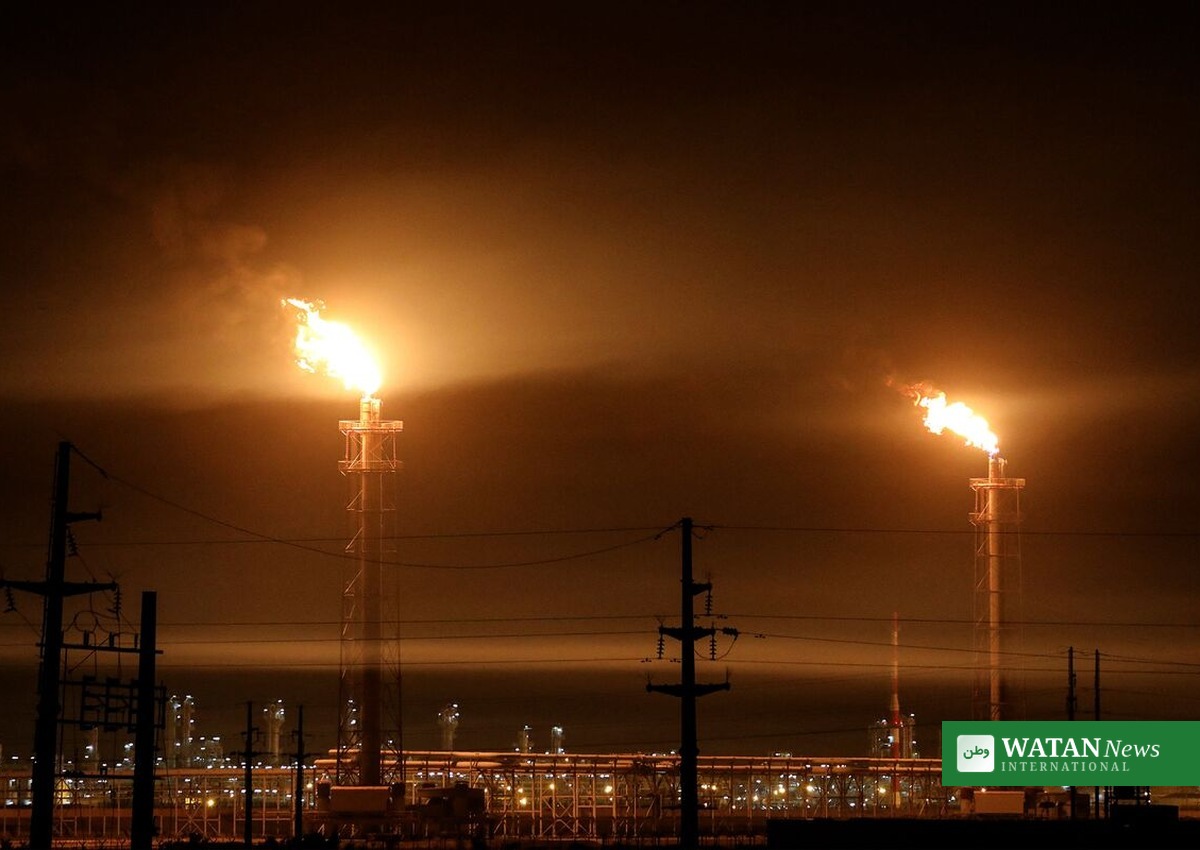
Citing findings by the UN Environment Programme and the Climate and Clean Air Coalition, Stiell said every dollar invested in key super-pollutant solutions could generate $15 in economic benefits. He also highlighted the scale of wasted gas: 167 billion cubic metres of gas are flared globally every year, representing an estimated $54 billion in lost energy value.
Brazil’s COP30 chief executive, Ana Toni, said methane reduction had become a permanent priority in the COP process and was essential to limiting the size and duration of the global temperature overshoot. She described cutting methane as an “emergency brake that buys us time” — but stressed it must complement, not replace, deep cuts in carbon dioxide.
What countries promised
- China: Methane and other non-CO2 gases will be included in its economy-wide emissions control target for 2035, with 30 million tonnes of CO2-equivalent abatement capacity to be established by 2030.
- Brazil: Called for methane reductions of at least 25 per cent by 2035 and 40 per cent by 2040, as part of its national climate plan.
- Australia: Endorsed the UK-led Statement on Drastically Reducing Methane Emissions in the Global Fossil Fuel Sector.
- Germany: Launched a Global SF6 Pledge at COP31 to tackle sulphur hexafluoride, an extremely potent greenhouse gas used in electricity equipment, with support from the United Kingdom and the European Commission.
- World Bank: Methane reduction programmes have expanded from 15 countries at COP28 to 45 countries, expected to cut 11 million tonnes of methane and benefit more than 160 million people.
The summit builds on similar high-level meetings at COP28, COP29 and COP30. Participants stressed that finance alone is not enough: stronger policies, better measurement and institutional capacity are needed to scale up technologies that already exist.
The announcements came as COP31 — billed by its presidency as an “implementation COP” — reached its halfway point in Antalya. Türkiye’s 35-by-35 electrification pledge and the Climate Implementation Bridge, with Pakistan among its first pilot countries, are part of the same push to turn promises into projects. The conference is scheduled to close on Friday 20 November.
Key facts
- More than $480 million in new philanthropic funding for methane and other non-CO2 gases, announced at COP31 in Antalya on 12 November 2026.
- An additional $25 million for the Super Pollutant Country Action Accelerator, taking its announced funding to $50 million and its reach to 14 countries, with a target of 30 by 2030.
- At least 75 per cent of fossil-fuel methane emissions can be cut with existing technology, and more than 60 per cent of those cuts at no net cost, according to the International Energy Agency.
- Every $1 invested in key super-pollutant solutions can generate $15 in economic benefits, according to UN Environment Programme and Climate and Clean Air Coalition findings.
- Some 167 billion cubic metres of gas are flared globally each year, worth an estimated $54 billion in lost energy value.
- World Bank methane programmes now run in 45 countries, aiming to cut 11 million tonnes of methane and benefit more than 160 million people.
Frequently asked questions
What is methane and why does it matter for the climate?
Methane is a powerful greenhouse gas that traps far more heat than carbon dioxide in the short term, but it breaks down in the atmosphere within about a decade. Because of that short life, cutting methane is one of the fastest ways to slow global warming in the coming years and to limit how far temperatures overshoot the 1.5°C goal.
What was announced at the COP31 methane summit?
More than $480 million in new philanthropic funding was announced on 12 November 2026 at the Leaders’ Level Methane and Other Non-CO2 Greenhouse Gases Summit in Antalya, co-hosted by Brazil, China and the United Kingdom alongside the COP31 Presidency. The funding covers energy, agriculture and waste, as well as black carbon, clean cooking, transport and cooling.
What is the Super Pollutant Country Action Accelerator?
It is a Climate and Clean Air Coalition programme launched at COP30 that places dedicated national teams inside governments, provides technical assistance and helps countries develop investment-ready projects to cut methane and other super pollutants. It started with $25 million for seven countries; after COP31 it has $50 million in announced funding and 14 countries, with a target of 30 developing countries by 2030.
Which new countries joined the Accelerator at COP31?
Côte d’Ivoire, Ethiopia, Fiji, Morocco, Pakistan, the Philippines and Uzbekistan joined at COP31, doubling the programme’s reach. They join Brazil, Cambodia, Indonesia, Kazakhstan, Mexico, Nigeria and South Africa, which were selected when the programme launched at COP30.
Will cutting methane replace cutting carbon dioxide?
No. Leaders at the summit stressed that methane cuts must complement, not replace, deep cuts in carbon dioxide. Brazil’s COP30 chief executive Ana Toni described methane reduction as an “emergency brake that buys us time” while the world cuts carbon dioxide, the main driver of long-term warming.
Author

usmanch0013@gmail.com
Related Posts

کاپ31 گھر تک: انطالیہ کے فیصلے روزمرہ زندگی کیسے بدلیں گے
آج انطالیہ میں کاپ31 کا ثقافتی دن ہے۔ میز پر کھانا، گھر میں توانائی اور کوڑے دان میں کچرا — سب کچھ...
Read out all
COP31 kommer hjem: Hvad klimatopmødet i Antalya betyder for en bæredygtig hverdag
- 0
- 1,182 word
Søndag er 'A Breath in Antalya' — COP31's kulturdag. Maden på bordet, energien i huset og affaldet i spanden er alle på...
Read out all
COP31 Comes Home: What the Antalya Climate Talks Mean for Everyday Sustainable Living
- 0
- 1,179 word
Sunday is 'A Breath in Antalya' — COP31's culture day. The food on the table, the energy in the house and the...
Read out all
Ukraine Strikes Major Russian Petrochemical Plant in Deep Drone Attack on Tatarstan
- 0
- 751 words
Ukrainian drones struck the Nizhnekamskneftekhim petrochemical complex and the TAIF-NK oil refinery in Nizhnekamsk, Tatarstan, overnight into Sunday, Kyiv's General Staff said,...
Read out all
COP31: Storbritannien, Canada og Norge lancerer 10by30 med 10 milliarder dollar til ren energi
- 0
- 1,240 word
Tre udviklingsfinansieringsinstitutioner lancerede 10by30 på COP31 i Antalya den 13. november med målet om at mobilisere mindst 10 milliarder dollar til vedvarende...
Read out all
کاپ31: برطانیہ، کینیڈا اور ناروے نے صاف توانائی کے لیے 10 ارب ڈالر کے 10بائی30 موسمیاتی مالیاتی اقدام کا آغاز کر دیا
کاپ31 میں انطالیہ میں 13 نومبر کو تین ترقیاتی مالیاتی اداروں نے 10بائی30 کا آغاز کر دیا، جس کا ہدف 2030 تک...
Read out all