
- 0
- 1,343 word
Türkiye’s presidency of the UN climate conference COP31 has vowed that the Antalya summit, running from 9 to 20 November 2026, will be about delivering results rather than making new promises. Under the banner of an “implementation COP”, the presidency has launched a flagship 35-by-35 Global Electrification Pledge — a collective goal to raise electricity’s share of global final energy consumption to 35 per cent by 2035 — alongside the Antalya Pledge on AI, a political commitment to govern the energy footprint of artificial intelligence.
COP31 President-Designate Murat Kurum, Türkiye’s Minister of Environment, Urbanization and Climate Change, unveiled the pledges at UN headquarters in New York on 21 September 2026, according to the official COP31 presidency. The presidency describes implementation, not new ambition, as the defining test of the summit.
A 35-by-35 electrification goal at the centre of the agenda
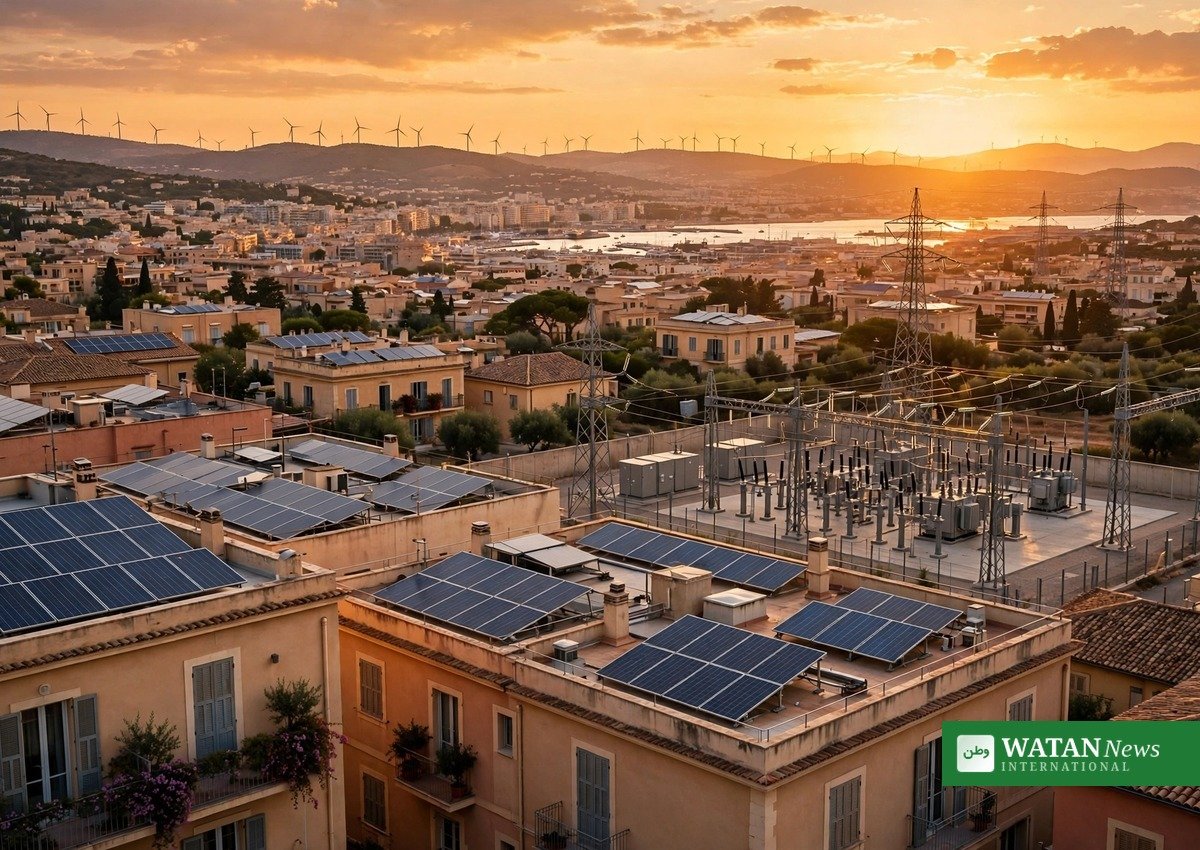
The 35-by-35 pledge sits at the heart of the presidency’s Action Agenda. It calls for electricity to reach 35 per cent of total final energy use by 2035, electrifying buildings, transport and industry, backed by clean power, energy storage, system flexibility and modern, resilient grids.
According to the presidency, the pledge is complemented by a mechanism to track collective progress on electrification, an implementation forum for knowledge sharing and capacity building, help for developing countries to identify grid investment needs and access finance, and a buildings compact targeting at least a 25 per cent reduction in energy-use intensity by 2035.
What the IEA says about feasibility
The International Energy Agency (IEA) has been asked by the presidency to assess the challenges and opportunities of electrification, with its analysis to inform a high-level dialogue with world leaders. According to an IEA analysis published alongside the pledge launch, the 35 per cent benchmark is within “striking distance” using existing technologies — and reaching it could cut global energy import bills by more than $400 billion and household energy costs by 15 per cent.
The Antalya Pledge on AI: setting terms for tech’s energy appetite
Alongside electrification, the presidency is pushing a first-of-its-kind political pledge on artificial intelligence. The Antalya Pledge on AI covers how AI is designed, procured, powered, deployed, measured and managed in support of climate and sustainable development goals, and it is being developed in cooperation with the UN’s International Telecommunication Union (ITU).
“We must openly discuss AI’s growing energy consumption and it is time for governments to start setting the terms,” Kurum said in the presidency statement. “We expect companies to be transparent about their energy use and to power their operations with clean energy.”
AI for Clean Tech pilots
The presidency also announced an AI for Clean Technologies Initiative, which will develop a portfolio of AI-enabled clean-technology pilots in priority sectors including smart energy and green industry, connecting projects with industry partners and investors. COP31 is expected to include a dedicated technology and AI day.
Civil society groups, including 350.org, have welcomed the electrification push but urged the co-presidencies to pair it with an equally clear commitment to phase out coal, oil and gas, arguing that growing electricity demand must be met with renewable energy.
What the negotiations must deliver
On the negotiation track, the Antalya conference will operate under an unusual Türkiye–Australia partnership. Türkiye holds the COP31 Presidency, while Australia’s Minister for Climate Change and Energy, Chris Bowen, serves as President of Negotiations with exclusive authority over the negotiating process, in consultation with Türkiye, according to the UNFCCC.
The summit formally comprises CMP21 and CMA8, and the agenda is expected to include food security, water efficiency, agriculture, public health, energy security, electrification, power grids, the circular economy, methane emissions, zero waste, climate-resilient cities, disaster risk management, green finance, carbon markets, green industrialization, digitalization, biodiversity, a just transition and marine ecosystems.
Finance, loss and damage, and the fossil-fuel roadmap
Financing for the Loss and Damage Fund established at COP27 is expected to remain a major negotiating issue, alongside the commitment by developed countries to provide $300 billion annually in climate finance to developing countries. The institutional arrangements for the Belém Action Mechanism, adopted at COP30 with a focus on people and equality, are also expected to take shape in Antalya, while an initial progress report under the Global Implementation Accelerator — which supports countries in implementing their nationally determined contributions (NDCs) — is to be submitted to the Turkish presidency.
A roadmap for moving away from fossil fuels is likely to be one of the most difficult files. According to reports, a document emerging from high-level discussions led by Colombia and the Netherlands will be submitted to the Turkish presidency, after efforts to agree on such a roadmap at COP30 met opposition from oil-producing countries.
FAKTA: The Turkish presidency’s 10 Action Agenda priorities
At a briefing on 26 September 2026, Türkiye’s deputy environment minister Burak Demiralp outlined the presidency’s guiding principles — dialogue, consensus and action — and ten priority areas under the Action Agenda:
- Zero waste
- Oceans and seas
- Food security
- Climate-resilient cities
- A climate action implementation bridge
- Youth and education
- Green industrialization
- Clean energy transition and electrification
- Real synergy
- Dynamic and resilient health systems
The World Leaders Summit is scheduled for 11–12 November in Antalya, and the official Pre-COP ministerial meeting and leaders’ event opened this week in Fiji and Tuvalu (5–8 October), co-delivered with Australia to build momentum from the Pacific.
Host country under scrutiny: Türkiye’s own energy picture
As host, Türkiye’s climate record is likely to face particular attention. The country ratified the Paris Agreement in 2021 and targets net-zero emissions by 2053. Under its first updated NDC it raised its 2030 reduction target to 41 per cent from 21 per cent against a business-as-usual scenario; its second NDC aims to limit emissions to 643 million tonnes of CO2 equivalent in 2035, with emissions planned to peak in 2038.
The country’s energy transition is a study in contrasts. Between 2010 and 2024, GDP grew 110 per cent while energy-related emissions grew 50 per cent — a partial decoupling — and renewables supplied 43 per cent of electricity generation in 2025. Solar generation rose 24 per cent in a year to 38 TWh, exceeding the National Energy Plan’s 2025 target ahead of schedule, and wind reached 39 TWh, or 11 per cent of generation. Türkiye, Europe’s largest solar-panel manufacturer, aims for 120 GW of combined wind and solar capacity by 2035.
Yet coal remains dominant: it accounted for about 25 per cent of total energy supply in 2024 and more than one-third of electricity generation, and Türkiye consumed around 120 million tonnes of coal in 2025 — the largest coal consumption in Europe. Electricity carbon intensity stood at roughly 420 grams of CO2 per kilowatt-hour, above the IEA average, while the IEA notes Türkiye recorded the fastest average annual electricity demand growth (4.5 per cent, 2005–2024) among its member countries.
On the legal side, Türkiye’s Climate Law adopted on 2 July 2025 created the framework for its net-zero target and a national emissions trading system designed to align with the EU’s Carbon Border Adjustment Mechanism, with a pilot covering about 180 industrial and energy facilities running through 2028. The country signed the Declaration to Triple Nuclear Energy Capacity at COP29; the first unit of the Akkuyu nuclear plant is expected to begin operations in 2026, with a 7.2 GW nuclear capacity target for 2035.
Civil society plans a parallel summit
Alongside the official negotiations, civil society groups are organizing a People’s Climate Summit in Antalya from 14–18 November under the banner “for Climate Justice, Beyond COP31”, expecting participants from the Pacific islands, the Amazon, Africa and Europe. Organizers argue official summits have enabled “false solutions” and say grassroots solidarity is needed to advance climate justice.
Whether the presidency’s implementation promise holds will be measured against concrete outcomes in Antalya — on electrification, on AI governance, on finance, and on the fossil-fuel question that has divided COPs for years. For more English-language coverage of climate policy and COP31, follow this COP31 pledge story on the main site, and read the presidency’s official announcement of the 35-by-35 and Antalya AI pledges and the UNFCCC’s COP31 conference page.
Author

usman2344913@gmail.com
Related Posts

Brewers Sweep Dodgers to Reach World Series for First Time Since 1982
- 0
- 580 words
The Milwaukee Brewers are going to the World Series for the first time in 44 years. Down 4-0 in the early innings...
Read out all
Lukashenko Says Trump Should Not Dictate Ukraine’s Future
- 0
- 497 words
Belarusian President Alexander Lukashenko said on Friday that US President Donald Trump should not dictate Ukraine’s political future, declaring that only the...
Read out all
Russian Drone Strikes Kill Three Across Ukraine, Cut Power to 370,000
- 0
- 419 words
Russian drone strikes across Ukraine killed at least three people and knocked out electricity to around 370,000 residents in the northwestern Volyn...
Read out all
Israeli Settlers Torch Olive Trees, Injure Photojournalist in West Bank Harvest Attack
- 0
- 484 words
Dozens of Israeli settlers attacked Palestinian olive harvesters in Abu Falah, West Bank, torching olive trees and injuring two people, including a...
Read out all
Candiru Spyware Ads Planted Zero-Click Spyware on 45 Al Jazeera Devices, Citizen Lab Says
- 0
- 621 words
Researchers have uncovered the first confirmed case of mercenary spyware being delivered to victims through ordinary online advertisements, infecting dozens of devices...
Read out all
Indonesia Forest Fires: Prabowo Approves Foreign Help as Haze Chokes Region
- 0
- 500 words
Indonesia has approved foreign firefighting help as its worst forest fires in a decade choke the region. Hundreds of thousands face breathing...
Read out all