- 0
- 838 words
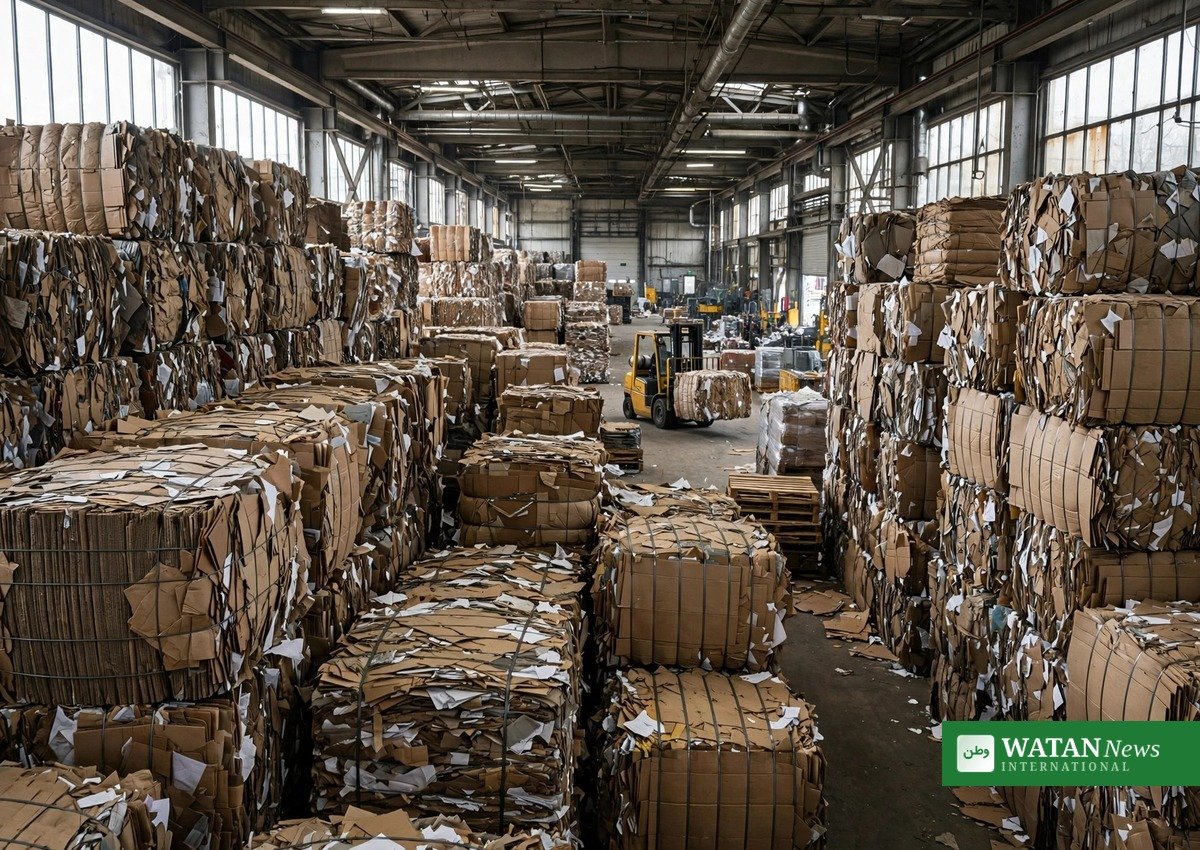
Paper recyclers in Europe have warned that the European Union’s new digital waste-shipment system could disrupt the global recycling trade, after raising the alarm at the world recycling convention in Málaga, Spain, on 27 October 2026.
The Bureau of International Recycling (BIR) Paper Division has asked the European Commission to postpone by at least six months the requirement to use the Digital Waste Shipment System (DIWASS) for recovered paper and cardboard. The call was reported on 30 October by three trade outlets covering the convention, and no postponement has been agreed: the calls remain industry requests.
What DIWASS is and when it bites
DIWASS is the European Commission’s central digital platform for submitting and exchanging documentation for cross-border waste shipments. It went live on 21 May 2026, alongside most provisions of the revised EU Waste Shipment Regulation.
For recovered paper and cardboard, its use becomes mandatory at the turn of the year — outlets report the deadline as 31 December 2026 or 1 January 2027 — for shipments entering, leaving or transiting through the European Union. Until then, companies may continue to use paper documents under a transitional arrangement. Reports of the Málaga session say shipments will also have to be reported two business days in advance.
A separate requirement follows on 21 May 2027, when overseas receiving plants will have to be audited to equivalent European standards under the revised rules.
The registration gap in Asia
The main problem, according to BIR Paper Division President Francisco Donoso, is registration outside the EU. To receive European recovered paper, buyers must be registered on the platform — yet of more than 1,000 paper mills in Asia, only a few dozen had signed up by the time of the Málaga convention.
Several major customers, particularly in India, Thailand and Malaysia, were reportedly not fully aware of the new system or of the advance-reporting requirement. Donoso warned of a supply crisis for Asian mills, describing the prospect in stark terms as a “catastrophe” and a “disaster” for the trade if the deadline arrives with registration still so low.
The stakes are large. Europe exports 6 to 8 million tonnes of surplus recovered paper a year, mainly to Asia, according to trade coverage of the convention. Germany’s recovered-paper exports in the first half of 2026 fell to 678,000 tonnes, the lowest level in roughly 20 years, according to pre-convention trade reporting — a sign, recyclers say, of how tight fibre availability already is.
Why this matters for zero waste
Recovered paper is one of the world’s most recycled materials. When paper and cardboard are collected, sorted and reprocessed into new paper, the fibre stays in use, landfill is avoided and pressure on virgin pulp falls. If cross-border shipments stall because paperwork cannot be filed digitally, recyclers warn that material could pile up in Europe while mills in Asia lose feedstock — a lose-lose for the circular economy and for emissions.
The Paper Division has therefore called not only for at least a six-month postponement but also for greater consultation with the recycling sector, so that registration and audit requirements for international shipments are workable in practice. How the Commission responds before the year-end deadline will decide whether the world’s largest recovered-paper trade keeps flowing or hits a digital wall. Related recycling coverage can be found in our earlier report on Ayala Land and Crown Pipes launching a PVC take-back programme.
Key Facts
- BIR’s Paper Division asked the European Commission on 27 October 2026, in Málaga, to postpone DIWASS for recovered paper by at least six months.
- DIWASS, the EU’s Digital Waste Shipment System, went live on 21 May 2026 and becomes mandatory for recovered paper at the turn of the year.
- Of more than 1,000 Asian paper mills, only a few dozen had registered on DIWASS by late October 2026, according to BIR’s Paper Division.
- Europe exports 6 to 8 million tonnes of surplus recovered paper a year, mainly to Asia.
- No postponement has been agreed; the calls are industry requests, and a further audit rule for overseas plants follows on 21 May 2027.
Frequently Asked Questions
What is DIWASS?
DIWASS is the European Commission’s Digital Waste Shipment System, a central digital platform for submitting and exchanging documentation for cross-border waste shipments. It went live on 21 May 2026.
When does DIWASS become mandatory for recovered paper?
At the turn of the year: outlets report the deadline as 31 December 2026 or 1 January 2027 for shipments of recovered paper entering, leaving or transiting through the European Union.
Why are recyclers asking for a delay?
Because registration is far behind: of more than 1,000 paper mills in Asia, only a few dozen had signed up by late October 2026, and buyers in India, Thailand and Malaysia were reportedly not fully aware of the system.
How much recovered paper does Europe export?
Europe exports 6 to 8 million tonnes of surplus recovered paper a year, mainly to Asia, according to trade coverage of the Málaga convention.
Has the European Commission agreed to postpone DIWASS?
No. As reported, no postponement has been agreed; the six-month delay is an industry request from the BIR Paper Division, along with a call for greater consultation.
Author

usmanch0013@gmail.com
Related Posts
Papirgenbrugere advarer: EU’s digitale affaldssystem kan forstyrre global genbrug
- 0
- 811 words
Papirgenbrugere har opfordret EU til at udsætte DIWASS-systemet for genbrugspapir med mindst seks måneder og advarer om forstyrrelser, da asiatiske fabrikker stort...
Read out all
کاغذ کی ری سائیکلنگ خطرے میں: یورپ کے نئے ڈیجیٹل نظام پر صنعت کا انتباہ
کاغذ کی ری سائیکلنگ کرنے والوں نے یورپی یونین سے کہا ہے کہ دوبارہ حاصل شدہ کاغذ کے لیے ڈیواس نظام کو...
Read out all
Congo-bassinet får stemme ved COP31, mens Tyrkiet nærmer sig Congo før Antalya
- 0
- 891 words
Tyrkiets ambassadør i Brazzaville siger, at Ankara arbejder med congolesiske institutioner for at give Congo og Congo-bassinet en stærkere stemme ved COP31...
Read out all
کاپ31 میں کانگو بیسن کی آواز: انطالیہ سے پہلے ترکی کا کانگو سے قریبی رابطہ
برازاویل میں ترکی کے سفیر نے کہا ہے کہ انقرہ کانگو کے اداروں کے ساتھ مل کر کاپ31 میں کانگو اور کانگو...
Read out all
Congo Basin Voice at COP31 as Türkiye Courts Congo Ahead of Antalya
- 0
- 898 words
Türkiye's ambassador in Brazzaville says Ankara is working with Congolese institutions to give Congo and the Congo Basin a stronger voice at...
Read out all
Borsa Istanbul Chief Detained in Bribery Probe as Fund Investigation Widens
- 0
- 573 words
Borsa Istanbul general manager Korkmaz Enes Ergun was detained on Saturday on suspicion of accepting bribes in a capital-market investigation, Anadolu Agency...
Read out all