- 0
- 1,188 word
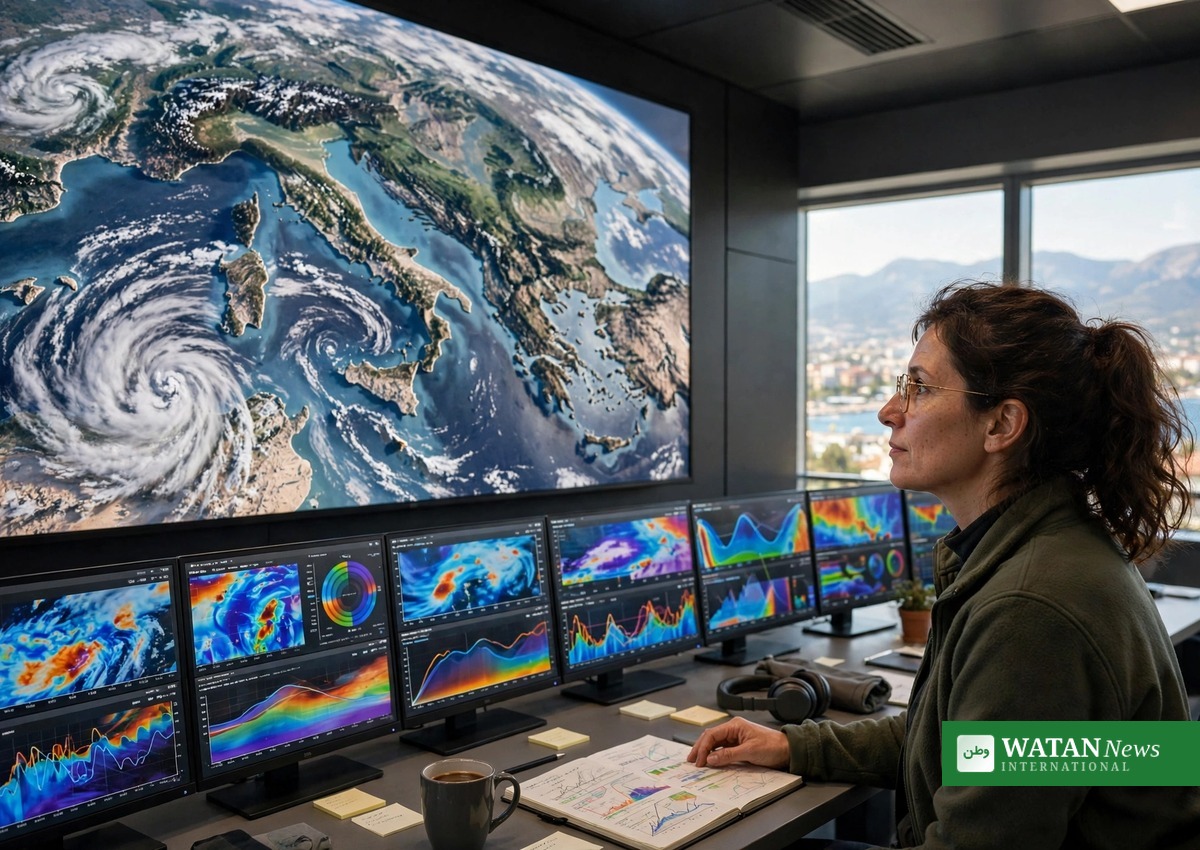
Antalya: As COP31 opens in Antalya on Monday, 9 November, the science of a warming planet takes centre stage at the summit. The United Nations climate conference hosts Earth Information Day on its opening day, and the World Meteorological Organization (WMO) will use the occasion to launch its flagship State of the Global Climate Update 2026.
Earth Information Day is the UNFCCC’s annual mandated event where negotiators meet the scientists who measure the planet. This year it carries extra weight: it opens the COP31 presidency’s push to ground two weeks of negotiations in observed facts, from greenhouse gas concentrations to El Niño, at a moment when the latest science shows the climate system changing faster than policies are responding.
What happens on Earth Information Day
Earth Information Day 2026 takes place on Monday, 9 November, from 15:00 to 18:00 local time (UTC+3) in the Blue Zone of the Antalya Expo Center, under the narrative “From Observations to Application”. The programme opens with a plenary session on the state of the global climate and the global climate observing system, followed by an interactive session of video presentations and World Café stations where the Earth observation community presents its tools, products, databases and resources.
The day has two themes. The first is the state of the global climate observing system itself — what the world’s satellites, weather stations, ocean buoys and other instruments are measuring, and where the gaps remain. The second is how Earth observations support effective climate action: integrated observation systems for assessments, modelling, early warning systems and other climate services, and equitable access to Earth observation data and related technologies.
Plenary statements will come from the Intergovernmental Panel on Climate Change (IPCC), the WMO and the World Climate Research Programme, the Global Climate Observing System and the Global Ocean Observing System, the Committee on Earth Observation Satellites and the Coordination Group for Meteorological Satellites, the Group on Earth Observations, and the Intergovernmental Oceanographic Commission of UNESCO.
The WMO climate update takes centre stage
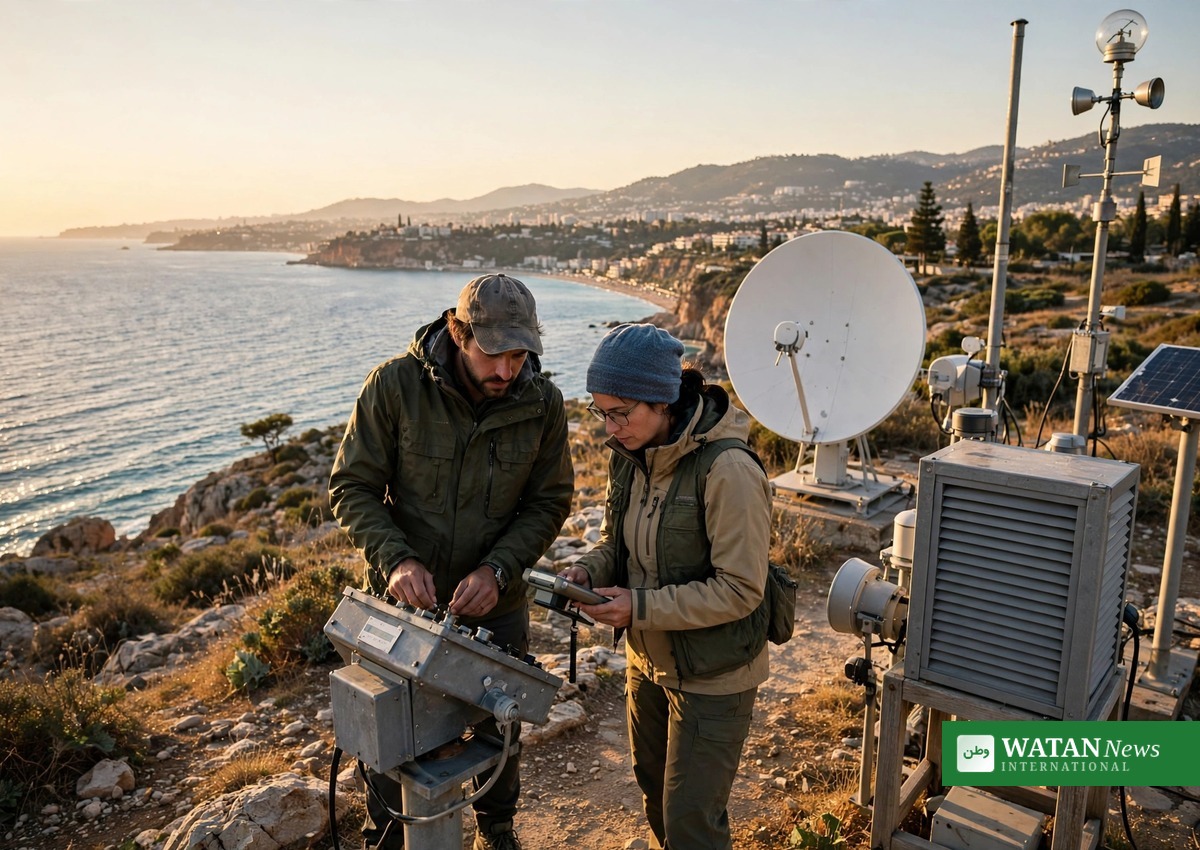
The centrepiece of the day is the launch of the WMO’s State of the Global Climate Update 2026, a science-based annual assessment of climate indicators and their impacts. According to the WMO, the update was prepared specifically for COP31 to inform the presidency and the negotiations, and it will spotlight the key climate indicators in what the organisation calls “yet again, an extraordinary year”.
WMO Secretary-General Celeste Saulo has said the organisation’s message to countries heading to Antalya is simple: COP31 must deliver on early warnings and on resilience, and the WMO’s role is to provide the shared scientific reference that lets all countries work from the same evidence base.
The update’s presentation at Earth Information Day will cover key climate indicators including El Niño and the Global Greenhouse Gas Watch. It lands days after the WMO’s Greenhouse Gas Bulletin, published on 27 October, reported that carbon dioxide in the atmosphere reached a record 426.8 parts per million in 2025 — 153 per cent of its level in 1750, before the industrial era — with all three main greenhouse gases at new highs. The UN Environment Programme’s Emissions Gap Report 2026, “The Point of Return”, has meanwhile put the world on course for about 2.8°C of warming by 2100 under current policies.
Satellites, digital twins and ocean carbon
The European Centre for Medium-Range Weather Forecasts (ECMWF) will be among the speakers. Vincent-Henri Peuch, its Director for Engagement with the EU, will speak on Copernicus climate applications and high-resolution climate projections using Digital Twins, while Director-General Florian Pappenberger will address the global state of systematic weather and climate observation. An ECMWF and Systematic Observations Financing Facility impact studies report will also be launched at the event.
Plymouth Marine Laboratory, whose ocean and climate experts are attending COP31, will present a poster on satellite-derived data products to inform carbon assessments, showing how satellite observations now provide a robust and increasingly comprehensive basis for monitoring ocean carbon at a global scale.
The IPCC will also be prominent on the opening day: IPCC Chair Jim Skea will address the opening plenary of COP31 on 9 November, and the IPCC will take part in more than fifty events across the two weeks, including a keynote at the presidency event on science, solutions and keeping 1.5°C within reach on 13 November.
Why observations matter for the negotiations
Earth Information Day matters because almost every decision at COP31 depends on observations. Early warning systems need weather data. Adaptation finance needs measured evidence of who is exposed and to what. Loss and damage discussions need records of what has already happened. And the second Global Stocktake, which is launched at COP31, needs a trusted picture of where the world stands.
The discussion continues the next day. On Tuesday, 10 November, a high-level side event at the UN Climate Change Pavilion from 14:30 to 15:30 will build on the Earth Information Day themes, looking at the state of the global climate observing system and at financing the data that protect people and inform investment — an event the WMO has billed as “A Hotter World Is Flying Blind”.
COP31 runs from 9 to 20 November at the Antalya Expo Center, with nearly 200 countries taking part. Its opening day also features the COP31 Health Day programme; read Watan News on COP31 Health Day in Antalya.
Key facts
- Event: Earth Information Day 2026, a mandated UNFCCC event at COP31
- When: Monday, 9 November 2026, 15:00–18:00 local time (UTC+3)
- Where: Blue Zone, Antalya Expo Center, Antalya, Türkiye
- Main launch: WMO State of the Global Climate Update 2026
- Theme: “From Observations to Application”
- Follow-up: High-level side event on the observing system, Tuesday 10 November, 14:30–15:30, UN Climate Change Pavilion
- COP31: 9–20 November 2026, Antalya, with nearly 200 countries
Frequently asked questions
What is Earth Information Day?
Earth Information Day is an annual mandated event of the UNFCCC that brings negotiators together with the systematic observation community to share the latest information on the state of the global climate system, including observed trends and future projections, to inform work under the UNFCCC and the Paris Agreement.
When and where is Earth Information Day 2026?
It takes place on Monday, 9 November 2026, from 15:00 to 18:00 local time (UTC+3) in the Blue Zone of the Antalya Expo Center, on the opening day of COP31.
What is the WMO State of the Global Climate Update 2026?
It is the World Meteorological Organization’s flagship science-based annual assessment of climate indicators and their impacts, prepared specifically for COP31. It is launched at Earth Information Day on 9 November 2026.
Why do Earth observations matter for climate negotiations?
Observations from satellites, weather stations and ocean instruments feed the forecasts behind early warnings, adaptation planning and investment decisions. They provide the shared evidence base for negotiations on finance, adaptation, loss and damage and the Global Stocktake.
What happens the day after Earth Information Day?
On Tuesday, 10 November, a high-level side event at the UN Climate Change Pavilion from 14:30 to 15:30 builds on the Earth Information Day themes, covering the state of the global climate observing system and financing the data that protect people and inform investment.
Author

usmanch0013@gmail.com
Related Posts
Iran Says Its Navy Shot Down a US MQ-1 Drone Near the Strait of Hormuz
- 0
- 481 words
Iran says its navy shot down a US MQ-1 drone near the Strait of Hormuz, but the claim has not been independently...
Read out all
COP31’s Green Zone genåbner for offentligheden, da Finans- og Handelsdagen sætter bæredygtig livsstil i centrum
- 0
- 837 words
COP31's Green Zone genåbnede for offentligheden i Antalya fredag den 13. november efter lukningen under verdensledernes topmøde, og Finans- og Handelsdagen sætter...
Read out all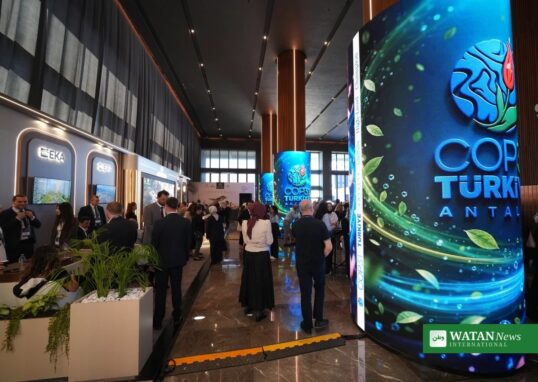
کاپ31 گرین زون عوام کے لیے دوبارہ کھل گیا، مالیات و تجارت کا دن پائیدار طرز زندگی کو مرکز میں لایا
کاپ31 کا گرین زون جمعہ 13 نومبر کو انطالیہ میں عوام کے لیے دوبارہ کھل گیا، عالمی قائدین کی سربراہی اجلاس کے...
Read out all
COP31 Green Zone Reopens to the Public as Finance and Trade Day Puts Sustainable Living in Focus
- 0
- 799 words
The COP31 Green Zone reopened to the public in Antalya on Friday 13 November after closing for the World Leaders Summit, with...
Read out all
US Shoots Down Two Iranian Drones Headed for Bahrain as Tehran Claims Radar Strike
- 0
- 633 words
US forces shot down two Iranian attack drones headed for Bahrain, CENTCOM said on Friday, disputing Tehran's claim that it destroyed a...
Read out all
Russia Reportedly Seeks Finland’s NATO Exit in Abu Dhabi Peace Talks
- 0
- 500 words
Bild reports Russian negotiators in Abu Dhabi put forward demands including Finland leaving NATO, a ban on alliance bases in the Baltic...
Read out all