- 0
- 1,430 word
LONDON — England will plant millions more trees and create a second new national forest under a Trees Action Plan published on Thursday 26 November 2026, backed by more than £1 billion of investment this parliament. The plan, published by the Department for Environment, Food and Rural Affairs (Defra) and the Forestry Commission, sets out more than 80 actions across six themes to expand woodland, make it more resilient and bring nature closer to where people live.
What the plan promises
The centrepiece for public access is the expansion of the public forest estate: 3,700 hectares of new publicly accessible woodland — the equivalent of 5,000 football pitches — will be created by March 2030 and managed by Forestry England. The plan also invests more than £14 million in sector support, including training and forestry skills grants, and more than £20 million in funding for trees, forestry and tree health research.
Neglected woodlands will be brought back into management under a new target, so that existing woods can recover for nature. The plan also aims to future-proof woodlands for a changing climate by increasing tree species diversity, strengthening tree health surveillance and biosecurity, and funding domestic production and seed propagation across a wide range of planting stock. Defra and the Forestry Commission are also investing £8.97 million in grants for home-grown seed and planting stock, according to trade publication The Dirt.
For the first time, major landowners are being brought together through a National Estate for Nature group. Government departments, voluntary organisations, private estates and institutions from the RSPB to the Crown Estate will work together to open up more woodland, so that more people can enjoy it.
Key facts
- What: Trees Action Plan 2026–2030 for England, published 26 November 2026 by Defra and the Forestry Commission
- Investment: More than £1 billion this parliament; over £14 million for forestry skills and green jobs; over £20 million for trees, forestry and tree health research
- New public woodland: 3,700 hectares — the equivalent of 5,000 football pitches — by March 2030, managed by Forestry England
- Second national forest: Around 700 square miles across the Oxford–Cambridge corridor; delivery partner is the Forest of Marston Vale Trust; final boundary and name to be announced in March 2027
- Community trees: £53 million Community Trees Fund opening early next year, to plant up to 500,000 trees outside woodlands
- Targets: Tree canopy cover of at least 16.5 per cent of England’s land area by 2050; a net increase of 43,000 hectares of tree canopy and woodland cover by 2030
A second national forest
The government has confirmed a proposed 700-square-mile national forest stretching across the Oxford–Cambridge corridor, taking in growth areas including Milton Keynes, Bedford, Tempsford, Biggleswade, Huntingdon and Cambourne, with the existing Forest of Marston Vale at its heart. The Forest of Marston Vale Trust has been selected through a Defra competition as the delivery partner, drawing on more than 30 years of experience establishing the National Forest in the Midlands.
That experience is the model for the new forest. Since the early 1990s, the National Forest has planted more than 10 million trees, increasing forest cover from just 6 per cent to over 26 per cent and creating more than 8,000 hectares of new habitat. Woodland currently covers just 8.5 per cent of the second national forest area, leaving large scope to create new woods, connect existing habitats and bring nature closer to where people live and work.
The second forest follows the launch of the Western Forest in 2025, the first of the three new national forests, which planted 242 hectares of new woodland in its first year. A third new national forest is also planned, with a focus on addressing deprivation and health inequalities through improved access to trees and nature.
Trees for towns and cities
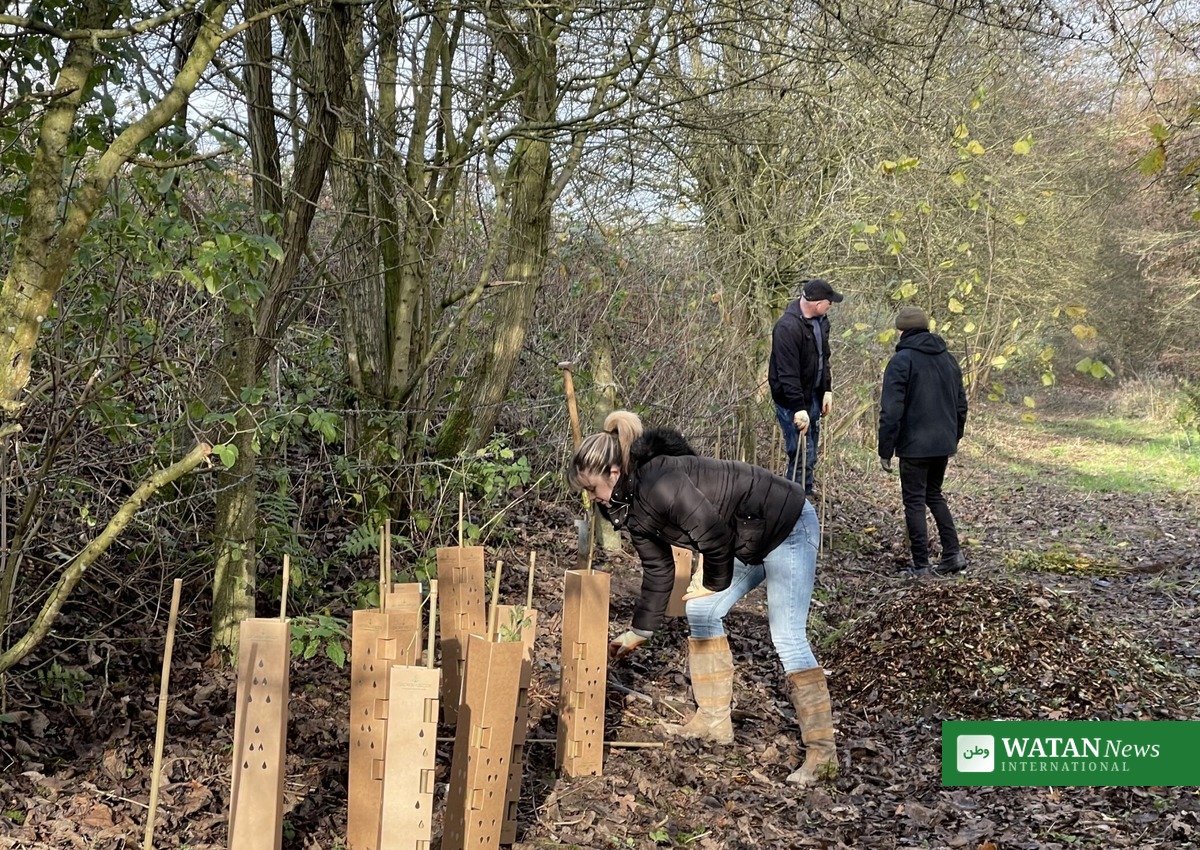
The plan builds on the £53 million Community Trees Fund, which is due to open early next year. It will help communities plant up to 500,000 trees outside woodlands — in streets, parks and neighbourhoods — including in deprived communities. Currently, only 26 per cent of adults in the most socially deprived areas have a green space close to home, compared with 38 per cent in the least deprived areas.
Environment Secretary Dame Angela Eagle said: “Under this ambitious new plan we are expanding public access to nature, planting millions of trees, and using them to boost our resilience to climate change.”
National Forest chief executive John Everitt said: “Today marks the second of three new national forests, following the launch of the Western Forest in 2025. I can’t wait to see it take shape, demonstrating how trees and woods can be integrated into new development to support nature’s recovery alongside economic growth.”
Why trees matter for the climate
Trees are one of the most effective defences against the extreme weather Britain experienced this summer, according to Defra. In cities, trees on streets can cool the air by as much as 4°C, while one mature tree can intercept over 15,000 litres of rainwater a year, reducing flood and run-off risks during storms.
Over the last two years, the government has brought tree planting rates in England to their highest since 2004. The plan sets a path towards the statutory target, under the Environment Act 2021, of increasing tree canopy cover to at least 16.5 per cent of England’s total land area by 2050, and supports the Environmental Improvement Plan target of a net increase of 43,000 hectares of tree canopy and woodland cover by 2030.
Forestry Commission chair Baroness Young said: “Climate change, diseases and pests are already reshaping where and how our trees grow. Adapting woodlands now to meet these challenges is an essential task for all owners to plan for so, under their stewardship, woodlands are vibrant, productive habitats able to provide benefits to wildlife and people for decades to come.”
Darren Moorcroft, chief executive of the Woodland Trust, said trees are “critical infrastructure in people’s lives, creating liveable towns and cities for the future and helping secure a resilient food supply from farms”.
Planting already under way
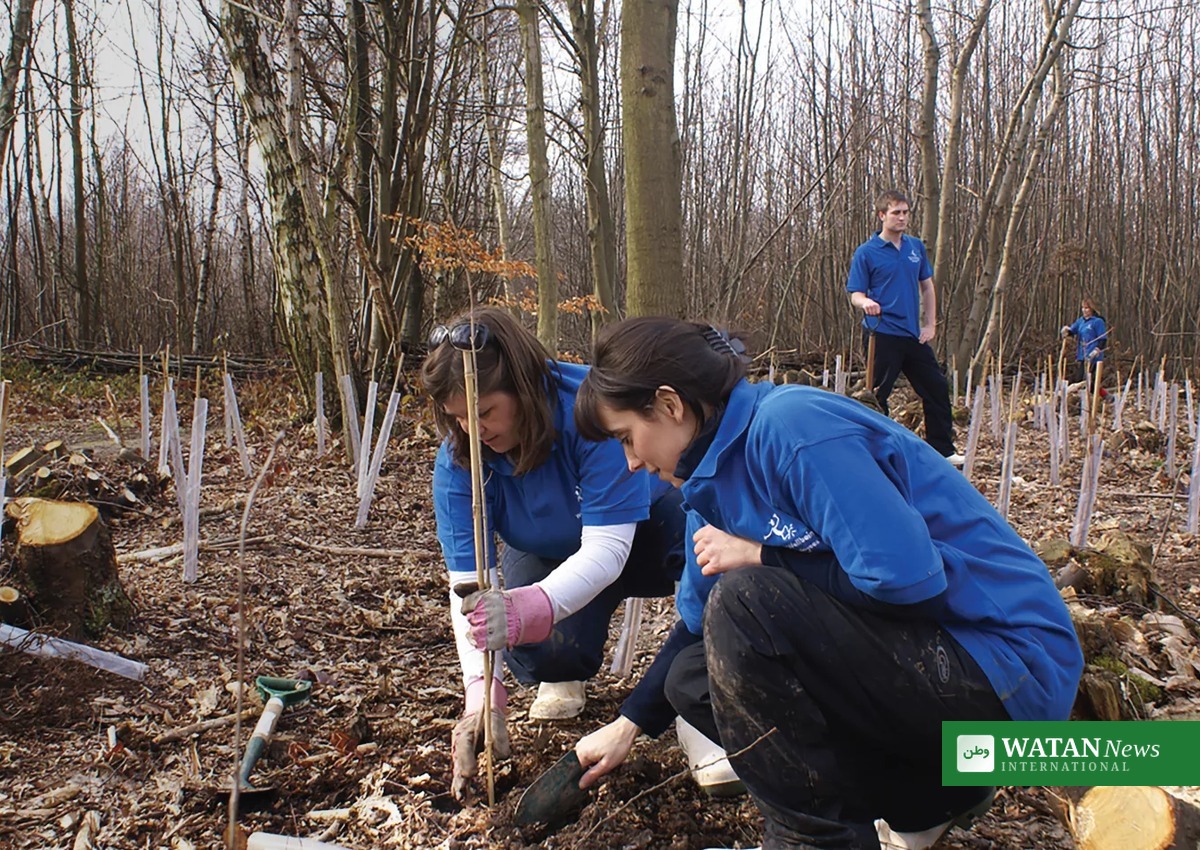
Meanwhile, in Cumbria, volunteers have planted the first 7,000 trees of a new temperate rainforest at Skiddaw Forest, the Cumbria Wildlife Trust announced on 26 November. Around 40,000 trees are planned for this winter, with about 600,000 trees to be established over five to ten years across a 3,000-acre reserve, creating around 620 acres of temperate rainforest over the next century.
The planting season is in full swing across Britain. National Tree Week runs until Sunday 29 November, and saplings grown from the fallen Sycamore Gap tree have already taken root in a new woodland. Read more in our report: Sycamore Gap Saplings Take Root as National Tree Week Opens Britain’s Planting Season
What happens next
The Community Trees Fund opens early next year, and the final boundary and name of the second national forest will be agreed through local stakeholder engagement and announced in March 2027. The 3,700 hectares of new publicly accessible woodland are due to be created by March 2030, as England works towards its 2050 canopy target.
For communities, the test of the plan will be practical: whether new woods appear near homes, schools and workplaces — and whether the trees planted this winter survive to become the forests of the coming decades.
Frequently asked questions
What is England’s Trees Action Plan?
It is the government’s four-year plan for trees and woodland in England, published on 26 November 2026 by Defra and the Forestry Commission. It sets out more than 80 actions across six themes to expand woodland, make it more resilient to climate change and disease, and bring nature closer to communities.
Where will England’s second national forest be?
The proposed forest covers around 700 square miles across the Oxford–Cambridge corridor, including Milton Keynes, Bedford, Tempsford, Biggleswade, Huntingdon and Cambourne, with the existing Forest of Marston Vale at its heart. The Forest of Marston Vale Trust is the delivery partner, and the final boundary and name will be announced in March 2027.
How many trees will the Community Trees Fund plant?
The £53 million Community Trees Fund, opening early next year, will help communities plant up to 500,000 trees outside woodlands — in streets, parks and neighbourhoods — with a focus on areas with less green space and higher deprivation.
What is England’s tree canopy target?
Under the Environment Act 2021, the statutory target is to increase tree and woodland canopy cover to at least 16.5 per cent of England’s total land area by 2050. The interim Environmental Improvement Plan target is a net increase of 43,000 hectares of tree canopy and woodland cover by 2030.
How do trees help against extreme weather?
According to Defra, trees on streets can cool the air by as much as 4°C, and one mature tree can intercept over 15,000 litres of rainwater a year, reducing flood and run-off risks during storms. Trees also store carbon, support wildlife and improve air quality.
Author

usmanch0013@gmail.com
Related Posts
Malta-unge vinder plads i grøn forretningsfinale i Grækenland
- 0
- 987 words
Ti MCAST-studerende fra Malta har vundet en plads i INNO-ANTIDOTEs internationale finale i Patras, Grækenland, med grønne forretningsidéer om land, hav og...
Read out all
مالٹا کے نوجوانوں کے سبز کاروباری منصوبے یونان کے فائنل میں پہنچ گئے
مالٹا کے ایم کاسٹ کے دس طلبہ نے زمین، سمندر اور ہوا سے متعلق سبز کاروباری منصوبوں کے ساتھ یونان کے شہر...
Read out all
Malta Youth Green Business Pitches Win Place in Greece Final
- 0
- 983 words
Ten MCAST students from Malta have won a place in the INNO-ANTIDOTE international final in Patras, Greece, with green business pitches on...
Read out all
UN Tourism sætter lokalsamfund i centrum for fremtidens rejser
- 0
- 1,424 word
UN Tourism har lanceret Project Unity, et nyt initiativ for lokalsamfundsdrevet turisme, der blev annonceret på organisationens 127. møde i Eksekutivrådet i...
Read out all
یو این سیاحت کا پروجیکٹ یونٹی: مقامی برادریاں سیاحت کے مرکز میں
یو این سیاحت نے پروجیکٹ یونٹی کا اعلان کیا ہے، جو ابوظہبی میں اپنے ایک سو ستائیسویں انتظامی کونسل اجلاس میں پیش...
Read out all
UN Tourism Puts Local Communities at the Heart of Travel’s Future
- 0
- 1,360 word
UN Tourism has unveiled Project Unity, a new community-led tourism initiative announced at its 127th Executive Council session in Abu Dhabi, alongside...
Read out all