- 0
- 1,257 word
Chicago, 19 November 2026: A 13-member international team of climate scientists and computing researchers has won the 2026 ACM Gordon Bell Prize for Climate Modelling for STORM, an artificial intelligence system that makes weather forecasting and long-term climate prediction faster and more accurate. The award was presented by the Association for Computing Machinery (ACM) at the SC26 supercomputing conference in Chicago.
The Gordon Bell Prize for Climate Modelling recognises innovative computing contributions towards solving the global climate crisis. The winning project, titled “Global Attention with Linear Complexity for Exascale Generative Data Assimilation in Earth System Prediction”, tackles one of the oldest bottlenecks in forecasting: turning the flood of observations from satellites, weather stations and ocean sensors into a reliable picture of the planet.
Key facts
- Award: 2026 ACM Gordon Bell Prize for Climate Modelling, presented on 19 November 2026 at SC26 in Chicago, Illinois.
- Winners: a 13-member international team led by Guannan Zhang of Oak Ridge National Laboratory, with researchers from Florida State University, Auburn University, Colorado State University and AMD.
- The system: STORM (Spatiotemporal Transformer for Observation-informed Reconstruction and Modeling), a generative AI method that replaces the traditional two-step data assimilation process with a single step.
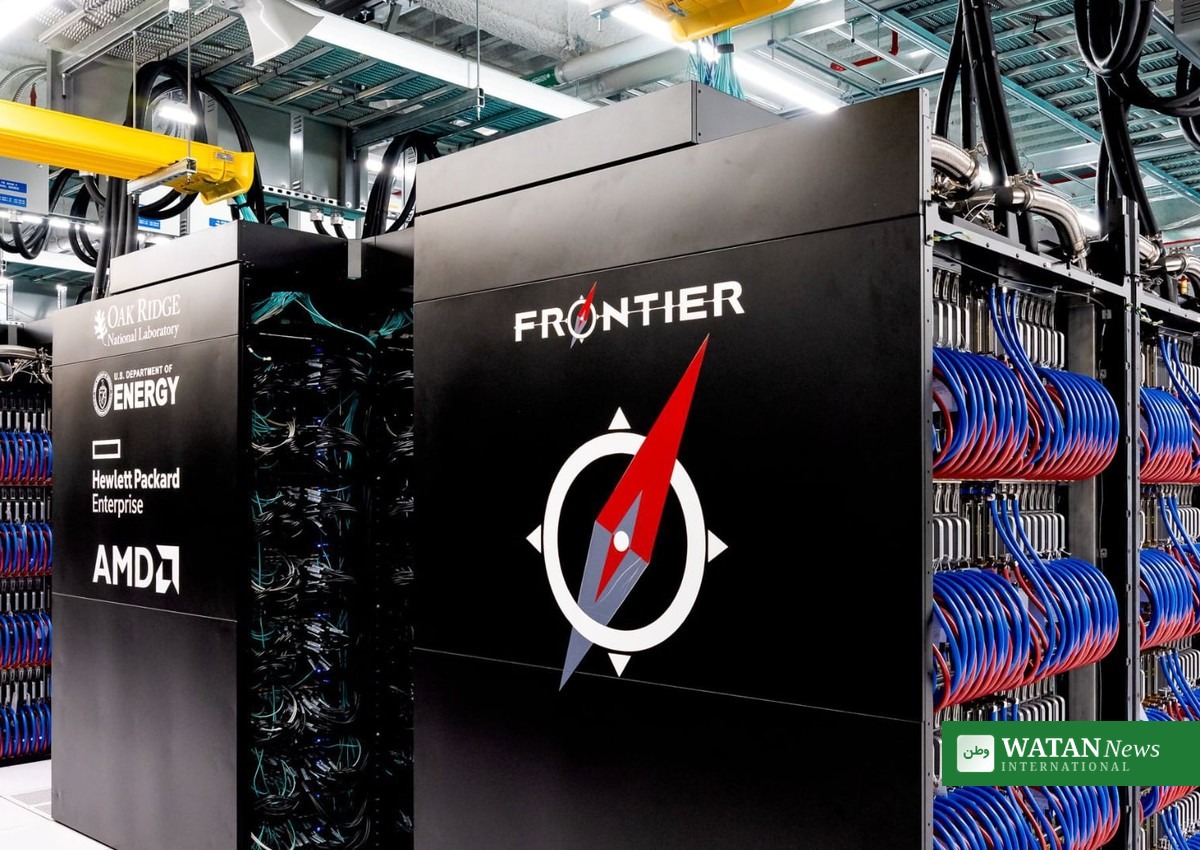
- The machine: Frontier, the exascale supercomputer at Oak Ridge National Laboratory, one of the most powerful supercomputers in the world.
- Prize: 10,000 US dollars, with the winning research to be published in The International Journal of High Performance Computing Applications.
What STORM does differently
Forecasting the Earth system has traditionally required two steps. First, data assimilation blends observations with a model of the atmosphere, oceans and land. Then a separate forecasting step projects that picture forward in time. Because the first step involves so many variables, ACM describes it as often “computationally prohibitive” — the system’s processors, memory or storage are frequently insufficient to run the algorithms at the scale needed.
STORM, developed by the prize-winning team, uses generative AI to combine those two steps into one. Instead of first building a separate picture of current conditions and then forecasting from it, the system learns from historical information and current observations together, in a single model. According to ACM, the result is a process that is both more efficient and more powerful.
Running on Frontier, the team reports that STORM scales to 74,400 graphics processing units with 96 to 99 percent strong-scaling efficiency and up to 6 ExaFLOPs of sustained computing throughput. It can run 32,768-member ensembles — many parallel versions of a forecast used to measure uncertainty — in 34 seconds on 4,096 graphics processing units. The system scales to 20 billion spatiotemporal tokens and 177,000 temporal frames, figures the team says show it can handle the enormous data volumes of Earth system prediction.

Why it matters for climate action
Better forecasts are not an academic luxury. The team presents examples in its prize-winning paper showing how STORM improves accuracy for hurricane modelling and long-term climate reanalysis — the reconstruction of past climate from historical records. Sharper hurricane forecasts give coastal communities more time to prepare and evacuate. More reliable long-term reanalysis helps governments and planners understand how the climate is changing and where adaptation investment is most needed.
The work also matters for trust in AI forecasting. “As AI becomes more widely used, we need ways to assess when its predictions deserve our confidence,” said team member Hristo Chipilski of Florida State University. The large ensembles STORM can run quickly are a way of measuring that uncertainty: when many parallel forecasts agree, confidence is higher; when they spread apart, the uncertainty is visible rather than hidden.
ACM notes that STORM’s method is broadly applicable beyond climate science, including fusion energy, astrophysics and materials science. For climate work, the prize jury’s message is clear: the tools that turn raw observations into trustworthy forecasts are themselves a form of climate action, because every adaptation decision — from flood defences to heatwave plans — depends on them.
The team behind the prize
The team was led by Guannan Zhang, a distinguished staff scientist at Oak Ridge National Laboratory and a Florida State University alumnus. Florida State University faculty on the team included Feng Bao, who contributed the generative data assimilation methodology developed by his research group, and Hristo Chipilski, who brought expertise in numerical weather prediction and atmospheric dynamics. Four other Florida State alumni also contributed to the work.
The full team, as announced by ACM, is Xiao Wang, Zezhong Zhang, Isaac Lyngaas, Hong-Jun Yoon, Jong-Youl Choi, Siming Liang, Janet Wang, Hristo G. Chipilski, Ashwin M. Aji, Feng Bao, Peter Jan van Leeuwen, Dan Lu and Guannan Zhang, working across Oak Ridge National Laboratory, Florida State University, Auburn University, Colorado State University and AMD Research and Advanced Development.
The prize itself
The ACM Gordon Bell Prize for Climate Modelling was introduced in 2023 and recognises advances in computing systems that address complex climate challenges. A cash prize of 10,000 US dollars accompanies the award, which was conceived and funded by Gordon Bell, a pioneer in high performance computing and researcher emeritus at Microsoft Research. The award will be given annually for the next ten years, and recipients have their research published in The International Journal of High Performance Computing Applications.
ACM, the world’s largest educational and scientific computing society, presented the award alongside the main 2026 ACM Gordon Bell Prize at SC26, the International Conference for High Performance Computing, Networking, Storage and Analysis, in Chicago.
The Gordon Bell Climate Prize joins a growing list of 2026 honours for climate champions, including the Earthshot Prize 2026 winners crowned in Mumbai, where five solutions — from Bhutan’s forest protection to electric rickshaws in India — each received £1 million to scale their work.
Conclusion
STORM will not by itself cut a single tonne of emissions. What it offers is something climate action depends on just as much: faster, sharper and more honest forecasts of the storms, heat and long-term shifts already under way. The Gordon Bell Prize recognises that the people building those tools — the climate champions working in computing — are part of the climate movement too.
Frequently asked questions
What is the ACM Gordon Bell Prize for Climate Modelling?
It is an award presented by the Association for Computing Machinery that recognises innovative parallel computing contributions towards solving the global climate crisis. It was introduced in 2023, carries a 10,000 US dollar cash prize, and will be given annually for the next ten years.
What is STORM?
STORM (Spatiotemporal Transformer for Observation-informed Reconstruction and Modeling) is a generative AI system developed by the prize-winning team. It replaces the traditional two-step data assimilation process in Earth system prediction with a single, more efficient step that combines historical information and current observations.
Why does faster data assimilation matter for climate action?
Data assimilation turns observations from satellites, weather stations and ocean sensors into the starting picture for forecasts. Doing it faster and at larger scale means sharper hurricane forecasts, better long-term climate reanalysis and clearer measures of forecast uncertainty — all of which help communities and governments prepare for extreme weather and plan adaptation.
What is the Frontier supercomputer?
Frontier is the exascale supercomputer at Oak Ridge National Laboratory in the United States, and one of the most powerful supercomputers in the world. The STORM team used it to run its system at a scale of up to 74,400 graphics processing units.
Who won the 2026 prize?
A 13-member international team led by Guannan Zhang of Oak Ridge National Laboratory, with researchers from Florida State University, Auburn University, Colorado State University and AMD Research and Advanced Development. The award was presented on 19 November 2026 at the SC26 conference in Chicago.
Author

usmanch0013@gmail.com
Related Posts

Houthis Attack Aramco’s Jazan Refinery, Saudi Coalition Says
- 0
- 628 words
Yemen's Houthis attacked Saudi Aramco's Jazan refinery on Thursday, the Saudi-led coalition said, a day after the group claimed a strike on...
Read out all
De fleste regeringer mangler en strategi for klimainformation, viser første globale kortlægning
- 0
- 1,455 word
Forum on Information and Democracy’s første globale kortlægning af 23 lande og EU finder, at de fleste regeringer ikke har nogen selvstændig...
Read out all
پہلی عالمی جانچ میں انکشاف: اکثر حکومتوں کے پاس موسمیاتی معلومات کی کوئی قومی حکمت عملی نہیں
ایف آئی ڈی کی پہلی عالمی جانچ میں 23 ممالک اور یورپی یونین کا جائزہ لیا گیا: اکثر حکومتوں کے پاس موسمیاتی...
Read out all
Most Governments Lack a Climate Information Strategy, First Global Mapping Finds
- 0
- 1,427 word
The Forum on Information and Democracy’s first global mapping of 23 countries and the EU finds most governments have no standalone strategy...
Read out all
Elektrisk hjem kan spare en typisk britisk husstand 1.200 pund om året
- 0
- 1,080 word
Ny analyse fra Storbritanniens Climate Change Committee viser, at en typisk husstand kan spare 1.200 pund om året ved at blive elektrisk...
Read out all
بجلی کی طرف منتقلی سے عام برطانوی گھرانا سالانہ 1,200 پاؤنڈ بچا سکتا ہے
برطانیہ کی موسمیاتی تبدیلی کمیٹی کے نئے تجزیے کے مطابق عام گھرانا بجلی کی طرف منتقلی سے سالانہ 1,200 پاؤنڈ بچا سکتا...
Read out all