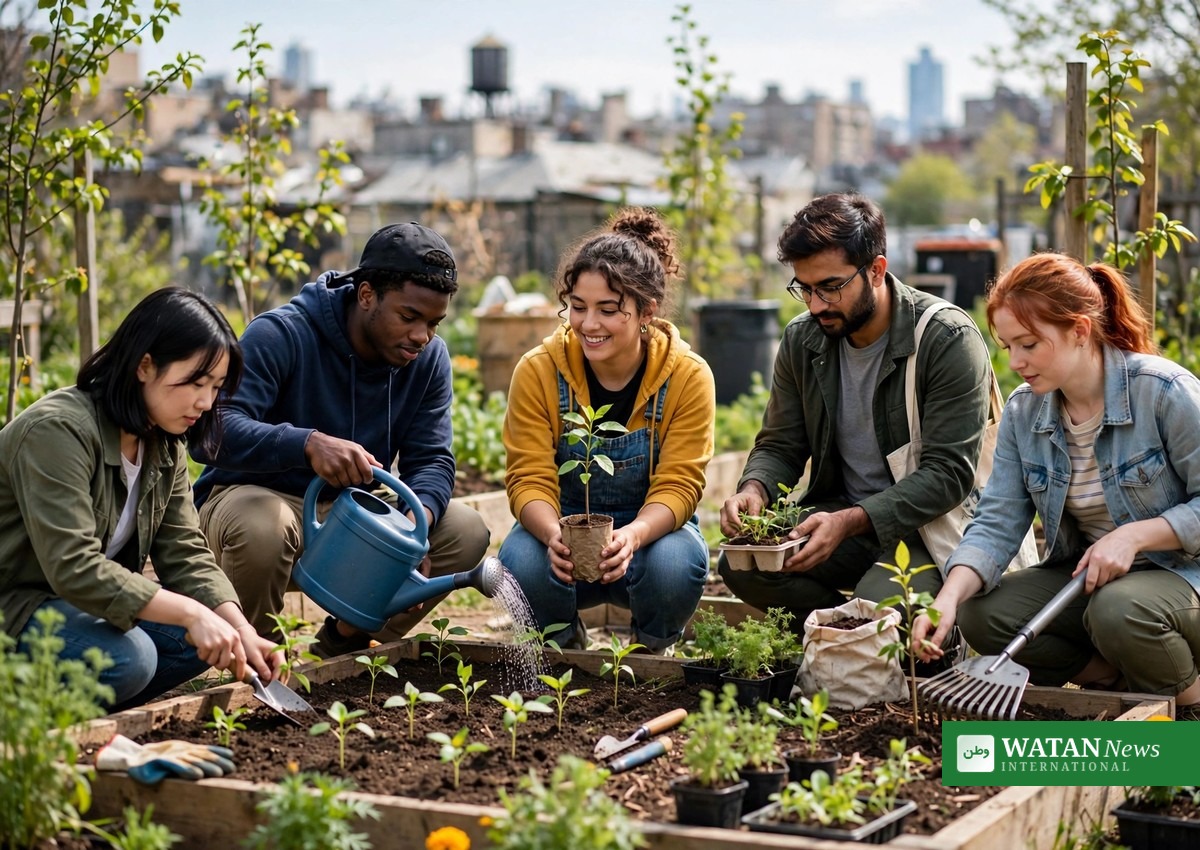
- 0
- 1,283 word
From Brussels to Aspen, from Dublin to Nairobi, thousands of volunteers carry the title of green ambassador. They are not diplomats and they are not paid officials. They are teachers, students, farmers, engineers and retirees who have agreed to turn climate concern into practical action in their own streets, schools and workplaces. This awareness article explains what green ambassadors do, how the biggest programmes work, and how anyone can join them.
FAKTA
- The European Climate Pact counts more than 1,000 Climate Pact Ambassadors across the European Union.
- Applications for the 2026 round of EU Climate Pact Ambassadors closed on 31 October 2026; new ambassadors will be confirmed in early 2027.
- The World Bank’s Max Thabiso Edkins Youth Ambassador Program received more than 7,600 applications for its 2026 edition.
- Ireland’s Climate Ambassador programme, run by An Taisce, was established in 2017 and asks each ambassador to complete at least two climate actions and two climate communications in the first year.
- At COP31 in Antalya, former Paris mayor Anne Hidalgo was named a UN-Habitat Goodwill Ambassador for a two-year term.
What a green ambassador actually does
A green ambassador is a volunteer sustainability leader. According to the European Commission, the Pact looks for people who can motivate others and act as changemakers in their own communities. The Edupro Global Green Ambassador Programme describes the same idea in plainer terms: ambassadors promote green skills, raise awareness of sustainability, and encourage young people and neighbours to take part in climate-positive initiatives.
The work is local by design. Ambassadors introduce climate and sustainability ideas in their school, workplace or neighbourhood, run small awareness activities, and help share reliable information about opportunities and deadlines. They are not expected to be scientists. They are expected to be trusted voices where they live — people others will listen to when a new recycling scheme, a tree-planting day or a school energy project needs support.
Europe’s 1,000-strong Climate Pact network
The largest organised network is the European Climate Pact, the European Commission’s community of people taking climate action. It now counts more than 1,000 Climate Pact Ambassadors, together with dozens of partner organisations.
Ambassadorships go to individuals only. Applicants must live in an EU member state and apply in their own name, not for an organisation or a company. Applications for the 2026 round closed on 31 October 2026 and are reviewed on a rolling basis; applicants receive an answer in November or December, and the new ambassadors are confirmed in early 2027. People who are not selected can join as a Friend of the Pact, an informal role with access to campaigns, events and activities.

A global volunteer wave
Beyond Europe, the title is spreading through global youth and education programmes. The Edupro Global Green Talent Awards opened a Global Green Ambassador Programme for 2026, and its published list names more than 60 volunteers from more than 20 countries — including Pakistan, Nigeria, Ghana, Kenya, Bangladesh, the Philippines, Mozambique, Sri Lanka and Türkiye. Ambassadors receive the title “Green Ambassador 2026” and a certificate of contribution, build skills in leadership, advocacy and communication, and the strongest performers may receive recommendation letters and priority for future Edupro initiatives. To keep the role neutral, ambassadors cannot compete in the awards themselves.
The World Bank’s Max Thabiso Edkins Youth Ambassador Program, delivered with Connect4Climate, ran its fifth edition in 2026 and received more than 7,600 submissions before applications closed. It is open to young changemakers aged 20 to 30 who learn from World Bank Group experts, act on campaigns covering energy, water, farming, gender equality, health, tourism and digital innovation, and join a global alumni community. The programme carries the name of Max Thabiso Edkins, a Connect4Climate champion who believed youth inclusion is essential to a resilient future.
Local programmes that train ambassadors
Some of the oldest ambassador programmes are national. Ireland’s Climate Ambassador programme, coordinated by An Taisce with support from the Department of Environment, Climate and Communications, was established in 2017. In their first year, ambassadors receive a full day of training covering the causes and effects of climate change, the solutions, climate communications and action planning. They then carry out at least two climate actions and two climate communications in their community, school or campus, with ongoing training, tours and network gatherings through the year — and an annual Climate Action Week campaign each October.
In the United States, the City of Aspen supports young people directly. Its Youth Sustainability Ambassador Grant offers funding of up to 1,500 US dollars and mentorship for youth aged 24 and under to run environmental and climate action projects in the community. Applications for the 2026-2027 cohort closed on 6 November 2026, selected projects are announced in December 2026, and the projects run from January to May 2027, with a showcase planned for April 2027.
When ambassadors become envoys
The same idea also works at the highest level. At COP31 in Antalya, the United Nations Human Settlements Programme, UN-Habitat, appointed former Paris mayor Anne Hidalgo as its Goodwill Ambassador for Eastern Europe and Central Asia. The appointment, announced on 10 November 2026, runs for a two-year term and focuses on Ukraine’s urban recovery, with climate action and resilient infrastructure among the priorities. Hidalgo, who served as mayor of Paris from 2014 to 2026, also serves as Global Ambassador of the Global Covenant of Mayors for Climate and Energy.
Days later, the United Kingdom appointed the world’s first special representative for climate security at the same summit. And throughout COP31, youth and national envoys carried their own demands into the negotiations — including more than 300 young climate envoys from Türkiye who arrived in Antalya on the summit’s final day. Watan News reported from COP31 on the role ambassadors and envoys played in Antalya: Climate ambassadors at COP31 in Antalya.
Why the model works
Climate policy is negotiated in conference halls, but it is delivered in neighbourhoods. Ambassadors bridge that gap: they translate big targets into a school project, a community garden or a conversation at the kitchen table. The programmes are mostly free to join, they train their volunteers, and they measure success in actions taken and people reached — not in speeches given. With the next round of EU Climate Pact Ambassadors due to be confirmed in early 2027, the network is set to grow further.
Frequently asked questions
What is a green ambassador?
A green ambassador is a volunteer who promotes climate awareness and action in their own community — in a school, workplace, neighbourhood or country. Ambassadors motivate others, share reliable information and help organise local climate activities.
Do green ambassadors get paid?
No. The roles described in this article are voluntary. Some programmes offer project support instead of a salary: the City of Aspen, for example, offers grants of up to 1,500 US dollars for an ambassador’s community project, plus mentorship.
How can I become a green ambassador?
Apply to a programme that fits where you live and your age. The European Climate Pact accepts individual applicants who live in an EU member state; the 2026 round closed on 31 October 2026 and new ambassadors are confirmed in early 2027. Global options include the Edupro Global Green Ambassador Programme and the World Bank’s Max Thabiso Edkins Youth Ambassador Program for ages 20 to 30.
What does the EU Climate Pact Ambassador programme involve?
Ambassadors join a community of more than 1,000 people across the European Union. They motivate others and act as changemakers in their own communities, with access to campaigns, events and activities. Applicants apply in their own name and must live in an EU member state.
What do youth ambassador programmes offer?
Training, mentorship, networks and recognition. Ireland’s programme offers a full training day plus network gatherings; Edupro offers a certificate of contribution and possible recommendation letters; the World Bank programme offers learning from World Bank Group experts and a global alumni community.
Author

usmanch0013@gmail.com
Related Posts
Pakistan Calls for Community-Led Swarm Electrification at COP31
- 0
- 497 words
Pakistan's climate minister told COP31 in Antalya that community-led swarm electrification — neighbours sharing rooftop solar power — could make the energy...
Read out all
Grønne ambassadører: Frivillige der forvandler klimabekymring til handling i lokalsamfundet
- 0
- 1,313 word
Tusindvis af frivillige verden over arbejder som grønne ambassadører og spreder klimabevidsthed og praktisk handling i deres lokalsamfund.
Read out all
گرین ایمبیسیڈر: وہ رضاکار جو موسمیاتی تشویش کو اپنی کمیونٹی کی عملی کارروائی میں بدل رہے ہیں
- 0
- 1 word
دنیا بھر میں ہزاروں رضاکار گرین ایمبیسیڈر کے طور پر اپنی کمیونٹی میں موسمیاتی آگاہی اور عملی کارروائی پھیلا رہے ہیں۔
Read out all
Tanker Hit by Unknown Projectile Near Khasab as Hormuz Tensions Rise
- 0
- 419 words
A tanker sailing out of the Strait of Hormuz was struck by an unidentified projectile about 11 nautical miles north of Khasab,...
Read out all
Saudi Arabia Intercepts Three Houthi Missiles Targeting Riyadh
- 0
- 773 words
Saudi air defences intercepted and destroyed three Houthi ballistic missiles fired towards Riyadh early on Saturday, the Saudi-led coalition said, in the...
Read out all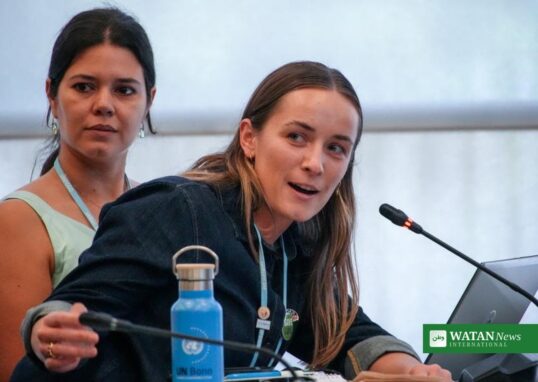
COP31’s ungdomschampion: Fødevaresystemer er ‘virkelig udsatte’ efter krigen i Iran
- 0
- 1,212 word
COP31's ungdomschampion Sally Higgins siger, at krigen i Iran har afsløret, hvor sårbare de globale fødevaresystemer er, fordi de afhænger af fossilbaseret...
Read out all