- 0
- 730 words
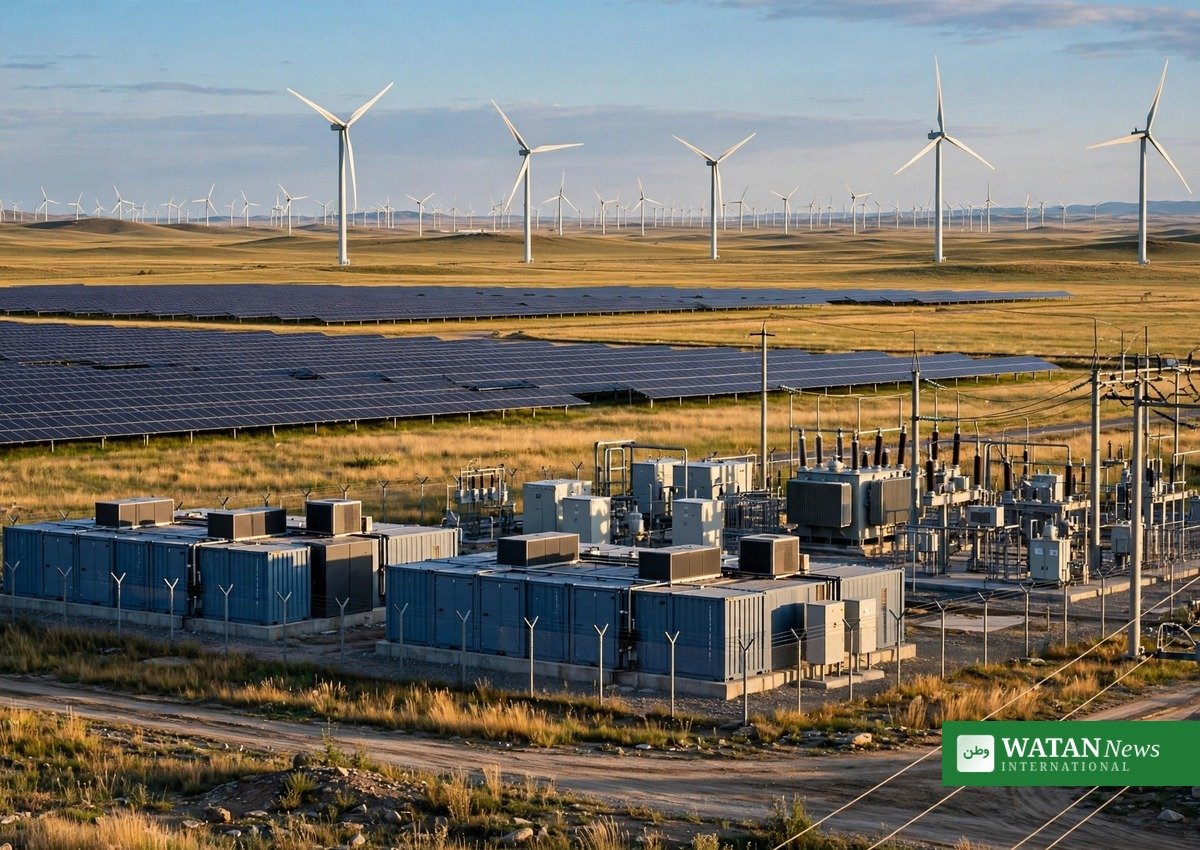
China Huaneng has fully grid-connected a 960 MW wind-solar-storage project in Ulanqab, Inner Mongolia, in a new step for combining wind, solar and battery storage into a single plant that can also help an existing coal-fired power station run more flexibly.
The project was developed by a subsidiary of China Huaneng, one of China’s largest state-owned power producers. It was reported on 21 October 2026 by TaiyangNews, citing China Huaneng, and the company describes it as the first project of its kind in China.
What the Huaneng wind-solar-storage plant contains
The facility combines 810 MW of wind power with 150 MW of solar power, a 60 MW/240 MWh grid-forming battery energy storage system and a 20 Mvar static synchronous condenser, all connected through a 220 kV step-up substation.
Once fully operational, China Huaneng expects the project to generate approximately 2.3 billion kWh of electricity a year.
The storage and grid equipment matter as much as the turbines and panels. Wind and solar output rises and falls with the weather, so the battery system stores electricity for use when generation dips, while the synchronous condenser helps keep the local grid stable. Pairing them with a coal plant retrofit is designed to let the older plant vary its output more flexibly instead of running at a fixed level.
Why Inner Mongolia is central to China’s clean energy build-out
Inner Mongolia holds some of China’s strongest wind and solar resources, and the region has become a testing ground for large hybrid plants that mix generation, storage and grid services.
In the same week, Inner Mongolia’s energy regulator published an implementation list covering five solar desertification-control projects in Alxa League with a combined capacity of 5.5 GW, showing how new solar capacity is being paired with land restoration in desert areas.
The wider context is a rapid global shift in energy spending. According to the International Energy Agency’s World Energy Investment 2026 report, global energy investment is expected to reach 3.4 trillion US dollars in 2026, with about 2.2 trillion dollars directed to clean energy technologies and infrastructure, including renewables, grids, storage and efficiency.
Readers can follow Watan News International’s climate coverage on the Watan News International English homepage.
FAKTA
- What: A 960 MW wind-solar-storage project in Ulanqab, Inner Mongolia, fully grid-connected.
- Developer: A subsidiary of China Huaneng; the company calls it the first project of its kind in China.
- Make-up: 810 MW wind, 150 MW solar, 60 MW/240 MWh grid-forming battery storage, 20 Mvar static synchronous condenser, 220 kV substation.
- Expected output: Approximately 2.3 billion kWh of electricity a year once fully operational.
- Purpose: Combine wind, solar and storage in one plant and help retrofit a coal-fired power plant for more flexible operation.
- Regional context: Five solar desertification-control projects in Alxa League, Inner Mongolia, totalling 5.5 GW, were listed by the regional energy regulator in the same period.
Conclusion
The Ulanqab project shows where large-scale renewables are heading: not wind or solar alone, but hybrid plants where storage and grid equipment let variable generation behave more like steady, dispatchable power — and where older fossil plants are adapted to fit around clean energy rather than replaced overnight.
Frequently asked questions
What is a wind-solar-storage hybrid project?
It is a single power plant that combines wind turbines and solar panels with battery storage and grid equipment, so electricity can be stored when the wind blows and the sun shines and released when it does not.
Why does the project include a battery system and a synchronous condenser?
The 60 MW/240 MWh battery stores electricity to smooth out gaps in wind and solar output. The static synchronous condenser helps stabilise voltage on the local grid, which becomes more important as variable renewables supply a larger share of power.
How much electricity will the plant produce?
China Huaneng expects approximately 2.3 billion kWh a year once the project is fully operational.
What does “first of its kind in China” mean here?
According to the company, it is the first Chinese project to combine wind, solar, grid-forming battery storage and synchronous compensation in this way while retrofitting a coal-fired power plant for flexible operation. That description comes from China Huaneng itself.
Why does this matter beyond China?
Grids everywhere face the same problem as wind and solar grow: keeping supply steady when the weather changes. Hybrid plants with storage are one of the main designs being tested to solve it, and the International Energy Agency reports about 2.2 trillion US dollars going into clean energy worldwide in 2026.
Author

usman2344913@gmail.com
Related Posts
Houthis Renew Warning Against Using Riyadh Airport as Partial Flights Resume
- 0
- 560 words
Yemen’s Iran-aligned Houthis on Sunday renewed their warning against using Riyadh’s King Khalid International Airport, hours after the airport announced it would...
Read out all
Food for Our Planet: EARTHDAY.ORG lancerer global kampagne for et sundere fødevaresystem
- 0
- 900 words
EARTHDAY.ORG har lanceret Food for Our Planet, en flerårig global kampagne, der skal ændre den måde, mad produceres, forbruges og værdsættes på,...
Read out all
فوڈ فار آور پلانیٹ: ارتھ ڈے تنظیم نے صحت مند غذائی نظام کے لیے عالمی مہم شروع کر دی
ارتھ ڈے تنظیم نے فوڈ فار آور پلانیٹ کے نام سے ایک کثیر سالہ عالمی مہم شروع کی ہے جس کا مقصد...
Read out all
Food for Our Planet: EARTHDAY.ORG launches global campaign for a healthier food system
- 0
- 855 words
EARTHDAY.ORG has launched Food for Our Planet, a multiyear global campaign to transform how food is produced, consumed and valued, with the...
Read out all
EU Unveils New Arctic Strategy for the Nordic Neighbourhood
- 0
- 775 words
The European Union has unveiled a new Arctic strategy that calls the far north “Europe’s Northern Neighbourhood”, placing security, climate, prosperity and...
Read out all
China Huaneng tilslutter 960 MW vind-sol-lagringsprojekt i Indre Mongoliet
- 0
- 763 words
China Huaneng har fuldt tilsluttet et 960 MW vind-sol-lagringsprojekt i Ulanqab i Indre Mongoliet til elnettet. Projektet samler vind, sol og batterilagring...
Read out all